
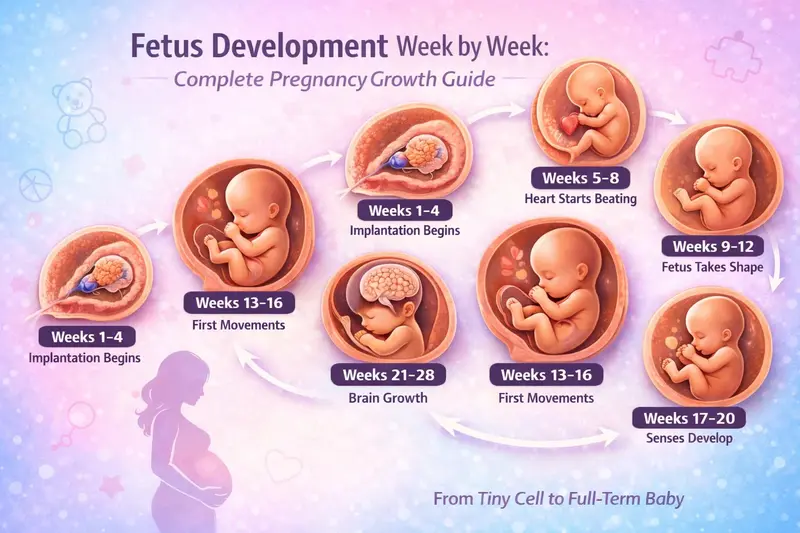
Pregnancy is one of those journeys where every week feels new. One day you’re just confirming the news, and the next, you’re wondering how your baby is growing inside. Understanding fetus development makes everything feel a little more real and a lot less confusing.
- Helps you connect with your baby
- Gives clarity on what’s happening inside
- Reduces unnecessary worry
- Makes each stage more meaningful
Quick Answer
If you’re looking for a simple idea of fetus development, here’s the quick version. It starts from a tiny cell and slowly grows into a fully developed baby over 9 months.
- Happens in 3 stages: germinal, embryonic, fetal
- The first two months are when major organs form.
- Growth and movement happen later
- Full development is reached by month 9
BasicUnderstanding
Simply put, fetus development is how a baby grows inside the womb from a single cell into a complete human. It’s a gradual process, but it happens faster than most people expect.
- Starts with fertilization
- Cells multiply rapidly
- Organs begin forming
- Baby grows in size and strength
Fetus Development Stages
This video explains fetus development week by week, showing how a baby grows from a tiny cell into a fully developed infant. It covers important stages like implantation, organ formation, and brain development in a simple and easy-to-understand way. Perfect for parents who want a clear overview of pregnancy growth.
The journey of fetus development stages can be divided into three simple parts. Each stage has its own role in building the baby.
- Germinal stage: fertilization and implantation
- Embryonic stage: organs and structure formation
- Fetal stage: growth, movement, and maturity
Weeks 1–4: The Beginning
At this stage, things are just starting quietly. Most parents don’t even realize pregnancy has begun, but inside, the first steps of fetus development are happening.
- Fertilization occurs
- Egg attaches to the uterus
- Placenta starts forming
- Size is like a poppy seed
Weeks 5–8: Rapid Changes
This is the time when the baby starts forming important parts. Even though it’s still very small, major development is happening quickly.
- Heart starts beating
- Brain begins developing
- Arms and legs start forming
- Size is like a kidney bean
Weeks 9–12: Becoming a Fetus
Now the baby is officially called a fetus. This stage of fetus development week by week shows clear body features starting to form.
- Fingers and toes appear
- Face starts taking shape
- Small movements begin
- Size is like a lime
Weeks 13–16: Growing Stronger
At this stage, growth becomes steady and more noticeable. Many parents start feeling better physically during this time.
- Bones begin to harden
- Facial expressions develop
- Gender may be visible
- Size is like an avocado
Weeks 17–20: First Movements
This is a special moment in pregnancy. You may feel your baby move for the first time, which makes everything feel real.
- Baby starts moving (fluttering feeling)
- Hearing begins developing
- Movements become more active
- Size is like a banana
Weeks 21–24: Developing Senses
Now the baby becomes more aware of its surroundings. This stage of fetus development focuses on sensory growth.
- Baby can hear sounds
- Skin is developing
- Movements become stronger
- Size is like a carrot
Weeks 25–28: Brain Development
At this stage, the brain grows rapidly. The baby also starts reacting to light and sound.
- Brain development increases
- Eyes can open and close
- Baby responds to voices
- Size is like an eggplant
Weeks 29–32: Preparing for Birth
Now the baby is getting ready for life outside the womb. Growth continues, but space inside becomes limited.
- Fat starts building under skin
- Bones are fully formed
- Movements feel stronger
- Size is like a coconut
Weeks 33–36: Final Growth Phase
By this stage, the baby is almost ready. The body continues to gain weight and prepare for delivery.
- Baby gains weight quickly
- Lungs continue developing
- Head may move downward
- Size is like a pineapple
Weeks 37–40: Full Term
This is the final stage of the fetus development process. The baby is fully developed and ready to be born.
- Organs are fully matured
- Lungs are ready for breathing
- Baby is prepared for birth
- Size is like a watermelon
Fetus Development Month by Month
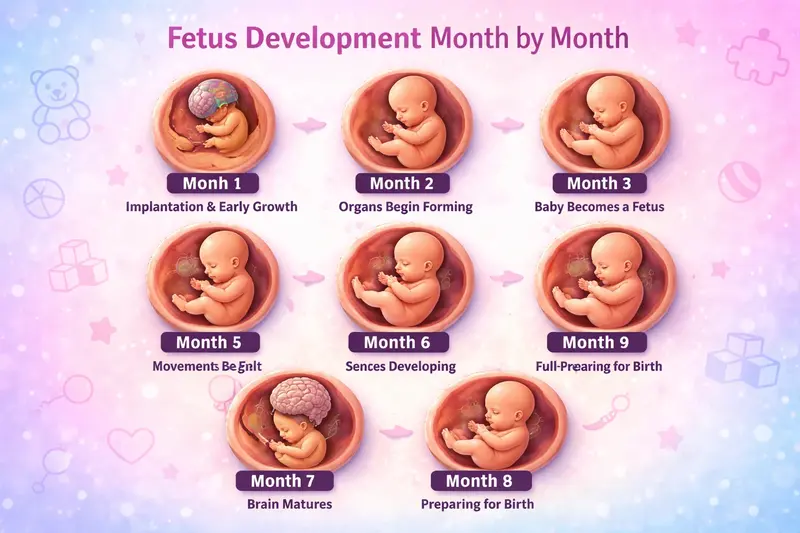
Month 1: Implantation and Early Growth
The first month of fetus development is all about beginnings. Following fertilization, the fertilized egg enters the uterus and adheres to the wall. This process is called implantation, and it marks the official start of pregnancy. Even though the baby is extremely tiny, important changes are already taking place.
- Fertilized egg implants in the uterus
- Cells begin rapid division
- Placenta starts forming
- Basic support system develops
Month 2: Organs Begin Forming
In the second month, fetus development becomes more complex as the baby starts forming major organs. This is a very sensitive stage because the foundation of the entire body is being built. The heart begins to beat, and the brain starts developing, even though the baby is still very small.
- Heart begins beating
- Brain development starts
- Spinal cord begins forming
- Basic organ structures appear
Month 3: Baby Becomes a Fetus
By the third month, a major milestone in fetus development is reached. The baby is now officially called a fetus. Most of the major organs have started forming, and the body begins to look more human. Although movements start, they are usually too small for the mother to feel.
- Baby is now called a fetus
- Arms, legs, fingers, and toes form
- Facial features begin developing
- Internal organs continue growing
Month 4: Movements Begin
During the fourth month, fetus development becomes more noticeable. The baby grows stronger, and early movements begin. While some mothers may start to feel slight movements, others may notice them a little later. The baby’s skeleton also begins to harden during this stage.
- Early movements start
- Bones begin to harden
- Facial expressions develop
- Growth becomes steady
Month 5: Kicks Can Be Felt
The fifth month is one of the most exciting stages of fetus development. This is when most mothers feel the baby’s movements clearly for the first time. These movements, often called “quickening,” create a strong emotional connection between mother and baby.
- Baby kicks can be felt
- Movements become stronger
- Muscles develop further
- Baby becomes more active
Month 6: Hearing Develops
In the sixth month, fetus development focuses on sensory growth. The baby begins to respond to sounds from outside the womb, including voices. This is also the stage where the baby’s sleep and wake patterns start forming.
- Hearing ability develops
- Baby responds to sound
- Skin continues developing
- Movement becomes more regular
Month 7: Brain Grows Rapidly
The seventh month is a crucial phase in fetus development, especially for brain growth. The nervous system becomes more advanced, and the baby can respond better to light, sound, and touch. At this stage, the baby has a higher chance of survival if born early, with medical support.
- Rapid brain development
- Nervous system improves
- Baby responds to light and sound
- Body continues growing
Month 8: Weight Gain Increases
During the eighth month, fetus development focuses mainly on weight gain and final growth. The baby starts storing fat under the skin, which helps regulate body temperature after birth. Space inside the womb becomes limited, so movements may feel stronger but less frequent.
- Rapid weight gain
- Fat develops under the skin
- Organs mature further
- Movements feel stronger
Month 9: Final Development Stage
The ninth month marks the final stage of fetus development. By now, the baby is fully developed and ready for birth. The lungs mature completely, and all organs are prepared to function outside the womb. The baby usually settles into a head-down position in preparation for delivery.
- Organs fully developed
- Lungs ready for breathing
- Baby gains final weight
- Body prepares for birth
Fetus Development Process
Fertilization of Egg and Sperm
A detailed 3D animation showing early fetus development from conception to the first few weeks of pregnancy. The video explains how a single cell grows, implants in the uterus, and begins forming the foundation of a developing baby
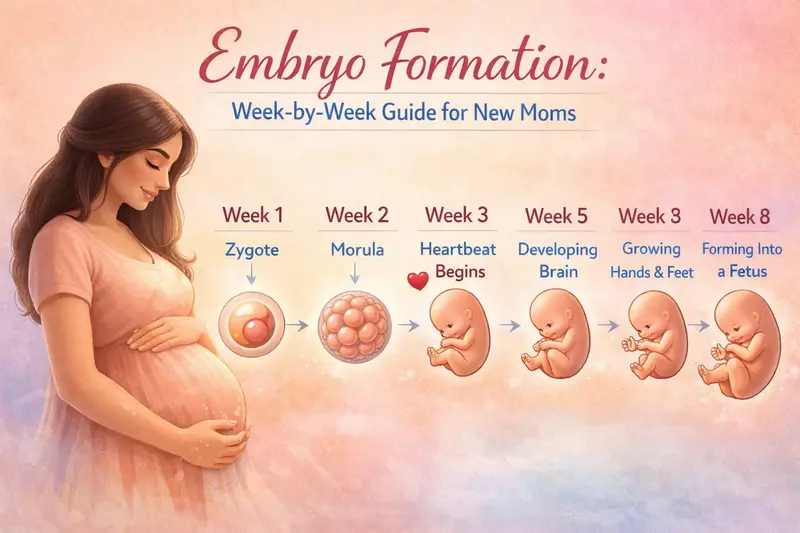
The first step in the fetus development process begins with fertilization. This happens when a sperm cell meets and combines with an egg cell, usually in the fallopian tube. This union forms a single cell called a zygote, which carries all the genetic information needed to create a new life. Even though this stage is microscopic, it marks the official start of fetus development.
- Sperm and egg combine to form a zygote
- Genetic traits are determined
- Process usually happens in the fallopian tube
- Marks the beginning of fetus development
Cell Division Begins
Once fertilization occurs, the next stage of fetus development involves rapid cell division. The zygote starts dividing into multiple cells as it travels toward the uterus. This process is incredibly fast and forms a cluster of cells that will later develop into different parts of the baby’s body.
- Zygote divides into multiple cells
- Cells multiply rapidly
- Forms a structure called a blastocyst
- Travels toward the uterus
Implantation in Uterus
After several days of cell division, the cluster of cells reaches the uterus and attaches itself to the uterine wall. This step is known as implantation and is a crucial milestone in fetus development. Once implantation occurs, the body begins supporting the pregnancy through the placenta.
- Blastocyst attaches to uterine lining
- Placenta begins forming
- Nutrient supply starts
- Pregnancy becomes stable
Organs Start Forming
One of the most important stages in the fetus development process is organ formation. During this phase, the embryo begins developing essential organs like the brain, liver, kidneys, and lungs. This stage lays the foundation for the baby’s entire body structure.
- Brain and spinal cord begin forming
- Internal organs start developing
- Body structure takes shape
- Critical stage of fetus development
Heart Begins Beating
As fetus development continues, the heart becomes one of the first organs to function. It starts beating very early in pregnancy, even before many other organs are fully formed. This is a major milestone because it supports blood circulation throughout the developing body.
- Heart starts beating early
- Supports blood circulation
- Essential for growth
- One of the first functional organs
Growth and Movement Increase
After the basic structure is formed, fetus development shifts towards growth and activity. The baby starts growing in size, and movements begin, although they may not be felt immediately. Over time, these movements become stronger and more noticeable.
- Baby grows in size and weight
- Muscles develop
- Movements begin and increase
- Activity becomes more regular
Final Preparation for Birth
The last stage of the fetus development process focuses on preparing the baby for life outside the womb. Organs mature, especially the lungs, and the baby gains weight. By the end of this stage, the baby is fully developed and ready for delivery.
- Organs reach full maturity
- Lungs prepare for breathing
- Baby gains final weight
- Body prepares for birth
Overall Understanding of the Fetus Development Process
When you look at the fetus development process as a whole, it becomes clear that every step has a specific purpose. From fertilization to birth, each stage contributes to building a healthy baby. The process may seem long, but it happens in a well-structured and natural way.
- Follows a step-by-step progression
- Each stage supports the next
- Ensures complete development
- Leads to a healthy birth
Why Understanding the Process Matters
Knowing about fetus development helps reduce fear and confusion during pregnancy. It allows parents to understand what is normal and what changes to expect. This knowledge also builds emotional connection and confidence throughout the journey.
- Reduces stress and anxiety
- Improves awareness of changes
- Helps track healthy development
- Builds confidence in parents
Fetus Development Diagram (Simple Understanding)
When people search for a fetus development diagram, they usually want a clear visual idea. It might be thought of as a gradual change.
- Starts as a tiny cell
- Becomes a small embryo shape
- Gradually looks like a baby
- Fully develops by the final stage
Practical Tips for Parents
Understanding fetus development is helpful, but daily care matters just as much.Little routines can have a significant impact.
- Eat balanced home food
- Stay hydrated
- Take proper rest
- Attend regular checkups
- Stay calm and stress-free
Common Mistakes
Many parents unknowingly make small mistakes during pregnancy. Being conscious of them keeps you more at ease and self-assured.
- Overthinking every symptom
- Comparing with other pregnancies
- Skipping doctor visits
- Ignoring mental health
- Not following proper nutrition
FAQs
What are the stages of the development of a fetus?
At a basic level, fetus development happens in three simple stages. It starts right after fertilization, then moves into a phase where all major body parts begin forming, and finally shifts into growth until birth.
- Germinal stage (week 1–2)
- Embryonic stage (week 3–8)
- Fetal stage (week 9–birth)
What month is a fetus fully developed?
By this stage, most of the fetus development is complete around the ninth month. The baby’s body and organs are ready for life outside.
- Fully developed in month 9
- Lungs mature in final weeks
- Baby gains final weight
Which bodily part develops first in the womb?
In early fetus development, the heart is the first major organ to start working. It begins beating very early in pregnancy.
- Heart forms first
- Starts beating around week 5–6
- Supports early circulation
What does a 1 month old fetus look like?
At this stage, the baby is very tiny and doesn’t yet look like a baby. It’s more like a small cluster of developing cells.
- Size like a poppy seed
- Curved tiny shape
- Early structures forming
Which organ in a fetus develops last?
During the final stage of fetus development, the lungs are the last major organ to fully mature, which is important for breathing after birth.
- Lungs develop last
- Mature in late pregnancy
- Essential for life outside
Final Thoughts
The journey of fetus development is a natural and beautiful process where each stage plays an important role in building life. Understanding these stages helps parents feel more confident and connected throughout pregnancy.
Author Bio
ZaminoToys Editorial Team creates simple, practical, and parent-focused content on parenting and child development. Our goal is to help parents understand topics like fetus development in an easy and relatable way.
Declaration
This content is for informational purposes only and not medical advice. Always consult a healthcare professional for any pregnancy-related concerns.
- Not a substitute for medical advice
- Every pregnancy is different
- Follow doctor’s guidance
- Use information responsibly
Pingback: Pre Pregnancy Care Tips Every First-Time Parent Must Know
Pingback: Safe Sleeping Position for Pregnant Women Every Trimester