
How to Choose the Best Sleeping Position for Pregnant Women
Pregnancy can make sleeping more challenging as your body changes. Choosing the right sleeping position for pregnant women helps improve comfort, supports your growing baby, and reduces common problems like back pain and restless sleep.
In this guide from Zaminotoys, you’ll learn the safest sleeping positions, which ones to avoid, and simple tips to enjoy better sleep throughout your pregnancy.
Which Position Is Safest?
When it comes to choosing the right sleeping position for pregnant women, doctors around the world agree on one thing: side sleeping is the safest option, especially as your pregnancy progresses. Lying on your side takes pressure off your major blood vessels, supports healthy blood flow to the placenta, and reduces strain on your back and hips.
While side sleeping is generally recommended from the second trimester onward, the exact side you choose can make a difference too, which brings us to the next important comparison
Best Sleeping Positions: Left vs Right
Sleeping on the Left Side
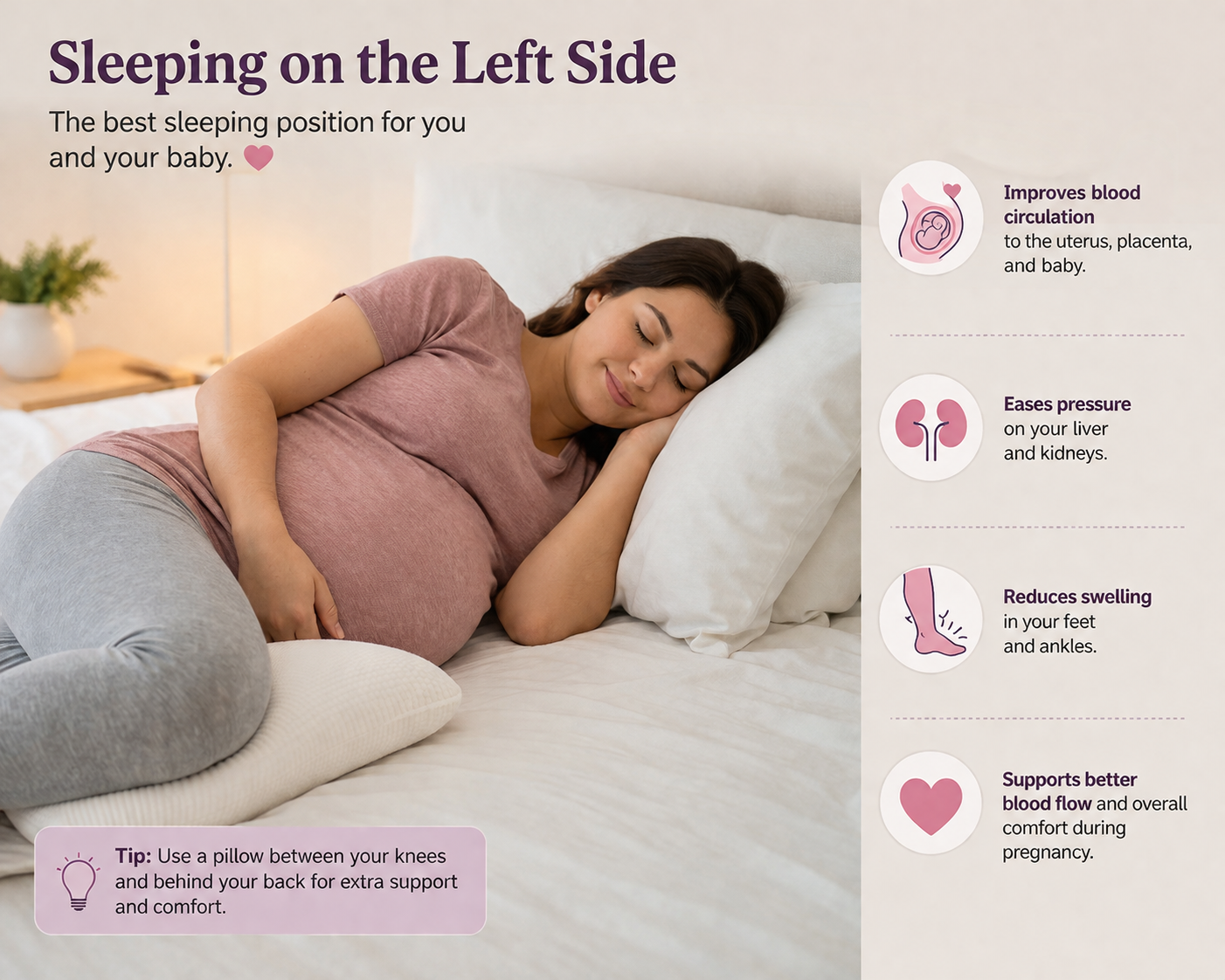
Left-side sleeping is widely considered the best sleeping position for pregnant women, particularly in the second and third trimesters. This position improves blood circulation to the uterus, placenta, and baby, while also easing pressure on your liver and kidneys. Many women notice reduced swelling in their feet and ankles when they favour the left side.
Sleeping on the Right Side
If you find yourself naturally rolling onto your right side at night, don’t panic. Sleeping on the right is not harmful and remains a safe sleeping position for pregnant women, though it may offer slightly less circulation benefit than the left side. Alternating between both sides through the night is completely normal and often more comfortable than forcing yourself to stay in one position.
Positions to Avoid
Not every posture is safe once your bump starts to grow. Here are the ones to be cautious of:
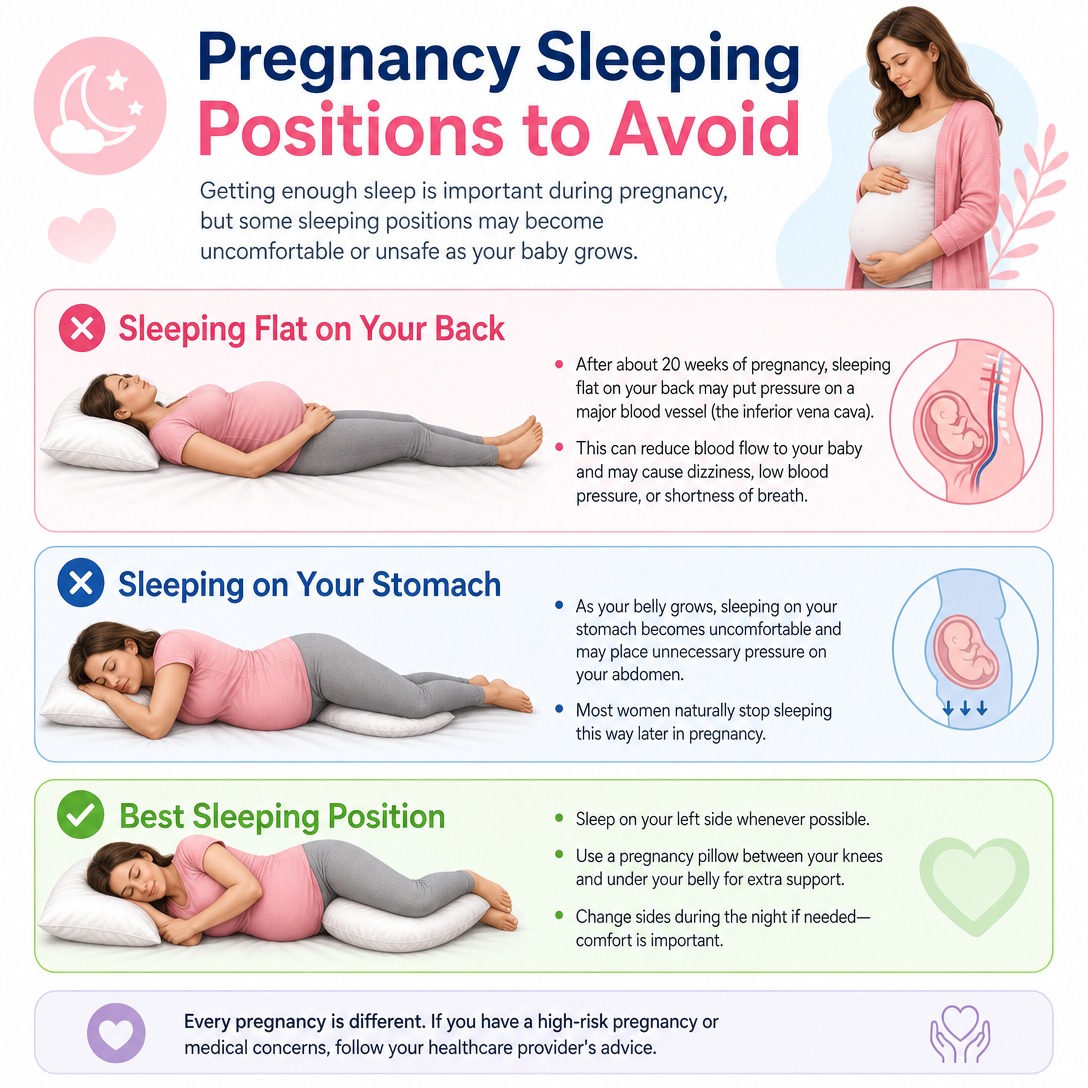
- Sleeping flat on your back: This can compress the vein that carries blood back to your heart, leading to dizziness, low blood pressure, and reduced blood flow to your baby, especially after the 20-week mark.
- Sleeping on your stomach: As your belly expands, this position becomes physically impossible and uncomfortable, but even in early pregnancy, it’s best to start training your body to sleep on your side.
Knowing which sleeping positions to avoid is just as important as choosing the safest sleeping position for pregnant women. As your pregnancy progresses, keeping these recommendations in mind can help you sleep more comfortably and support a healthier pregnancy.
Sleeping Position During Pregnancy: First 3 Months
During the first trimester, including the first month, most women can sleep in any position that feels comfortable because the baby is still small and well protected by the pelvic bone. Although there is no immediate need to change your sleeping habits, this is the perfect time to start practising the sleeping position for pregnant women by gradually getting used to sleeping on your left side. Building this habit early can make the transition easier as your pregnancy progresses and your growing baby bump makes certain sleeping positions less comfortable.
Sleeping Position During Pregnancy: Second Trimester
By the second trimester, your growing bump makes stomach sleeping impractical, and doctors typically advise against back sleeping from this stage onward. This is when side sleeping, particularly on the left, becomes the recommended sleeping position for pregnant women. Using a pillow between your knees can help maintain spinal alignment and ease lower back discomfort.
Sleeping Position During Pregnancy: Third Trimester
The third trimester brings the most noticeable changes: a heavier bump, more frequent urination, and increased breathlessness when lying flat. Left-side sleeping is strongly recommended in these final weeks, as it supports optimal blood flow to your baby and reduces pressure on your major organs. Many women find that propping their upper body slightly with pillows helps with heartburn and shortness of breath during this stage.
How to Sleep Better During Pregnancy: Simple Tips
Better sleep during pregnancy comes down to a mix of the right posture and small lifestyle tweaks:
- Go to bed and wake up at the same time every day
- Avoid heavy meals, caffeine, and excess fluids close to bedtime.
- Keep your bedroom cool, dark, and free of screens before sleep.
- Practice light stretching or prenatal yoga to ease physical tension.
These habits, paired with the correct sleeping position for pregnant women, can significantly reduce nighttime disturbances.
Sleep Hygiene Tips During the Second Trimester
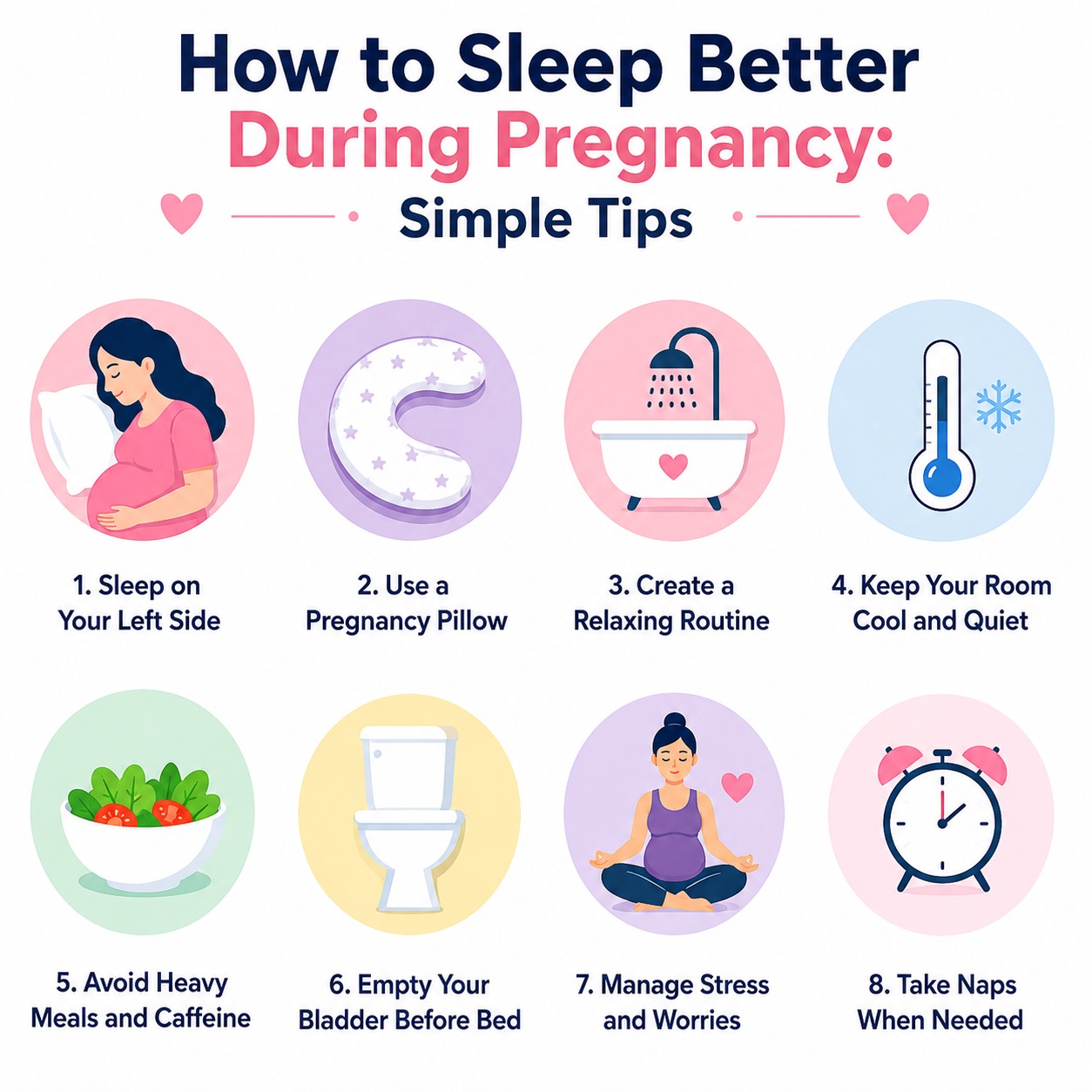
Getting quality sleep becomes more important during the second trimester as your body continues to change. Keep your bedroom cool, quiet, and dark to create a comfortable sleep environment. Maintain a regular sleep schedule by going to bed and waking up at the same time each day for better sleep during pregnancy . Avoid using your phone, tablet, or TV before bedtime, as screen light can make it harder to fall asleep. Instead, read a book, listen to calming music, or practice deep breathing to help your body relax.
Eat smaller, balanced meals in the evening and avoid spicy, oily, or heavy foods that may cause heartburn. Staying hydrated during the day is important, but reduce fluids close to bedtime to limit nighttime bathroom trips. Sleeping on your left side with your head slightly raised can also help reduce heartburn and improve comfort. Gentle activities such as walking, prenatal yoga, or stretching during the day can improve sleep quality and support a healthy sleeping position for pregnant women.
Simple Tips for Sleeping Comfortably During Pregnancy
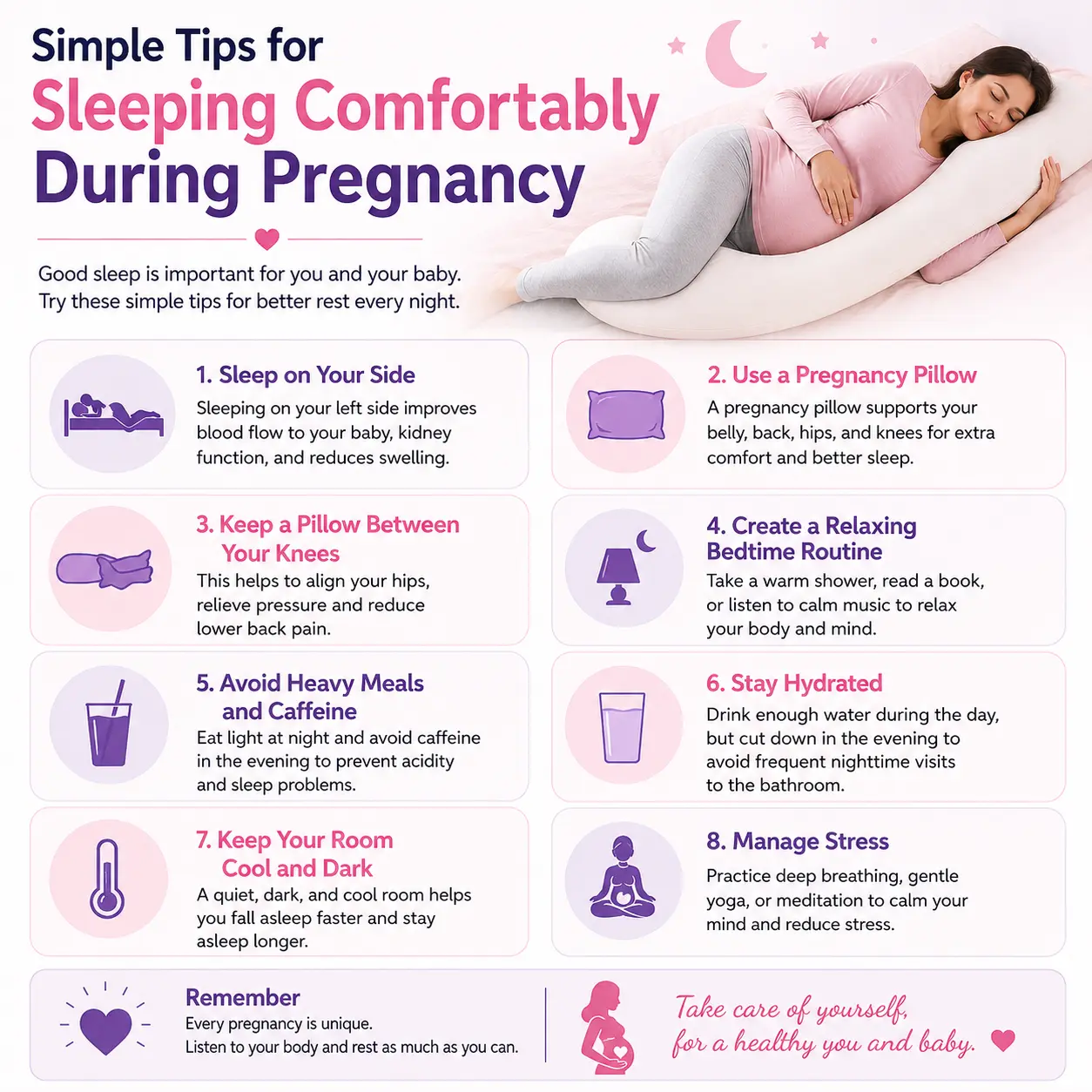
- Start sleeping on your side early to help your body adjust as your pregnancy progresses.
- Use pillows for extra support under your belly, between your knees, or behind your back to stay comfortable.
- Raise your head slightly with an extra pillow if you have heartburn or find it hard to breathe.
- Avoid drinking too much water before bedtime to reduce frequent trips to the bathroom.
- Follow a relaxing bedtime routine, such as reading a book or listening to calming music, to help you fall asleep more easily.
These simple tips can help you maintain a comfortable and safe sleeping position for pregnant women, making it easier to enjoy a better night’s sleep throughout your pregnancy.
How to Use Pregnancy Pillow Better Sleep During Pregnancy
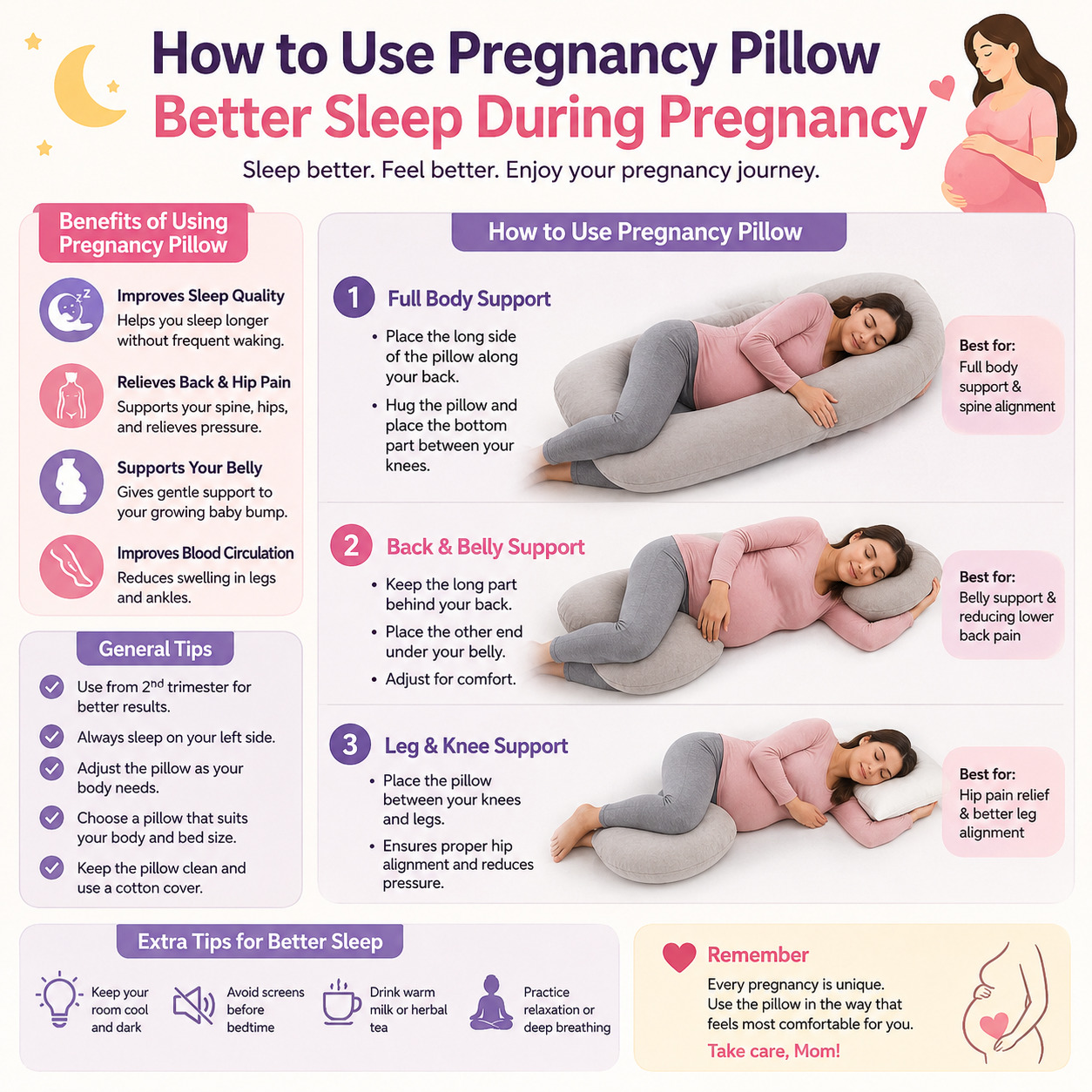
Pillows are one of the simplest yet most effective tools for supporting a healthy sleeping position for pregnant women. Here’s how to use them:
- Between your knees: Helps keep your hips aligned and eases lower back pain.
- Under the belly: Offers gentle support as your bump grows, especially in the third trimester.
- Behind the back: Prevents you from accidentally rolling onto your back during sleep.
- Pregnancy or body pillows: A full-length pregnancy pillow supports your knees, belly, and back simultaneously, making it one of the most popular investments for expecting mothers
Tips to Sleep Better During Pregnancy
- Stay active during the day Gentle activities like walking or pregnancy-safe exercises can help you sleep better at night.
- Relax before bedtime:Deep breathing, meditation, or listening to calming music can reduce stress and help you fall asleep more easily.
- Choose light, healthy meals: Avoid spicy or heavy foods before bed, as they may cause heartburn and disturb your sleep.
- Use a supportive mattress and pillows:A comfortable mattress and well-placed pillows can support your body and help you maintain a safe sleeping position for pregnant women throughout the night.
These simple habits can improve your sleep quality and help you wake up feeling more rested during pregnancy.
Conclusion
Choosing the right sleeping position for pregnant women can help you sleep more comfortably while supporting your health and your baby’s growth. Although sleeping on your left side is generally the safest option, using supportive pillows and following healthy sleep habits can make every night more restful.
At Zaminotoys, we are committed to helping expecting mothers with trusted pregnancy tips, practical advice, and quality maternity products to make every stage of pregnancy more comfortable and enjoyable.
FAQ
1. What is the best sleeping position for pregnant women?
The best sleeping position for pregnant women is sleeping on the left side. This position improves blood flow to the placenta, supports your growing baby, and helps reduce pressure on your back, liver, and kidneys. If you wake up on your right side, there’s usually no need to worry, as both sides are generally considered safe.
Which side should I avoid while sleeping during pregnancy?
Both the left and right sides are generally safe. However, the left side is often recommended because it offers the best blood circulation for both mother and baby. It is considered the ideal sleeping position for pregnant women.
Do pregnancy pillows really help?
Yes. Pregnancy pillows provide support for your belly, back, hips, and knees, making it easier to maintain a comfortable sleeping position for pregnant women. They can also reduce pressure on your lower back and improve overall sleep.
How can I improve my sleep quality during pregnancy?
Following a regular sleep routine, using supportive pillows, avoiding caffeine before bedtime, staying hydrated during the day, and choosing the right sleeping position for pregnant women can help you enjoy a more restful and comfortable night’s sleep