


🎨 Find Colors
Discover colors
RED
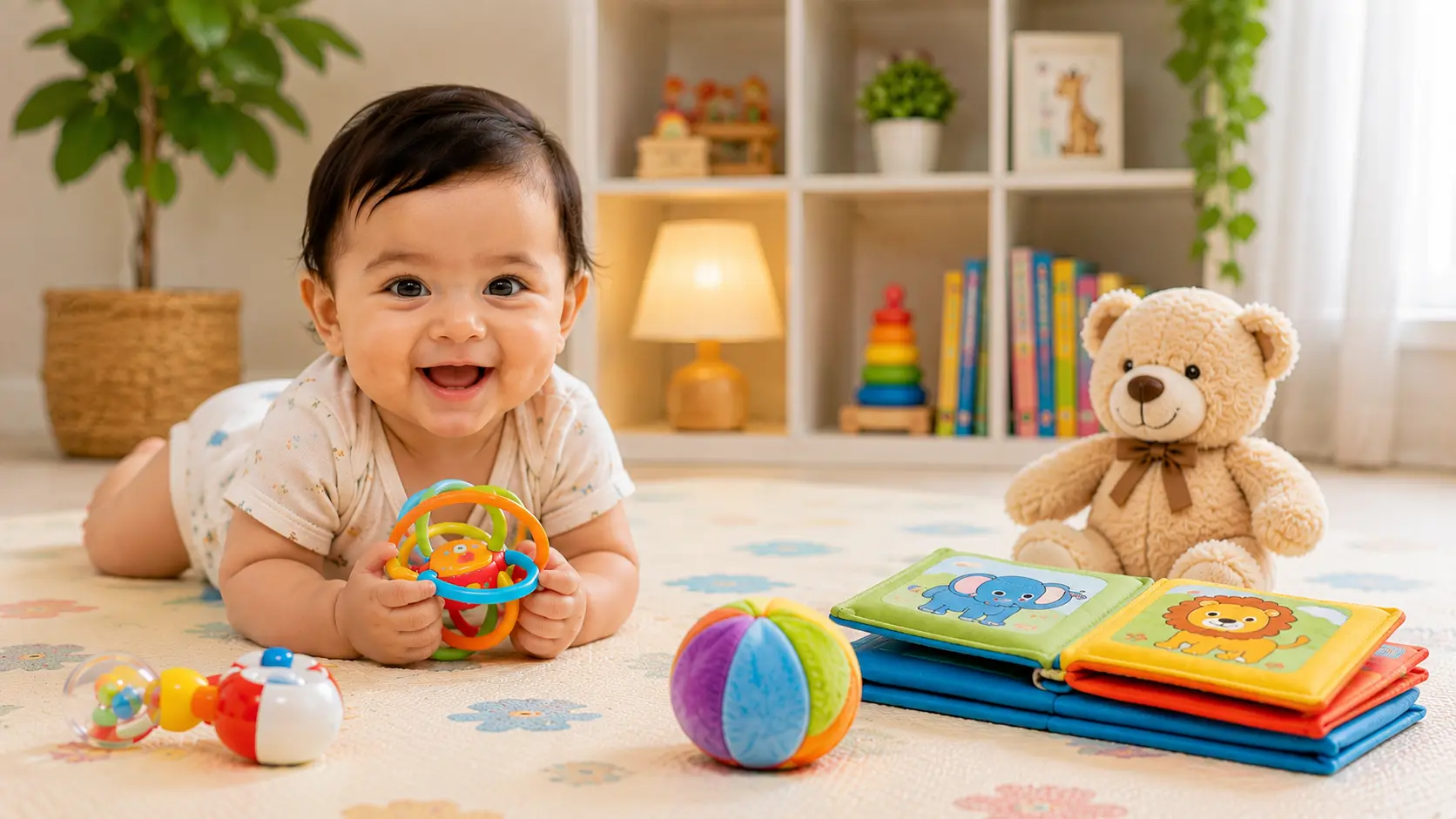
Discover age-appropriate toys that encourage your baby's senses, movement, curiosity, and early development—from newborn play to their first year.
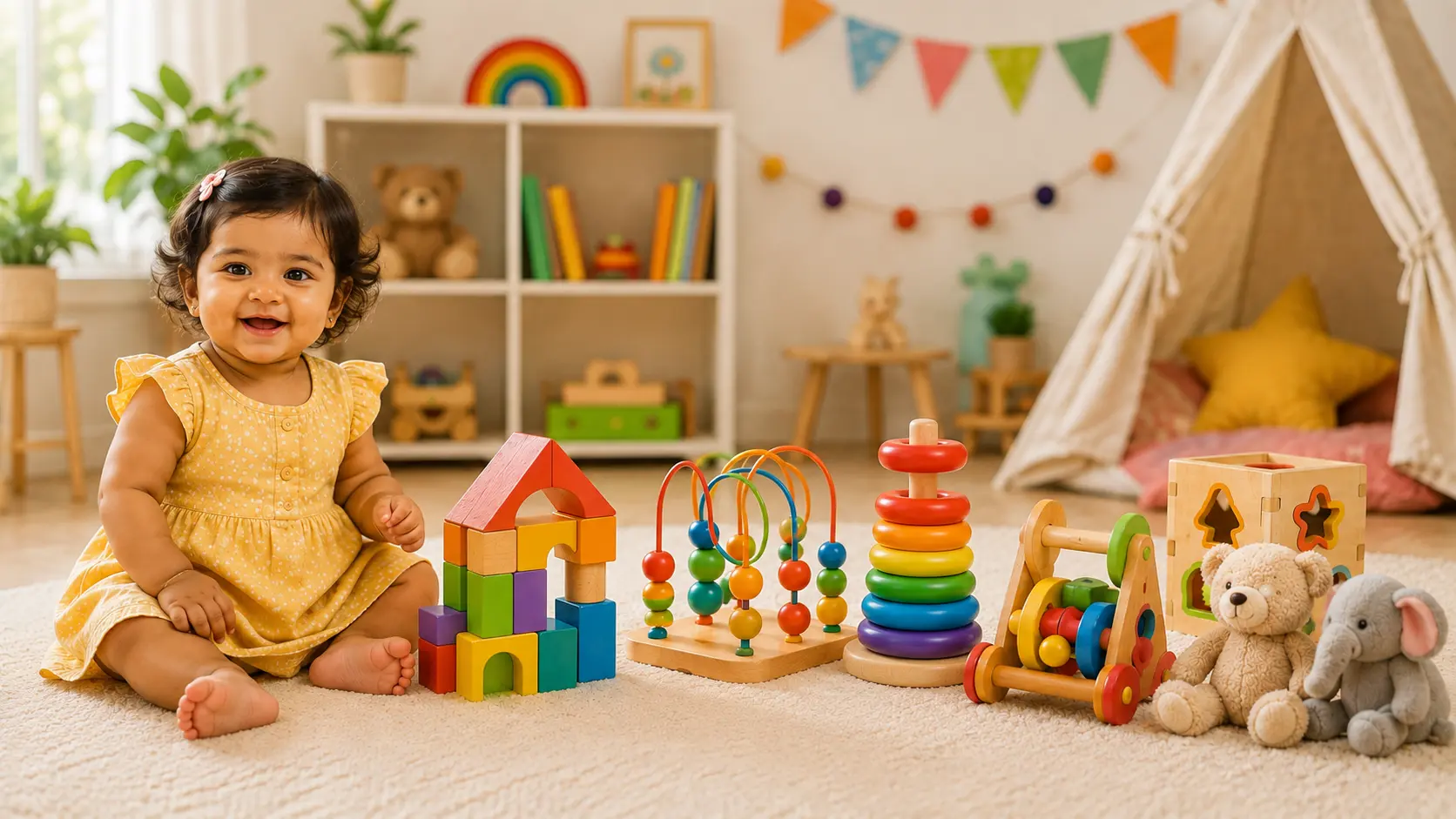
Find playful toy ideas for curious 1–2-year-olds that encourage movement, creativity, problem-solving, and Early World of Learning.
Explore fun toy ideas for curious 3–4-year-olds that inspire pretend play, creativity, learning, and new discoveries.
When my daughter was born, I thought parenting would be like most other things in life. Read enough, compare enough, and one day you get the “right” answer. I bought a black and white card because someone online said newborns like it. I watched her eyes follow the pattern for the first time. I thought, okay, now I am starting to understand the early world of learning.
But I did not, not really. Slowly I understood something else. There is no one answer that stays the same for long. A toy that was very important in March was forgotten by June. Something I was told to “watch for” came early for one skill and very late for another. The only thing that stayed the same was that everything kept changing, on its own time, not on my schedule.
That is why this page is here. Not to give you one fixed answer, because there is not one. But to walk you through how play usually changes from birth to four years, stage by stage, in simple words. So you get a rough map, not a strict rulebook.
Curated picks from newborn to preschool — 0 to 4 years
It would be easy to write one big list. I have seen a lot of like “50 toys every child needs” or “top 10 toys”….etc., and not one of them i could write myself-have my complete faith. A toy That is good for a six-month-old who is just learning to hold something is often completely wrong for a two-year-old who wants to build a tower and then knock it down on purpose. Age is not just a marketing word here. It actually decides if a toy gets used, or if it just sits in a corner.
So this page looks at toys by age, in five parts — 0 to 6 months, 6 months to 1 year, 1 to 2 years, 2 to 3 years, and 3 to 4 years. Each part below gives you a short, honest look at that age, with a link to the full page if you want more detail. What you are reading now is the part in between all five stages — the pattern that connects them, which you will not find on any single age page.
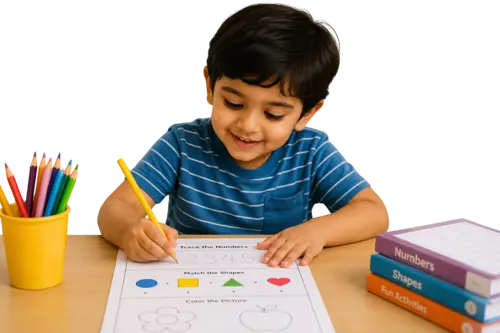
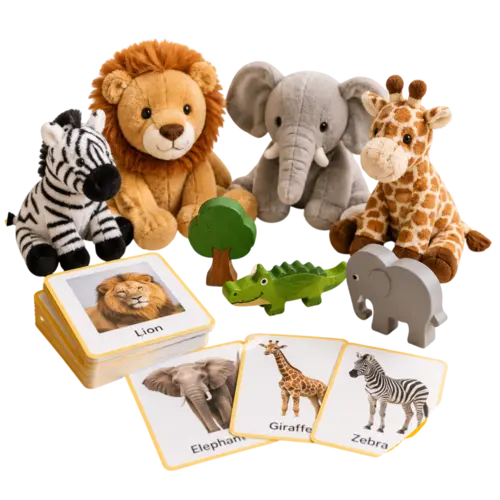
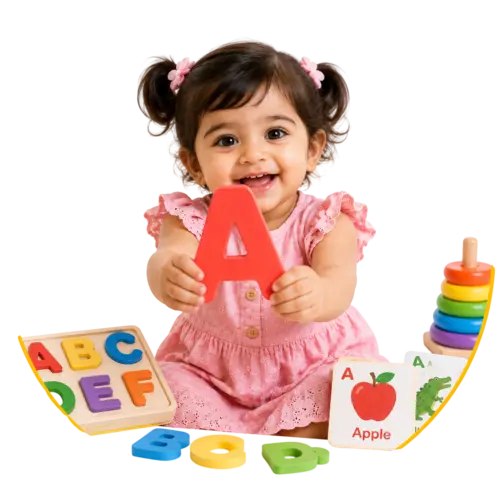
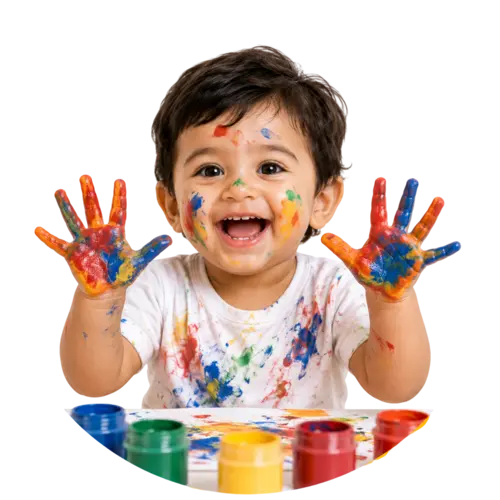
Simple learning activities for toddlers and preschoolers, including colors, animals, numbers, alphabet words, shapes, outdoor play, music and creative discovery.
Discover colors
Learn animal names
Count 1 2 3
Learn letters
Discover shapes
Active play ideas
Listen and play
Think and explore


In the first months, play does not really look like play. It is mostly about the senses—a baby taking in contrast, sound, and touch, long before the hands can do much. I kept it simple in this stage: a contrast card, a soft crinkly cloth, a light rattle. Nothing with batteries. Nothing that worked on its own.
What stayed with me was not any one toy. It was how much of what looked like “just staring” was actually her working something out, quietly, in her own way. [Read the full 0 to 6 Months guide →]
Somewhere in this stage, everything changes. A baby who was mostly watching now starts reaching, grabbing, banging things together, dropping the same spoon from the high chair twenty times just to see it happen again. This is when toys that respond to the baby’s own action — a ball that rolls when pushed, a box where a ball drops through a hole — start to matter more than toys that just work on their own.This stage can also be tiring, honestly, because so much of it looks messy from outside, but it has a real purpose for the baby doing it. [Read the full 6 Months to 1 Year guide →]
Around one year, play starts to look more planned. Walking, or trying to, takes up a big part of the day. Stacking toys get picked up not just to knock down, but sometimes to actually build, even if it is wobbly. Small problem-solving shows up in normal moments — working out how a shape fits into a hole, or how to reach a toy that is just out of hand’s reach.
I remember noticing, somewhere in this stretch, that her likes and dislikes had become truly her own — not just a reaction to whatever I placed in front of her. [Read the full 1 to 2 Years guide →]
Somewhere in year three, pretend play stops being occasional and becomes almost constant. A spoon becomes a phone. A cardboard box becomes a car, then a boat, then something with a name only she understands. She is talking more now, so play starts to feel like real conversation, not just sounds.
I also noticed something I did not expect—she wanted a play partner more than play items. A toy alone was not always enough. She wanted someone to hand the pretend phone to. [Read the full 2- to 3 Years guide →]
By three, going into four, play gets longer. Attention grows, at least for things she really likes. Stories get longer. Pretend games get more detailed. Building has a real goal now, not justsomething to knock down. Questions come in loops that test any parent’s patience by the fifth “why.”
By this stage, I had mostly stopped comparing her to other children the same age, even cousins her exact age — the differences between children this age are wide, and mostly mean nothing in the long run. [Read the full 3 to 4 Years guide →]
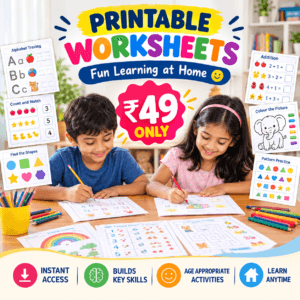
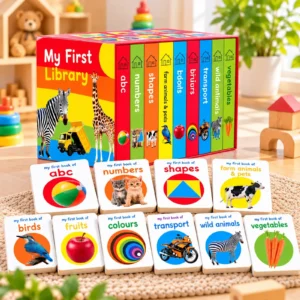
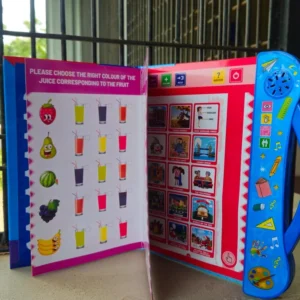
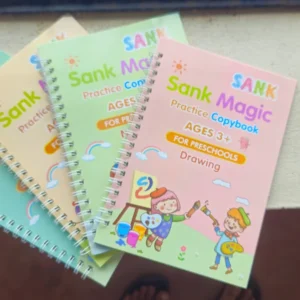
Discover toys, books, worksheets and learning resources made for little learners from birth to 4 years.
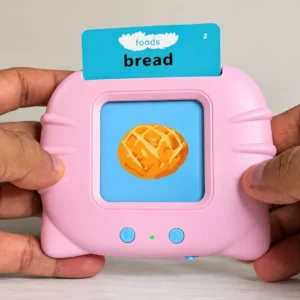
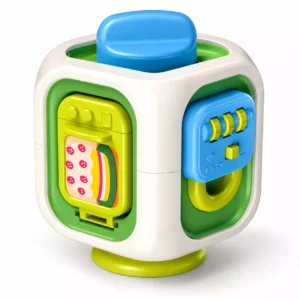
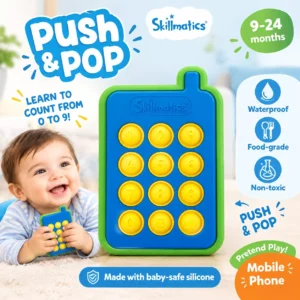
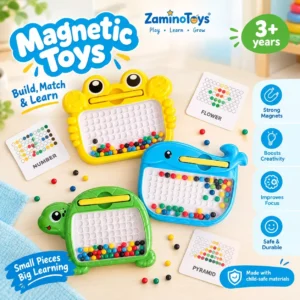

A toy that needs some effort usually lasts longer than one that does not. This was true at every stage. At six months, it was a wooden rattle that needed real movement to make a sound, compared to a light-up toy that reacted the moment you touched it. At two years, it is a set of blocks that can become anything, compared to a toy with one fixed job that gets one week of attention and then sits unused. The pattern does not change. Only the toy changes.
Marketing words stay just as unreliable, no matter the age on the box. “Braindevelopment,” “boosts thinking,” “scientifically proven” — these words appear on toys for six-month-olds and toys for four-year-olds. They mean about the same amount in both cases, which is to say, not much on their own. I have learned to look past the label and ask asimpler question — what does she actually do with this, and is that worth the money?
Repeating the same thing again and again is not a warning sign, at any age. A six-month-old dropping the same toy over and over. A two-year-old wanting the same book every night. A nearly four-year-old playing the same pretend game for the tenth day in a row. None of this means she is bored or that something is wrong. This is how children this age actually learn and settle into something new. I used to find it a little boring myself. Now I think it is one of the most honest signs that something is really working for her.
Comparing your child rarely helps. Every stage brings a new reason to wonder if your child is “on track” compared to someone else. I have stopped trusting that comparison much, at any age. A child ahead in one thing is often behind in another, and both are completely normal. The stages in this guide are patterns, not deadlines. Public sources like the CDC and WHO also describe them this way — as general ranges most children move through at their own pace, not fixed points every child must reach by a set date.
You do not need much. This might be the thing I believe most strongly, and it has been true at every stage. A cardboard box, a few kitchen containers, and a pile of laundry to sort—these have done as much for her play, at every age, as anything bought specially for the purpose. Toys and books do have a real place, but they support the play. They are not the whole story.
Find the stage your child is roughly in now.
Read the short part above to understand this stage.
Click through for more toy and activity ideas.
Look at the stage just before and just after.
Think of this page as a simple guide to toys by age—less like an instruction manual, more like a loose map. Find the stage your child is roughly in now, read the short part above, and click through to the full guide if you want more toy and activity ideas for that stage. Then, if you are curious, look at the stage just before and just after—not because you need to Prepare early, or worry about falling behind, but because seeing the whole journey usually makes any single stage feel less urgent and a little more normal, in a good way.
If your child seems to be moving through these stages at a different speed than what is written here—earlier, later, or out of order—that is very likely still normal. These are general patterns from observation and public guidance, not a checklist your child must finish on time.
No. These are general patterns, not requirements. Every child grows at their own pace, and a wide range of timing is considered normal. If you ever have a real concern about your child's development, please talk to your pediatrician, not an age guide online.
That happens a lot, and it is not something to worry about on its own. Children do not move through these stages in one strict order. Interests are different for every child. Some stages get more attention, some barely get noticed.
Not always. Many toys are useful across more than one stage. Stacking rings, for example, get used differently at six months than at two years, but stay useful the whole way through. Watching what your child is drawn to right now usually tells you more than a strict age-based shopping list.
The individual age pages go deep into toy and activity ideas for one stage at a time. This page sits above those. It is a shorter, honest look at the whole 0 to 4 journey, and what stays the same across it, for anyone who wants the bigger picture before going into one specific stage.
No. Every stage from birth involves some kind of play, even if it does not look like play the way people usually imagine. Watching contrast and sound at six months is just as much "play" as pretend games at three years. In case you're afraid you missed the starting line — FYI, there is no such thing.
I am a father sharing what I have noticed and tried with my own daughter across her first four years. I'm not a doctor, a pediatrician, or a child psychologist. This page shares general patterns and our own experience, not a developmental assessment. If you have concerns about your child's growth or safety, please talk to your pediatrician.
Shafeer
Founder, ZaminoToys