First Trimester Pregnancy: A Week-by-Week Survival Guide for New and Expecting Moms
Finding out you’re pregnant is a life-changing moment filled with excitement, happiness, and many questions. First Trimester Pregnancy covers the first 12 to 13 weeks and is one of the most important stages of your pregnancy journey. During this time, your baby’s heart, brain, and other vital organs begin to develop, while your body goes through many hormonal and physical changes.
You may experience symptoms like morning sickness, tiredness, mood swings, and food cravings. Understanding these early changes can make your pregnancy journey feel easier and less stressful. In this guide, you’ll learn about First Trimester Pregnancy week by week, common symptoms, healthy eating tips, self-care advice, and when to contact your doctor—everything you need to support a healthy pregnancy from the very beginning. At Zaminotoys, we believe that informed parents make confident decisions, and we’re here to support you with trusted pregnancy and parenting resources throughout your journey.
Week-by-Week Guide
Week 1–4
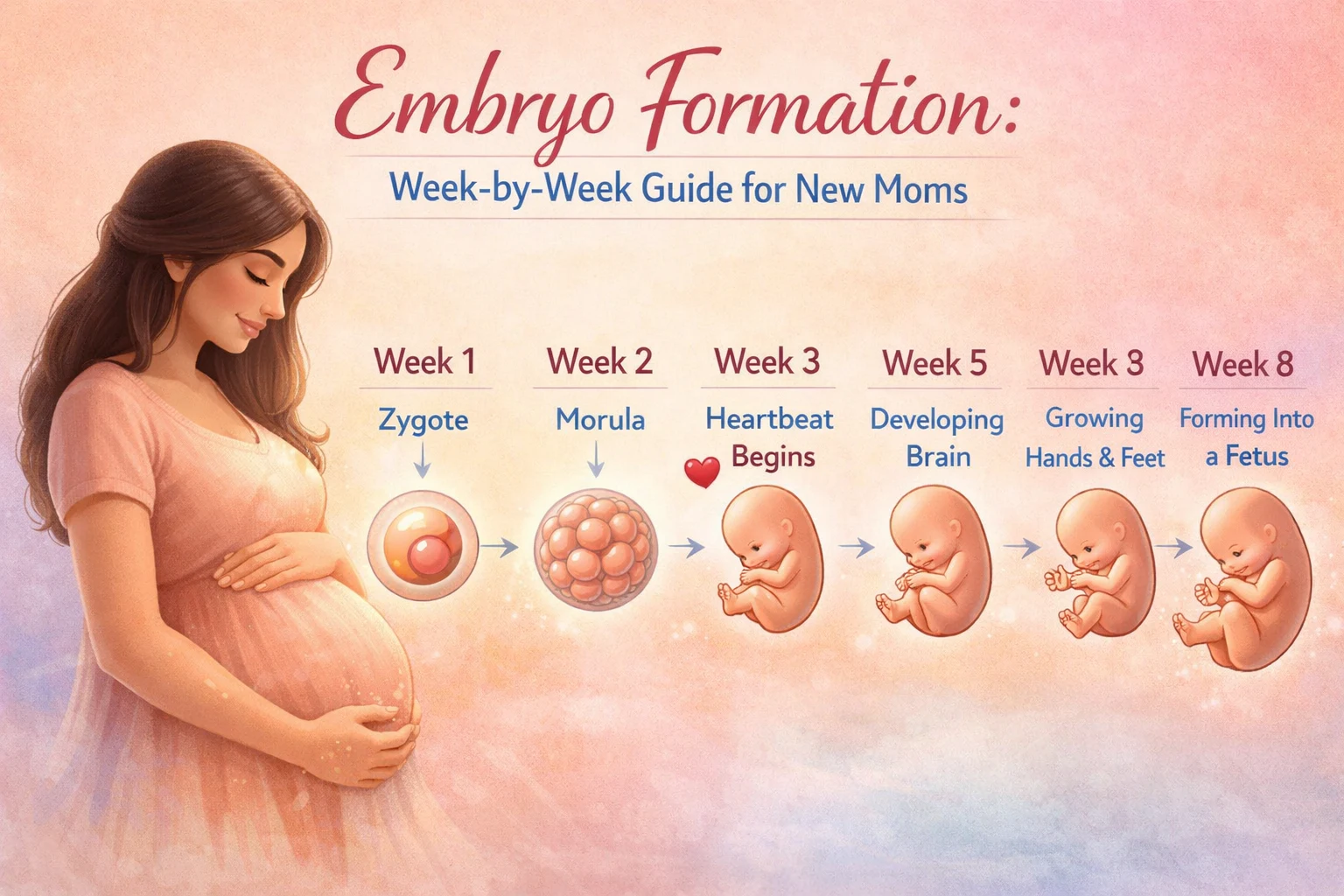
Baby’s development: Technically, weeks 1 and 2 happen before conception, as pregnancy is counted from your last period. Ovulation and fertilization usually occur around week 2 or 3. By week 4, the fertilized egg has implanted into the uterine lining, and the earliest structures of the placenta and embryo begin forming.
Mother’s body: Hormones like hCG (human chorionic gonadotropin) start rising rapidly. This is the hormone that pregnancy tests detect.
Common symptoms: Many women feel nothing at all in these early days. Some notice light spotting (implantation bleeding), mild cramping, or breast tenderness.
Care tips: If you are trying to conceive, start taking a folic acid supplement now if you haven’t already. Avoid alcohol, smoking, and unnecessary medications until you confirm your status with a home test
Week 5
Baby’s development: The neural tube, which becomes the brain and spinal cord, starts forming. The heart begins to take shape and may start showing early electrical activity.
Mother’s body: hCG levels climb quickly, and this is usually when a home pregnancy test turns positive.
Common symptoms: Tiredness, mild nausea, tender breasts, and frequent urination often begin around this time.
Care tips: Book your first prenatal appointment. Start a gentle, whole-food diet and keep a water bottle handy, as dehydration can worsen nausea.
Week 6
Baby’s development: The heart is now beating and may be visible on an early ultrasound. Tiny buds that will become arms and legs appear.
Mother’s body: Rising progesterone can slow digestion, leading to bloating.
Common symptoms: Morning sickness often intensifies. Some women notice heightened smell sensitivity that triggers nausea.
Care tips: Eat small, frequent meals instead of three large ones. Bland foods like crackers, rice, and toast are easier on the stomach.
Week 7
Baby’s development: The brain grows rapidly, and small hand and foot paddles appear. By this week, your baby has grown to about the size of a blueberry.
Mother’s body: Blood volume increases to support the growing baby, which can leave you feeling more tired than usual.
Common symptoms: Tiredness, nausea, and mild mood swings are common.
Care tips: Prioritize sleep and short naps if possible. Gentle walks can help with energy and digestion.
Week 8
Baby’s development: Facial features start forming, tiny eyes, ears, and a nose become visible. The embryo begins making small movements, although you can’t feel them yet.
Mother’s body: Your uterus is growing, though it may not show externally yet.
Common symptoms: Nausea, food aversions, and bloating often peak around this time.
Care tips: Identify your food triggers and avoid strong-smelling meals. Ginger tea or ginger candies may help settle the stomach.
Week 9
Baby’s Development: By this stage, all major organs have started to develop, and your baby is now officially called a fetus.
Mother’s body: Your waistline may feel slightly tighter, even if it’s not visibly showing yet.
Common symptoms: Breast changes, occasional headaches, and continued fatigue.
Care tips: Wear a supportive, comfortable bra. Stay hydrated to help reduce headaches.
Week 10
Baby’s development: Vital organs continue maturing. Fingers and toes are more defined, and tiny nails start to form.
Mother’s body: Morning sickness may begin to ease for some women, though not all.
Common symptoms: Mild cramping (round ligament stretching), increased vaginal discharge, and continued fatigue.
Care tips: Wear breathable cotton underwear and mention any unusual discharge to your doctor.
Week 11
Baby’s development: The baby’s body is growing faster than the head, helping proportions look more balanced. Basic reflexes are developing.
Mother’s body: Skin changes may appear, like a subtle glow or occasional breakouts due to hormonal shifts.
Common symptoms: Bloating, mild constipation, and some remaining nausea.
Care tips: Add fiber-rich foods like oats, fruits, and vegetables to ease digestion
Week 12
Baby’s development: By the end of this week, most major organs are formed. The baby can make small movements, though you still won’t feel them.
Mother’s body: Many women start feeling a shift — energy slowly returning, nausea calming down.
Common symptoms: Symptoms may start easing, though every pregnancy is different.
Care tips: This is a common time for the first trimester screening and dating ultrasound. Celebrate this milestone — you’re almost through the first trimester.
Common Symptoms During First Trimester Pregnancy
- Nausea and Morning Sickness: Despite the name, it can happen any time of day. It usually peaks between weeks 6–9 and often improves by week 12–14.
- Fatigue: Your body is working hard to build a placenta and support new life. Rest is not laziness it’s necessary.
- Food Cravings and Food Aversions: Hormones can make once-favorite foods unappealing, while unexpected cravings appear.
- Breast or Chest Changes: Tenderness, swelling, and darkening of the areolas are common as your body prepares for breastfeeding.
- Mood Swings: Hormonal shifts can cause sudden emotional changes. Be gentle with yourself.
- Frequent Urination: Increased blood flow and a growing uterus put pressure on the bladder.
- Bloating: Progesterone slows digestion, leading to a feeling of fullness or gas.
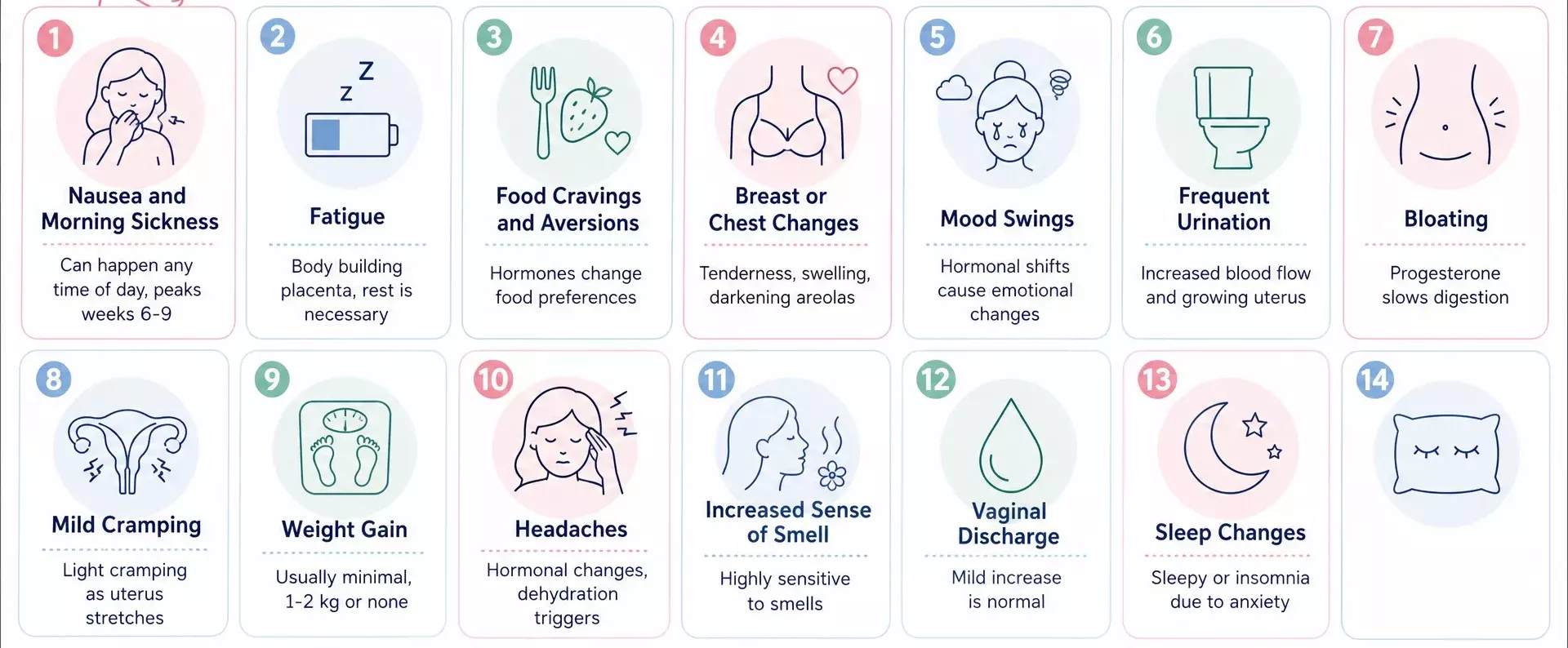
- Mild Cramping: Light cramping can happen as the uterus stretches, but sharp or severe pain should always be checked.
- Weight Gain: Weight gain in the first trimester is usually minimal — often just 1–2 kilograms, or sometimes none at all if nausea is severe.
- Headaches: Hormonal changes, dehydration, or low blood sugar can trigger headaches.
- Increased Sense of Smell: Many women become highly sensitive to smells, which can worsen nausea.
- Vaginal Discharge: A mild increase in clear or white discharge is normal; contact your doctor if it changes color, smell, or is accompanied by itching.
- Sleep Changes: Some women feel constantly sleepy, while others struggle with insomnia due to anxiety or physical discomfort.
Healthy Diet During the First Trimester
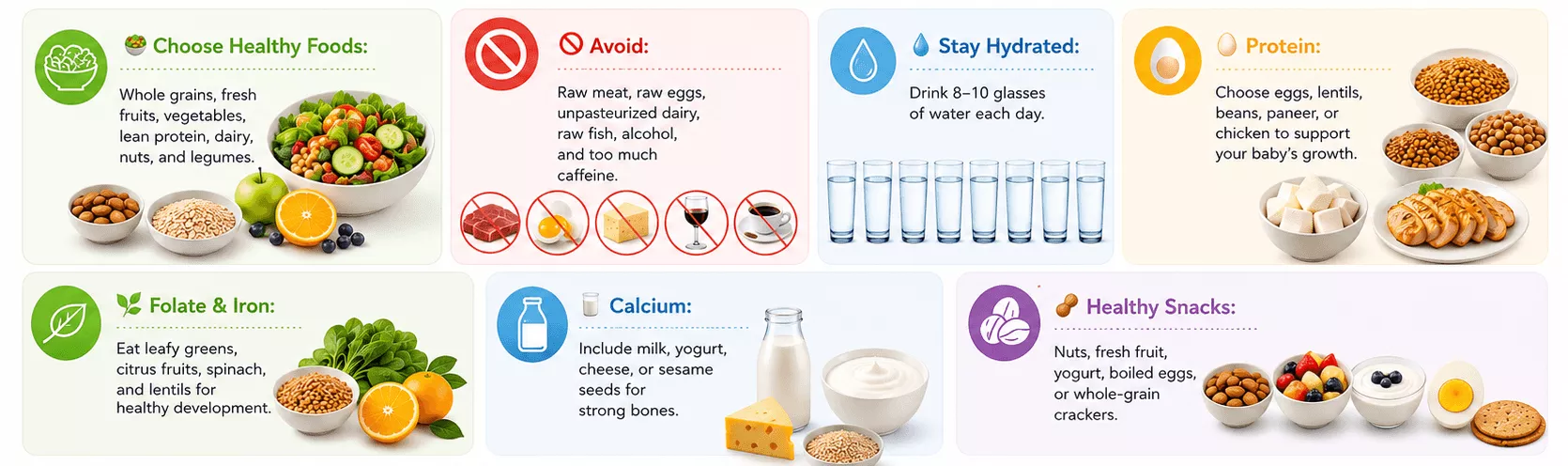
- 🥗 Choose Healthy Foods: Whole grains, fresh fruits, vegetables, lean protein, dairy, nuts, and legumes.
- 🚫 Avoid: Raw meat, raw eggs, unpasteurized dairy, raw fish, alcohol, and too much caffeine.
- 💧 Stay Hydrated: Drink 8–10 glasses of water each day
- 🥚 Protein: Choose eggs, lentils, beans, paneer, or chicken to support your baby’s growth.
- 🌿 Folate & Iron: Eat leafy greens, citrus fruits, spinach, and lentils for healthy development.
- 🥛 Calcium: Include milk, yogurt, cheese, or sesame seeds for strong bones.
- 🥜 Healthy Snacks: Nuts, fresh fruit, yogurt, boiled eggs, or whole-grain crackers.
- This version is concise, easy to read, and naturally optimized around the keyword First Trimester Pregnancy.
Pregnancy Tests
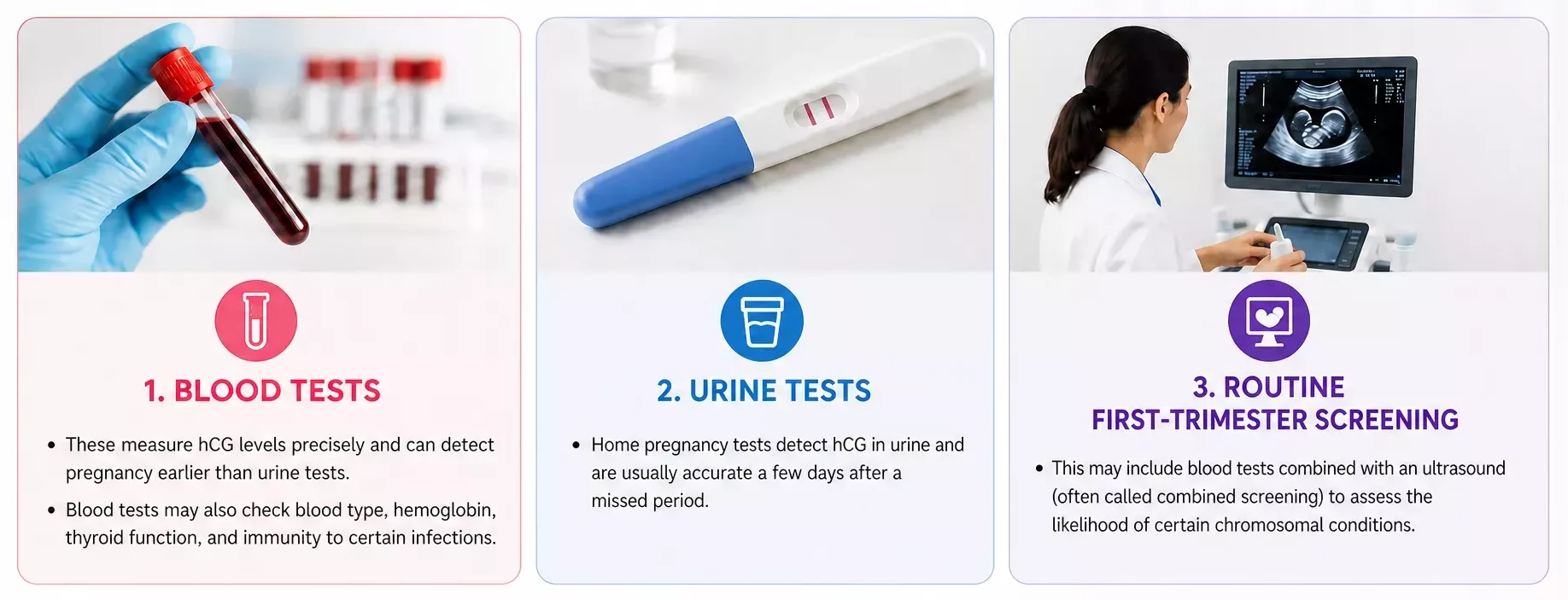
Blood tests: These measure hCG levels precisely and can detect pregnancy earlier than urine tests. Blood tests may also check blood type, hemoglobin, thyroid function, and immunity to certain infections.
Urine tests: Home pregnancy tests detect hCG in urine and are usually accurate a few days after a missed period.
Routine first-trimester screening: This may include blood tests combined with an ultrasound (often called combined screening) to assess the likelihood of certain chromosomal conditions.
What these tests check for: Overall maternal health, baby’s early development, and risk assessment for conditions like Down syndrome. These are screening tools, not definitive diagnoses, and your doctor will guide you on next steps if results need further evaluation
What to Expect During a First Trimester Pregnancy Ultrasound
Why the first ultrasound is performed: To confirm the pregnancy, check the heartbeat, and rule out complications like ectopic pregnancy.
Dating scan: This ultrasound estimates your due date based on the baby’s measurements, which can sometimes differ slightly from calculations based on your last period.
What parents can expect: The first ultrasound is often an emotional moment — many parents hear their baby’s heartbeat for the first time. It may be done through the abdomen or, in early pregnancy, through a transvaginal scan for clearer images.
Safety of ultrasound: Ultrasound uses sound waves, not radiation, and is considered safe for both mother and baby when performed by trained professionals.
Chorionic Villus Sampling (CVS) in First Trimester
What CVS is: A prenatal test that examines a small sample of placental tissue to check for chromosomal or genetic conditions.
Who may be offered the test: Women with a higher risk of genetic conditions due to age, family history, or abnormal screening results may be offered CVS.
When it is usually performed: Typically between weeks 10 and 13.
Benefits and risks: CVS offers earlier, more definitive genetic information compared to screening tests. However, it carries a small risk of miscarriage and other complications, which your doctor will discuss in detail.
Importantly, CVS is not a routine test for every pregnancy. It is usually recommended only when there is a specific medical reason, and the decision is entirely personal, made in consultation with your healthcare provider.
Exercise and Self-Care During First Trimester Pregnancy
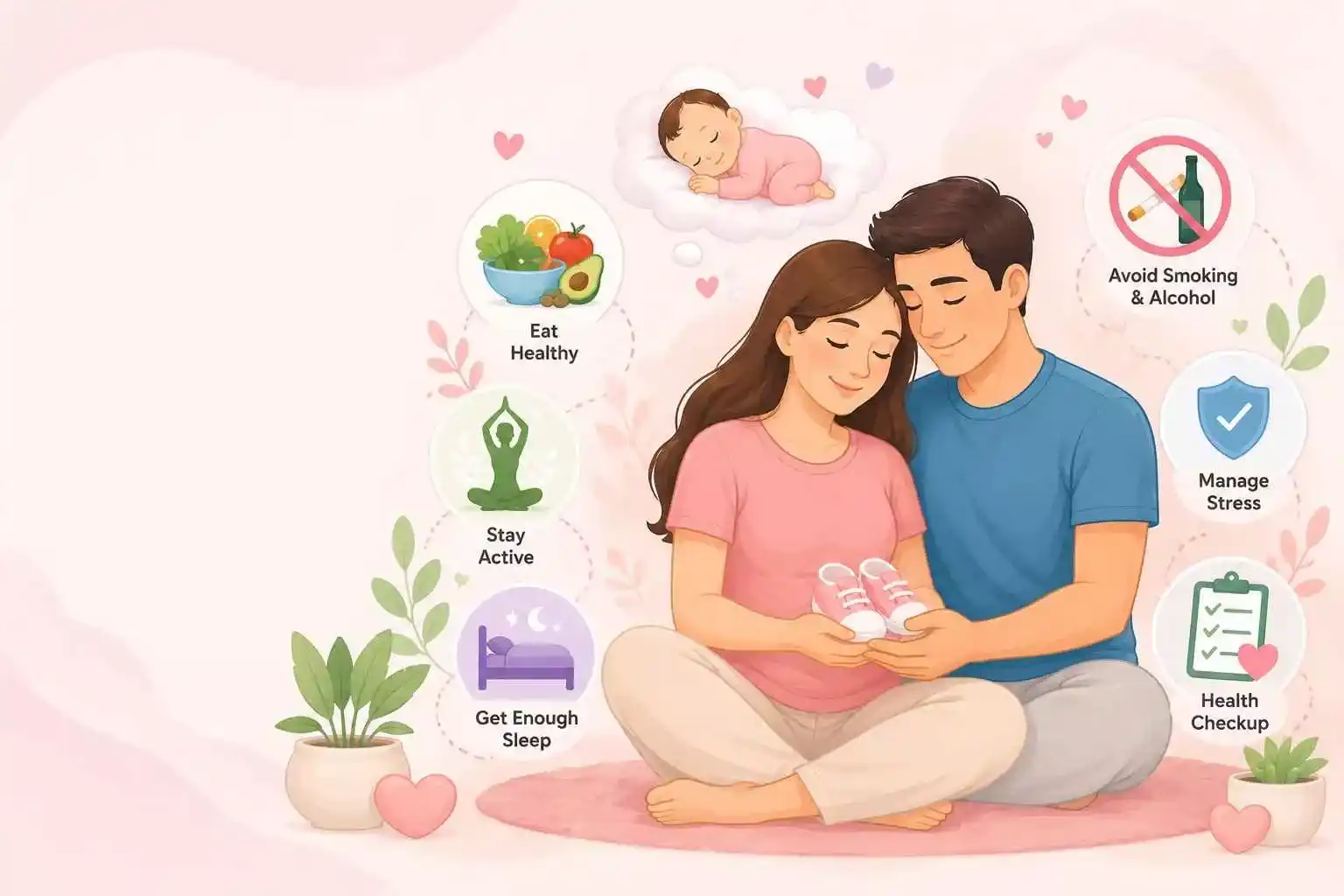
Safe physical activity: Gentle activities like walking, prenatal yoga, and swimming are generally considered safe, unless your doctor advises otherwise based on your health history.
Rest: Listen to your body. Short naps and early bedtimes can make a real difference in energy levels.
Stress management: Deep breathing, light stretching, journaling, or simply talking to a loved one can help ease anxiety.
Sleep: Aim for 7–9 hours of sleep, and consider a pregnancy pillow if discomfort disrupts your rest.
Hydration: Staying well-hydrated supports digestion, reduces headaches, and helps manage fatigue.
Warning Signs During First Trimester Pregnancy
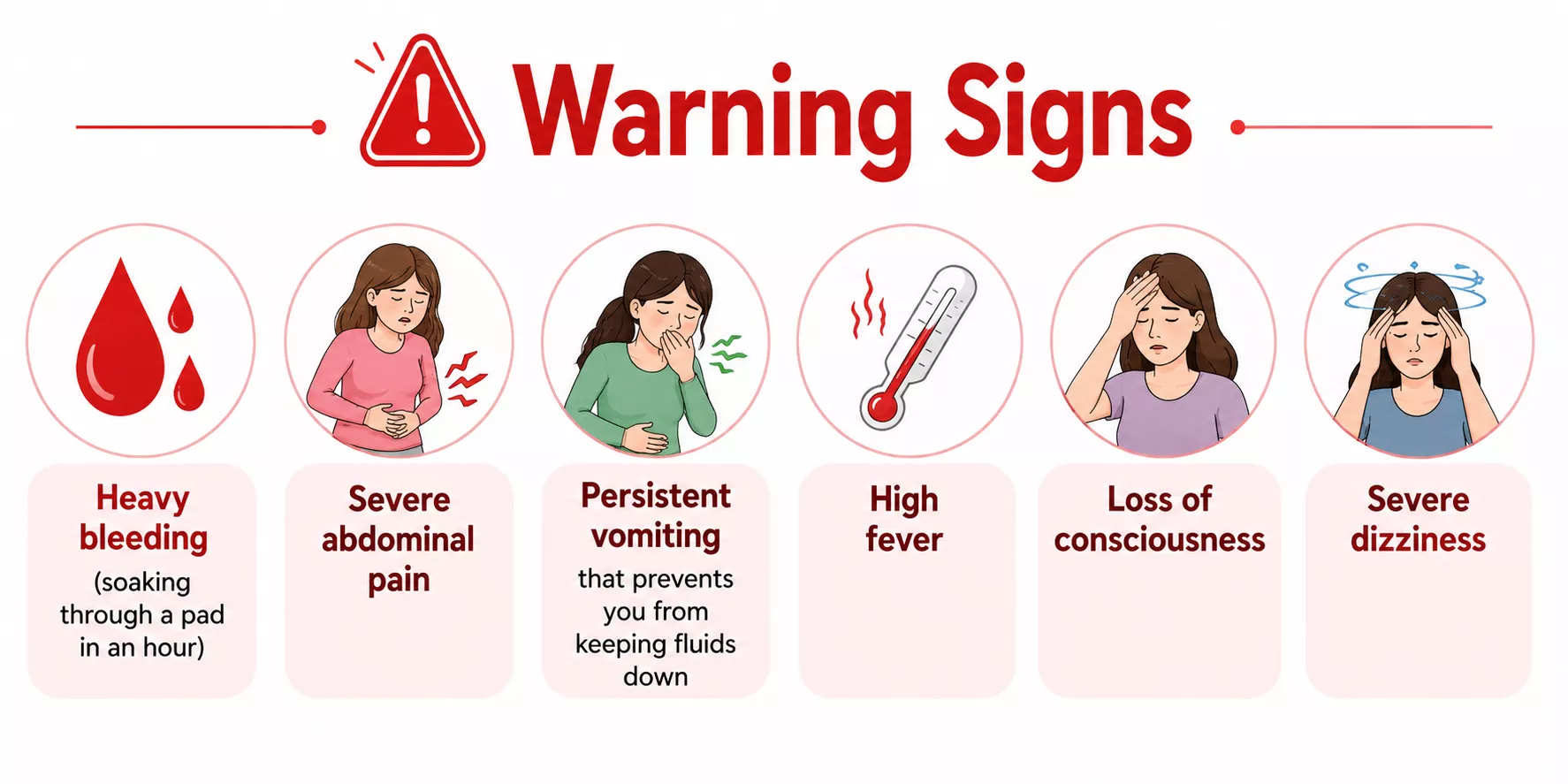
While most first trimester symptoms are normal, contact your healthcare professional immediately if you experience:
- Heavy bleeding (soaking through a pad in an hour)
- Severe abdominal pain
- Persistent vomiting that prevents you from keeping fluids down
- High fever
- Loss of consciousness
- Severe dizziness
These signs do not always mean something is seriously wrong, but they should always be evaluated promptly by a medical professional.
First Trimester Pregnancy Checklist
- Take a home pregnancy test and confirm with a blood test if needed
- Schedule your first prenatal appointment
- Start prenatal vitamins as advised by your doctor
- Eat small, frequent, nutrient-rich meals
- Stay hydrated throughout the day
- Avoid alcohol, smoking, and unsafe foods
- Get adequate rest and manage stress
- Attend your dating ultrasound
- Discuss any recommended screening tests with your doctor
- Note any warning signs and know when to seek help
- Keep a simple symptom journal to track changes
Conclusion
First-trimester pregnancy is a season of enormous change — physically, emotionally, and hormonally. Your baby is growing from a single cell into a tiny being with a beating heart, while your body works tirelessly behind the scenes to support that growth.
It’s normal to feel a mix of excitement, exhaustion, and uncertainty all at once. Be patient with yourself, eat nourishing foods when you can, rest when your body asks for it, and don’t hesitate to reach out to your healthcare provider with any questions or concerns.
Most importantly, attend your prenatal check-ups regularly. They are your best tool for tracking your baby’s growth and ensuring your own wellbeing throughout this beautiful, transformative journey.