
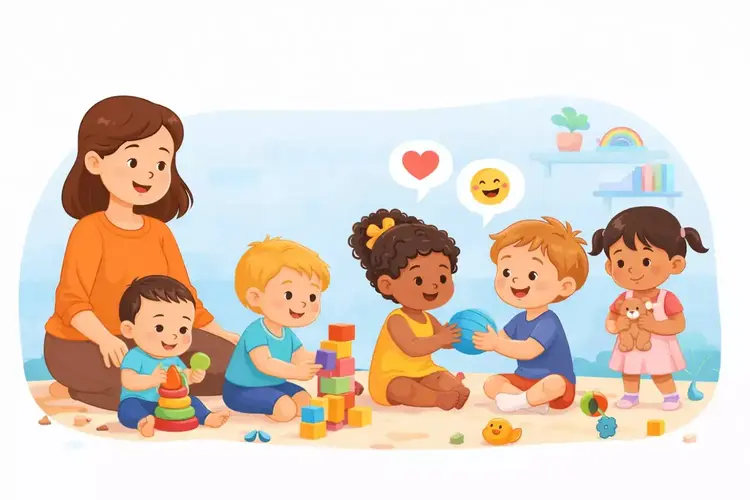
Social development in early childhood is one of the most powerful building blocks of a child’s future success. From the first smile to making real friends, children gradually learn how to connect, communicate, and cooperate with others. While many parents focus mainly on physical growth or academic readiness, strong social development in early childhood quietly shapes confidence, emotional intelligence, behavior, and lifelong relationship skills.
According to global child-development research, the early years form the foundation for future learning, mental health, and social adjustment. Children who develop strong social skills early tend to adapt better in school, build healthier friendships, and manage emotions more effectively.
At ZaminoToys, we review pediatric guidance, developmental psychology insights, and real parenting experiences to create practical, trustworthy resources for families. This parent-friendly guide explains social development in early childhood, including key stages, milestones, influencing factors, warning signs, and simple daily activities that support healthy social growth.
Quick Summary
- Social development in early childhood begins at birth and grows rapidly in the first five years through daily interaction and play.
- Strong social skills help children build friendships, manage emotions, and adjust better in preschool and school environments.
- Major milestones include social smiling (0–6 months), parallel play (1–2 years), and cooperative play (3–5 years).
- Warm parenting, responsive communication, and regular peer exposure strongly support healthy social development in early childhood.
- Warning signs such as poor eye contact, lack of interest in peers, or difficulty understanding emotions should be monitored early.
- Play-based learning, emotion coaching, and modeling positive behavior are the most effective ways to improve social skills at home.
- Experts recommend a balanced (authoritative) parenting style — combining warmth with clear boundaries — for the best long-term outcomes.
What Is Social Development in Early Childhood?
Social development in early childhood refers to how young children learn to:
In simple terms, it is the process through which children learn how to function successfully with other people.
Experts in developmental psychology explain that social development in early childhood begins at birth and evolves rapidly during the first five years. During this time, the brain is highly responsive to social experiences, making early interactions extremely important.
Why It Matters
When social development in early childhood is strong, children usually:
✅ Make friends more easily
✅ Express feelings appropriately
✅ Show empathy
✅ Handle conflicts better
✅ Adjust smoothly in preschool and school
Weak social development, on the other hand, may lead to communication difficulties, behavioral struggles, or low confidence later.
Why Social Development in Early Childhood Is So Important
Many parents underestimate how deeply early social skills affect future success. In reality, social development in early childhood influences emotional health, learning ability, and even leadership skills later in life.
1. Builds Emotional Security
Healthy social development in early childhood helps children feel safe, valued, and understood. When caregivers respond warmly and consistently, children develop secure attachment, which supports confidence and emotional stability.
2. Prepares Children for School Readiness
Socially skilled children typically find it easier to:
- Follow classroom routines
- Wait for their turn
- Work in groups
- Respect teachers
Because of this, strong social development in early childhood is closely linked to smoother school adjustment.
3. Improves Communication Skills
Early back-and-forth interaction — such as eye contact, babbling conversations, and gestures — helps children build language and social understanding together. Communication and social growth develop side by side.
4. Supports Lifelong Relationships
Children who experience healthy social development in early childhood are more likely to build positive friendships, cooperate in teams, and maintain healthy adult relationships.
5. Boosts Confidence and Independence
When children feel socially competent, they explore new environments more confidently and handle challenges with less fear.
Key Stages of Social Development in Early Childhood
Understanding age-wise milestones helps parents support social development in early childhood more effectively.
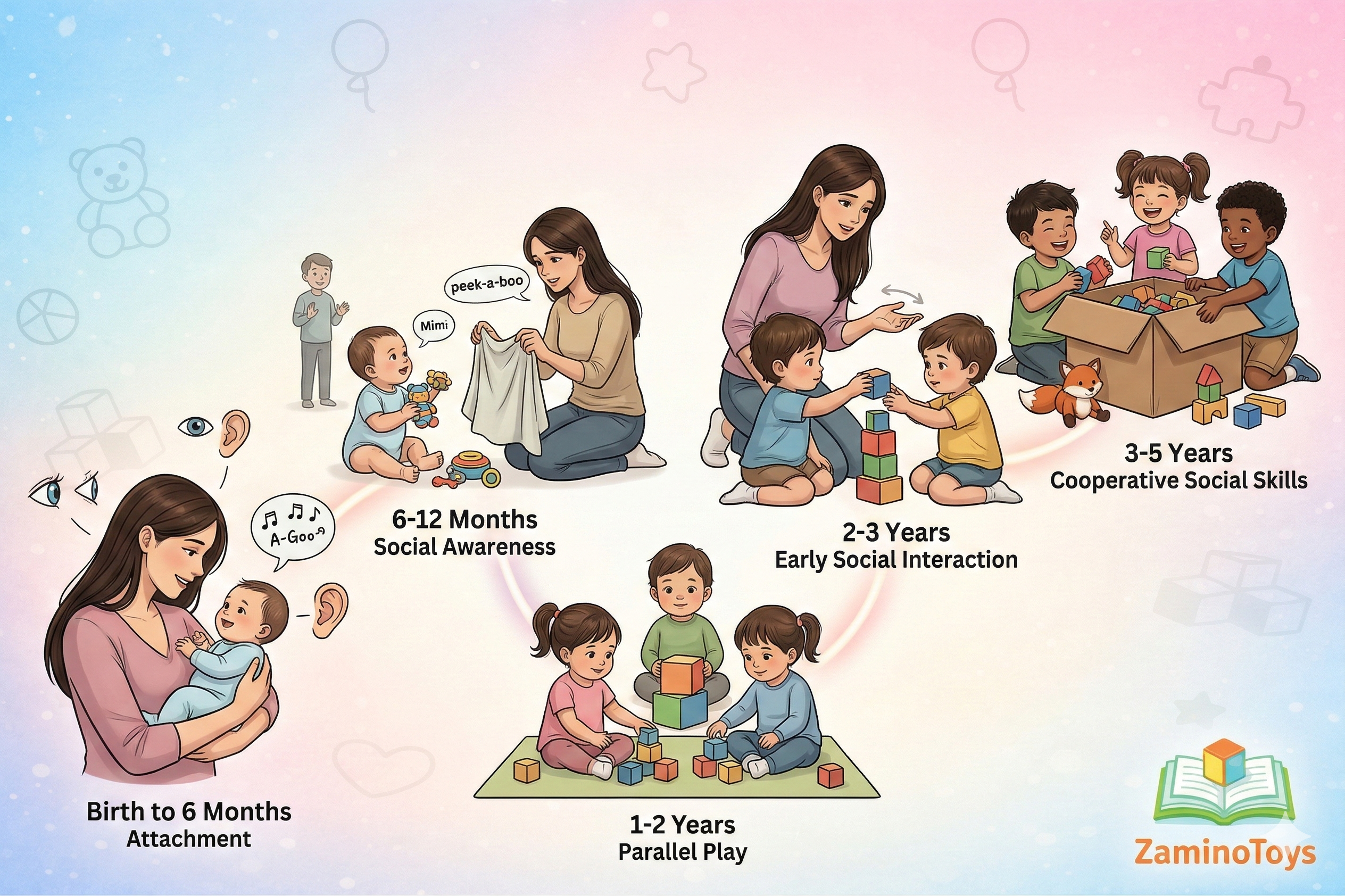
Birth to 6 Months — Attachment Begins
What to Expect
- Social smiling
- Eye contact
- Recognizing caregivers
- Responding to voices
At this stage, social development in early childhood focuses mainly on building trust and emotional bonding.
How Parents Can Help
✔ Talk frequently to your baby
✔ Maintain warm eye contact
✔ Respond quickly to cries
✔ Use expressive facial reactions
These simple actions strongly support early social wiring.
6 to 12 Months — Social Awareness Grows
During this phase, babies become more aware of familiar and unfamiliar people.
Common Signs
- Stranger anxiety
- Imitating sounds
- Enjoying peek-a-boo
- Showing preference for caregivers
This period is very sensitive for social development in early childhood, as babies start reading emotional cues from faces and voices.
Parent Tips
✔ Play interactive games
✔ Encourage babbling conversations
✔ Introduce new people gradually
✔ Use expressive speech
1 to 2 Years — Parallel Play Stage
A major shift in social development in early childhood happens here.
What Is Parallel Play?
Toddlers play beside other children but not directly with them. This is normal and developmentally appropriate.
Signs
- Plays near peers
- Observes other children
- Begins imitation
- Shows toy possessiveness
Parent Guidance
✔ Arrange small play opportunities
✔ Provide similar toys
✔ Avoid forcing sharing
✔ Model gentle behavior
2 to 3 Years — Early Social Interaction
Now social development in early childhood becomes more visible.
Milestones
- Starts simple sharing
- Uses social words (“hi,” “bye”)
- Shows early empathy
- Engages in pretend play
Parent Support
✔ Teach turn-taking
✔ Label emotions
✔ Encourage pretend games
✔ Praise positive interaction
3 to 5 Years — Cooperative Social Skills
This is a golden period for social development in early childhood.
Signs of Healthy Progress
- Makes real friends
- Plays in groups
- Understands basic rules
- Resolves simple conflicts
- Shows empathy consistently
Parent Tips
✔ Encourage group play
✔ Teach problem-solving
✔ Model polite language
✔ Support teamwork activities
Major Factors That Influence Social Development in Early Childhood
Every child develops at their own pace. Several factors affect social development in early childhood.
Home Environment
Children learn social behavior primarily by observing family interactions. A warm, responsive home strongly supports healthy development.
Parent–Child Relationship
Responsive caregiving — talking, singing, and playing — is one of the strongest drivers of social development in early childhood.
Child Temperament
Some children are naturally outgoing, while others are shy or slow-to-warm. Good parenting adapts to the child rather than forcing personality changes.
Opportunities for Peer Interaction
Regular play with other children accelerates social development in early childhood. Helpful environments include:
- Playgroups
- Preschool
- Family gatherings
- Community parks
Quality of Play
Play-based learning supports social, emotional, and cognitive growth together, making it essential in early years.
Warning Signs of Social Development Delay
Early attention is important.
Watch for these possible red flags in social development in early childhood:
🚩 Avoids eye contact
🚩 Shows no interest in other children
🚩 Rarely responds to name
🚩 Extreme or frequent tantrums
🚩 Difficulty understanding emotions
🚩 Cannot engage in simple play by age 3
If several signs persist, consult a pediatrician or child psychologist for evaluation.
Practical Ways to Improve Social Development in Early Childhood
Parents can significantly strengthen social development in early childhood through daily habits.
1. Talk Throughout the Day
Frequent conversation builds both language and social understanding.
Try this:
- Describe daily actions
- Ask simple questions
- Encourage back-and-forth talk
- Narrate routines
2. Encourage Play-Based Learning
Play is one of the strongest boosters of social development in early childhood.
Best Activities
- Pretend play
- Building blocks
- Role-play games
- Outdoor group play
3. Teach Emotion Words
Children behave better when they can name feelings.
Use phrases like:
- “You look upset.”
- “Are you feeling happy?”
- “That made you angry.”
This strengthens emotional intelligence.
4. Model Positive Social Behavior
Children copy adults more than they follow instructions.
Model:
✔ Politeness
✔ Patience
✔ Sharing
✔ Respectful communication
5. Provide Safe Social Exposure
Gradual exposure builds confidence and supports social development in early childhood.
Start with:
- Cousins
- Neighbors
- Small playdates
- Preschool environments
6. Limit Excess Screen Time
Too much screen exposure can reduce real-world interaction opportunities.
ZaminoToys expert tip: Prioritize active play and face-to-face communication in the early years.
Modern Challenges Affecting Social Development
Today’s children face new obstacles that can influence social development in early childhood.
Digital Overuse
Heavy screen time may reduce face-to-face practice.
Smaller Family Size
Fewer siblings mean fewer daily social lessons.
Busy Parenting Schedules
Limited quality interaction time can slow social learning.
Awareness helps parents balance these challenges effectively.
Best Parenting Style for Healthy Social Growth
Child psychologists often recommend authoritative parenting — a balanced approach combining warmth and structure.
Healthy Formula
Warmth + Boundaries + Communication = Strong Social Development
Parents should:
- Be emotionally responsive
- Set clear limits
- Encourage independence
- Guide behavior calmly
This balanced method strongly supports social development in early childhood.
Sources
-
Child development guidelines from the American Academy of Pediatrics
-
Early childhood research from the Harvard University
-
Global early childhood development resources from UNICEF
FAQs
When does social development in early childhood begin?
It begins at birth, starting with bonding, eye contact, and early attachment behaviors.
How can I improve my child’s social skills quickly?
Focus on:
- Interactive play
- Responsive communication
- Peer exposure
- Emotion coaching
Is shyness a problem in early childhood?
Not necessarily. With gentle support, shy children usually develop strong social confidence over time.
About the Author
This article is created by the ZaminoToys Parenting Research Team, dedicated to helping Indian parents make informed decisions about early learning, toys, and child development. Our content is based on developmental research, pediatric recommendations, and real parenting insights.
Educational purpose only — not medical advice.
Final Thoughts
Strong social development in early childhood does not happen automatically. It grows through daily connection, responsive parenting, meaningful play, and emotional support. Children do not need perfect parents — they need present, patient, and consistent ones.
When parents combine warmth, structure, and play, children naturally grow into confident, emotionally secure, and socially capable individuals.

Pingback: What Is FAFO Parenting? Benefits & Risks (Explained)