Best selling Bedtime Stories for Kids: Top 4 Storybooks for Relaxing Nights and Brain
Choosing the right book can turn a chaotic evening into a peaceful, bonding ritual. Beyond helping children wind down, reading BedTime Stories For kids aloud stimulates language processing, expands vocabulary, and strengthens emotional regulation.This comprehensive guide evaluates the top four storybook collections available today. Our recommendations are based on age-appropriateness, illustration quality, structural layout, and developmental value.
📚 Quick Comparison: Best Bedtime Stories Books for Kids
Find the perfect bedtime story book for your child. Compare age group, learning benefits, story type, and choose the ideal book to make bedtime fun and meaningful.
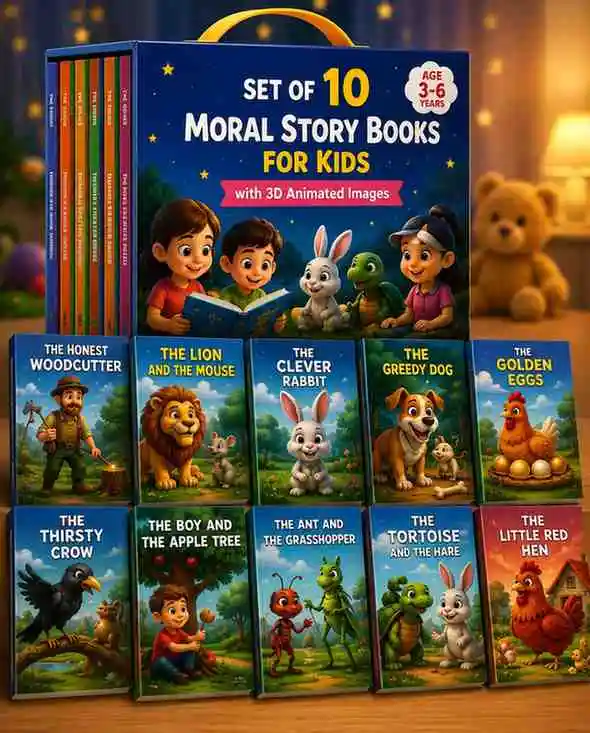
📖 Set of 10 Moral Story Books
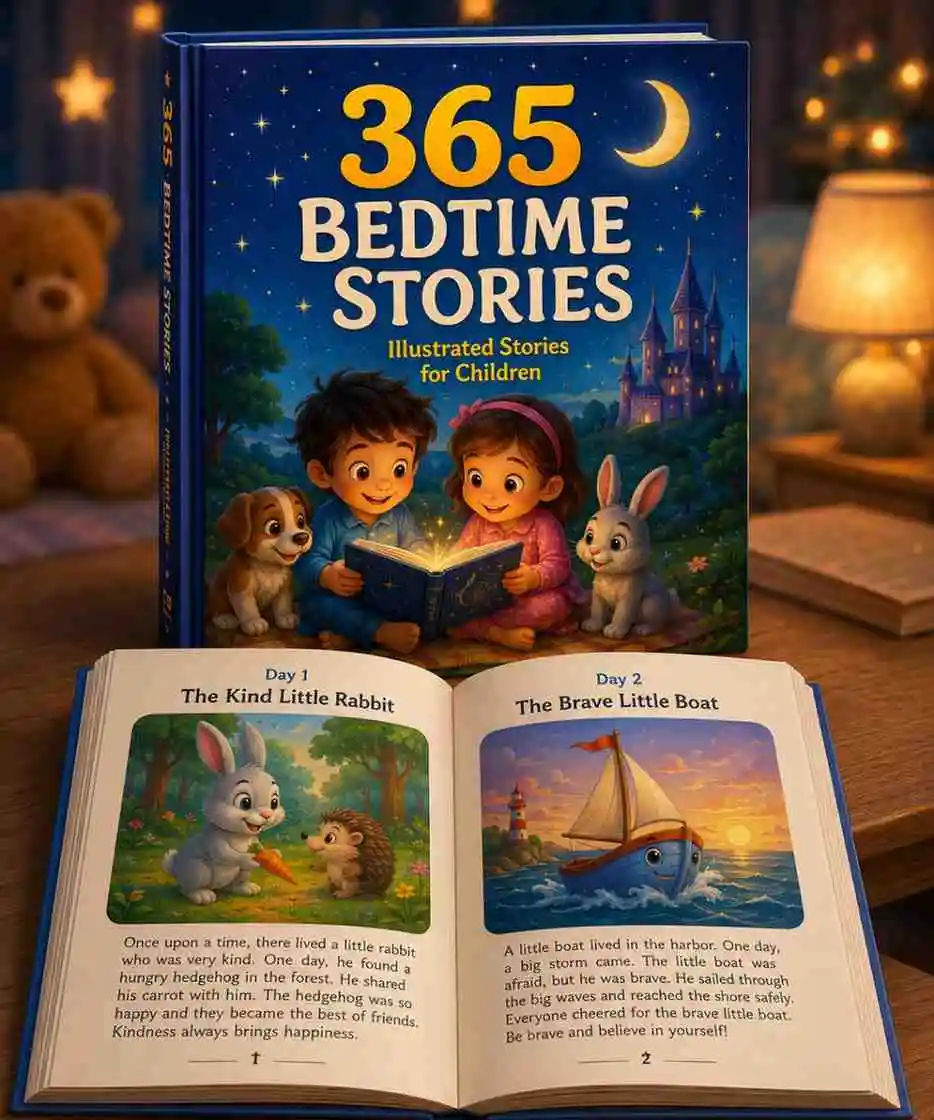
🌙 365 Bedtime Stories
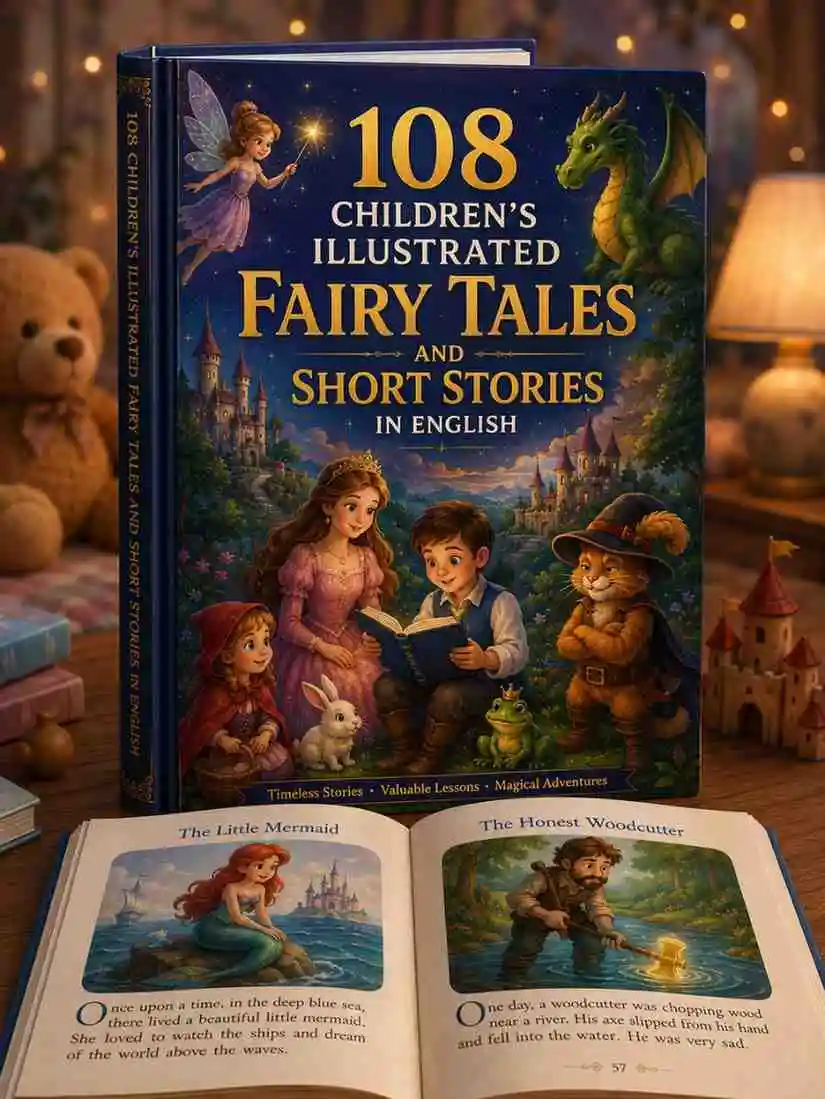
🧚 108 Bedtime Stories
🦊 101 Tales Panchatantra
Detailed Product Reviews & Expert Analysis
1. Set of 10 Moral Story Books for Kids (with 3D Animated Images)
Designed specifically for early childhood, this collection focuses on visual stimulation and simple, impactful lessons to keep short attention spans engaged.
code
- Target Age Group: 3 to 6 Years Old
- Format: Pack of 10 individual booklets
- Features: This collection stands out due to its dual-sensory approach. It pairs an advanced, high-quality read-aloud feature with immersive 3D animated graphics. The seamless audio narration makes it incredibly easy for young children to follow along, while the dynamic 3D illustrations bring the moral fables to life on every page.
Why It Excels for Early Development
At ages 3 to 6, a child’s brain processes information primarily through visual cues. The 3D animated imagery in this set adds depth to the pages, keeping sensory-seeking toddlers anchored to the page.Because the stories are split across ten separate books, parents can let their children choose a specific volume, fostering autonomy and a sense of ownership over their bedtime routine.
Performance Analysis
- Readability: Excellent. Large fonts and limited text lines per page minimize visual fatigue for early readers.
- Narrative Length: Short, structured narratives that can be completed in 5 to 7 minutes—ideal for dropping cortisol levels before sleep.
- Durability: Softcover booklets; requires careful handling by younger toddlers.
2. 365 Bedtime Stories (Illustrated Stories for Children)
An expansive anthology structured to provide exactly one unique story for every single night of the year, taking the guesswork out of book selection.
code
- Target Age Group: 3 years old to 8 years old.
- Format: Single heavy-volume comprehensive anthology
- Key Feature: Calendar-synced progression of daily stories
Why It Excels for Early Development
Consistency is the cornerstone of pediatric sleep hygiene. The “one story a night” framework helps parents establish a predictable boundary. Children quickly learn that when the daily story concludes, it is time to transition to sleep.
The broad variety of tales prevents routine fatigue, introducing diverse vocabulary themes from science fantasy to classic folklore.
Performance Analysis
- Readability: Balanced layout, though text size is slightly smaller to accommodate the massive content count.
- Narrative Length: Strictly limited to 1 page per story, taking roughly 3 to 5 minutes to read.
- Value: Extremely high cost-per-story efficiency due to the single-volume format.
3.108 Children's Illustrated Fairy Tales and Short Stories in English
A versatile bridge volume designed to span across a wide childhood age bracket, accommodating both passive listening and early independent reading.
code
- Target Age Group: 4 to 10 Years Old (Also safe for infants/toddlers as a read-aloud)
- Format: Mid-sized illustrated compilation
- Key Aspect: Focus on moral values, character development, and cognitive methods.
Why It Excels for Early Development
This book serves as an excellent long-term investment for growing families. For infants and toddlers, the rhythmic cadence of a parent reading these fairytales serves as an acoustic comfort. As children enter school age (6 to 10 years), the familiar sentence structures make it an approachable tool for practicing independent reading.
Performance Analysis
- Readability: Easy-to-read, high-contrast text placed over gentle, non-intrusive backgrounds.
- Narrative Length: Moderate length stories (approx. 2 to 3 pages each), allowing for deeper character immersion.
- Theme Variety: High focus on imagination, magic, and classical folklore structures.
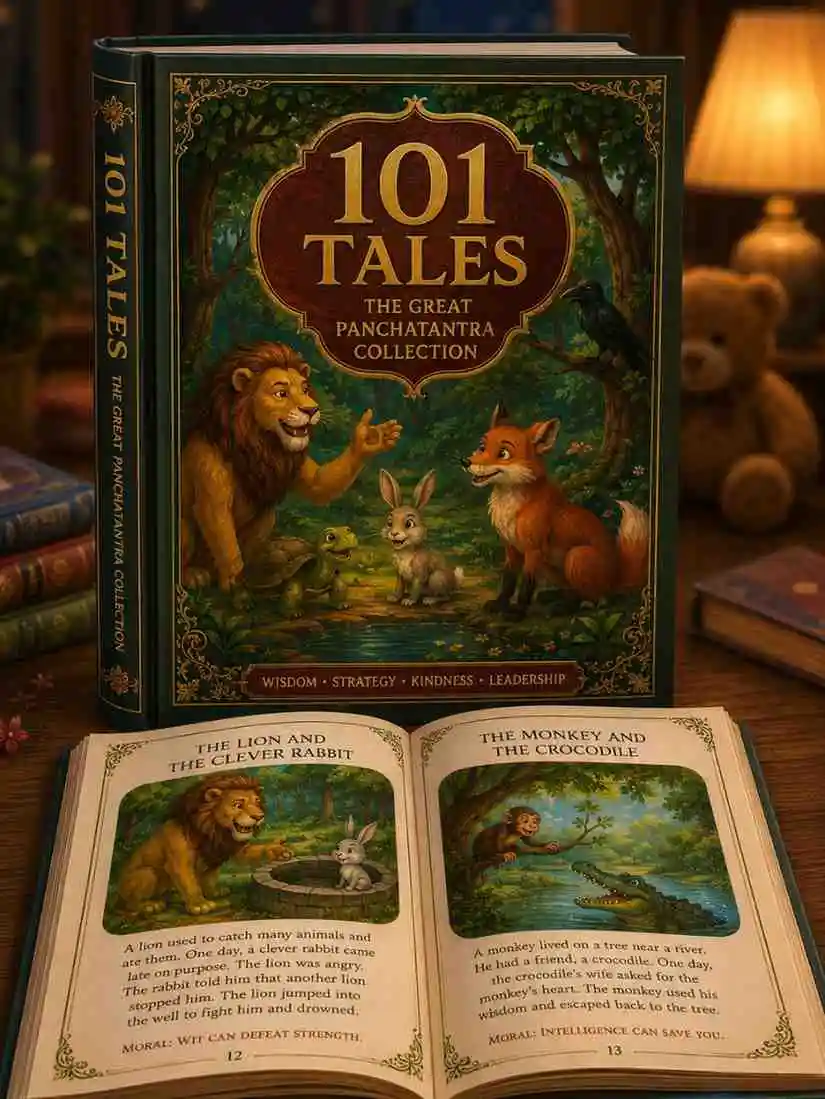
4. 101 Tales: The Great Panchatantra Collection (Hardback)
A premium hardcover edition containing ancient, time-tested Indian fables focused heavily
code
- Recommended Age Group: 5 to 12 Years
- Format: Premium Hardback Edition
- Benefits: Helps you to think about how to be a good person, Helps to develop personality
Why It Excels for Early Development
Unlike simple “good vs. evil” stories, children five years of age and older can learn useful life lessons from these old animal tales:
Strategic Thinking: Encourages kids to pause, analyze motives, and think before acting.
Social Intelligence: Teaches young readers how to understand human nature and navigate friendships.
Relatable Lessons: Uses imaginative animal narratives to make complex ideas—like loyalty, peer pressure, and conflict—easy for kids to grasp.
By framing these tough real-world topics through friendly animal characters, the stories give children a safe, clear space to process complex social interactions.
Performance Analysis
- Readability: The text uses words that are good for readers who are getting better at reading but not so hard that they get upset.
- The vocabulary is quite rich. Helps readers learn new words. It is good for growing readers.
- The words are not too simple, but not too complex either.
- They help readers improve their reading skills.
- Narrative Length: In-depth, multi-layered stories that encourage conversation before lights out.
- Durability: Exceptional. The sturdy hardback casing stands up well to years of use.
Strategic Guide: How to Select the Ideal Bedtime Book
To get the most value out of your library, consider these three key guidelines before purchasing:
Match the Narrative Arc to Sleep Neurochemistry
Bedtime reading requires a specific structure. Look for books that begin with engaging actions to capture attention but wind down into repetitive, rhythmic prose. Avoid overly intense conflict sequences right before bed, as these can trigger mild adrenaline spikes that delay the production of melatonin.
Focus on Illustration Mechanics
For children under 5 years old, illustrations shouldn’t just decorate the text—they need to mirror it exactly. If a text mentions a “green apple,” that apple should be clearly visible. This alignment helps children build associations between spoken words and visual symbols, accelerating early literacy.
Prioritize Text Architecture
Look for high-contrast formatting (dark text on a light background). Avoid books where text blocks are printed directly on top of busy, dark illustrations. Poor contrast forces a child’s eyes to strain under dim bedtime lighting, which can cause restlessness rather than relaxation.
FAQ
What is the ideal age to start a bedtime reading routine?
You can start reading bedtime stories for kids as early as 4 to 6 months old. While infants do not understand the plot, hearing a parent’s structured, rhythmic voice builds crucial auditory processing skills. Starting early also forms strong subconscious associations with emotional security, making the crib feel like a safe environment.
How many stories should be read per session?
The ideal baseline is to read one long narrative or two short bedtime stories for kids, keeping the total session between 10 and 15 minutes. Exceeding a 20-minute threshold can accidentally overstimulate younger children. Pushing past this limit triggers cortisol release, causing them to miss their natural, evolutionary window for deep sleep.
Should I choose paperback, hardback, or digital formats for evening reading?
Physical print books are highly recommended over digital tablets when sharing bedtime stories for kids. Handheld screens emit blue light that suppresses natural melatonin production and fragments sleep cycles. For infants, pick durable board books; for toddlers, use paperbacks; and invest in premium hardbacks for older children who handle books gently.
How do bedtime stories for kids help with early child development and brain growth?
Children’s vocabulary and emotional intelligence grow quickly when reading bedtime stories for kids because it activates language-processing brain regions. When children listen to a story, their minds actively map out the words into internal images. This neural exercise improves their reading comprehension, focus, and critical thinking skills long before they enter a classroom.
Can listening to repetitive bedtime stories for kids help them fall asleep faster?
Yes, reading the exact same bedtime stories for kids repeatedly creates a predictable sound pattern that actively lowers a child’s heart rate. Repetition provides children with a great deal of psychological comfort. Knowing exactly what word comes next eliminates bedtime anxiety, drops their stress hormones, and signals to the nervous system that it is completely safe to drift off to sleep.
Building a Consistent Evening Reading Routine
To make your bedtime reading sessions as effective as possible, try following this simple, step-by-step sequence each evening:
1.Dim the environment: 15 minutes before reading.
Turn off harsh overhead lighting and switch to warm bedside lamps. This drop in ambient light signals to the brain that it is time to start producing melatonin.
2.Offer controlled autonomy: 2 minutes.
Present two or three pre-approved book options and let your child choose. This gives them a sense of control, which reduces resistance to bedtime.
3.Maintain physical proximity: 10 to 15 minutes.
Sit close enough so your child can easily see the illustrations. Physical closeness lowers cortisol (stress hormone) levels and reinforces a sense of safety.
4.Conclude with a predictable phrase: 30 seconds.
Always close the book with the same final phrase, such as “The story is finished, time to dream.” Consistent verbal triggers help children transition smoothly into sleep mode.
View the full curation of curated editions by browsing the complete catalog of bedtime stories for kids on Amazon to build your child’s personalized library.