


Spooning Montessori: Rice and Water Games That Cost Me Zero
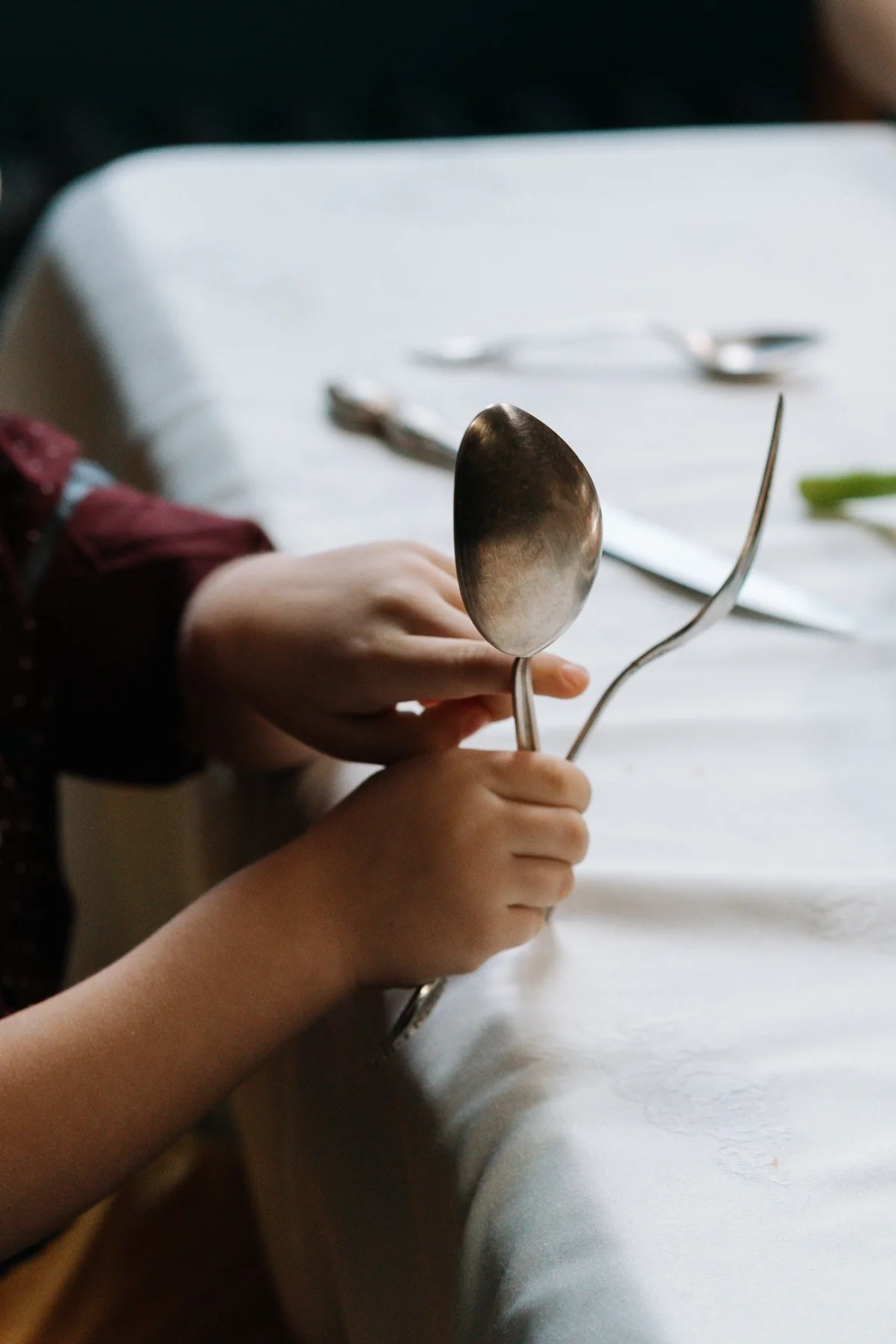
Image : Pexels
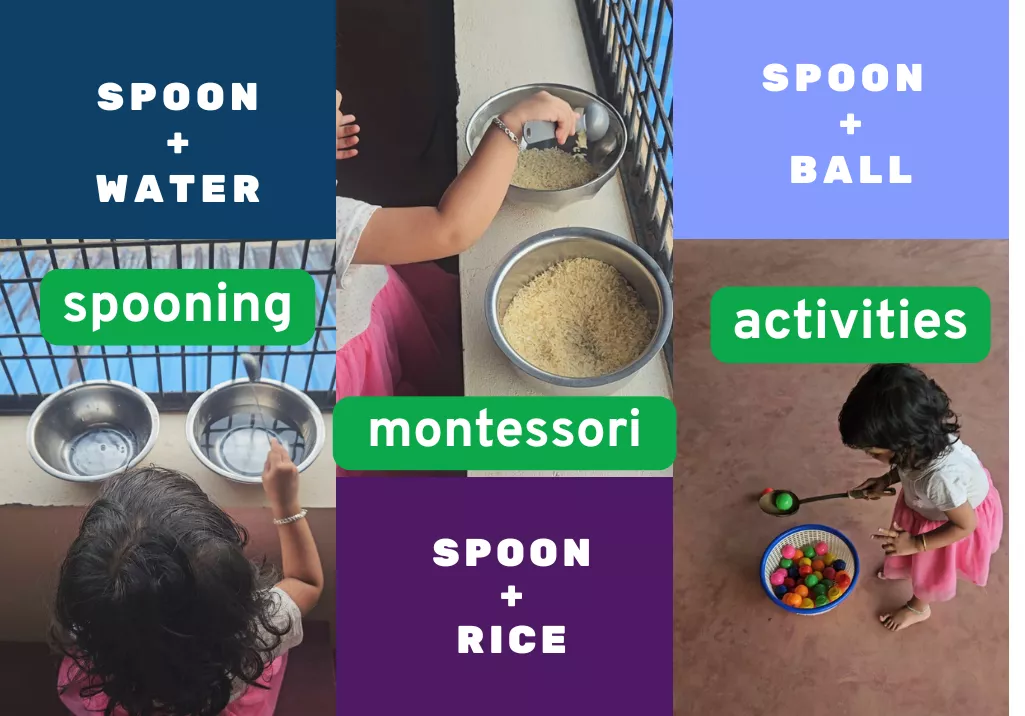
My daughter is 2 years and 2 months old. I handed her a spoon and two steel bowls, and the plain kitchen setup held her attention better than I expected. Spooning is a simple Montessori-style activity: your child uses a spoon to move something from one container to another. We tried it three ways at home: with rice, with water, and with plastic balls. Two of them were very engaging, and one was less so. This post covers what we used, what happened, and the safety rules I follow.
Everything below was tested at home with one child, so your toddler may react differently.
Quick answer: What is spooning?
Spooning means scooping with a spoon and moving things between two containers. It is often described as a Montessori-style activity because it uses real, everyday objects and lets the child work at her own pace. You need no special set. If you have a spoon and two bowls, you can start today.
Here is how our three versions compared.
| Activity | What we used | How engaging | Cost |
|---|---|---|---|
| Spooning rice | Two steel bowls, a spoon she can carry, and rice | Very engaging | Zero |
| Spooning water | Two steel bowls, a spoon she can carry, and water | Very engaging | Zero |
| Spooning balls | Plastic pots, light plastic balls, and a big spoon | Engaging, but less | Plastic pots and light plastic balls |
Why try spooning at home?
I like spooning because it needs almost nothing. There is no battery, no screen, and no instruction booklet. You show your child once how to scoop and tip, and then you step back. It also gives a toddler a job to do with her own hands, and mine seemed to enjoy having one.
I will not make promises about what spooning does for development. I have no way to measure that at home. What I can tell you is what I saw: she stayed with the activity, and two of the three versions were very engaging for her.
What the research says (and what it doesn’t)
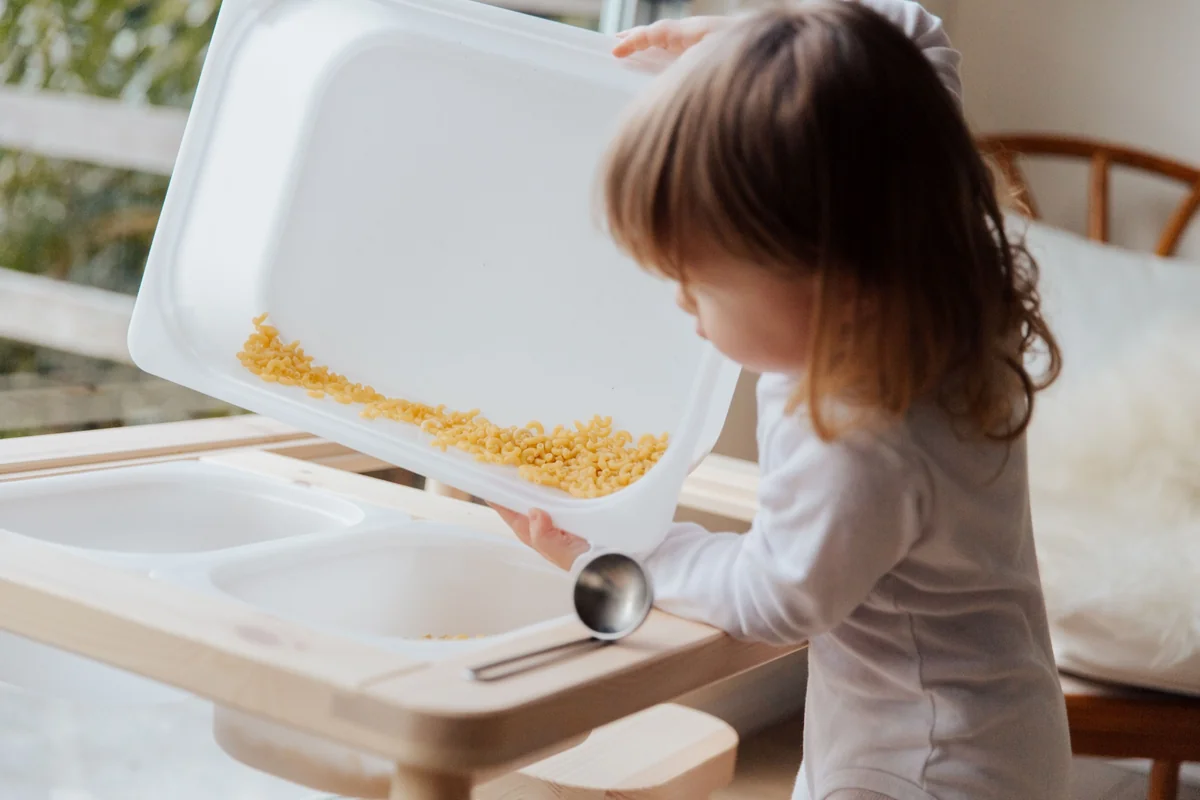
Image : Pexels
Spooning belongs to what Montessori schools call “practical life” activities: everyday tasks like pouring, scooping, and carrying. I found one published study on these activities. In 2015, researchers Punum Bhatia, Alan Davis, and Ellen Shamas-Brandt published a quasi-experiment in Early Education and Development on Montessori practical life activities and fine motor skills. They compared 50 five-year-olds in four Montessori schools with 50 five-year-olds in a kindergarten program over eight months. The Montessori group scored significantly higher on accuracy, speed, and consistent use of the dominant hand on a test called the Flag Posting Test.
Before you take that as a promise, here is what the study does not show:
It was about five-year-olds in school programs, not toddlers at home.
It was about practical life activities in general. The abstract does not mention spooning.
It compared two kinds of program, so it cannot say what any single activity does for one child.
It was a quasi-experiment, which means the children were not randomly assigned. The two groups may have differed in other ways besides the activities.
So I read it as a reason to feel good about everyday hands-on tasks, not as proof that a spoon and a bowl will do anything specific for my daughter. If you want the details, read the abstract on ERIC, which is a free research library sponsored by the US Department of Education.
What you need
One spoon your child can hold and carry comfortably (a spoon-like ice cream scoop worked too).
Two bowls or pots.
A tray or old towel under the bowls.
An adult who stays within arm’s reach the whole time.
Safety: Stay within arm’s reach throughout the activity. Do not tie a string across a cot or crib.
Activity 1: Spooning rice
What we used: Two steel bowls, one spoon she can carry, and dry rice.
How it went: I filled one bowl with rice and put the empty bowl next to it. She scooped with the spoon, carried it across, and tipped it into the second bowl. It was very engaging for her. She even refused to stop.
Why I think it worked: It is a simple job with a clear start and finish, and the spoon was one she could carry herself. I have also noticed that she likes to play with things like rice or powder. That is my guess, not something I can prove.
My rule: I only do this after age 2, and I never leave her with it. Rice grains are small, and a toddler may try to put them in her mouth. I sit beside her the whole time.
Activity 2: Spooning water
What we used: The same two steel bowls and the same spoon, or a spoon-like ice cream scoop, with water in one bowl.
How it went: I put water in one bowl and left the other empty, and she moved it across with the spoon. This one was very engaging too. It was a different material from the rice, and just as engaging.
Why I think it worked: The same reasons as the rice: two bowls, one spoon she can handle, and a task she can see through to the end. She also likes to play with water.
My rule: Again, I stay beside her. Use only a small amount of water in the bowl, and put a towel underneath to avoid the mess, or skip the towel if you don’t mind it. Toddlers and water need an adult close by, even when the bowl is small. Sometimes she even tries to drink it, as a funny imitation of drinking, so I keep the water clean and stay right there.
Activity 3: Spooning balls
What we used: Plastic pots, very light plastic balls, and a big spoon. I chose the balls carefully: none of them were small.
How it went: I put the plastic balls in one pot, and she moved them to the other with the spoon. This was the least engaging of the three. She was still interested, but not as much as with rice and water. I think the big spoon was part of the reason.
I made it harder step by step. I started with the pots close together. Once she managed that, I moved them a little further apart each time. That kept her trying. It was still engaging, just less than the other two.
What I would change next time: Use a smaller spoon that fits her hand, and keep the pots close together for longer at the start. This is my guess, and I have not yet tested it.
My rule: I do not use small balls. I pick balls that are clearly large, and I choose very light ones. A quick test: if a ball could fit through a toilet roll tube, it is too small for a toddler who still puts things in her mouth.
How to set it up in five minutes
- Put a tray or an old towel on the floor or a low table.
- Fill one bowl with a small amount of rice or water and leave the other empty.
- Show her once: scoop, carry, tip. Do not talk too much.
- Sit beside her and let her try. Do not correct every spill.
What I learned from all three
The zero-cost versions did best. Rice and water in steel bowls were more engaging than the plastic pots and balls. I also changed the spoon for the third activity, so I cannot say which change made the difference.
Match the spoon to the child. The big spoon was probably the weak point in the third activity, not the activity itself.
Make it harder slowly. Moving the pots apart a little at a time gave her something to work toward.
Spills are part of it. A tray or towel under the bowls saves your patience.
Stay close. I supervise every activity from start to finish.
Safety checklist
Stay within arm’s reach at all times. Never leave a toddler alone with water, rice, or small balls.
Rice only for children past 2 who are no longer putting everything in their mouths, and only with an adult beside them.
Choose balls that cannot fit through a toilet roll tube.
Use a spoon with no sharp edges.
Use a small amount of clean water because she may try to drink it.
Stop the activity if she starts putting rice or balls in her mouth.
Frequently Asked Questions
-
What age can a child start spooning activities?
It depends on the child. We tried these at 2 years and 2 months. For younger children, check the safety of every material and keep an adult close.
-
Is spooning really a Montessori activity?
It is a Montessori-style activity. It uses everyday objects and lets the child work alone at her own pace. I am a dad, not a Montessori teacher, so I describe it as Montessori-inspired.
-
What can I use instead of rice?
Water worked equally well for us. Whatever you choose, it must be safe if a small amount reaches her mouth, and an adult must be right there.
-
Do I need to buy anything?
No. Two bowls, a spoon, and a towel are enough. We used items from our kitchen.
-
How do I make it easier or harder?
Easier: Keep the bowls close together and use a spoon that fits her hand.
Harder: Move the bowls further apart a little at a time.
Source
- Bhatia, P., Davis, A., & Shamas-Brandt, E. (2015). Educational gymnastics: The effectiveness of Montessori practical life activities in developing fine motor skills in kindergartners. Early Education and Development, 26(4), 594–607.
Final word
SHARE THIS STORY
Of the three, spooning rice and water were the clear winners at our house, and they cost nothing. The balls taught me to choose the right spoon and start simple. If you try this, start with one bowl of water or rice, stay close, and let her spill.
I would like to hear which version your toddler preferred.
Latest
Pretend Play Toys: A Dad’s View of 6 Types for Young Kids
November 3, 2026
I Tried Rice, Water and Balls for Toddler Spoon Play at Home
October 29, 2026
My 2-Year-Old Loved the Sounds, But These Books Were Too Much!
October 28, 2026
Tummy Time Toys: Mat, Cards or Piano Gym? Which Is Best?
October 24, 2026
Paper Tearing, Pouring and More: 6 Activities We Tried at Home
October 21, 2026
Categories