Do We Really Need Toys? A Father's Honest Look at Where the Money Goes
Quick Summary
- Toys aren’t essential in the way food or sleep are, but simple, age-right play does support how young children learn to think, move, talk, and manage their feelings.
- The research is solid on play — not on any specific branded toy. No toy “builds a genius.” A cardboard box counts as much as anything on a shelf.
- What matters most is age-fit, not hype: buying what a viral video shows can waste more money than it saves.
- One toy at a time, rotated, tends to hold a child’s attention longer than a pile of everything at once.
- For my own two-year-old, sound and touch still win over “building” toys most days — except a few, like ring stacking, that she comes back to on her own.
As a Father of a Two-Year-Old, Spending Money on Toys
I’ll be honest about where this started. I was standing in front of a shelf, holding a toy that cost more than I was comfortable admitting, asking myself a question I hadn’t really let myself ask before: do we actually need this?
Not “is this cute.” Not “will she like it for a week.” The bigger question — if toys as an entire industry vanished tomorrow, would my daughter actually be worse off? Or have we, as parents, just been sold a very convincing story?
I run a small toy and play website, so I’m not exactly a neutral party here. But that’s part of why I wanted to sit with this question honestly instead of skipping past it. So I did what I usually do when I’m unsure about something — I went looking. Not for another “10 best toys” list, but for what toys actually are, where they came from, and what real evidence says about whether they matter at all.
Here’s what I found, written the way I’d want to read it myself — as a doubtful parent, not a salesman.
None of this means toys are essential, or that an empty toy box would leave your child worse off. It just means the research points somewhere simpler than the toy aisle does — a child figuring things out through open-ended play, with or without a specific object designed for it.
A Short, Honest History of Toys
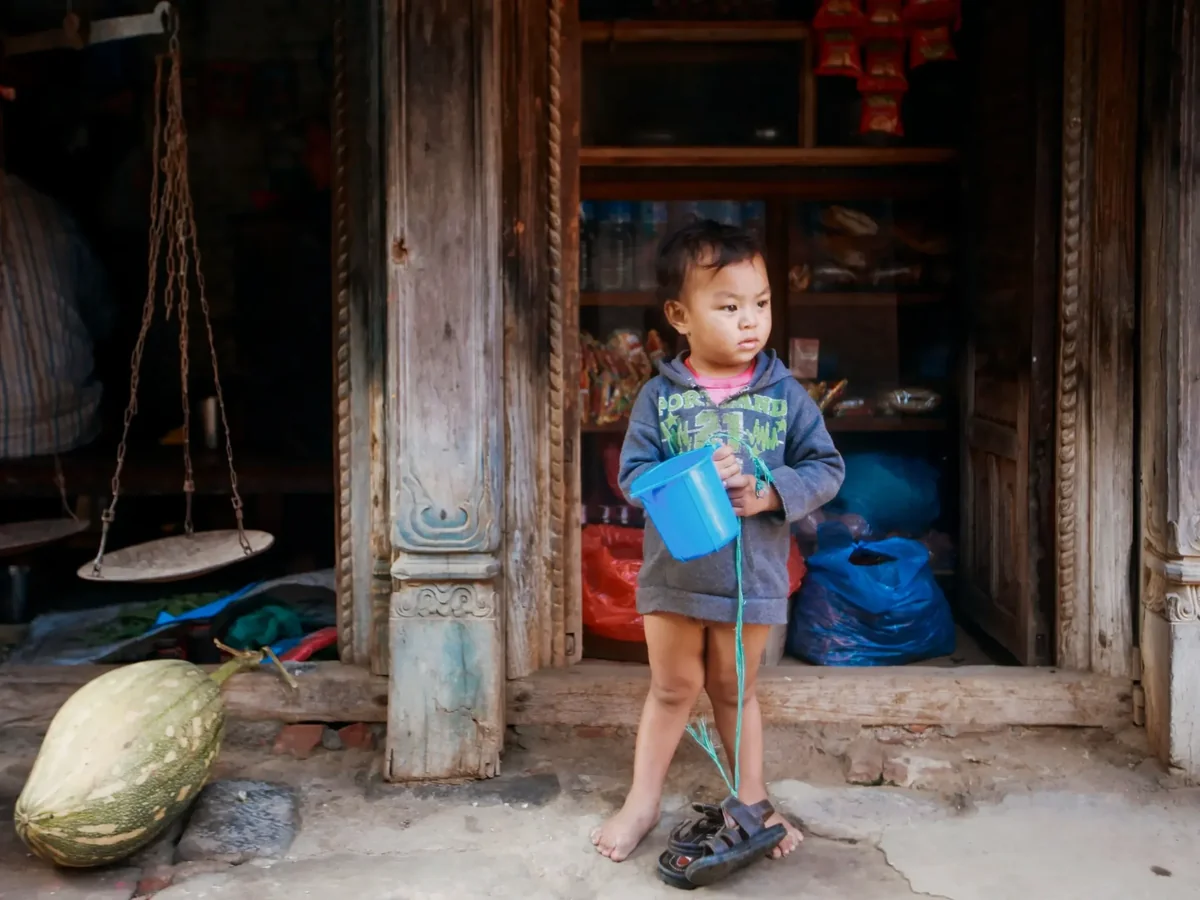
Toys are a lot older than plastic packaging makes them feel.
Archaeologists have found carved animal figures, spinning tops, and rattles in sites thousands of years old — some in ancient Egypt, some in the Indus Valley civilization, which is not far from where a lot of us grew up. Long before “developmental toys” was a marketing phrase, children were doing the same basic things: spinning something to watch it move, banging two objects together to hear a sound, wrapping cloth around a stick and calling it a doll.
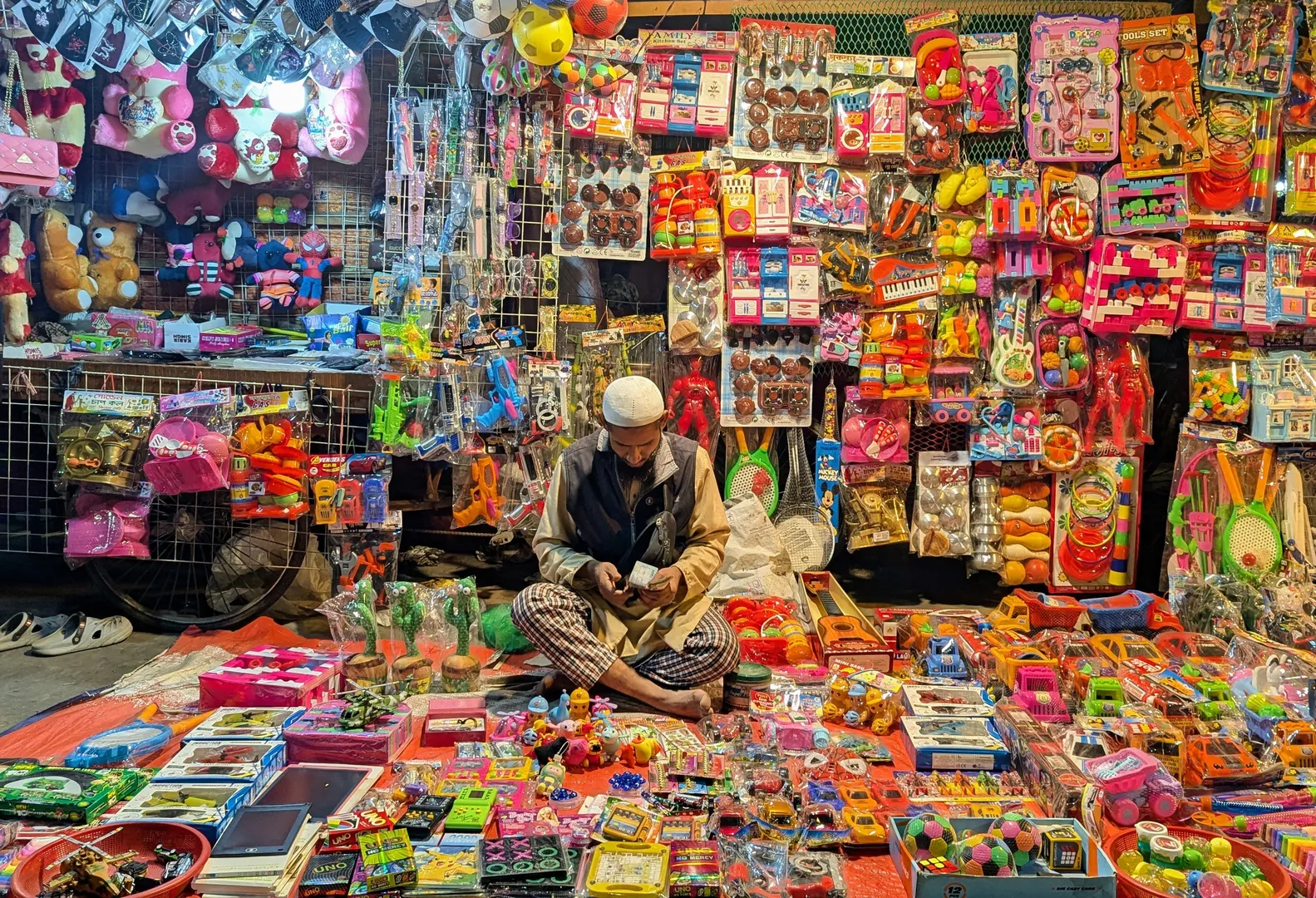
For most of history, toys weren’t bought. They were made — from whatever was around. A carved piece of wood. A cloth doll stitched from scraps. A set of stones for a counting game. The “toy” wasn’t the point; the play was. The object was just whatever happened to be handy enough to play with.
The shift toward toys as products, made for mass sale rather than homemade, really picked up during the Industrial Revolution in the 1800s, when factories could suddenly produce the same tin soldier or wooden top a thousand times over. Then came plastic in the 20th century, and with it, toy aisles, toy catalogs, and eventually, toy influencers on a phone screen.
What strikes me, looking at this history, is how recent the pressure is. Children have played with simple objects for as long as there have been children. The idea that a child needs a specific, purchased, branded toy to develop properly — that part is new. That part is marketing.
What the Research Actually Says
Play itself has real, well-established research behind it. This isn't controversial. Researchers going back decades — Jean Piaget's work on how children build understanding through hands-on exploration, and Lev Vygotsky's work on how pretend play helps children develop language and self-control — form the foundation that most modern child development thinking still rests on. These aren't fringe ideas; they're taught in early-childhood education programs worldwide.
Harvard's Center on the Developing Child puts it in a way I keep coming back to:
"Brains are built over time, from the bottom up."Their research describes early experiences — including play — as forming a foundation that later learning builds on, similar to a building needing a strong base before you add floors.
Here's where I want to be careful, though. A lot of "toy benefit" content online cites very specific claims — exact journal names, exact numbers, exact promises like "this toy type boosts spatial reasoning by X%." When I tried to trace some of those back to their original sources, several didn't hold up to scrutiny, or the actual study said something much more modest and general than the headline claimed. I'm not going to repeat those specific numbers here, because I can't verify them myself, and repeating an unverified claim just because it sounds convincing isn't something I'm willing to do — even if it would make this post sound more impressive.
So instead, here's what I can say with more confidence, based on the parts of the research that are widely and consistently supported:
- Thinking and problem-solving: Open-ended play — the kind where a child figures out what to do with something, rather than a toy doing all the work — is consistently linked to how children practice reasoning, cause-and-effect thinking, and early number sense. A pile of blocks, sorted, stacked, and knocked down repeatedly, is doing more quiet cognitive work than it looks like from the outside.
- Movement and coordination: Toys that involve grasping, dropping, stacking, or pushing give a young child repeated, low-stakes practice at controlling their own hands and body — practice that happens naturally through play rather than instruction.
- Pretend play and emotions: Vygotsky's research specifically pointed to pretend play — a spoon becoming a phone, a box becoming a car — as a space where children practice self-control, patience, and working out simple social situations, often before they can fully explain any of it in words.
- Language: Talking during play — narrating what's happening, naming objects, asking simple questions — is consistently linked to vocabulary growth. The toy itself matters less here than what happens around it.
A general "less is more" idea shows up across a lot of this research too: children tend to engage more deeply, and for longer, with fewer toys available at once, rather than a room full of options competing for attention. I'll come back to this, because it matched exactly what I saw at home.
What to Actually Check Before Buying
| Age Range | What Play Often Looks Like | What It Tends to Support |
|---|---|---|
| 0–6 months | Watching, listening, simple touch | Sensory awareness, early focus |
| 6–12 months | Grabbing, dropping, banging | Cause and effect, hand control |
| 1–2 years | Stacking, early pretend, pointing | Problem-solving, early language |
| 2–3 years | Pretend play, sorting, longer focus | Imagination, emotional practice, vocabulary |
| 3–4 years | Building with a goal, longer | Planning, patience, more complex language |
This table is a general pattern, not a checklist. Children move through it at very different speeds, and that’s normal.
A viral toy that looked impressive in a fifteen-second video isn’t automatically the right toy for your child right now. Age-fit and what actually holds their attention matter more than how well something performed on someone else’s camera.
Why It Matters More in Today's Busy Life
Here’s the part that made this whole question feel less abstract for me.
A lot of parents today — myself included — don’t have the luxury of unstructured, all-day free time with our kids the way earlier generations sometimes did. Work, commuting, running a household, managing everything else life throws in — it adds up. That’s not guilt-talk, it’s just the reality a lot of us are living in.
This is where I think toys earn their place, honestly. Not as a replacement for a parent — nothing does that, and I don’t believe any toy company should be allowed to imply otherwise — but as a bridge. A well-chosen toy can hold a toddler’s focused attention for fifteen or twenty genuinely engaged minutes, which is sometimes exactly the window a parent needs to finish cooking, take a work call, or just breathe for a minute.
The toy isn’t doing the parenting. It’s buying a little room for the parenting that’s already happening around it.
None of this is about buying more. If anything, it’s the opposite — fewer toys, chosen more carefully and rotated instead of piled together, seem to do more for a child’s attention and play than a shelf full of options ever did in our house.
As a Father, What I Actually Found
So, back to the original question. Do we really need toys?
Here’s my honest answer, based on two years of actually living this, not just reading about it.
Toys are a real help — but only if you buy them checking age and developmental fit, not because a video made them look impressive. I’ve bought things purely because they went viral, and most of them sat untouched within a week. The toys that actually got used were almost always the boring-looking ones that matched exactly where she was developmentally at that moment.
Toys have genuinely helped cut down screen time in our house. I’m not going to pretend we’re a screen-free household — we’re not. But having a few good, engaging toys within reach has made it much easier to redirect her attention away from a phone or the TV, without a fight. That’s a real, practical benefit I didn’t expect going in.
One toy at a time beats a pile of toys, every time. This is the “less is more” research playing out exactly as described, in my own living room. When everything is out at once, she skims across all of it and settles on nothing. When I rotate and keep just a few things accessible, she goes deeper into whatever’s there.
Right now, she’s more pulled toward sound and touch than building. She’s two, and most days, a toy that makes a noise or has an interesting texture wins over a set of blocks she’s asked to construct something with. That tracks with what I read — building and pretend play tend to deepen a bit later. But it’s not absolute. Ring stacking, for whatever reason, is the one “building” toy that’s hit differently for her from early on. She comes back to it on her own, which is more than I can say for most of what’s on that shelf I mentioned at the start.
So — do we really need toys? Not in the way the industry wants us to believe. No toy is essential, and no toy guarantees anything about how a child turns out. But simple, age-right play, given real space and real attention, does seem to matter. The toy is just the object that makes the play easier to reach.
Frequently Asked Questions
-
Do toys actually help child development, or is it mostly marketing?
Play itself has solid, long-standing research behind it. Specific toys don't — no toy guarantees a developmental outcome, whatever the packaging claims. What seems to matter is the kind of play (open-ended, hands-on) more than the brand or price of the object.
-
Is it bad to buy toys based on trending videos?
Not automatically, but it's worth pausing first. A toy that's trending because it looks impressive on camera isn't necessarily right for your child's current age or interest. Checking age-fit tends to matter more than checking view counts.
-
How many toys should a child have at once?
Less than most shelves suggest. Several parents and some research both point the same direction — a small, rotating set that a child can actually focus on tends to work better than a large pile competing for attention.
-
Can toys replace screen time?
They can help reduce it, in practice, but they're not a guaranteed swap for every child or every moment. In our house, having a few genuinely engaging toys nearby has made redirecting away from a screen noticeably easier.
-
Are toys a substitute for parents spending time with their child?
No, and I don't think any honest source would claim otherwise. Toys can hold a child's attention for a useful stretch, which helps busy parents get through a task — but they support the time parents spend with their kids, they don't replace it.
I’m a father sharing what I’ve noticed and tried with my own daughter — I’m not a child psychologist, pediatrician, or researcher. This post reflects general, well-established research on play alongside our own family’s experience, not a developmental assessment of any child. If you have concerns about your child’s growth, please talk to your pediatrician.
SHARE THIS STORY
Latest
2 Year Olds Books
October 17, 2026
soft toys for newborn
October 16, 2026
Educational Games for Kids
October 10, 2026
Infant Bath Toys
October 1, 2026
Do We Really Need Toys
September 28, 2026
Categories