


Educational Games for Kids Aged 1–4: 7 Home Games Shared by a Dad, with a Quick Safety Check

Quick answer: Simple educational games for kids aged 1 to 4 can be played with things already at home, like cups, socks and a box. Keep sessions to about 5 to 10 minutes, stay within arm’s reach the whole time, and let your child end the game when they’re done.
You are standing in a shop or scrolling a shopping page late at night, looking at a box that promises to teach your toddler everything. It costs a lot and you’re not sure it will survive the first week of play, let alone the first year.
At ZaminoToys, we think the honest answer is that many simple games can be made at home. Some bought toys are worth having, and we’ll cover how to tell the difference.
This article covers seven games you can start today, what to look for if you do buy something, and a few safety points that matter more than any age label on a box.
What Do We Mean by “Educational” for Under-4s?
The word gets used loosely. Here it means a game where a child gets to look, handle, sort, pour, point, or copy something while you play alongside them. That’s all. If your child laughs while knocking down a tower you built, the activity may be enjoyable for them. Enjoying the game is reason enough.
A few practical points before the list:
Check the age label on every toy.
Short sessions are normal.
Repeating is normal too.
- Check the age label on every toy. Follow the manufacturer’s instructions and warnings, and take extra care with toys that contain batteries or magnets or have parts that can come loose.
- Short sessions are normal. Some toddlers enjoy a short session; others want to continue or move on quickly. Don’t stretch it.
- Repeating is normal too. A child who wants the same game 15 times in a row isn’t being difficult. They like it.
Game 1: Stack and Knock Down (about 12 months and up)
What you need: 3 to 5 plastic cups or soft blocks.
Put a few blocks on the floor for your child to explore. You can also offer an empty cup and watch how they use both during play. Some children stack. Some drop cups into a bowl. Some wear a cup as a hat. All of that is fine.
Honest limit: This one can end quickly. If the cups stop holding your child’s interest, leave them for another day. You can vary the game by letting your child choose which cup goes on top or by stacking the cups inside one another.
Game 2: Sock Match (about 2 to 4 years)
What you need: 4 to 6 pairs of clean socks in different colors or patterns.
Tip them in a pile. Show them one sock and ask, “Where’s the other one?” Start with only three pairs. Fewer socks make it easier to spot a match. With a big pile, many toddlers just start flinging.
This works well while you’re folding laundry anyway, so it doesn’t feel like an extra task. Younger children may match by color first, and patterns come later.
Game 3: What color can you spot? (about 2 to 3 years)
What you need: a few familiar household objects in different colors.
Say a color, then take your child’s hand and look around for something that matches. Start with two or three objects. Name each one as you find it, then let your child pick the next color.
Make it easier: hold up two objects and ask your child to point to the one that matches.
Try a variation: with an older child, ask them to find two things that share a color.
Honest limit: many 2-year-olds will wander off to play with whatever they find. That’s fine. Follow them and name the colors as you go.
Safety: before you start, scan the room for anything sharp, breakable, or small enough to swallow. Put away glass, scissors, and tiny items. Everything your child picks up should be safe to hold and mouth.
Game 4: Posting box (about 1 to 3 years)
What you need: a sturdy cardboard box with a lid, and a few large items such as wooden spoons.
Cut a wide slot in the lid. An adult should do this and tape over any rough edges. Your child posts the items in, then tips them out again. Many toddlers repeat this again and again.
Honest limit: the box gets squashed fast, and some children just throw the items. Swap in a fresh box when it sags.
Safety: use only large, sturdy items with no loose parts, sharp edges, or breakable pieces. Check wooden spoons for splinters. For under-3s, keep buttons, coins, beads, and bottle caps well away from this game.
A toilet-roll tube is only a rough check. Always follow the age label on anything you buy, and stay within arm’s reach while your child plays.
Game 5: What was that noise? (about 2 to 4 years)
What you need: one pan, one wooden spoon, and a cushion.
You make the sounds first. Ask your child to turn around or tuck their head behind the cushion.Give the pan a light tap and ask, “What was that?” If your child picks the wrong one, show them the right choice and let them try once more.Next, hand over the spoon. Now it’s your turn to guess. Give a few silly wrong answers on purpose.Keep the taps soft so the noise isn’t too loud for little ears. Sit beside your child for this part.
Honest limit: some children will skip the guessing and just want to bang the pan. That’s fine. It’s still a sound game.
Make it easier: let your child watch the tap first, then hide it on the next turn.
Safety: check that the spoon and pan have no loose parts and the spoon has no splinters. If you make a shaker, seal the lid firmly with glue, check it before every use, and stop using it if it loosens or cracks. Skip loose rice or beads. Children can open lids and swallow what’s inside. Stay within arm’s reach the whole time.
Game 6: Point to the picture (about 1 to 4 years)
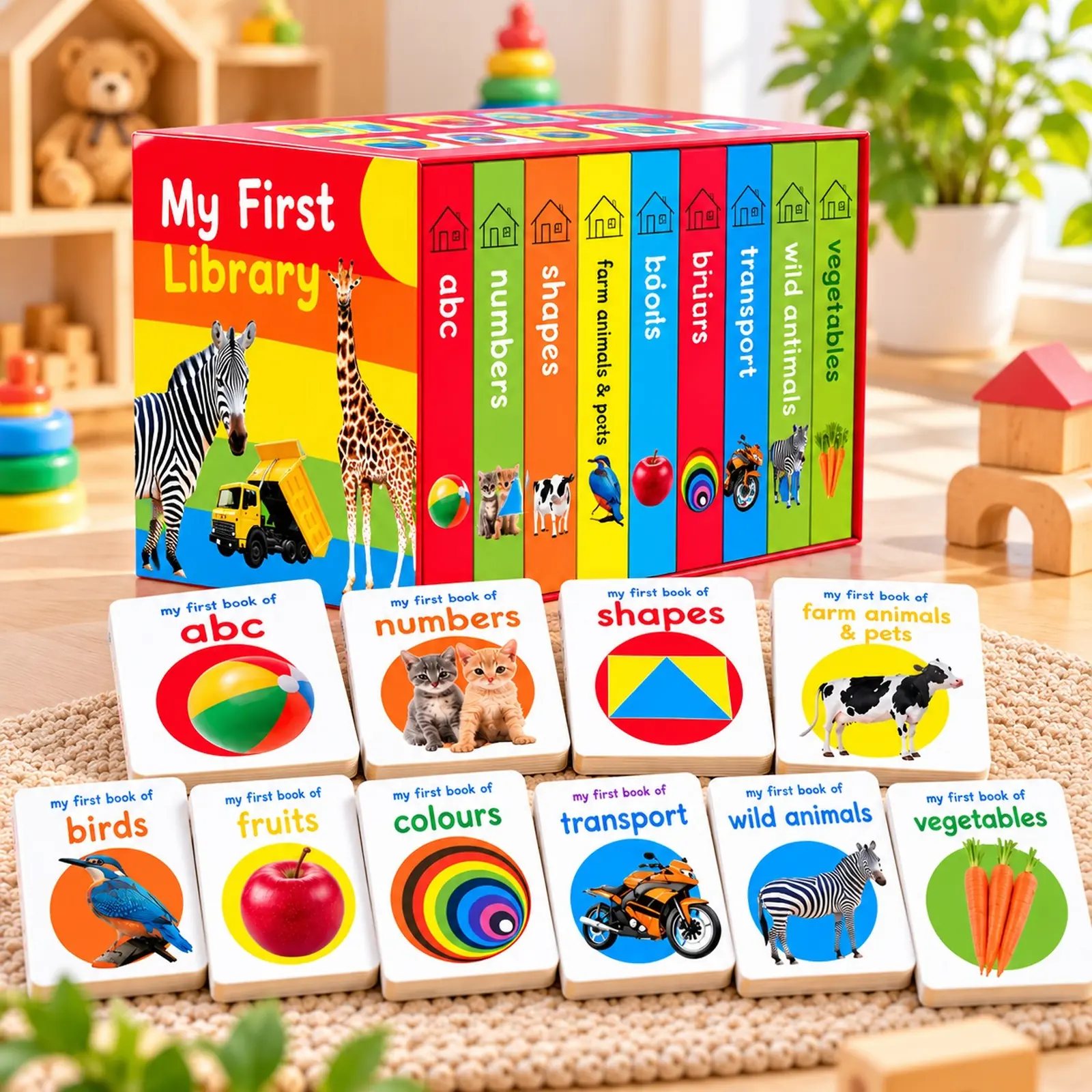
What you need: one picture book your child already likes.
You don’t have to read every word. Point to a familiar picture and ask, “Where’s the dog?”Once pointing gets easy, try a slightly harder question: “Is the dog running or sleeping?”If your child pulls the book closer for the story, go ahead and read it.
Honest limit: many 1-year-olds will chew the book or turn pages too fast to point at anything. That’s normal. Try again in a few weeks.
Safety: before you start, check the book for torn flaps, loose pieces, or peeling stickers. Small bits can come away and end up in a mouth. For babies who mouth books, choose a sturdy board book. Stay within arm’s reach while your child plays.
Game 7: Tip, pour, repeat (about 2 to 4 years)
What you need: two sturdy plastic cups and a shallow tray.
Show your child how to pour from one cup into the other. Expect spills. A tray under the cups keeps the mess small.Start with a small amount of water.
Honest limit: many children will tip everything out in one go, or just splash. That’s part of the game, so keep the amount small.
Safety: stay within arm’s reach the whole time, especially with water. Never leave a young child alone with any amount of water, even a shallow tray. Check the cups for cracks. Clean up any spilled water as soon as you spot it to keep the floor from getting slippery.
When is it worth buying a toy instead of playing at home?
This site earns a small commission from some links, so here is the plain truth: you don’t need to buy much. The home games above cover a lot of ground.
A bought toy is worth a look when it meets these four tests:
- Many uses: a set of wooden blocks can be stacked, sorted, lined up, and carried. More uses mean more ways to play.
- Solid build: check the materials, the construction, and the age label. Reviews help, but they can’t prove a toy is safe.
- Right for now: a chunky puzzle with three or four large pieces suits many 2-year-olds.
- Your child’s interest: if your child keeps reaching for your phone camera, a toy camera may appeal. If they ignore toys with buttons, skip that type.
Honest limit: even a well-made toy can sit unused after a week. Try borrowing one, or start with a home version, before you spend.
What should I check before my child plays?
For children under 3, check the toy and the space before you start. Here are five quick checks:
- Choking hazards: if a piece could fit in your child’s mouth, leave it out. A toilet-roll tube is a rough screen, not a full safety test.
- Age labels: read the age rating and instructions, especially for toys with batteries, magnets, or parts that come off.
- Hands-on check: run your hand over the toy. Cracks, sharp edges, or wobbly parts mean it goes in the bin.
- Distance: stay within arm’s reach. With water, even a tray’s worth, never step away.
- Batteries: keep button batteries out of reach and make sure the compartment is secured with a screw. If your child may have swallowed one, get emergency help right away.
In India, many toys sold for children must carry the BIS Standard Mark. Look for it on the pack and check the product details before you buy.
Frequently asked questions
-
When can my toddler start playing simple games?
A child can start simple play in the first year, such as holding a soft block or looking at a board book with you. Games like sock match or guessing a sound suit many children from about 2 years. Before that, handling and looking games are plenty. Follow your child’s interest, and use only age-suitable items.
-
How long should a toddler game last?
Many toddler games last about 5 to 10 minutes, but there is no fixed time. Some days a game lasts two minutes, and that is fine. Put it away and see if your child asks for it later. Let your child decide when the game is over.
-
Are bought toys better than homemade games?
Not necessarily. Bought toys are not automatically better than homemade games. A cup, a sturdy cardboard box, or a picture book can be enough for a simple game. A bought toy can be worth it when it is safe, sturdy, suits your child’s age now, and your child keeps coming back to it. If it fails any of those, a home game is a fine choice.
-
What if my child isn’t interested in a game?
Try a different game, or come back to it another day. Children have different tastes, and they do not need to enjoy every game. If a game gets a shrug, tidy it away without a fuss. There is no need to push it. You can offer it again in a few weeks.
If you have a worry about your child’s speech or development, a paediatrician can check it. These games are for everyday play, not for diagnosis.
Conclusion
You don’t need to try all seven. Choose the one that suits your afternoon, stay beside your child, and stop when they do. If they enjoy it, repeat it. If they don’t, try another.
For parents looking at educational games for kids in shops or online, the main questions are simple: is it safe, does it suit my child’s age now, and will my child want to play with it again and again, rather than just on the first day? If a toy passes those, it may be worth buying. If not, there’s likely a cup and a box at home that will do the job.You can find more play ideas, honest toy reviews, and safety article at zaminotoys.in
SHARE THIS STORY
Latest
Categories