Parenting trends keep evolving, and one term that has recently gone viral is “ What is FAFO parenting.” Many parents are curious—is this a smart way to raise independent kids, or is it too harsh?
If you’ve ever thought, “Let my child learn the hard way,” you’ve already touched the idea behind this approach.
In this detailed guide, you’ll clearly understand what is FAFO parenting, how it works, real-life examples, and whether it is actually good for your child.
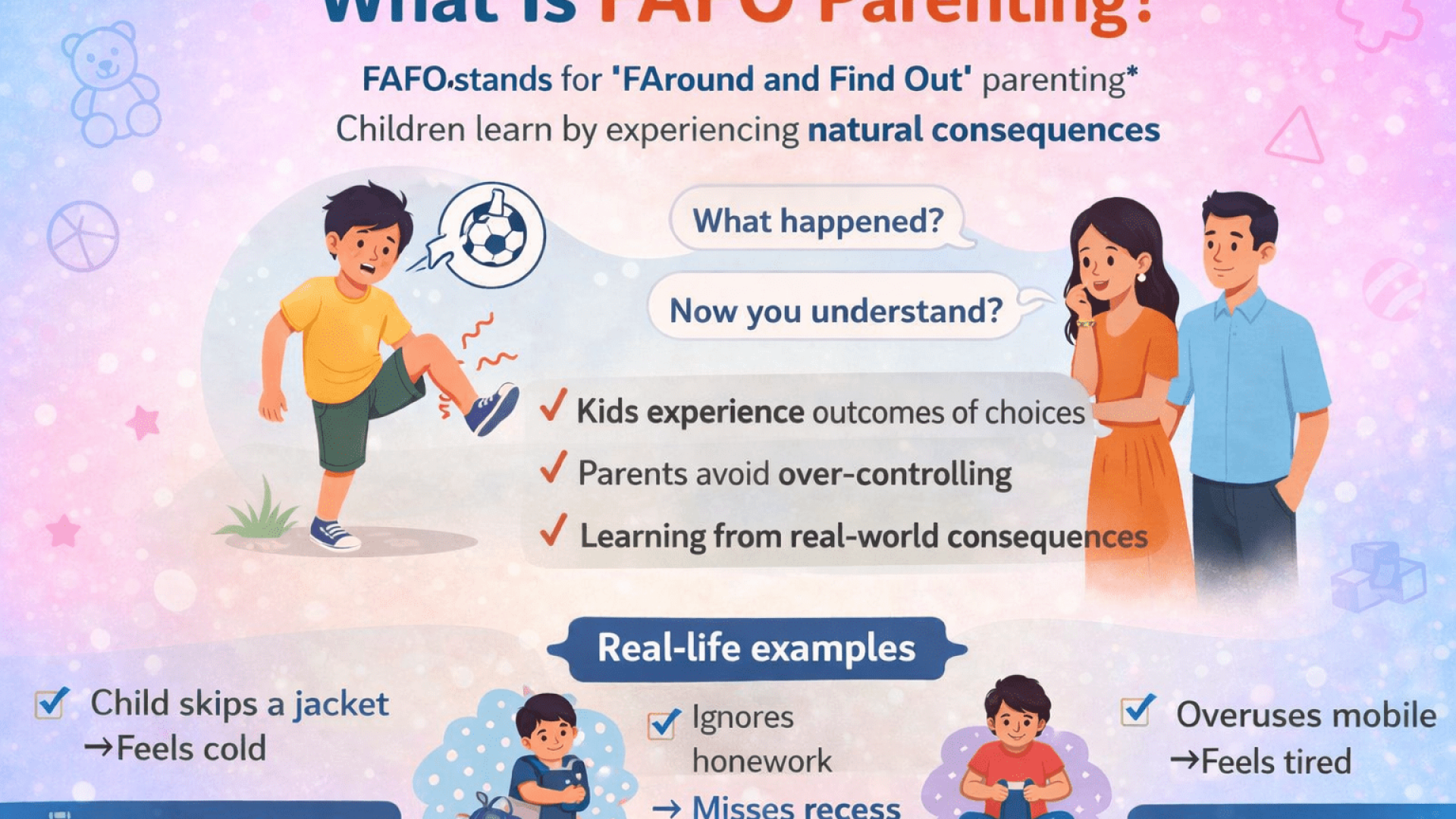
FAFO parenting stands for “F Around and Find Out” parenting*, where children learn through natural consequences instead of constant parental control.
Key points:
Kids learn by experiencing outcomes of their actions
Parents step back instead of over-controlling
Focus on real-world learning and accountability
Encourages independence and decision-making
What Is FAFO Parenting?
What is FAFO Parenting Full Form
The FAFO parenting full form is:“F Around and Find Out”*While the phrase is informal, the concept is serious—it means letting children experience consequences to understand right and wrong.
FAFO Parenting Meaning
The FAFO parenting meaning is simple:Instead of warning repeatedly, parents allow children to face the result of their actions.
For example:
If a child refuses to wear a jacket → they feel cold
If they don’t complete homework → they face school consequences
This approach focuses on learning through experience, not lectures.
FAFO Parenting Trend
The FAFO parenting trend became popular on social media platforms like TikTok and parenting forums.
Why it’s trending:
Parents are tired of over-explaining
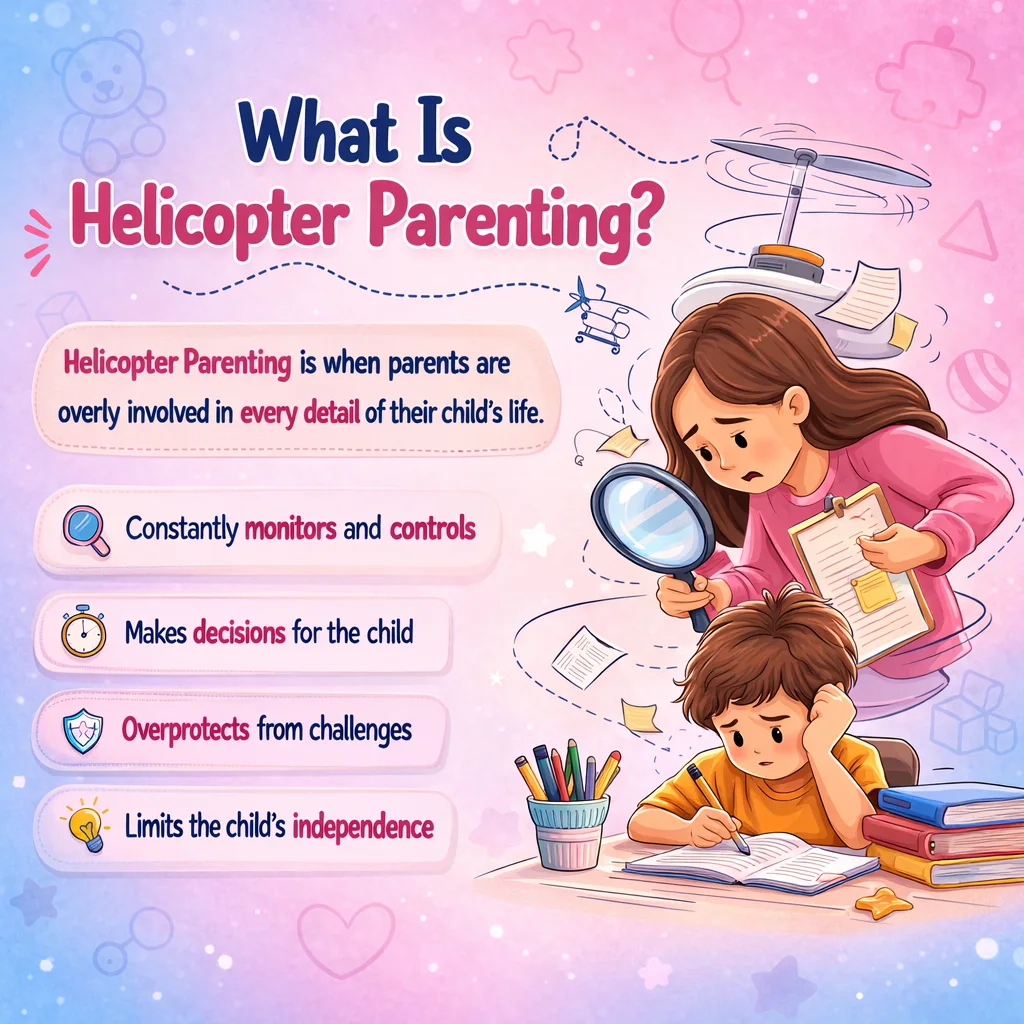
Shift from helicopter parenting
Focus on raising independent children
It’s often discussed in modern fafo parenting article discussions and even debated in platforms like parenting forums and news sites (fafo parenting guardian discussions).
How FAFO Parenting Works
Understanding what is FAFO parenting is not enough—you must know how FAFO parenting actually works in real life.
Many parents misunderstand this concept and either: ❌ Become too strict ❌ Or completely step back
But the real fafo parenting style lies in a balanced execution.
Core Concept of FAFO Parenting
What is FAFO parenting? This video explains how children learn through real-life consequences instead of punishment. It highlights the difference between FAFO parenting and traditional discipline, helping parents understand when and how to use this approach effectively.
At its foundation, FAFO parenting works on one powerful principle:
Natural consequences teach better than repeated instructions
In simple terms:
Instead of saying “Don’t do this” again and again
Parents allow children to experience the outcome of their choices
This is the true fafo parenting meaning in action.
Why This Works (Psychology Insight)
According to child psychology research, children learn best through:
✔ Direct experience ✔ Cause-and-effect understanding ✔ Emotional connection to outcomes
When a child feels the consequence: Learning becomes deeper and long-lasting
This is why FAFO parenting is becoming a strong fafo parenting trend among modern parents.
The FAFO Learning Cycle (Step-by-Step)
To truly understand what is FAFO parenting, you need to understand this cycle:
Step 1: Child Makes a Choice
Every situation starts with a decision.
Example: Child refuses to wear shoes
Step 2: Parent Allows (Safe Freedom)
Instead of forcing:
✔ Parent allows the choice ❌ No shouting ❌ No over-warning
FAFO parenting is NOT: ❌ Ignoring your child ❌ Letting anything happen
It is:
Controlled freedom with safe consequences
Golden Rule of what is FAFO Parenting
Before allowing any consequence, ask:
✔ Is it safe? ✔ Is it reversible? ✔ Will it teach something meaningful?
If YES → allow FAFO If NO → intervene immediately
Emotional Role of Parents in FAFO Parenting
A major mistake in the fafo parenting style is ignoring emotions.
But true FAFO parenting includes:
1. Emotional Support After Failure
When child fails: ❌ Don’t say: “I told you” ✔ Say: “Now you understand?”
2. No Shame, No Blame
Avoid: ❌ Embarrassing the child
Instead: ✔ Focus on learning
3. Stay Calm
Your reaction decides: Whether child learns or feels hurt
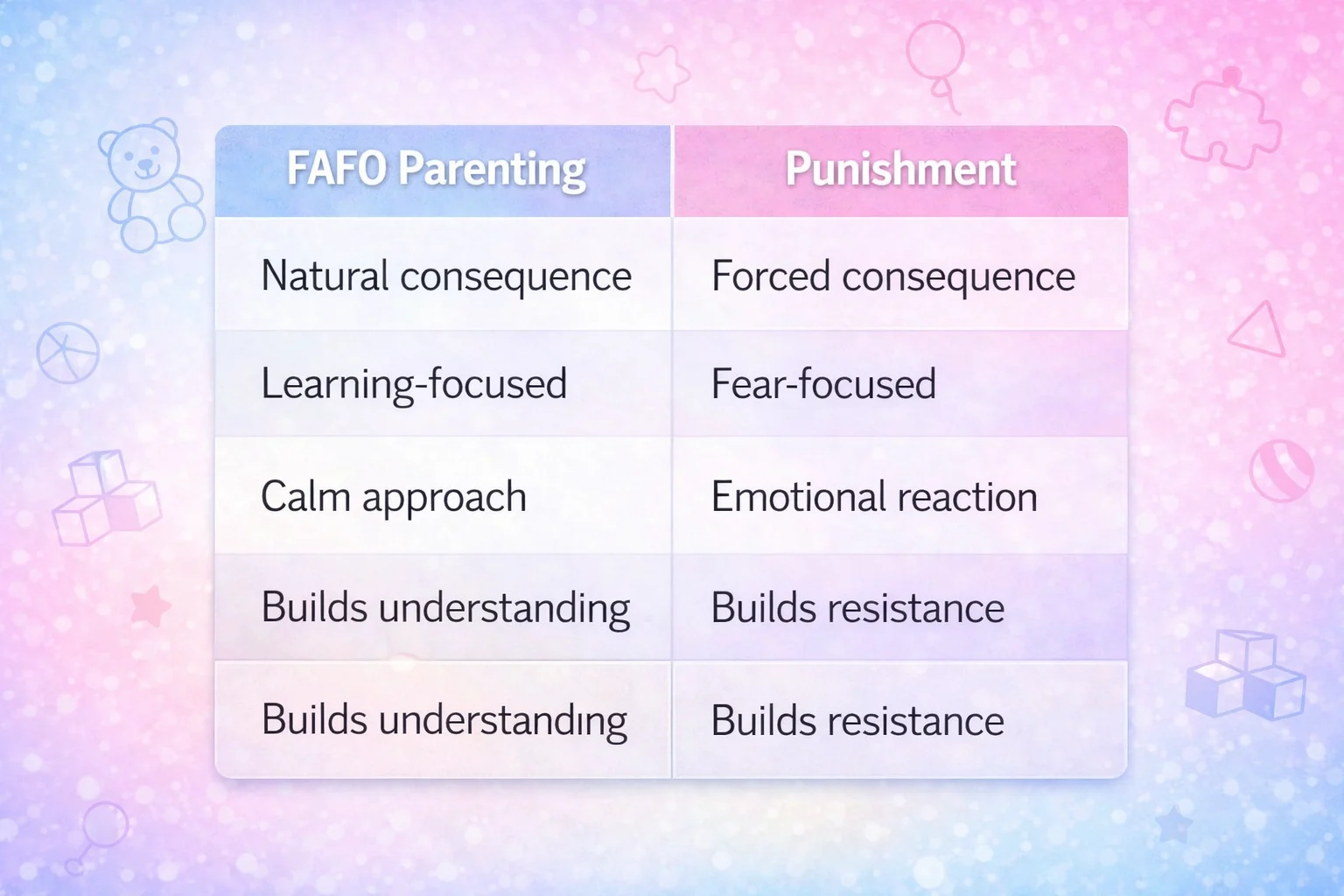
FAFO Parenting vs Punishment (Critical Difference)
Many parents confuse FAFO with punishment.
Let’s clarify:
👉 This distinction is critical for applying what is FAFO parenting correctly.
When FAFO Parenting Works Best
FAFO parenting is effective in situations like:
✔ Daily routines ✔ Habits ✔ Responsibility learning ✔ Time management ✔ Social behavior
Situations Where FAFO Should NOT Be Used
Never use FAFO when:
❌ Safety is involved (road, fire, strangers) ❌ Emotional breakdown is happening ❌ Child is too young to understand
Age-Wise Application of FAFO Parenting
Toddlers (2–4 years)
❌ Limited use ✔ Simple consequences only
Kids (5–10 years)
✔ Best stage for FAFO ✔ Strong learning impact
Teens
✔ Highly effective ✔ Builds independence
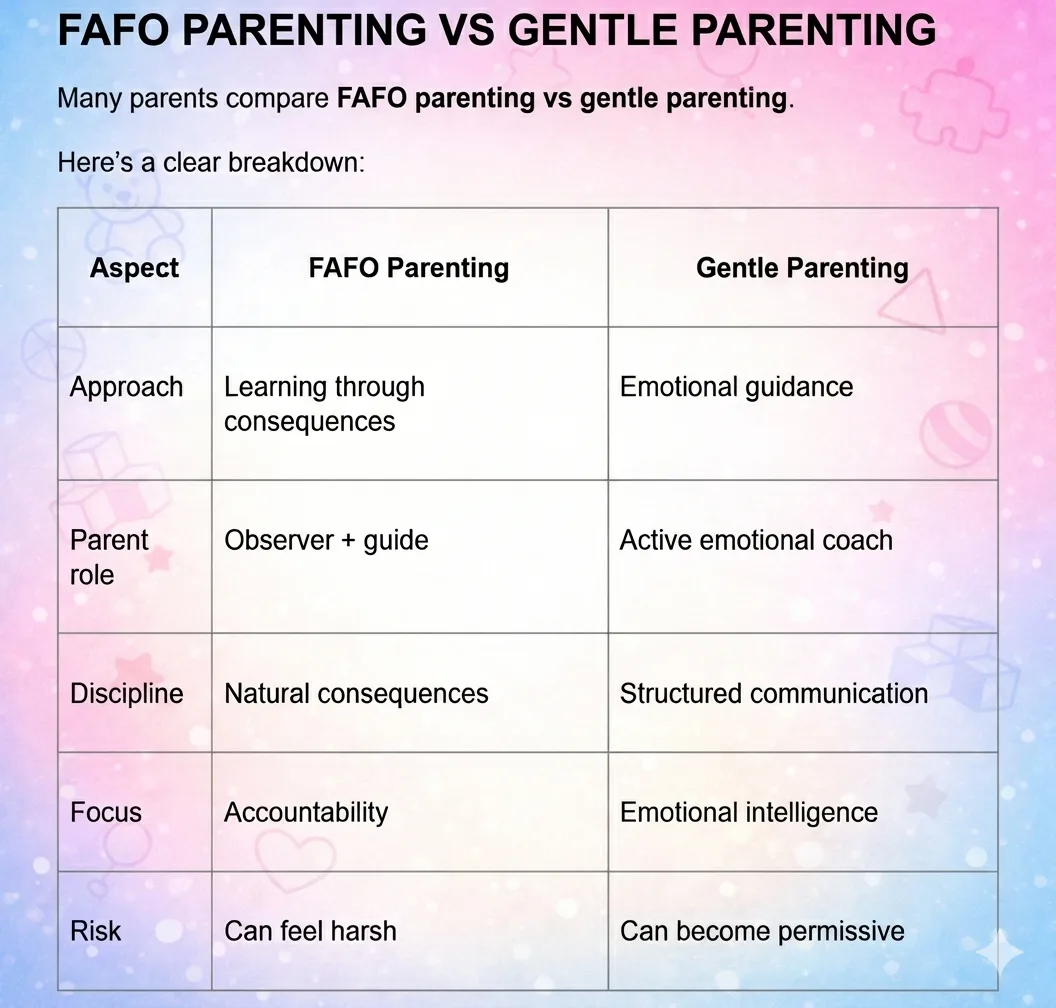
What is FAFO Parenting and Modern Parenting Shift
The rise of FAFO parenting shows a shift:From: ❌ Overprotective parentingTo: ✔ Real-world preparationThis is why many fafo parenting articles and discussions highlight it as a response to:
You warn your child 10 times They still don’t listen
At that point, FAFO parenting says:
“Let experience teach what words cannot”
For this reason, a lot of parents nowadays are looking into:
fafo parenting meaning
fafo parenting examples
is fafo parenting good
Because it offers something powerful:
Real learning without constant struggle
Final Takeaway of How FAFO Parenting Works
To summarize:
✔ FAFO parenting works through natural consequences ✔ It builds responsibility and independence ✔ It requires emotional support and control ✔ It should be used selectively, not everywhere
👉 Most importantly:
What is FAFO parenting? It is not about letting kids fail—it is about helping them learn safely through experience.
FAFO Parenting Examples: What Is FAFO Parenting in Real Life
Understanding fafo parenting examples helps you apply it correctly.
What is FAFO parenting? This video explains how children learn through natural consequences instead of punishment. It highlights the key differences between FAFO parenting and traditional discipline, helping parents understand when to guide and when to let kids learn on their own.
Even if child fails: Be supportive, not dismissive
Common Mistakes Parents Make
Avoid these errors:
❌ Letting children face dangerous consequences ❌ Using FAFO as punishment ❌ Ignoring emotional needs ❌ Not explaining outcomes ❌ Overusing the method
👉 Balance is the key.
FAQs
What is FOMO parenting?
FOMO parenting means “Fear Of Missing Out” parenting. Parents try to give children every opportunity to avoid missing out, often leading to over-scheduling and pressure.
Which four parenting philosophies are there?
The four types are: authoritative, authoritarian, permissive, and uninvolved. Each differs in control, warmth, and communication style.
What is a FAFO parenting mom?
A FAFO mom allows her child to learn through consequences instead of constant warnings, promoting independence and accountability.
What is the 7 7 7 rule for parents?
The 7-7-7 rule suggests spending meaningful time with children daily, weekly, and yearly to strengthen bonding and emotional connection.
AUTHOR BIO
Written by ZaminoToys Parenting Expert We share simple, practical parenting advice to help parents handle real-life challenges with confidence.