Search Results for: sensory toys

Here are the search results for your search.

When and Why Do Newborns Need Sensory Toys? Newborn Sensory Toys Parenting Guide (0–6 Months)
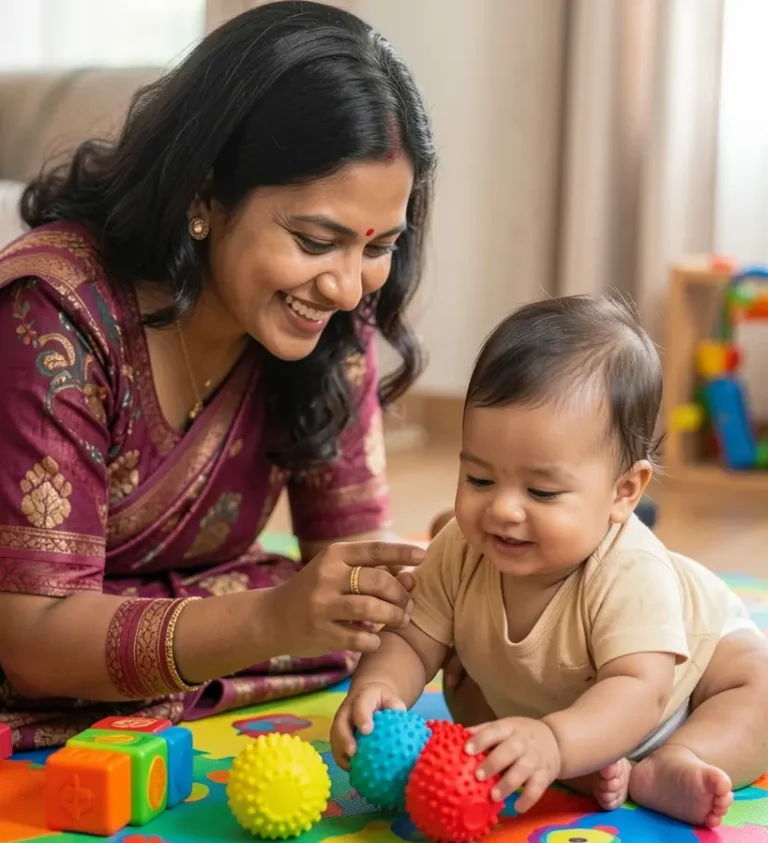
Mother engaging her infant with sensory toys for infants on a colorful playmat

  Welcoming a baby into your life comes with many questions — and one of the most common is: When should I introduce sensory toys? And why do newborns need sensory toys in the first place? This complete parenting guide to newborn sensory toys (0–6 months) explains the science behind early development, how sensory toys support brain growth, and how to choose safe, age-appropriate toys for infants. Quick Answer for Busy Parents When do newborns need sensory toys? Newborns can benefit from sensory toys from birth, especially toys that gently stimulate vision, hearing, and touch. Why are sensory toys important? Because during the first six months, a baby’s brain forms rapid neural connections. Proper sensory stimulation helps strengthen these connections and supports cognitive, emotional, and motor development. Why Sensory Toys Matter From Day One Many parents think toys are just for entertainment. In reality, sensory toys are developmental tools. According to research from the Harvard Center on the Developing Child, early childhood is a period of intense brain growth. The brain forms more than one million neural connections per second in early life. Sensory-rich experiences strengthen these pathways. This means that simple newborn sensory toys — such as black-and-white contrast cards or soft rattles — are not just objects. They help your baby: Focus their vision Recognize sounds Explore textures Develop emotional bonding Even before babies can hold toys, they are learning through observation and listening. What Are Sensory Toys? Sensory toys are toys designed to stimulate one or more of the five senses: 👀 Vision 👂 Hearing ✋ Touch 🤸 Movement ❤️ Emotional comfort Examples of newborn sensory toys include: High-contrast black and white cards Soft textured rattles Musical crib mobiles Tummy time sensory mats Plush comfort toys Unlike regular toys, sensory toys for infants are designed specifically to support developmental milestones.   0–6 Months: What’s Happening in Your Baby’s Brain? From birth to six months, your baby transitions from reflex-driven movements to active exploration. 0–3 Months Visual tracking begins Babies respond to sound Early bonding develops Grasp reflex appears 3–6 Months Rolling and reaching Teething begins Cause-and-effect learning develops Babbling increases The right newborn sensory toys align with these milestones and support natural growth. 0–3 Months: Gentle Sensory Stimulation At this stage, babies can see only 8–12 inches away and are sensitive to overstimulation. Sensory toys should be soft, simple, and calming. Best Newborn Sensory Toys (0–3 Months) ✔ Black and white sensory toys – Improve visual focus and tracking✔ Soft rattles – Introduce sound awareness✔ Musical crib mobiles – Support hearing development✔ Tummy time sensory mats – Strengthen neck and shoulder muscles✔ Soft plush toys – Encourage emotional bonding Why These Sensory Toys Matter These early sensory toys help newborns: Strengthen eye coordination Recognize sound patterns Develop early motor reflexes Build trust and emotional comfort 3–6 Months: Exploration and Interaction Now your baby begins grabbing, rolling, and mouthing objects. Sensory toys should encourage movement and curiosity. Best Sensory Toys for 3–6 Months ✔ BPA-free teething sensory toys✔ Crinkle books and textured cloth books✔ Grasping balls and soft blocks✔ Musical cause-and-effect toys✔ Talking plush toys Development Goals Supported Hand-eye coordination Motor skill development Memory building Early language listening Cause-and-effect learning This is the stage where sensory toys shift from observation to interaction. Let’s look at the growth milestones: Age Range Key Developments 0–3 Months Visual tracking, sound recognition, grasp reflex, early bonding 3–6 Months Smiling, babbling, rolling, grabbing, teething, self-recognition Toys that align with each stage support this natural development. The Science Behind Early Sensory Toys Studies show that sensory-rich environments help create stronger brain pathways. By providing varied textures, sounds, and visuals, you help your baby process new information. 📖 UNICEF recommends daily sensory play to boost a child’s brain and emotional resilience. 👂 Hearing: Use soft rattles, talking toys, or musical mobiles. 👀 Vision: High-contrast black and white books improve focus. 🖐 Touch: Fabrics with texture improve curiosity and motor coordination. 🤲 3–6 Months – Exploration & Action Now your baby begins to reach, roll, and grab. Their neck is stronger. Their eyes follow movement. They are learning cause and effect — for example, “If I press, it squeaks!” Now is an ideal occasion give them toys that they can play with. 🧸 Best Toys for 3–6 Months ✅ 1. Teething Toys Soothes sore gums Choose BPA-free silicone or textured rubber Chill in fridge (not freezer) for extra relief ✅ 2. Crinkle Books or Soft Books Make crinkle sounds when touched Encourage touch and visual exploration Introduce basic shapes, animals, or faces ✅ 3. Grasping Balls or Soft Blocks Improves hand-eye coordination Choose lightweight, easy-to-hold shapes Try activity cubes with tags and textures ✅ 4. Musical and Light Toys Introduce cause and effect Boost memory and attention Encourage movement and smiles! ✅ 5. Soft Animal Toys That Talk Toys that say “hello” or sing rhymes Improve language listening Build emotional bonding 💡 Real-Life Toy Tips for Indian Parents 💰 Budget-Friendly Tips: Don’t buy too many toys. 5–7 quality toys per stage are enough. Use household items like scarves, steel cups, or old cloth for DIY toys (always supervise). 🧼 Hygiene Tips: Clean all toys once or twice a week. Wash soft toys with baby-safe detergent. Use toy sanitizer sprays for plastic toys. 🕒 Play Schedule Tips: Use morning time for active play Use bedtime for soft music toys Don’t force play when baby is tired or cranky 3–6 Months: Toys for Exploration Your baby is now starting to move more — reaching, grasping, mouthing, rolling, and kicking. Their brain is learning fast, especially through cause-and-effect. ✅ What to Look For: Teething-safe toys made from food-grade silicone Crinkle or squeaky textures for sound discovery Toys that respond when touched (e.g. soft music, rattles) Graspable shapes that help with hand-eye coordination 🧠 Development Goal: Motor skills, cause-effect learning, coordination 🧩 Toy Examples: Soft blocks with different textures and sounds Silicone teething rings with textured grips Plush animals that talk or sing when squeezed Cloth books with lift-the-flap
When and Why Do Newborns Need Sensory Toys? Newborn Sensory Toys Parenting Guide (0–6 Months) Read More »

Musical Toys

Musical Toys for Newborns Gentle Sounds Baby Will Love Explore musical toys for newborns that add gentle sounds to early play, with simple tips for choosing safe, age appropriate options. Musical Toys for Newborns: A Safe Toy Ideas A newborn’s world is small and quiet at first — feeds, naps, and short stretches of wide-eyed watching. Sound plays a bigger part in that world than most people expect. A soft rattle shake, a gentle lullaby from a crib mobile, a plush toy that hums when squeezed — these small moments of sound can turn an ordinary afternoon into something your baby actually notices. That’s really the whole idea behind musical toys for newborn babies: not entertainment for entertainment’s sake, but a gentle way to give your little one something calm to focus on. This guide walks through what actually matters when picking one out, which types tend to work best, and a few things worth skipping altogether. What Are Musical Toys for Newborns? For a newborn, a musical toy can be as simple as a soft rattle or a toy with a quiet tune. The sound becomes part of those early play moments. A musical toy made for a toddler who wants to press buttons and hear different songs is a completely different product from one made for a baby who is still figuring out how to focus their eyes on a moving shape. Good musical toys for newborns usually have a few things in common: gentle, adjustable sounds, little or no flashing light, and simple melodies that repeat instead of offering too many songs or sound effects in one toy. They’re meant to soothe, not stimulate. Best Types of Musical Toys for Newborns 🔊 Gentle Sound Look for a toy with an adjustable volume dial, or one where the loudest setting is still fairly soft. A toy that startles rather than soothes has missed the entire point. 🔩 Secure Batteries Battery compartments should be closed with a screw, not a simple snap-on lid. This one detail separates a well-made toy from a risky one, especially with anything secondhand. 🧵 No Loose Parts Ribbons, bows, plastic eyes, tags — anything that could work loose with repeated tugging or washing needs a second look. Run your fingers along every seam before you trust a toy near your baby. 🏷️ Age Recommendations Packaging usually lists a suggested age range, and it’s there for a reason — a toy built for grabbing hands doesn’t do much for a two-week-old who can barely lift their arms yet. Checking that label can help avoid pointless purchases. 🧺 Easy-to-Clean Materials Spit-up happens constantly in the early weeks, so anything fabric-based should go straight into the washing machine without falling apart. 🧸 Sturdy Construction Stitching should hold, plastic shouldn’t feel brittle, and nothing should rattle loose after a few uses. A toy that starts falling apart quickly usually wasn’t built with a baby’s mouth and hands in mind to begin with. 🎠 Musical Crib Mobiles A mobile with slow-turning shapes and a soft tune is often the single most-used toy in a nursery. It gives your baby something to watch and listen to without needing to do anything themselves, which fits perfectly with how little a newborn can physically manage. 🧸 Soft Musical Toys Plush toys with a hidden music box inside make great comfort items. They’re easy to take anywhere, whether you’re heading out in the car, using the stroller, or visiting a family member, and their gentle sounds are less likely to overwhelm your baby. 🤸 Musical Play Gyms Once a baby starts kicking and reaching a bit more, a play gym with dangling musical pieces gives those movements a purpose. A gentle kick that produces a soft sound is often a baby’s first real taste of cause and effect. 🎵 Musical Rattles Simple, classic, and still one of the best options out there. Shake it gently near your baby and watch how their eyes track toward the sound — it’s a small moment, but a genuinely sweet one. 👆 Touch-Activated Musical Toys These play a short, soft tune when squeezed. At this stage your baby won’t be doing the squeezing themselves, but they’ll enjoy listening while you do it for them, and that’s completely normal for this age. Best Types of Musical Toys for Newborns Toy Type Best Used For Watch Out For Crib Mobile Naptime, quiet wind-down Flashing lights, overlapping tunes Soft Musical Toy Comfort, travel, cuddling Non-adjustable volume Musical Play Gym Supervised awake time Toys meant for older babies Musical Rattle Short focused play sessions Hard or rigid materials Touch-Activated Plush Gentle sensory exposure Sudden loud sound bursts Musical Toys to Avoid for Newborns Not everything labeled “infant-friendly” is actually appropriate this early. Choose toys without excessive flashing lights, fixed-volume sounds, sharp plastic edges, or easily opened battery compartments. If a toy feels like it was designed to impress a shopper rather than soothe a baby, it probably wasn’t built with the earliest weeks in mind. How to Choose Safe Musical Toys Not every toy on a shelf deserves a place in your baby’s room. When picking musical toys for newborn babies, here are some important things to check before buying. 🔘 Small Parts Buttons, bows, and decorative pieces can look harmless in a photo and still come loose with regular use. Check every attachment point before a toy goes near the crib. 🔊 Volume Some cheap toys can have a harsh, tinny sound that may startle rather than soothe. Listen to a sample before buying and look for toys with a volume switch or a naturally soft default setting. 🔩 Batteries Screwed-in battery compartments are non-negotiable, especially for hand-me-down or secondhand toys where you can’t be sure of the original build quality. 🧵 Seams and Materials Rough stitching or chipping paint wears down fast with daily handling. Smooth plastic and machine-washable fabric hold up far better. 🏷️ Age Labels The suggested age range on the packaging isn’t just a suggestion

Musical Toys Read More »

pick best toys

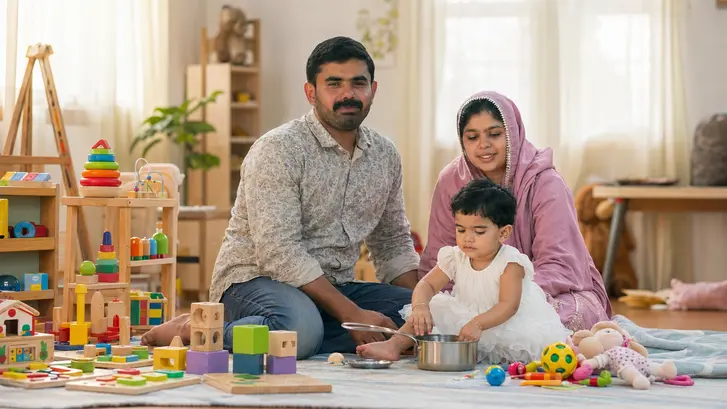
Father and mother watching their daughter play with a simple object surrounded by carefully chosen toys

How I Picked Toys for My Daughter A dad’s real experience choosing toysthat are fun, useful, and right for her age. What I Expected vs. What Actually Happened Picking Toys for My Daughter My ideas about what toys to introduce to my daughter started even before she was born. Not because I wanted a perfectly styled play corner — honestly, I was just excited, and a little anxious about getting it “right.” I remember scrolling through toy listings late at night, trying to work out how to pick the best toys for a baby I hadn’t even met yet, and slowly realizing that most of what I was reading was written to sell something, not to help me understand my own child. Two years later, I have a much simpler answer than I expected to find. This is that journey — what we tried, what actually got used, and what just sat there. Before She Was Born: Planning vs. Reality I pictured a neat little shelf of wooden toys and “developmental” kits. Then she actually arrived, and I learned two things fast: newborns don’t care about elaborate play gyms, and a lot of the toy market is built around parental worry, not what a baby actually needs. What I actually needed wasn’t more products. It was a simple way to think about what she was ready for at each stage — and the willingness to just watch her, instead of guessing from a box. My daughter watching and exploring a colourful hanging toy during her early months, when even the simplest things could hold her attention. The best toy doesn’t have to be the biggest or most expensive one. 0 to 3 Months — Simple, High-Contrast, Nothing Fancy In the first weeks, a newborn’s vision is still developing — mostly bold contrast, close range. So I kept it simple: A black-and-white contrast card, propped beside her changing mat A soft crinkle cloth she could touch during tummy time A lightweight wrist rattle Watching her eyes actually track the card’s pattern for the first time was a small, ordinary moment, and it stuck with me more than I expected — no toy did that, she did. What I skipped: anything with batteries. A flat card on the floor did more than any light-up toy we were gifted. 3 to 6 Months — Reaching, Grabbing, Figuring Things Out By three months she was reaching for things and bringing her hands to her mouth constantly. An O-ball (the open, easy-to-grip kind) became a genuine favorite — her fingers could actually get around it, unlike a few smoother toys that just slipped out of her hands. A simple wooden rattle taught her something too, in her own way: move my arm, hear a sound. Nothing complicated about it, but she’d repeat it over and over. 6 to 12 Months — From Watching to Doing Once she could sit up on her own, everything changed. She went from looking at things to actually handling them — banging, dropping, passing between hands. A few things that genuinely held her attention during this stretch: Real-photo sensory cards — we moved on from black-and-white patterns to cards with actual photos of everyday objects and faces A simple wooden box with a ball that drops through a hole — no branding needed to explain it; she’d drop the ball in, watch it roll out, and immediately do it again, for longer stretches than I expected from something so plain A sturdy push walker — once she started pulling up to stand, this gave her something stable to lean into while she worked out her first steps 12 to 24 Months — Books, Stacking, and a Lot of Repetition After her first birthday, play got more physical and more purposeful. Board books with lift-the-flap pages and different textures became part of our actual routine, not just something on a shelf — though she was just as often interested in flipping pages fast as she was in listening to me read them, which is exactly how it goes with a real toddler. Nesting stacking cups turned out to be one of the most-used things we owned — towers, bath-time pouring, hiding small objects underneath, whatever she decided that day. A simple wooden shape sorter, with big knobs she could actually grip, gave her something to work at and get frustrated by and eventually figure out. Now, at Two She’s deep into pretend play these days — a simple wooden play kitchen with velcro vegetables keeps her busy while My Wife actually cooking. Building blocks and magnetic tiles get used for towers, roads, whatever she’s decided they are that afternoon. A basic sorting tray, grouping things by color, holds her attention longer some days than others — which I’ve learned is just how this age works. How I Actually Try to Pick the Best Toys Now Not a formal system — just the questions that have actually saved me money and clutter: Does she do the work, or does the toy? If it flashes and plays music the moment it’s switched on, she mostly watches. If it waits for her to do something with it, she plays. Can it be used in more than one way? Something that’s only ever “correct” one way tends to get boring fast. Does it hold up to actual use? Thick board pages, food-grade silicone, and solid wood have all outlasted the thinner plastic toys we’ve had. Am I buying this for her, or because an ad got to me? Honestly, I’ve caught myself almost adding something to the cart purely because the listing claimed it “helps development” — and that’s usually the exact moment I’ve learned to slow down and ask the question again, rather than trust the label. I want to be clear about something: none of this is a guarantee that a toy will “build” a specific skill. What I’ve actually seen is simpler — a toy that invites her to do something

pick best toys Read More »

best-toys-for-6-to-12-months-montessori-play-movement-age-wise-gift-ideas

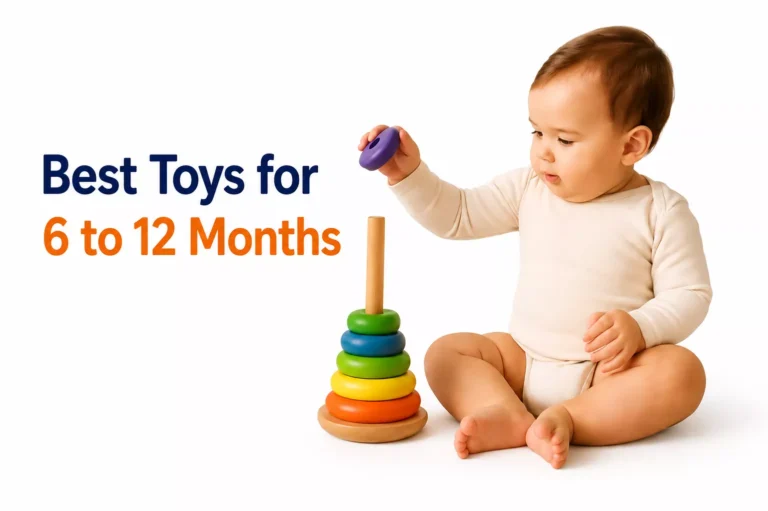
Infant stacking rings on a wooden peg near text reading Best Toys for 6 to 12 Months.

Best Toys for 6 to 12 Months: Essential Picks to Boost Baby Development Jump Directly to Recommended Toys Home / Expert Matched In a Hurry? Milestone-to-Toy Quick Match We mapped Pediatric PT Dr. Olivia’s milestone checklist directly to safe, high-rated developmental alternatives available in India: 6–12 Months (Crawl, Stand & Explore): Fisher-Price Ultimate Playhouse & BCP Soft Foam Blocks Targets gross motor skills, core stability, crawling, and spatial awareness. 12–18 Months (Fine Motor & Active Balance): GRAPHENE Kids Steering Wheel & Sunderlook Mini Balance Bike Builds fine motor precision, cause-and-effect logic, and dynamic balance. 18+ Months (Advanced Coordination & Logic): Edbuosy Modular Couch, LENDZEE Pikler Triangle & Cable World Activity Cube Accelerates independent climbing, gross motor strength, and spatial logic. What Milestones Do Babies Reach Between 6 and 12 Months? Between 6 and 12 months, your baby rapidly transitions from a passive observer into an active explorer. To support this physical leap, they need targeted toys that help them practice three core developmental drivers: 🎯 Overview 💪 Physical Movement 🖐️ Manipulation 🧠 Cause & Effect What This Guide Offers Indian Parents This evidence-backed guide removes the guesswork out of selecting toys by breaking down developmental needs month by month: Handpicked Picks: Targeted for your 6-month-old, 9-month-old, or 12-month-old. Expert Masterclasses: Practical breakdowns from leading pediatric physical therapists. Growth Roadmaps: Clear understanding of physical and sensory progress. Local Alternatives: Safe, non-toxic options easily bought right here in India. Gross Motor & Physical Movement During this phase, babies transition from static positions to full mobility. Toys should encourage muscle activation, balance, and spatial movement. Key Physical Focus: Graduating from sitting up independently to crawling, pulling up on furniture, and standing with support. Fine Motor & Active Manipulation Hand-eye coordination rapidly sharpens between 6 and 12 months as babies move from whole-hand grasping to precision dexterity. Key Skill Focus: Reaching for moving targets, transferring items between hands, banging blocks together, and mastering the early pincer grasp. Cognitive Logic & Cause & Effect Babies begin to realize that their physical actions produce predictable outcomes in their environment. Key Cognitive Focus: Dropping toys intentionally to evaluate sounds, testing textures, and interacting with tactile objects to learn spatial bounds. 💡 Pediatric Research Insight A landmark study by the American Academy of Pediatrics shows that open-ended toys in caregiver-supported environments significantly boost cognitive flexibility, emotional resilience, and early language development compared to battery-operated devices. Expert Breakdown: Dr. Olivia (Pediatric Physical Therapist) Physical development in this window focuses on core stability, spatial navigation, and leg muscle activation. Watch Dr. Olivia break down how physical milestones align with open-ended play design: Top Recommended Picks & Indian Alternatives While premium cross-border imports can be cost-prohibitive due to international shipping fees, we curated highly safe, local alternatives available directly in India: Budget Friendly Cable World 6-in-1 Activity Cube A multi-functional learning hub for fine motor precision and cause-and-effect reasoning. Perfect for sitting play. Check Price on Amazon India Movement Trainer Sunderlook Mini Balance Bike Indoor trainer designed for babies transitioning from crawling to early standing. Drives core balance. Check Price on Amazon India Premium Centerpiece LENDZEE Wooden Pikler Triangle Solid wood structural climber built for independent climbing, spatial awareness, and muscle strength. Check Price on Amazon India Pick #1: Fisher-Price Laugh & Learn Ultimate Playhouse (IMPORTED) Premium Developmental Anchor This interactive playhouse serves as a complete gross motor tracking frame, designed to safely anchor a 6-to-12-month-old infant as they push up from a crawl into an independent stand. Developmental Uses & Milestone Benefits: Gross Motor Skills: Supports early standing, balance, and spatial navigation. Fine Motor Precision: Tactile buttons, key turning, and drop-through ball play. Cognitive Development: Interactive cause-and-effect learning loops. Language & Communication: Musical phrasing and early vocabulary exposure. 👍 Pros: Packed with 200+ songs; scales flawlessly from age 6 months up to 3 years old. 👎 Cons: Large physical footprint; requires 30–45 minutes of initial setup assembly. Buy On Amazon India Pick #2: 5-Piece Soft Foam Climbing Blocks Set Gross Motor Active Play This five-piece modular foam configuration accelerates gross motor skills by providing dense, impact-absorbing crawling elevations for safe spatial muscle activation. Developmental Uses & Milestone Benefits: Gross Motor Skills: Indoor climbing, ramp crawling, and core balance support. Fine Motor Precision: Stacking, shifting modular shapes, and tactile grip. Cognitive Development: Spatial awareness and structural problem-solving. 👍 Pros: Safe Build: Soft foam core absorbs impacts; water-resistant PU leather cover wipes clean easily. 👎 Cons: High Investment: Global import freight carries a premium tag over ₹20,993; requires dedicated space. Buy On Amazon India Pick #3: GRAPHENE Kids Musical Steering Wheel Toy High-Value Local Alternative An excellent local interactive choice that targets bilateral hand coordination through non-static tracking mechanics, offering a practical alternative to high-cost imported driving toys. Developmental Uses & Milestone Benefits: Fine Motor Precision: Steering rotation, gear shifting, and targeted button pressing. Cognitive Development: Visual tracking using the dynamic simulated road screen. Cause-and-Effect Logic: Direct auditory and light feedback upon interaction. 👍 Pros: Smart Value: Saves over ₹25,000 in import fees while providing rich sensory engagement in a compact footprint. 👎 Cons: Battery Dependent: Requires AA batteries for audio and display screen; lightweight plastic body. Buy On Amazon India Pick #4: Sunderlook Mini Balance Ride-On Push Bike Early Movement Trainer A low-clearance, four-wheel movement trainer engineered with limited safety steering bounds to steadily develop early pelvic balance and leg muscle groups. Developmental Uses & Milestone Benefits: Gross Motor Skills: Bilateral leg pushing and directional balance. Physical Movement: Smoothly transitions crawling infants into active movers. Body Awareness: Spatial navigation and coordination control. 👍 Pros: Sturdy & Safe Build: 135-degree steering limit prevents tipping; silent TPU indoor wheels at ₹1,999. 👎 Cons: Age Note: Box targets 12–36 months; younger infants pushing up to stand require close supervision. Buy On Amazon India Pick #5: Cable World Baby Activity Cube (6-in-1 Multi-Purpose Learning Toy) All-In-One Fine Motor Hub This all-in-one exploratory station stacks six distinct mechanical milestone challenges into a small layout, driving fine motor skill practice without causing sensory overload. Developmental Uses

best-toys-for-6-to-12-months-montessori-play-movement-age-wise-gift-ideas Read More »

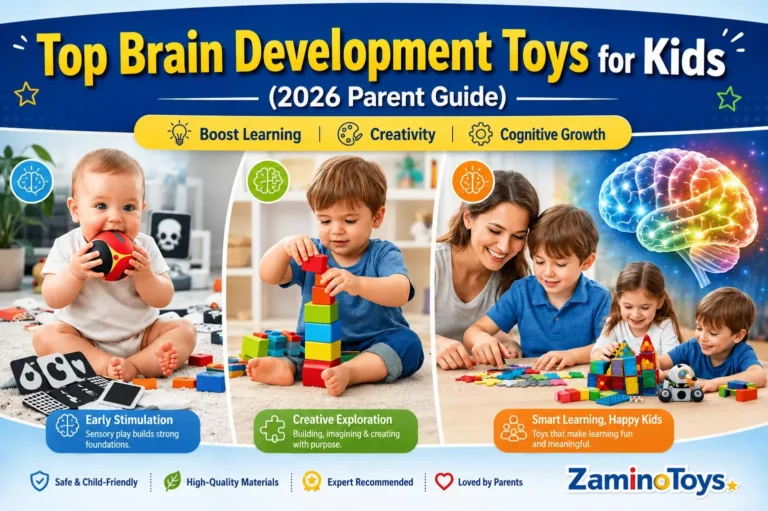
Top Brain Development Toys to Boost Your Child’s Learning (2026 Parent Guide)

Brain development toys helping infants, toddlers, and preschool children improve learning, creativity, memory, and cognitive development through interactive play

Are you searching for the best brain development toys for your child? The right brain development toys do more than keep children busy. They help improve memory, problem-solving, creativity, language skills, and emotional growth. In this parent-friendly guide, you will learn: ✅ How brain development works in young children ✅ Why play is important for learning ✅ How to choose safe brain development toys ✅ Best brain development toys by age group ✅ Simple ways to turn playtime into learning time What Are Brain Development Toys? Brain development toys are toys designed to help children think, learn, and explore. These toys support healthy brain growth through play. Brain development toys help children build: Strong brain connections Thinking and problem-solving skills Memory and focus Language and communication Emotional control Unlike screen-based entertainment, brain development toys require children to touch, move, build, and explore. This active play helps the brain grow faster and stronger. Why Brain Development Toys Are Important The first five years of life are the most important for brain growth. During this time, a child’s brain forms millions of connections every second. Using brain development toys during early childhood helps children: Learn faster Build stronger thinking skills Improve attention span Develop better emotional control Research shows that children learn best when they play, explore, and interact with their environment. Brain development toys support this natural learning process. Why Play Helps Brain Development One of the finest methods for kids to learn is via play. When children play with brain development toys, they: Try new ideas Solve problems Learn social skills Improve creativity Different types of play help the brain in different ways. How Play Builds Brain Skills Play Activity Brain Skills Developed Building blocks Logic and spatial thinking Puzzles Memory and problem-solving Pretend play Creativity and language Board games Strategy and patience Play also helps children feel confident. you know how children leran?trying,failing and trying again   How to Choose the Best Brain Development Toys Choosing the right brain development toys is very important. Use this simple parent checklist. 1. Choose Age-Appropriate Brain Development Toys keep in mind  that its not appropriate to  force children to learn in ways which doesnt match their age or ability   Infants: Sensory and visual toys Toddlers: Motor skill and language toys Preschoolers: Creative and problem-solving toys 2. Choose Skill-Building Toys Good brain development toys should help children develop: Thinking skills Fine motor skills Pattern recognition Cause-and-effect learning 3. Choose Open-Ended Brain Development Toys Open-ended toys allow children to play in many ways. Example: Building blocks can become towers, houses, or bridges. This improves imagination and flexible thinking. 4. Choose Safe Brain Development Toys Always check that toys: Are made from safe, non-toxic materials Do not contain small choking hazards Are strong and durable Follow child safety standards Safety should always be the top priority. Best Types of Brain Development Toys Providing different types of brain development toys helps children learn many skills. Building and Construction Brain Development Toys Examples: Blocks Magnetic tiles Construction kits These brain development toys help children: Learn balance and structure Improve problem-solving Develop motor skills Understand basic engineering concepts Puzzle and Logic Brain Development Toys Puzzles and board games help children: Improve memory Develop patience Build thinking skills Learn strategy These brain development toys also help children learn teamwork and social interaction. Creative Brain Development Toys Examples: Drawing and coloring kits Musical instruments Craft activity kits Creative brain development toys help children: Express emotions Improve hand-eye coordination Build confidence Strengthen imagination Best Brain Development Toys for Infants (0–12 Months) Infants learn through their senses. Sensory brain development toys are best for this stage. Recommended Brain Development Toys for Infants Soft rattles Black-and-white sensory cards Textured balls Teething rings Activity play gyms These brain development toys help infants: Improve sensory awareness Develop motor movement Strengthen hearing and vision Learn grasping skills Books Are Powerful Brain Development Toys Board books help infants: Learn sounds and language Improve listening skills Build memory Reading daily supports strong brain growth. Best Brain Development Toys for Toddlers (1–3 Years) Toddlers love to explore and move. Brain development toys for toddlers should support curiosity. Top Brain Development Toys for Toddlers Building blocks Shape sorters Stacking toys Talking educational toys Interactive books These brain development toys help toddlers: Learn new words Understand cause and effect Improve coordination Strengthen problem-solving Repetition during play helps toddlers learn faster. Best Brain Development Toys for Preschoolers (3–5 Years) Preschoolers can handle more complex learning activities. Recommended Brain Development Toys for Preschoolers Advanced puzzles Board games STEM building toys Beginner coding toys Art and craft kits Why STEM Brain Development Toys Are Important STEM toys introduce children to: Science learning Engineering thinking Logical problem-solving Analytical skills These brain development toys build confidence and prepare children for school learning. How to Use Brain Development Toys for Learning Buying brain development toys is only the first step. How children use them matters most. 1. Create Fun Learning Challenges Try activities like: Build the tallest tower Solve puzzles within time Build bridges using blocks These challenges improve focus and patience. 2. Use Brain Development Toys in Daily Routine Parents can: Use shape games during snack time Read books before bedtime Practice counting during cleaning time This makes learning natural and fun. 3. Plan Themed Learning Days Examples include: Science learning day Art and craft day Storytelling day Themed learning improves memory and understanding. Expert Parent Tips for Using Brain Development Toys Parents play the biggest role in learning. ✔ Play With Your Child Ask simple thinking questions like: What happens if we try this? Why do you think this works? This improves problem-solving skills. ✔ Follow Your Child’s Interests If your child loves vehicles, introduce building toys related to cars and roads. Interest-based play improves learning. ✔ Reduce Screen Time Hands-on brain development toys give better learning results than passive screen time. Frequently Asked Questions About Brain Development Toys   What are the best brain development toys? The best brain development toys include

Top Brain Development Toys to Boost Your Child’s Learning (2026 Parent Guide) Read More »

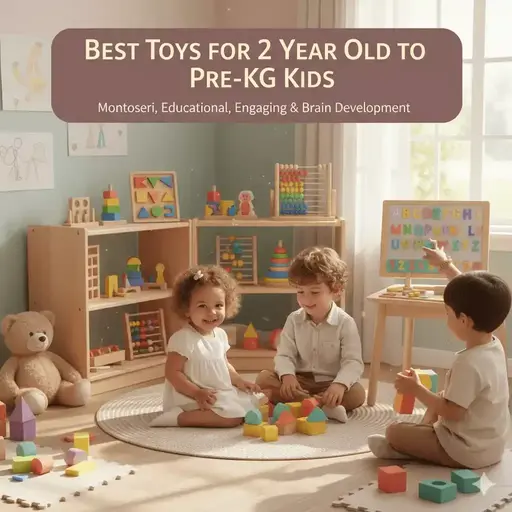
Best Toys for 2 Year Old to Pre-KG Kids: Montessori, Educational, Engaging & Brain Development Toys

Toys for 2 Year Old

Why Choosing the Right Toys for 2 Year Old Matters When your child turns two, the world suddenly becomes their playground. Every color, texture, sound, and movement sparks curiosity. At this stage, the brain develops faster than at any other time. Choosing the right toys for 2 year old children can shape how they learn, imagine, and grow. Between 2 years and pre-KG age (around 4 years), kids learn through hands-on exploration — not lectures or screens. That’s why the Montessori approach, educational play, and engaging learning toys are trending among conscious parents in India. These toys allow your little one to play independently, stay curious, and develop naturally. So, in this guide, we’ll walk you through 4 key categories of toys: Montessori Toys for 2 Year Old Educational Toys for 2 Year Old Engaging Learning Toys for 2 Year Old Brain Development Toys for 2–4 Year Kids Each section includes 3 handpicked toys with buying links and expert-backed insights into how each supports growth. 🧩 1. Montessori Toys for 2 Year Old: Independence & Practical Learning Montessori philosophy focuses on giving children freedom to explore, think, and create at their own pace. For toddlers, this means toys that are simple, purposeful, and sensory-rich — designed to stimulate hands, eyes, and brain equally. Why Montessori Toys Are Perfect Toys for 2 Year Old At two years, toddlers love repeating actions. Montessori toys encourage repetition, fine motor skills, hand-eye coordination, and logical thinking. These toys teach cause and effect — every pull, push, and twist builds understanding of how the world works. Here are 3 Montessori toy recommendations perfect for toys for 2 year old: 🪵 1. Montessori Wooden Busy Board Buyig Link: Montessori Busy Board   Buyig Link: Montessori Busy Board   A Montessori classic, this busy board includes zippers, buttons, locks, switches, and laces. It keeps your child focused while improving their fine motor control and problem-solving ability. Why it’s great: Promotes independence Strengthens finger muscles Builds daily life skills 🔢 2. Wooden Shape Sorter Box Link:  wooden-shape-sorter Link:  wooden-shape-sorter Shape sorters are Montessori staples that teach your child how shapes fit into the world. As your child matches each piece, they learn spatial awareness, patience, and focus — key skills before starting school. Why it’s great: Encourages visual recognition Improves logical sequencing Durable and safe for toddlers 🧮 3. Montessori Stacking Rings   Link:Montessori Stacking Rings Link:Montessori Stacking Rings This colorful stacker promotes early counting, color sorting, and hand control. The circular motion helps train the wrist — essential for writing later. Why it’s great: Introduces order and size comparison Boosts patience and hand coordination Montessori Takeaway: Montessori toys for 2 year old are not about entertainment but empowerment. They let children do things themselves, preparing them for pre-KG life with confidence. 📚 2. Educational Toys for 2 Year Old: Play That Teaches Educational toys combine fun with structured learning. At 2 years, children are like sponges — they absorb language, numbers, and logic through imitation and play. Why Educational Toys Are Essential From identifying colors to learning alphabets, educational toys for 2 year old turn daily playtime into meaningful learning experiences. Unlike screen learning, these toys build focus, imagination, and creativity naturally. Here are our top three educational toys for toddlers: 🧠 1. Alphabet & Number Learning Board Link: Alphabet & Number Learning Board Link: Alphabet & Number Learning Board   This board uses colorful letters and numbers to introduce literacy and numeracy in a playful way. Perfect for 2-year-olds starting to recognize symbols and sounds. Benefits: Enhances letter recognition Boosts memory retention Builds vocabulary 🎨 2. Magnetic Drawing Board Link: magnetic-drawing-board Link: magnetic-drawing-board Encourage creativity with this mess-free drawing tool. It develops fine motor skills, imagination, and hand control — early steps toward writing. Benefits: Zero mess coloring Boosts creativity and expression Builds visual-spatial skills 🧩 3. Color & Shape Matching Puzzle Link: color-shape-puzzle Link: color-shape-puzzle Children love matching colors and shapes. This educational puzzle helps toddlers identify differences, improving their cognitive flexibility. Benefits: Encourages problem-solving Strengthens observation Promotes patience and persistence Educational Takeaway: By 2 years old, children are ready to learn foundational skills. The best educational toys for 2 year old are those that make them think, ask questions, and express themselves. 🎯 3. Engaging Learning Toys for 2 Year Old: Fun That Stays Productive Engaging toys keep your child’s attention while teaching something meaningful. The key is balance — not overstimulation, not boredom. Why Engagement Matters When a toy is truly engaging, your child practices focus, self-control, and creative experimentation. Engagement means they’re not distracted — they’re exploring deeply. Here are 3 engaging toys ideal for 2-year-olds to pre-KG: 🧸 1. Activity Cube Toy Link: learning-activity-cube Link: learning-activity-cube This 5-in-1 cube includes bead maze, clock, alphabet rollers, and spinning gears — all in one. It’s a mini play center that supports multi-skill development. Benefits: Improves coordination and patience Offers multi-sensory stimulation Keeps toddlers engaged for hours 🎼 2. Musical Xylophone Toy Link: musical-xylophone Link: musical-xylophone Music is a language of its own. A xylophone enhances auditory learning and rhythm understanding — perfect for building creativity. Benefits: Enhances sound recognition Improves motor timing Encourages music appreciation 🪙 3. Counting Bears Sorting Set Link: counting-bears-set Link: counting-bears-set This colorful sorting game teaches counting, color grouping, and logical classification. It’s both engaging and educational. Benefits: Strengthens math readiness Develops logical sequencing Keeps learning fun and visual Engagement Takeaway: Engaging toys for 2 year old children should spark curiosity and hold their focus — because deep play equals deep learning. 🧠 4. Brain Development Toys for 2 Year Old to Pre-KG: Grow Smart from the Start Between 2 and 4 years, 90% of a child’s brain develops. That’s why toys that stimulate thinking, problem-solving, and exploration are vital. Why Brain Development Toys Matter Brain development toys support neural growth, coordination, memory, and reasoning. They teach toddlers how to connect cause and effect, recognize patterns, and stay focused. Here are 3 highly recommended toys for brain development:

Best Toys for 2 Year Old to Pre-KG Kids: Montessori, Educational, Engaging & Brain Development Toys Read More »

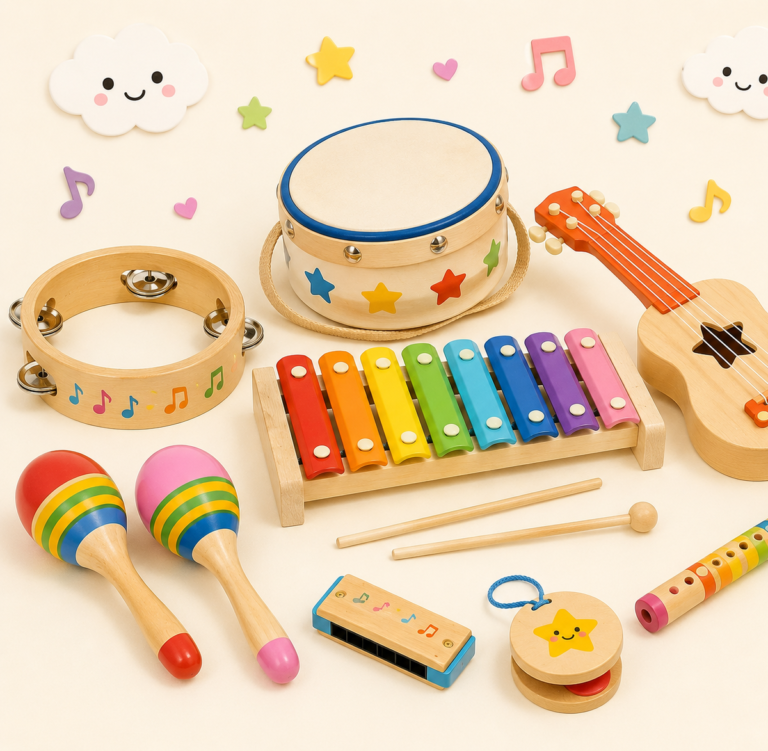
Best Musical Toys for Infant Brain Development

🎵Music and the Infant Mind From the very first lullaby whispered into a newborn’s ear to the cheerful chimes of a musical cot mobile, sound plays a crucial role in early brain development. Music is not just a source of comfort; it’s a scientific tool that supports infant brain development, enhances emotional bonding, and stimulates neural growth. Recent studies suggest that musical exposure, especially through musical toys, actively engages multiple areas of a baby’s brain—including those responsible for memory, language processing, auditory recognition, and motor skills. In fact, many experts in early childhood development now recommend the use of age-appropriate musical toys for infants to support cognitive and emotional milestones. For example, the rhythmic tapping on a toy drum, the tinkling of a xylophone toy, or the colorful keys on a child’s piano are not just fun—they’re functional tools for brain growth and sensory development. These toys help improve coordination, attention span, auditory discrimination, and even pave the way for early speech patterns. If you’re a parent who’s serious about giving your child the best start in life, investing in interactive musical toys is one of the smartest choices you can make. They support both mental development and emotional bonding, offering your little one a playful path to progress. Whether it’s a musical elephant toy, a gentle lullaby toy, or a stimulating piano play gym, each item is designed to nurture specific parts of your baby’s developing brain. In this blog, you’ll discover how musical toys directly impact brain development, which toys work best at various age stages (from 0–12 months), and how musical play links with the frontal cortex development and neurological development of your growing baby. You’ll also get practical recommendations, parent tips, and expert-backed insights to guide your choices. So, let’s tune in to the science and joy of music as we explore the best musical toys that boost infant brain development—because these aren’t just toys, they’re tools for lifelong learning. 🧠 The Science Behind Music and Brain Development Did you know that babies are born with nearly all the neurons they’ll ever need—but their brains require rich sensory input to build strong connections? That’s where the game changer Musical toys steps in. Backed by scientific research, music acts as one of the most effective stimuli for infant brain development, helping babies grow smarter, more social, and emotionally balanced right from the crib. According to the Harvard Center on the Developing Child, the early years—from birth to age three—are a critical period for developing the architecture of the brain. Neural connections are formed rapidly in response to positive stimulation, and musical toys offer exactly that: rhythmic, repetitive, and emotionally engaging input that activates multiple brain regions at once. 🔬 How Music Stimulates Infant Brain Development: Engages the Auditory Cortex When babies hear music from musical soft toys, rattles, or soothing lullabies, the auditory cortex becomes active. This enhances their ability to differentiate between sounds, understand speech patterns, and eventually, start forming words. In Language Development these listening skills are the backbones or say the very foundation of it. Stimulates the Frontal Cortex The frontal cortex is involved in planning, attention, and emotional control. Exposure to musical toys—like a gentle octoplush toy or a musical activity table—can help babies learn how to self-soothe, improve focus, and recognize emotional cues in different types of music. Boosts the Motor Cortex Have you ever noticed how babies instinctively move when they hear music? Shaking a musical rattle, pressing buttons on a baby piano, or tapping a mini drum set activates the motor cortex, supporting coordination, balance, and gross motor skills. For activities or developments like crawling, standing, and walking these are very crucial. Activates the Hippocampus The hippocampus is the brain’s memory center. Research shows that repetitive exposure to rhythmic music can help infants improve memory retention and pattern recognition. Musical toys that play familiar tunes or repeat melodies encourage this type of learning through sound. 🎶 Why Rhythmic Music Matters Babies exposed to rhythmic sounds show enhanced brain development in areas linked to cognitive skills, language acquisition, and social-emotional growth. Patterns in music—like beats, pauses, and tempo changes—help babies predict outcomes, which strengthens logical thinking. Musical toys like the infant drum set, piano gym mats, or sound puzzle boards allow babies to explore cause and effect (press a button, hear a sound), improving curiosity, understanding, and learning capacity. Whether it’s a soft plush toy playing gentle lullabies or an interactive piano that lights up and plays multiple notes, each musical toy offers a multisensory experiencethat encourages a baby’s brain to develop connections for lifelong learning. So the next time your little one giggles while tapping on a toy drum or lights up at the sound of a piano, remember—it’s not just cute. It’s brain development in action. Useful Resources: Harvard University: Brain Architecture NIH Study on Music and Brain Development 🎵 Best Musical Toys for Infant Brain Development: A Month-by-Month Guide (0–12 Months) 👶 Top Musical Toys for Infants to Three Months(0-3 Months) In the early weeks of life, your baby’s world is a blur of light, sound, and touch. While vision is still developing, hearing is already sharp—making this the perfect time to introduce gentle musical toys that support comfort, sleep, and sensory development. 🌟 Top Picks for 0–3 Months Musical Cot Mobile These are a nursery essential. Select a gently rotating crib mobile with gentle lullaby and swinging toys with a lot of contrast.. The combination of soothing motion and music promotes visual tracking and sensory engagement. Some models also include nightlights or nature sounds. Lullaby Toy / Sound Machine Plushie Think of this as your baby’s bedtime buddy. These soft toys play calming white noise, heartbeat sounds, or lullabies to create a womb-like atmosphere. These sounds help regulate your baby’s emotional state and promote better sleep patterns. Musical Rattle Soft rattles that play gentle tunes when shaken are ideal for newborns. They help babies develop grip reflex and auditory awareness. Look for lightweight options with soft

Best Musical Toys for Infant Brain Development Read More »

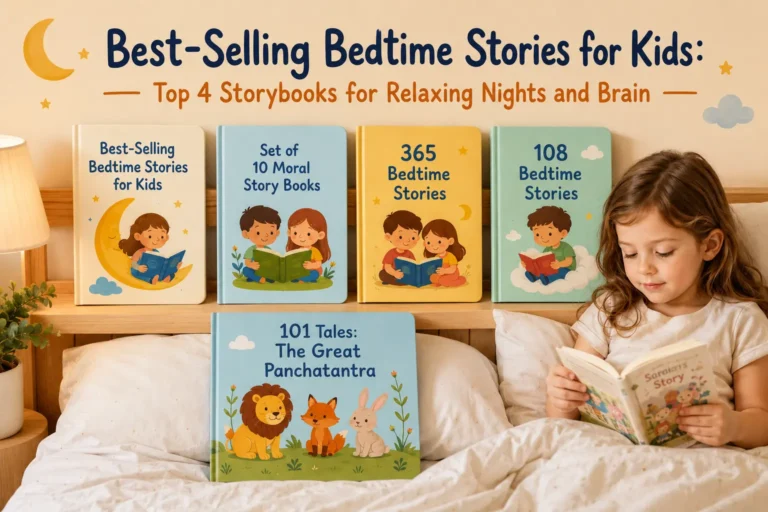
Best-Selling Bedtime Stories for Kids: Top 4 Storybooks for Relaxing Nights and Brain

Bedtime Stories for Kids

Early Learning Bedtime Stories & Books: Top 4 Storybooks for Kids (0–4 Years) 🔍 View Top 4 Storybooks Home / Expert Curation Guide For Children From Ages 0 To 4 📖 Bedtime Stories Are Really Important For Your Child Reading to your child every night does a lot of things. It helps your child learn things understand more words and feel better when they are sad or upset. This is especially important when your child is very young. Language & Vocabulary: They help your child hear how people talk and learn words. Emotional Growth: They give your child a way to deal with their feelings and calm down. Cognitive Development: They help your child use their imagination and build connections in their brain. Sleep Routine: They help your child get ready for bed and feel safe at night. Our team has looked at the bedtime stories for children from ages 0 to 4 years old. They have picked the 4 stories that they think are really good for your child. Bedtime stories are very important for your child. Bedtime stories help your child in ways. We want to help you find the bedtime stories, for your child. Disclaimer: ZaminoToys.in is supported by our readers. When you buy through links on our site, we may earn an affiliate commission at no extra cost to you. Learn more on our disclosures page. 📚 Quick Comparison: Early Learning Book Selections Compare our reviewed collections across target ages, narrative structures, cognitive benefits, and best-fit developmental stages to help you choose the right resource for your young child. 📖 Book Title 👶 Target Age 🌟 Narrative Type 🎯 Cognitive Benefit ❤️ Best Suited For Set of 10 Moral Story Books ✨ Check Price on Amazon 0–4 Years (Early Readers) Short Moral Stories Visual Association Toddlers & Visual Learners 365 Bedtime Stories ✨ Check Price on Amazon 0–4 Years (Toddlers) Daily Routine Tales Consistent Habit Building Nightly Bedtime Routine 108 Bedtime Stories ✨ Check Price on Amazon 2–4 Years & Up Fairy Tales & Fables Vocabulary Expansion Growing Families 101 Tales Panchatantra ✨ Check Price on Amazon 3–4 Years Classic Moral Tales Early Problem Solving Pre-school Preparation 📖 Set of 10 Moral Story Books Target Age0–4 Years (Early Readers) NarrativeShort Moral Stories BenefitVisual Association Best Suited ForToddlers & Visual Learners ✨ Check Price on Amazon 🌙 365 Bedtime Stories Target Age0–4 Years (Toddlers) NarrativeDaily Routine Tales BenefitConsistent Habit Building Best Suited ForNightly Bedtime Routine ✨ Check Price on Amazon 🧚 108 Bedtime Stories Target Age2–4 Years & Up NarrativeFairy Tales & Fables BenefitVocabulary Expansion Best Suited ForGrowing Families ✨ Check Price on Amazon 🦊 101 Tales Panchatantra Target Age3–4 Years NarrativeClassic Moral Tales BenefitEarly Problem Solving Best Suited ForPre-school Preparation ✨ Check Price on Amazon Detailed Product Reviews & Expert Analysis Product Review #1 1. Set of 10 Moral Story Books for Kids (with 3D Animated Images) This collection uses structural 3D animation mechanics to capture short attention spans, allowing early learners to map complex moral lessons through visual-spatial cues. Target Age Group: 3 to 6 Years Old Format: Pack of 10 individual booklets Features: Dual-sensory approach pairing high-quality visual layouts with immersive 3D illustrations. The dynamic graphics bring fables to life on every page, helping young children follow along easily. ✨ Check Price on Amazon Why It Excels for Early Development At ages 3 to 6, a child’s brain processes information primarily through visual cues. The 3D animated imagery in this set adds depth to the pages, keeping sensory-seeking toddlers anchored to the reading experience. Because the stories are split across ten separate books, parents can let their children choose a specific volume, fostering autonomy and a sense of ownership over their bedtime routine. Performance Analysis Readability: Excellent. Large fonts and limited text lines per page minimize visual fatigue for early readers. Narrative Length: Short, structured narratives that can be completed in 5 to 7 minutes—ideal for relaxing routines before sleep. Durability: Softcover booklets; requires mindful handling by younger toddlers. “Managing toddler bedtime resistance starts with structure and consistency. Key strategies include establishing a calming pre-sleep routine, maintaining the exact same bedtime nightly, providing a safe comfort object like a favorite toy, and encouraging independent sleep habits when they call out.” — Adapted from expert guidance on HealthyChildren.org Recommended Selection 2. 365 Bedtime Stories (Illustrated Stories for Children) A calendar-synced comprehensive anthology engineered to reinforce positive sleep hygiene by establishing clear, predictable evening reading boundaries. Target Age Group: 2 years old to 7 years old. Format: Single heavy-volume comprehensive anthology Key Feature: Calendar-synced progression of daily stories 🛒 Buy On Amazon Why It Excels for Early Development Consistency is the cornerstone of pediatric sleep hygiene. The “one story a night” framework helps parents establish a predictable boundary. Children quickly learn that when the daily story concludes, it is time to transition to sleep. The broad variety of tales prevents routine fatigue, introducing diverse vocabulary themes from science fantasy to classic folklore. Performance Analysis Readability: Balanced layout, though text size is slightly smaller to accommodate the massive content count. Narrative Length: Strictly limited to 1 page per story, taking roughly 3 to 5 minutes to read. Value: Extremely high cost-per-story efficiency due to the single-volume format. Recommended Selection 3. 108 Children’s Illustrated Fairy Tales and Short Stories in English A highly versatile bridge compilation that transitions from an acoustic comfort framework for toddlers into an independent reading layout for school-age children. Target Age Group: 2 to 4 Years Old (Also safe for infants/toddlers as a read-aloud) Format: Mid-sized illustrated compilation Key Aspect: Focus on moral values, character development, and cognitive methods. 🛒 Buy On Amazon Why It Excels for Early Development This book serves as an excellent long-term investment for growing families. For infants and toddlers, the rhythmic cadence of a parent reading these fairytales serves as an acoustic comfort. As children enter school age (6 to 10 years), the familiar sentence structures make it an approachable tool for practicing independent reading. Performance Analysis Readability:

Best-Selling Bedtime Stories for Kids: Top 4 Storybooks for Relaxing Nights and Brain Read More »

Best Useful Gifts for Childrens

Useful Gifts for Childrens

🎁 Gift Guide Top 15 Useful Gifts for Children 👇 See All 15 Gifts 🎨 🧩 📚 🚀 🎁 Home / Looking for a gift that children will actually use and enjoy? In this guide, we’ve handpicked the 25 Best Useful Gifts for Children That Parents Actually Appreciate. From educational toys and creative activities to practical everyday gifts, these ideas help support learning, development, and endless fun while providing lasting value beyond the excitement of unwrapping. Every parent has been there. You spend time picking the perfect gift, wrap it beautifully, and three days later, it is forgotten in a corner. Sound familiar? That is exactly why useful gifts for children matter more than ever. The right gift does not just excite a child for five minutes. It becomes part of their daily life, sparking creativity, building skills, and bringing joy every single day. Whether it is a birthday, Diwali, Eid, or Children’s Day, this guide will help you choose gifts that children truly love and actually use 🎁 Find the Perfect Gift Select the child’s age and interest to get personalized gift ideas. Child’s Age Select Age0–2 Years3–5 Years6–8 Years9–12 Years Interest Select InterestLearningArt & CraftScience & STEMReading Find Gift Ideas 🎁 🎁 Recommended Gifts Select the child’s age and interest, then click Find Gift Ideas. Why Are Useful Gifts Important for Kids? Every parent has lived through it: a beautifully wrapped present, an excited child, and then… silence. Three days later, the gift is forgotten in a corner while the kid plays with the cardboard box. Useful gifts for childrens, often considered the best useful gifts for childrens, are different. They grow with the child. They show up in daily routines. They quietly teach skills, spark curiosity, and build confidence — all while the child is simply having fun. When a gift is truly useful, it offers more than just fun. It becomes part of a child’s everyday life, encouraging learning, creativity, and growth while creating lasting memories. It becomes part of the child’s world. A quality art set that sits on the study table every morning. A sturdy backpack they carry to school with pride. A puzzle they return to again and again. These are the gifts children remember  and the ones parents feel genuinely good about giving. Many parents prefer useful gifts for childrens because they become part of everyday life. Studies and child development specialists suggest that gifts which combine fun with learning can positively support a child’s overall growth and development. They improve problem-solving skills, encourage creativity, and support emotional development. In short, useful gifts are not just thoughtful; they are one of the best investments you can make in a child’s early years. 15 Smart Gift Ideas for Kids Educational & Learning Gifts Globe for Kids (5 to 12 Year) Buy Now Flash Cards (Above 1 Year) Buy Now Abacus (Ages 3–6) Buy Now Educational Books (Ages 3–5) Buy Now STEM Innovators (Ages 6–10) Buy Now Building & Problem-Solving Gifts Puzzle Sets (Ages 3+) Buy Now Coding Robot Kits (Ages 5+) Buy Now Magnetic Tiles (Ages 3+) Buy Now LEGO Sets (Ages 6+) Buy Now Building Blocks (Ages 1–3) Buy Now Creative & Artistic Gifts Coloring Books (Ages 3+) Buy product Musical Instruments (Ages 3+) Buy product DIY Craft Kits (Ages 5+) Buy product Drawing Tablets (Ages 6+) View Product Art & Craft Kits (Ages 4+) View More How to Choose the Best Useful Gift for Kids With hundreds of options available, choosing the right gift can feel overwhelming. Here is a simple guide to help you choose the right gift every time.  Daily Usefulness — Everyday Useful Gifts for Kids The best question to ask before buying a gift is, “Will this child actually use this tomorrow?” Think about a child’s typical day school, playtime, creative activities, and bedtime. Gifts that fit naturally into these moments deliver the most value. A personalised water bottle, a fun stationery set, a creative craft kit, or a read-aloud storybook are all things children interact with every single day. Everyday useful gifts also solve a real need. Parents notice when a gift is practical, and children appreciate it more when it becomes “theirs”  something they use, carry, and care for. That’s why useful gifts for childrens continue to be a popular choice for families. Quick examples of everyday useful gifts for kids: Colourful art and craft kits Personalised name puzzles Storybooks in regional languages (Hindi, Malayalam, Tamil) Lunch boxes with fun designs Sensory play kits for toddlers Safety & Quality — Child-Friendly Materials and Easy-to-Use Designs A gift is only a good gift when it is completely safe. For children under the age of 6, this is especially critical. When choosing gifts for children in India, look for: BPA-free and non-toxic materials — especially important for toddlers who put everything in their mouths No sharp edges or small detachable parts — a choking hazard for younger children ISI mark or EN71 safety certification — a reliable indicator of quality and safety Age-appropriate design—a toy meant for a 6-year-old can frustrate a 3-year-old and lose its magic entirely Easy-to-use designs matter too. When a child can pick up a gift and start using it independently — without needing a parent to set it up for 45 minutes — the enjoyment is instant. Simple, intuitive, well-made gifts get used more and last longer, making them ideal useful gifts for childrens. At Zamino Toys, every product is selected with child safety as the first priority. No compromise Design That Sparks Joy — Because Cuteness Always Matters Children are naturally drawn to gifts that look fun and exciting, regardless of how educational they may be. Good design is not superficial; it is essential. Bright colours, friendly shapes, familiar characters, and satisfying textures all make a gift feel special from the moment it is unwrapped. A wooden puzzle with vibrant animal prints. A craft kit with pretty packaging.A backpack with an adorable bear design. These design choices make children want

Best Useful Gifts for Childrens Read More »

Learning & Play

Educational Games for Growing Minds Educational Games 🌱 Every Age Every Stage 🧠 Growing Minds ⭐ Trusted Picks Educational Games are a powerful way to help children learn, explore, and develop essential life skills while having fun. At Zaminotoys, we bring together carefully selected educational games, learning products, and courses designed to support children through every stage of their growth from curious babies taking their first steps in learning to confident teenagers preparing for the future. Every child learns differently, which is why our collection covers a wide range of learning experiences. From Brain & Logic Games that enhance critical thinking and problem-solving abilities to Reading & Language Games that strengthen communication, vocabulary, and literacy skills, every resource is carefully chosen to make learning enjoyable, engaging, and effective. Children can also discover Math Games, STEM & Science Games, Creativity Games, and Social Skills Games that encourage curiosity, imagination, critical thinking, teamwork, and confidence. At Zaminotoys, we are committed to helping parents find trusted educational resources that match their child’s age, interests, and developmental needs. Whether you’re looking for educational games, quality learning products, or skill-building courses, our recommendations are designed to inspire a love of learning and help children grow, succeed, and thrive at every stage of childhood. Explore by Category 🧠 Brain & Logic Games Puzzles, memory challenges, strategy games, and critical thinking activities.   📖 Reading & Language Games Phonics, vocabulary building, storytelling, spelling, and literacy development.   ➕ Math Games Counting, arithmetic, patterns, number recognition, and problem-solving fun.   🔬 STEM & Science Games Coding, robotics, engineering kits, experiments, and scientific exploration.   🎨 Creativity Games Art, music, crafts, imagination, and creative expression activities.     🤝 Social Skills Games Teamwork, communication, empathy, emotional intelligence, and collaboration.     Why Educational Games Matter for Child Development Educational Games make learning fun, interactive, and meaningful while helping children develop essential skills for everyday life. Unlike traditional learning methods, educational games encourage active participation, helping children stay engaged while developing problem-solving, communication, creativity, and critical-thinking abilities. The benefits of educational learning extend beyond academics. Through interactive games, learning products, and structured courses, children can improve concentration, decision-making, teamwork, and self-confidence. These experiences help them apply what they learn in real-life situations while building a strong foundation for future growth and success. We believe that the right Educational Games can support every stage of a child’s growth. Combined with quality learning products and courses, these resources help children build confidence, discover new interests, and develop the skills they need for future success. By choosing age-appropriate educational experiences, parents can create a fun and supportive learning environment both at home and beyond. Shop by Skill Reading Maths STEM Coding Creativity Logic Solving Interaction Educational Games by Age  0–2 Years At this stage, children learn through sensory experiences and interaction. Recommended Activities: Sensory play toys Shape sorters Stacking blocks Musical toys Interactive storybooks Skills Developed: Motor skills Sensory awareness Early communication Cause-and-effect learning 2–4 Years Toddlers and preschoolers thrive on hands-on exploration and imaginative play. Recommended Activities: Matching games Alphabet games Number puzzles Pretend play sets Memory games Skills Developed: Language development Early literacy Social skills Creativity 4–6 Years Children begin developing stronger reasoning and academic readiness skills. Recommended Activities: Reading games Math games STEM activities Logic puzzles Arts and crafts Skills Developed: Problem solving Reading readiness Number recognition Fine motor skills 6–12 Years School-age children benefit from games that challenge thinking and encourage curiosity. Recommended Activities: STEM kits Coding games Strategy board games Science experiments Educational apps Skills Developed: Critical thinking Creativity Teamwork Academic confidence 13–18 Years Teenagers need engaging resources that build real-world skills. Recommended Activities: Coding platforms Robotics kits Financial literacy games Language-learning apps Career exploration courses Skills Developed: Leadership Communication Digital literacy Career readiness Skill Development Courses for Children Explore a variety of courses designed to help children learn new skills, build confidence, and discover their interests. From academic learning to creativity and personal development, these courses support growth at every stage. Chess Course Improve strategic thinking, focus, patience, and effective problem-solving skills. Coding Course Learn programming basics while developing creativity, logic, and innovation. Handwriting Course Enhance handwriting quality, clarity, and writing speed.Supports better written communication and presentation. Abacus Course Improve mental math, concentration and calculation skills through fun learning activities. Drawing & Art Course Encourage creativity and self-expression through art activities. Helps develop imagination and fine motor skills. Language Learning Course Build strong reading, writing, and speaking abilities. Improves vocabulary, communication, and language confidence. Frequently Asked Questions About Educational Games How do Educational Games benefit children? They improve creativity, problem-solving, communication, and critical-thinking skills Why are educational courses important for children?  Educational courses help children gain knowledge, confidence, and practical skills for future success. Can Educational Games reduce screen dependency? Many educational games encourage hands-on learning and active participation away from screens. How do learning activities prepare children for the future? They help develop essential skills needed for school, life, and future success. What skills help children succeed in the future? A strong foundation in problem-solving, communication, teamwork, and lifelong learning prepares children for future opportunities and challenges. Which course is best for improving concentration? Abacus and Chess courses are popular choices for improving focus and concentration. Helping Children Learn Through Play Helping Children Learn Through Play Every child has the potential to learn, grow, and achieve great things when given the right opportunities. Educational Games make learning more enjoyable by turning everyday activities into exciting experiences that encourage curiosity, creativity, and discovery. From educational games and learning resources to engaging courses and activities, every experience helps children build valuable skills and confidence for the future. By creating a positive learning environment and encouraging exploration, parents can inspire a lifelong love of learning and help children reach their full potential at every stage of childhood. When children enjoy the learning process, they become more motivated to explore new ideas and develop new skills. 

Learning & Play Read More »