adminzaminotoys

pick best toys

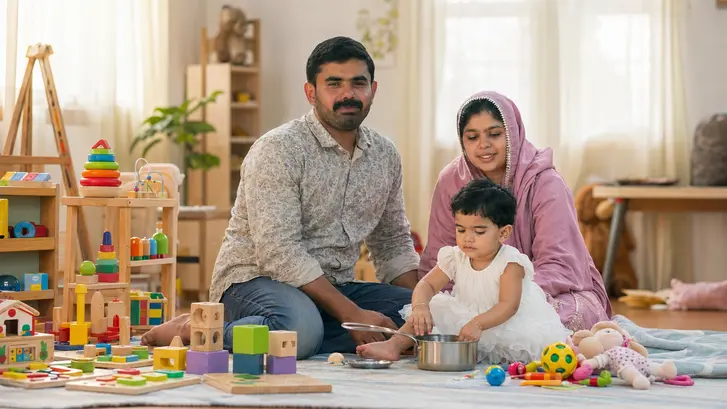
Father and mother watching their daughter play with a simple object surrounded by carefully chosen toys

How I Picked Toys for My Daughter A dad’s real experience choosing toysthat are fun, useful, and right for her age. What I Expected vs. What Actually Happened Picking Toys for My Daughter My ideas about what toys to introduce to my daughter started even before she was born. Not because I wanted a perfectly styled play corner — honestly, I was just excited, and a little anxious about getting it “right.” I remember scrolling through toy listings late at night, trying to work out how to pick the best toys for a baby I hadn’t even met yet, and slowly realizing that most of what I was reading was written to sell something, not to help me understand my own child. Two years later, I have a much simpler answer than I expected to find. This is that journey — what we tried, what actually got used, and what just sat there. Before She Was Born: Planning vs. Reality I pictured a neat little shelf of wooden toys and “developmental” kits. Then she actually arrived, and I learned two things fast: newborns don’t care about elaborate play gyms, and a lot of the toy market is built around parental worry, not what a baby actually needs. What I actually needed wasn’t more products. It was a simple way to think about what she was ready for at each stage — and the willingness to just watch her, instead of guessing from a box. My daughter watching and exploring a colourful hanging toy during her early months, when even the simplest things could hold her attention. The best toy doesn’t have to be the biggest or most expensive one. 0 to 3 Months — Simple, High-Contrast, Nothing Fancy In the first weeks, a newborn’s vision is still developing — mostly bold contrast, close range. So I kept it simple: A black-and-white contrast card, propped beside her changing mat A soft crinkle cloth she could touch during tummy time A lightweight wrist rattle Watching her eyes actually track the card’s pattern for the first time was a small, ordinary moment, and it stuck with me more than I expected — no toy did that, she did. What I skipped: anything with batteries. A flat card on the floor did more than any light-up toy we were gifted. 3 to 6 Months — Reaching, Grabbing, Figuring Things Out By three months she was reaching for things and bringing her hands to her mouth constantly. An O-ball (the open, easy-to-grip kind) became a genuine favorite — her fingers could actually get around it, unlike a few smoother toys that just slipped out of her hands. A simple wooden rattle taught her something too, in her own way: move my arm, hear a sound. Nothing complicated about it, but she’d repeat it over and over. 6 to 12 Months — From Watching to Doing Once she could sit up on her own, everything changed. She went from looking at things to actually handling them — banging, dropping, passing between hands. A few things that genuinely held her attention during this stretch: Real-photo sensory cards — we moved on from black-and-white patterns to cards with actual photos of everyday objects and faces A simple wooden box with a ball that drops through a hole — no branding needed to explain it; she’d drop the ball in, watch it roll out, and immediately do it again, for longer stretches than I expected from something so plain A sturdy push walker — once she started pulling up to stand, this gave her something stable to lean into while she worked out her first steps 12 to 24 Months — Books, Stacking, and a Lot of Repetition After her first birthday, play got more physical and more purposeful. Board books with lift-the-flap pages and different textures became part of our actual routine, not just something on a shelf — though she was just as often interested in flipping pages fast as she was in listening to me read them, which is exactly how it goes with a real toddler. Nesting stacking cups turned out to be one of the most-used things we owned — towers, bath-time pouring, hiding small objects underneath, whatever she decided that day. A simple wooden shape sorter, with big knobs she could actually grip, gave her something to work at and get frustrated by and eventually figure out. Now, at Two She’s deep into pretend play these days — a simple wooden play kitchen with velcro vegetables keeps her busy while My Wife actually cooking. Building blocks and magnetic tiles get used for towers, roads, whatever she’s decided they are that afternoon. A basic sorting tray, grouping things by color, holds her attention longer some days than others — which I’ve learned is just how this age works. How I Actually Try to Pick the Best Toys Now Not a formal system — just the questions that have actually saved me money and clutter: Does she do the work, or does the toy? If it flashes and plays music the moment it’s switched on, she mostly watches. If it waits for her to do something with it, she plays. Can it be used in more than one way? Something that’s only ever “correct” one way tends to get boring fast. Does it hold up to actual use? Thick board pages, food-grade silicone, and solid wood have all outlasted the thinner plastic toys we’ve had. Am I buying this for her, or because an ad got to me? Honestly, I’ve caught myself almost adding something to the cart purely because the listing claimed it “helps development” — and that’s usually the exact moment I’ve learned to slow down and ask the question again, rather than trust the label. I want to be clear about something: none of this is a guarantee that a toy will “build” a specific skill. What I’ve actually seen is simpler — a toy that invites her to do something
pick best toys Read More »

Grow With Me- 0 to 5 Years milestone tracking worksheet

Grow With Me – 0 to 5 Years Milestone Tracking Worksheet đŸ“„ Download Free Worksheet Scroll down to download your printable worksheet âŹ‡ïž Created by ZaminoToys Editorial Team Download Your Free Printable Worksheet đŸ“„ Download A4 Print PDF (Free) đŸ“„ Download US Letter PDF (Free) Tracking the rapid changes, unforgettable firsts, and precious growth milestones during your child’s first five years is an essential journey for every family. In this free and printable worksheet, we have carefully designed an organized keepsake that lets you capture every tiny detail effortlessly. Parents can easily record monthly photo memories, developmental achievements, growth metrics, and vital health milestones all in one place. This structured keepsake will challenge your routine while building a wonderful memory book that your child will look back on with immense warmth and appreciation in the future. Source Reference: Information regarding the milestone trackers, keepsake categories, and developmental guidelines is derived from the My Growing Years worksheet.

Grow With Me- 0 to 5 Years milestone tracking worksheet Read More »

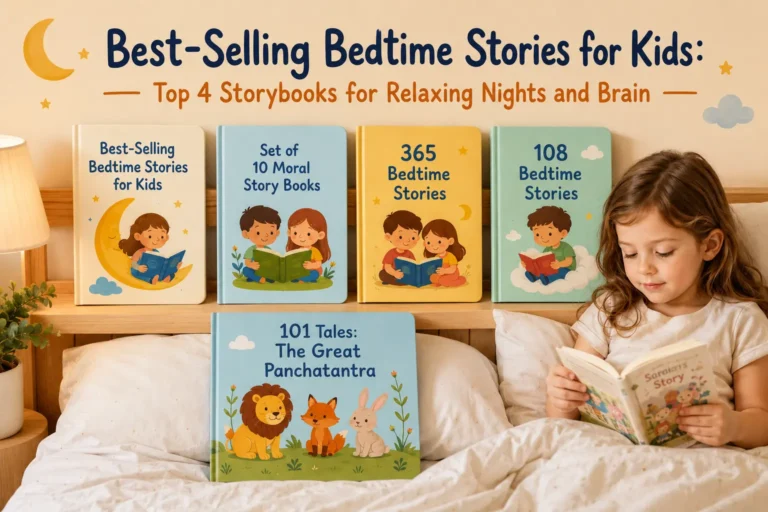
Best-Selling Bedtime Stories for Kids: Top 4 Storybooks for Relaxing Nights and Brain

Bedtime Stories for Kids

Early Learning Bedtime Stories & Books: Top 4 Storybooks for Kids (0–4 Years) 🔍 View Top 4 Storybooks Home / Expert Curation Guide For Children From Ages 0 To 4 📖 Bedtime Stories Are Really Important For Your Child Reading to your child every night does a lot of things. It helps your child learn things understand more words and feel better when they are sad or upset. This is especially important when your child is very young. Language & Vocabulary: They help your child hear how people talk and learn words. Emotional Growth: They give your child a way to deal with their feelings and calm down. Cognitive Development: They help your child use their imagination and build connections in their brain. Sleep Routine: They help your child get ready for bed and feel safe at night. Our team has looked at the bedtime stories for children from ages 0 to 4 years old. They have picked the 4 stories that they think are really good for your child. Bedtime stories are very important for your child. Bedtime stories help your child in ways. We want to help you find the bedtime stories, for your child. Disclaimer: ZaminoToys.in is supported by our readers. When you buy through links on our site, we may earn an affiliate commission at no extra cost to you. Learn more on our disclosures page. 📚 Quick Comparison: Early Learning Book Selections Compare our reviewed collections across target ages, narrative structures, cognitive benefits, and best-fit developmental stages to help you choose the right resource for your young child. 📖 Book Title đŸ‘¶ Target Age 🌟 Narrative Type 🎯 Cognitive Benefit ❀ Best Suited For Set of 10 Moral Story Books ✹ Check Price on Amazon 0–4 Years (Early Readers) Short Moral Stories Visual Association Toddlers & Visual Learners 365 Bedtime Stories ✹ Check Price on Amazon 0–4 Years (Toddlers) Daily Routine Tales Consistent Habit Building Nightly Bedtime Routine 108 Bedtime Stories ✹ Check Price on Amazon 2–4 Years & Up Fairy Tales & Fables Vocabulary Expansion Growing Families 101 Tales Panchatantra ✹ Check Price on Amazon 3–4 Years Classic Moral Tales Early Problem Solving Pre-school Preparation 📖 Set of 10 Moral Story Books Target Age0–4 Years (Early Readers) NarrativeShort Moral Stories BenefitVisual Association Best Suited ForToddlers & Visual Learners ✹ Check Price on Amazon 🌙 365 Bedtime Stories Target Age0–4 Years (Toddlers) NarrativeDaily Routine Tales BenefitConsistent Habit Building Best Suited ForNightly Bedtime Routine ✹ Check Price on Amazon 🧚 108 Bedtime Stories Target Age2–4 Years & Up NarrativeFairy Tales & Fables BenefitVocabulary Expansion Best Suited ForGrowing Families ✹ Check Price on Amazon 🩊 101 Tales Panchatantra Target Age3–4 Years NarrativeClassic Moral Tales BenefitEarly Problem Solving Best Suited ForPre-school Preparation ✹ Check Price on Amazon Detailed Product Reviews & Expert Analysis Product Review #1 1. Set of 10 Moral Story Books for Kids (with 3D Animated Images) This collection uses structural 3D animation mechanics to capture short attention spans, allowing early learners to map complex moral lessons through visual-spatial cues. Target Age Group: 3 to 6 Years Old Format: Pack of 10 individual booklets Features: Dual-sensory approach pairing high-quality visual layouts with immersive 3D illustrations. The dynamic graphics bring fables to life on every page, helping young children follow along easily. ✹ Check Price on Amazon Why It Excels for Early Development At ages 3 to 6, a child’s brain processes information primarily through visual cues. The 3D animated imagery in this set adds depth to the pages, keeping sensory-seeking toddlers anchored to the reading experience. Because the stories are split across ten separate books, parents can let their children choose a specific volume, fostering autonomy and a sense of ownership over their bedtime routine. Performance Analysis Readability: Excellent. Large fonts and limited text lines per page minimize visual fatigue for early readers. Narrative Length: Short, structured narratives that can be completed in 5 to 7 minutes—ideal for relaxing routines before sleep. Durability: Softcover booklets; requires mindful handling by younger toddlers. “Managing toddler bedtime resistance starts with structure and consistency. Key strategies include establishing a calming pre-sleep routine, maintaining the exact same bedtime nightly, providing a safe comfort object like a favorite toy, and encouraging independent sleep habits when they call out.” — Adapted from expert guidance on HealthyChildren.org Recommended Selection 2. 365 Bedtime Stories (Illustrated Stories for Children) A calendar-synced comprehensive anthology engineered to reinforce positive sleep hygiene by establishing clear, predictable evening reading boundaries. Target Age Group: 2 years old to 7 years old. Format: Single heavy-volume comprehensive anthology Key Feature: Calendar-synced progression of daily stories 🛒 Buy On Amazon Why It Excels for Early Development Consistency is the cornerstone of pediatric sleep hygiene. The “one story a night” framework helps parents establish a predictable boundary. Children quickly learn that when the daily story concludes, it is time to transition to sleep. The broad variety of tales prevents routine fatigue, introducing diverse vocabulary themes from science fantasy to classic folklore. Performance Analysis Readability: Balanced layout, though text size is slightly smaller to accommodate the massive content count. Narrative Length: Strictly limited to 1 page per story, taking roughly 3 to 5 minutes to read. Value: Extremely high cost-per-story efficiency due to the single-volume format. Recommended Selection 3. 108 Children’s Illustrated Fairy Tales and Short Stories in English A highly versatile bridge compilation that transitions from an acoustic comfort framework for toddlers into an independent reading layout for school-age children. Target Age Group: 2 to 4 Years Old (Also safe for infants/toddlers as a read-aloud) Format: Mid-sized illustrated compilation Key Aspect: Focus on moral values, character development, and cognitive methods. 🛒 Buy On Amazon Why It Excels for Early Development This book serves as an excellent long-term investment for growing families. For infants and toddlers, the rhythmic cadence of a parent reading these fairytales serves as an acoustic comfort. As children enter school age (6 to 10 years), the familiar sentence structures make it an approachable tool for practicing independent reading. Performance Analysis Readability:

Best-Selling Bedtime Stories for Kids: Top 4 Storybooks for Relaxing Nights and Brain Read More »

The Science of Stacking: How Block Play Builds Future Engineers and Mathematicians

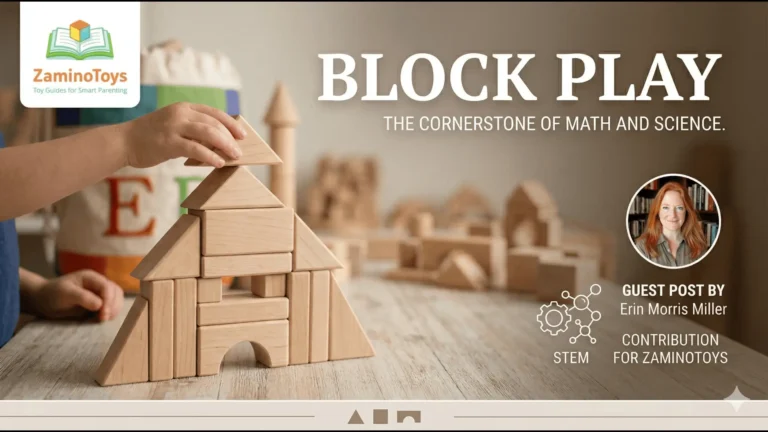
Block Play

When I was five years old, my grandfather gave me one of the best Christmas gifts I ever got. They came in a big red sack my grandmother made with the letter E for Erin. The sack was full of wooden unit blocks, and I enjoyed many hours of fun through Block Play building towers and houses. They were made of smooth maple and had mathematical precision.A square was formed by two triangles, and a rectangle was formed by two squares. An arch and a half circle block could make the rectangle. They were solid and large enough to be easily stacked by small hands. I was thrilled. The blocks became a favorite toy for me and my three year old brother. It was not until I studied child development that I understood their true power. They were homemade versions of the Froebel Blocks. The Froebel Legacy: Why Kindergarten Started with Blocks Friedrich Froebel was one of the first educators to promote the idea that young children learn through play. He originated the concept of the kindergarten in 1840. He developed a range of materials for the kindergarten classroom, including a set of blocks to teach geometry and mathematics. Froebel influenced nearly every early education leader who followed, including Maria Montessori. Froebel recognized that the work of young children was play. It is through play that children learn to understand the world and lay the groundwork for future school performance.   Sharing these stories is a core part of our mission at ZaminoToys. You can find more expert-backed resources and toy reviews over on the ZaminoToys Blog. What Makes Unit Blocks Special? The Froebel blocks were special because each smaller block came together to form the larger block. This is the key feature of what are called “unit blocks.” Unit blocks develop cognitive and creative skills. Students learn: Geometry principles of shape and form. Mathematical concepts of number and pattern. Spatial manipulation. Creative skills of planning, communication, and problem-solving. Unit blocks develop cognitive and creative skills that are essential for long-term growth. For a deeper look at how specific playthings impact neural pathways, check out our 2026 Parent Guide to Brain Development Toys. Exploring Geometry and Numeracy Block play begins with the exploration of geometry. Children learn to identify the different shapes, compare the shapes to understand similarities and differences, and explore how different shapes match and combine. As children rotate the blocks, they learn about symmetry. As they stack to form towers, they learn about balance and counterbalance. Children explore the foundational concepts of mathematics. They learn to understand and apply numeracy from counting and stacking the blocks. Children learn about logical ideas such as more/less, inside/outside, above/below and repeated sequences as they build walls. As their building becomes more sophisticated, they explore pattern creation. Block play begins with the exploration of geometry, shapes, and textures. This physical interaction is a natural progression from the earlier stages of sensory play for 7-month-olds, where tactile discovery first begins.   Block Play as a Foundation for Engineering Learning through block play is even more beneficial when children play together. I was given the set of blocks with the assumption that my brothers and I would play with them together. This play is the foundation for the team-based problem solving that is often used in engineering. Engineering work begins with: A statement of the goal or problem. Making plans. Constructing prototypes. Evaluating results. Trial-and-error. Communication with others. Block play works in the same way. Children playing together with blocks need to communicate their goals. They learn to evaluate different designs and explain to each other how their ideas may work. Each child may have different ideas and must work together to evaluate and implement different creative solutions to problems. They learn to successfully integrate each child’s knowledge. The language that they use to solve problems together becomes an inner monologue when the child is working on challenges in the future. This is key to social learning theory. Inspiration for Great Minds My youngest brother and I were recruited to study engineering in college. I chose educational psychology, but my brother did become an engineer. We are not alone in being inspired by Froebel Blocks and similar building toys. Frank Lloyd Wright attributed his early play with Froebel Blocks as the inspiration for his interest in architecture. The artists Piet Mondrian and Wassily Kandinsky were inspired to play with form and shape in their work. Albert Einstein was inspired by a similar type of unit blocks made of stone. Unit blocks are likely one of the most important learning toys for STEM. Recommendations for Choosing Block- Toys Choose unit blocks: These are blocks that are precision cut so that the smaller blocks form the larger blocks. It is important that the blocks come together to form geometric shapes, such as two pyramids making the cube. Choose natural materials: Plain wood or stone can be stacked with greater precision and the right amount of friction between the surfaces. Choose the right size: The blocks should fit easily in the child’s hand. Too big or too small and there will be frustration. Choose the right amount: One set of blocks per child who is working with the blocks is sufficient. The constraint of there being a limited number of materials improves creativity. Suggested Block Sets Constructive Playthings Unit Block Set Community Playthings Introductory Set Unit Blocks GuideCraft Unit Blocks Frequently Asked Questions What are the specific mathematical benefits of block play? Block play is a direct introduction to geometry and numeracy. As children manipulate unit blocks, they learn about fractions (two squares equal one rectangle), symmetry, and spatial reasoning. These physical experiences create a “mental map” that helps children understand abstract math concepts more easily when they enter formal schooling. Why are “Unit Blocks” better than random building toys? Unlike standard blocks, Unit Blocks are precision-cut in a 1:1:2 ratio. This mathematical consistency allows children to discover that different shapes can combine to form

The Science of Stacking: How Block Play Builds Future Engineers and Mathematicians Read More »

Constipation in a NewBorn: Doctor-Approved Causes, Remedies, Home Treatments & Complete Infant Care Guide

Constipation in a newborn occurs when a baby passes hard, dry, or painful stool rather than simply having fewer bowel movements. Most mild cases can be safely managed with gentle massage, feeding correction, movement exercises, and warm baths. However, persistent symptoms require pediatric evaluation to prevent complications. Pediatrician’s Perspective “As a pediatric healthcare professional, one of the most common concerns raised by new parents is constipation in a new born. Many families become worried when their baby strains while passing stool or does not poop daily. While this concern is understandable, it is important to know that newborn bowel habits vary widely and not every irregular stool pattern indicates constipation”. True constipation in a newborn is identified by stool texture, baby discomfort, and feeding behavior rather than stool frequency alone. This medically structured guide explains causes, symptoms, constipation in a newborn home remedies, clinical constipation in infants treatment, and safe prevention methods supported by pediatric knowledge. Understanding Normal Newborn Bowel Movements Before diagnosing constipation in a newborn, parents must understand what is considered normal. Breastfed Babies Breastfed newborns typically: Pass soft, loose stools ‱ Poop multiple times daily during early weeks ‱ May poop less frequently after digestive maturity develops Breast milk contains natural digestive enzymes and mild laxative properties. Therefore, true constipation in a newborn is less common in exclusively breastfed babies. Formula-Fed Babies Formula-fed infants often: Pass thicker stools ‱ Have slightly less frequent bowel movements ‱ Show higher risk of stool firmness Many parents seeking treatment constipation in a newborn by managing formula-related stool consistency changes. Medical Definition of Constipation in a Newborn Clinically, constipation in a newborn is diagnosed when: Stool is hard or pellet-like ‱ Baby cries or strains excessively during bowel movement ‱ Abdomen appears bloated or firm ‱ Feeding decreases due to discomfort ‱ Stool frequency reduces alongside pain Passing stool every two or three days can still be normal if the stool remains soft and the baby remains comfortable. Causes of Constipation in a Newborn Understanding causes helps parents choose Remedies for safe constipation in a newborn, instead of experimenting with unsafe solutions. 1. Incorrect Formula Preparation Improper mixing ratio is one of the leading causes of constipation in a newborn. Concentrated formula reduces hydration and leads to stool hardening. Parents should always follow manufacturer instructions carefully when preparing formula milk. 2. Immature Digestive Coordination Newborn digestive systems are still developing. Their intestines and abdominal muscles are learning to coordinate stool movement. This developmental stage may mimic constipation in infant remedies failure, although it is often temporary. 3. Mild Dehydration Insufficient fluid intake, especially among formula-fed infants, can cause stool dryness. Hydration balance plays a crucial role in preventing constipation in a new born. 4. Feeding Transition Sudden changes in feeding routine or formula brand may temporarily disturb digestion. Many mild cases improve with simple constipation in newborn home remedies. 5. Rare Medical Conditions Persistent or severe constipation in a new born may occasionally signal underlying medical conditions such as: Congenital intestinal obstruction ‱ Thyroid hormone deficiency ‱ Hirschsprung disease These require immediate pediatric evaluation. Symptoms of Constipation in a New Born Parents should monitor these warning signs: Hard or dry stool  Excessive crying during bowel movement  Bloated or tight abdomen Feeding refusal Blood streaks due to anal fissure Reduced stool frequency with discomfort Recognizing early symptoms helps parents apply appropriate constipation in infants treatment or home management safely. How to Treat Constipation in New Born Safely Parents frequently ask pediatricians, how to treat constipation in new born safely. Treatment always begins with gentle, non-invasive approaches unless complications exist. Doctor-Recommended Constipation in Newborn Home Remedies These methods are medically accepted and safe for mild constipation in a new born. Gentle Tummy Massage Abdominal massage stimulates intestinal movement and reduces trapped gas pressure. Recommended Method Wash hands thoroughly ‱ Apply mild baby oil ‱ Massage abdomen clockwise ‱ Continue for 5–10 minutes twice daily Massage remains one of the safest remedies recommended by pediatricians for constipation in a newborn.  Bicycle Leg Exercise Passive leg movement improves bowel stimulation naturally. How to Perform Lay baby on back ‱ Move legs gently in cycling motion ‱ Repeat 10–15 repetitions This exercise supports natural digestion and is widely used in constipation in infant remedies. “Parents Can use This excercise as as A home Remedy Only,Its not recommended as a solution either By Indian Academy Of Pediatrics (IAP) OR American Academy of Pediatrics (AAP) )”-  By  Dr Arshad Jaman MT Warm Bath Therapy  Warm water relaxes abdominal muscles and improves stool passage. Pediatricians often suggest this simple method when advising how to treat constipation in new born. Feeding Technique Evaluation Improper feeding remains a major contributor to constipation in a newborn. Breastfeeding Support Ensure correct latch ‱ Maintain frequent feeding ‱ Monitor swallowing pattern Formula Feeding Support Use correct dilution ratio ‱ Avoid frequent brand switching ‱ Observe formula tolerance Many cases of constipation in infants treatment resolve after feeding correction. Unsafe Remedies Parents Must Avoid Many online-suggested constipation in newborn home remedies are medically unsafe. Avoid: ❌ Honey (risk of infant botulism) ❌ Adult laxatives ❌ Herbal mixtures without doctor approval ❌ Rectal stimulation using objects ❌ Giving water without pediatric advice Unsafe methods can worsen constipation in a newborn or cause infection and injury. Clinical Constipation in Infants Treatment If home remedies fail, pediatricians may recommend medical constipation in infants treatment. Glycerin Suppository Occasionally used to provide immediate stool relief. Should only be used under strict medical supervision. Formula Modification Doctors may recommend partially hydrolyzed or specialized formula for babies struggling with digestion. Medical Evaluation Persistent constipation in a newborn beyond two weeks requires investigation for underlying disorders. When Parents Should Seek Immediate Medical Help Consult a pediatrician urgently if: Baby has no stool for more than five days ‱ Persistent vomiting occurs ‱ Abdomen becomes severely swollen ‱ Baby refuses feeding ‱ Blood appears repeatedly in stool ‱ Baby shows fever or poor weight gain These symptoms indicate serious constipation in a newborn must

Constipation in a NewBorn: Doctor-Approved Causes, Remedies, Home Treatments & Complete Infant Care Guide Read More »

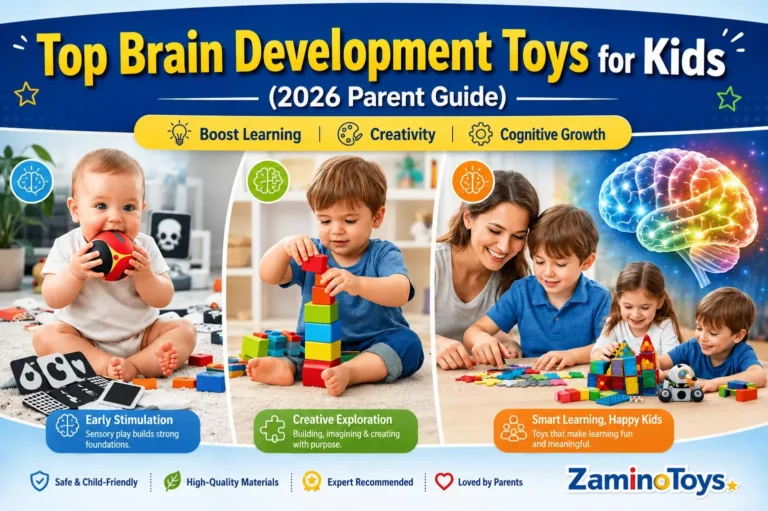
Top Brain Development Toys to Boost Your Child’s Learning (2026 Parent Guide)

Brain development toys helping infants, toddlers, and preschool children improve learning, creativity, memory, and cognitive development through interactive play

Are you searching for the best brain development toys for your child? The right brain development toys do more than keep children busy. They help improve memory, problem-solving, creativity, language skills, and emotional growth. In this parent-friendly guide, you will learn: ✅ How brain development works in young children ✅ Why play is important for learning ✅ How to choose safe brain development toys ✅ Best brain development toys by age group ✅ Simple ways to turn playtime into learning time What Are Brain Development Toys? Brain development toys are toys designed to help children think, learn, and explore. These toys support healthy brain growth through play. Brain development toys help children build: Strong brain connections Thinking and problem-solving skills Memory and focus Language and communication Emotional control Unlike screen-based entertainment, brain development toys require children to touch, move, build, and explore. This active play helps the brain grow faster and stronger. Why Brain Development Toys Are Important The first five years of life are the most important for brain growth. During this time, a child’s brain forms millions of connections every second. Using brain development toys during early childhood helps children: Learn faster Build stronger thinking skills Improve attention span Develop better emotional control Research shows that children learn best when they play, explore, and interact with their environment. Brain development toys support this natural learning process. Why Play Helps Brain Development One of the finest methods for kids to learn is via play. When children play with brain development toys, they: Try new ideas Solve problems Learn social skills Improve creativity Different types of play help the brain in different ways. How Play Builds Brain Skills Play Activity Brain Skills Developed Building blocks Logic and spatial thinking Puzzles Memory and problem-solving Pretend play Creativity and language Board games Strategy and patience Play also helps children feel confident. you know how children leran?trying,failing and trying again   How to Choose the Best Brain Development Toys Choosing the right brain development toys is very important. Use this simple parent checklist. 1. Choose Age-Appropriate Brain Development Toys keep in mind  that its not appropriate to  force children to learn in ways which doesnt match their age or ability   Infants: Sensory and visual toys Toddlers: Motor skill and language toys Preschoolers: Creative and problem-solving toys 2. Choose Skill-Building Toys Good brain development toys should help children develop: Thinking skills Fine motor skills Pattern recognition Cause-and-effect learning 3. Choose Open-Ended Brain Development Toys Open-ended toys allow children to play in many ways. Example: Building blocks can become towers, houses, or bridges. This improves imagination and flexible thinking. 4. Choose Safe Brain Development Toys Always check that toys: Are made from safe, non-toxic materials Do not contain small choking hazards Are strong and durable Follow child safety standards Safety should always be the top priority. Best Types of Brain Development Toys Providing different types of brain development toys helps children learn many skills. Building and Construction Brain Development Toys Examples: Blocks Magnetic tiles Construction kits These brain development toys help children: Learn balance and structure Improve problem-solving Develop motor skills Understand basic engineering concepts Puzzle and Logic Brain Development Toys Puzzles and board games help children: Improve memory Develop patience Build thinking skills Learn strategy These brain development toys also help children learn teamwork and social interaction. Creative Brain Development Toys Examples: Drawing and coloring kits Musical instruments Craft activity kits Creative brain development toys help children: Express emotions Improve hand-eye coordination Build confidence Strengthen imagination Best Brain Development Toys for Infants (0–12 Months) Infants learn through their senses. Sensory brain development toys are best for this stage. Recommended Brain Development Toys for Infants Soft rattles Black-and-white sensory cards Textured balls Teething rings Activity play gyms These brain development toys help infants: Improve sensory awareness Develop motor movement Strengthen hearing and vision Learn grasping skills Books Are Powerful Brain Development Toys Board books help infants: Learn sounds and language Improve listening skills Build memory Reading daily supports strong brain growth. Best Brain Development Toys for Toddlers (1–3 Years) Toddlers love to explore and move. Brain development toys for toddlers should support curiosity. Top Brain Development Toys for Toddlers Building blocks Shape sorters Stacking toys Talking educational toys Interactive books These brain development toys help toddlers: Learn new words Understand cause and effect Improve coordination Strengthen problem-solving Repetition during play helps toddlers learn faster. Best Brain Development Toys for Preschoolers (3–5 Years) Preschoolers can handle more complex learning activities. Recommended Brain Development Toys for Preschoolers Advanced puzzles Board games STEM building toys Beginner coding toys Art and craft kits Why STEM Brain Development Toys Are Important STEM toys introduce children to: Science learning Engineering thinking Logical problem-solving Analytical skills These brain development toys build confidence and prepare children for school learning. How to Use Brain Development Toys for Learning Buying brain development toys is only the first step. How children use them matters most. 1. Create Fun Learning Challenges Try activities like: Build the tallest tower Solve puzzles within time Build bridges using blocks These challenges improve focus and patience. 2. Use Brain Development Toys in Daily Routine Parents can: Use shape games during snack time Read books before bedtime Practice counting during cleaning time This makes learning natural and fun. 3. Plan Themed Learning Days Examples include: Science learning day Art and craft day Storytelling day Themed learning improves memory and understanding. Expert Parent Tips for Using Brain Development Toys Parents play the biggest role in learning. ✔ Play With Your Child Ask simple thinking questions like: What happens if we try this? Why do you think this works? This improves problem-solving skills. ✔ Follow Your Child’s Interests If your child loves vehicles, introduce building toys related to cars and roads. Interest-based play improves learning. ✔ Reduce Screen Time Hands-on brain development toys give better learning results than passive screen time. Frequently Asked Questions About Brain Development Toys   What are the best brain development toys? The best brain development toys include

Top Brain Development Toys to Boost Your Child’s Learning (2026 Parent Guide) Read More »

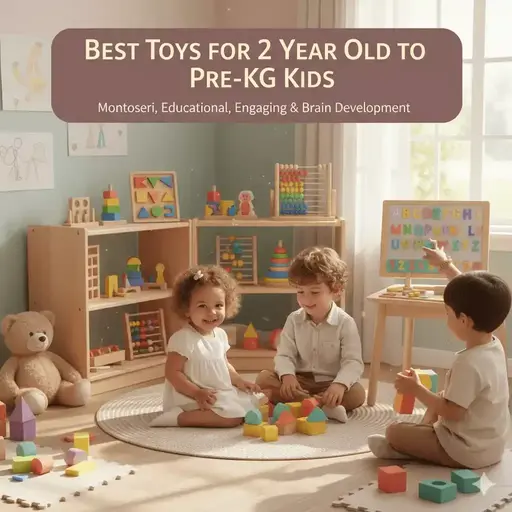
Best Toys for 2 Year Old to Pre-KG Kids: Montessori, Educational, Engaging & Brain Development Toys

Toys for 2 Year Old

Why Choosing the Right Toys for 2 Year Old Matters When your child turns two, the world suddenly becomes their playground. Every color, texture, sound, and movement sparks curiosity. At this stage, the brain develops faster than at any other time. Choosing the right toys for 2 year old children can shape how they learn, imagine, and grow. Between 2 years and pre-KG age (around 4 years), kids learn through hands-on exploration — not lectures or screens. That’s why the Montessori approach, educational play, and engaging learning toys are trending among conscious parents in India. These toys allow your little one to play independently, stay curious, and develop naturally. So, in this guide, we’ll walk you through 4 key categories of toys: Montessori Toys for 2 Year Old Educational Toys for 2 Year Old Engaging Learning Toys for 2 Year Old Brain Development Toys for 2–4 Year Kids Each section includes 3 handpicked toys with buying links and expert-backed insights into how each supports growth. đŸ§© 1. Montessori Toys for 2 Year Old: Independence & Practical Learning Montessori philosophy focuses on giving children freedom to explore, think, and create at their own pace. For toddlers, this means toys that are simple, purposeful, and sensory-rich — designed to stimulate hands, eyes, and brain equally. Why Montessori Toys Are Perfect Toys for 2 Year Old At two years, toddlers love repeating actions. Montessori toys encourage repetition, fine motor skills, hand-eye coordination, and logical thinking. These toys teach cause and effect — every pull, push, and twist builds understanding of how the world works. Here are 3 Montessori toy recommendations perfect for toys for 2 year old: đŸȘ” 1. Montessori Wooden Busy Board Buyig Link: Montessori Busy Board   Buyig Link: Montessori Busy Board   A Montessori classic, this busy board includes zippers, buttons, locks, switches, and laces. It keeps your child focused while improving their fine motor control and problem-solving ability. Why it’s great: Promotes independence Strengthens finger muscles Builds daily life skills 🔱 2. Wooden Shape Sorter Box Link:  wooden-shape-sorter Link:  wooden-shape-sorter Shape sorters are Montessori staples that teach your child how shapes fit into the world. As your child matches each piece, they learn spatial awareness, patience, and focus — key skills before starting school. Why it’s great: Encourages visual recognition Improves logical sequencing Durable and safe for toddlers 🧼 3. Montessori Stacking Rings   Link:Montessori Stacking Rings Link:Montessori Stacking Rings This colorful stacker promotes early counting, color sorting, and hand control. The circular motion helps train the wrist — essential for writing later. Why it’s great: Introduces order and size comparison Boosts patience and hand coordination Montessori Takeaway: Montessori toys for 2 year old are not about entertainment but empowerment. They let children do things themselves, preparing them for pre-KG life with confidence. 📚 2. Educational Toys for 2 Year Old: Play That Teaches Educational toys combine fun with structured learning. At 2 years, children are like sponges — they absorb language, numbers, and logic through imitation and play. Why Educational Toys Are Essential From identifying colors to learning alphabets, educational toys for 2 year old turn daily playtime into meaningful learning experiences. Unlike screen learning, these toys build focus, imagination, and creativity naturally. Here are our top three educational toys for toddlers: 🧠 1. Alphabet & Number Learning Board Link: Alphabet & Number Learning Board Link: Alphabet & Number Learning Board   This board uses colorful letters and numbers to introduce literacy and numeracy in a playful way. Perfect for 2-year-olds starting to recognize symbols and sounds. Benefits: Enhances letter recognition Boosts memory retention Builds vocabulary 🎹 2. Magnetic Drawing Board Link: magnetic-drawing-board Link: magnetic-drawing-board Encourage creativity with this mess-free drawing tool. It develops fine motor skills, imagination, and hand control — early steps toward writing. Benefits: Zero mess coloring Boosts creativity and expression Builds visual-spatial skills đŸ§© 3. Color & Shape Matching Puzzle Link: color-shape-puzzle Link: color-shape-puzzle Children love matching colors and shapes. This educational puzzle helps toddlers identify differences, improving their cognitive flexibility. Benefits: Encourages problem-solving Strengthens observation Promotes patience and persistence Educational Takeaway: By 2 years old, children are ready to learn foundational skills. The best educational toys for 2 year old are those that make them think, ask questions, and express themselves. 🎯 3. Engaging Learning Toys for 2 Year Old: Fun That Stays Productive Engaging toys keep your child’s attention while teaching something meaningful. The key is balance — not overstimulation, not boredom. Why Engagement Matters When a toy is truly engaging, your child practices focus, self-control, and creative experimentation. Engagement means they’re not distracted — they’re exploring deeply. Here are 3 engaging toys ideal for 2-year-olds to pre-KG: 🧾 1. Activity Cube Toy Link: learning-activity-cube Link: learning-activity-cube This 5-in-1 cube includes bead maze, clock, alphabet rollers, and spinning gears — all in one. It’s a mini play center that supports multi-skill development. Benefits: Improves coordination and patience Offers multi-sensory stimulation Keeps toddlers engaged for hours đŸŽŒ 2. Musical Xylophone Toy Link: musical-xylophone Link: musical-xylophone Music is a language of its own. A xylophone enhances auditory learning and rhythm understanding — perfect for building creativity. Benefits: Enhances sound recognition Improves motor timing Encourages music appreciation đŸȘ™ 3. Counting Bears Sorting Set Link: counting-bears-set Link: counting-bears-set This colorful sorting game teaches counting, color grouping, and logical classification. It’s both engaging and educational. Benefits: Strengthens math readiness Develops logical sequencing Keeps learning fun and visual Engagement Takeaway: Engaging toys for 2 year old children should spark curiosity and hold their focus — because deep play equals deep learning. 🧠 4. Brain Development Toys for 2 Year Old to Pre-KG: Grow Smart from the Start Between 2 and 4 years, 90% of a child’s brain develops. That’s why toys that stimulate thinking, problem-solving, and exploration are vital. Why Brain Development Toys Matter Brain development toys support neural growth, coordination, memory, and reasoning. They teach toddlers how to connect cause and effect, recognize patterns, and stay focused. Here are 3 highly recommended toys for brain development:

Best Toys for 2 Year Old to Pre-KG Kids: Montessori, Educational, Engaging & Brain Development Toys Read More »

Father of Indian Pediatrics: Dr K.C. Chaudhuri & IAP History Explained

Dr. K.C. Chaudhuri portrait, the respected 'Father of Indian Pediatrics' and founder of the Indian Journal of Pediatrics, featured on the Zamino Toys blog discussing child health history.

Free PDF: Dr. K.C. Chaudhuri Biography Download our simple guide to the life and history of the Father of Indian Pediatrics. Download Free PDF Father of Indian Pediatrics is a title closely associated with Dr. K. C. Chaudhuri. While many people are familiar with the Indian Academy of Pediatrics (IAP), very few truly know the inspiring story of the visionary who helped shape it. His relentless work laid the foundation for modern child healthcare in India. His pioneering efforts didn’t just build institutions—they transformed the future of millions of children across the country. Scroll down to learn more about his life and contributions, explore his historic journey, and download our Exclusive free PDF on his lasting legacy. Understanding the IAP: From the Father of Indian Pediatrics to Modern Guidelines Raising a healthy child today can feel overwhelming for many parents in India. Between advice from relatives, information on social media, and endless Google searches, it can be difficult to know which guidance is trustworthy. This is where the Indian Academy of Pediatrics (IAP) plays a crucial role. The IAP is a leading and highly trusted medical organization dedicated to child healthcare in India. It provides evidence-based guidelines for pediatricians, hospitals, and parents on topics like vaccination schedules, nutrition, child safety, development milestones, and parenting practices. Understanding the work of the Indian Academy of Pediatrics helps parents make informed, evidence-based decisions for their children’s health and development. In this guide, we will cover: The Indian Academy of Pediatrics’ (IAP) past  The legacy of Dr. K.C. Chaudhuri, the father of Indian pediatrics How the IAP vaccination schedule works in India Key nutrition and child development guidelines Practical parenting advice from pediatric experts By the end of this guide, you will clearly understand how IAP recommendations shape modern parenting and child healthcare in India. DR. K.C. Chaudhuri – Father of Indian Pediatrics https://youtu.be/o1oitP4jE4w?si=qfYiL5_IGGHioYj3 The father of Indian pediatrics is widely recognized as Dr. Kshitish Chandra Chaudhuri, commonly known as Dr. K.C. Chaudhuri. His pioneering work played a crucial role in establishing pediatrics as a specialized medical discipline in India and shaping the modern foundations of child healthcare in the country. In the early decades of the 20th century, healthcare systems in India were largely focused on adult medicine. Children were often treated simply as “small adults,” and very little attention was given to their unique developmental, nutritional, and medical needs. Dr. Chaudhuri strongly challenged this approach. He believed that children required dedicated healthcare systems, specialized research, and trained pediatric professionals who understood the distinct nature of childhood diseases and development. One of his most significant contributions came in 1933, when he founded the Indian Journal of Pediatrics, the first independent pediatric medical journal in India and one of the earliest in Asia. The journal helped connect Indian pediatricians with global medical research and created a scientific platform to discuss child health issues specific to India. READ  Authoritative Parenting: A Balanced Parenting Style That Builds Confident and Responsible Children Dr. Chaudhuri also played an instrumental role in building professional networks among pediatric doctors. In 1948, he helped establish the Indian Pediatric Society, which later merged with other pediatric associations and contributed to the formation of the Indian Academy of Pediatrics, now the largest professional body of pediatricians in India. Beyond academic contributions, the father of Indian pediatrics was also involved in developing institutions dedicated to child healthcare. He founded the Institute of Child Health in Kolkata, one of India’s earliest specialized pediatric hospitals, which later became an important center for pediatric treatment, education, and research. The Father of Indian Pediatrics Dr. K.C. Chaudhuri.  Fundamentally reshaped the nation’s approach to child healthcare. By championing preventive medicine, nutritional education, immunization, and specialized clinical training, he laid the groundwork for the field. His advocacy ultimately transformed pediatrics from a general practice subset into a respected, independent medical discipline in India. His philosophy about child health was simple yet powerful: “Healthy children build a healthy nation.” This idea reflected his belief that the future of any country depends on the health and well-being of its children. By promoting scientific pediatric care, he laid the foundation for modern child health policies and medical education in India. Today, decades after his pioneering work, the legacy of the father of Indian pediatrics continues through pediatric research institutions, child health programs, and medical organizations such as the Indian Academy of Pediatrics. Thousands of pediatricians across India follow the principles he championed—evidence-based medicine, child-focused healthcare, and continuous research to improve the well-being of infants and children. The influence of father of Indian pediatrics remains deeply embedded in India’s pediatric healthcare system. His contributions not only shaped medical education but also helped raise awareness among parents and doctors about the importance of specialized healthcare for children.  Download Research Guide: Father of Indian Pediatrics Readers who want a deeper understanding of the life and contributions of Kshitish Chandra Chaudhuri, widely known as the Father of Indian pediatrics,can download this detailed research guide Here. This research PDF provides a detailed biography of father of indian pediatrics, the pioneer of pediatric medicine in India and a key figure in the development of modern child healthcare. The Indian Academy of Pediatrics (IAP): What Is It? The Indian Academy of Pediatrics (IAP) is a professional association of doctors dedicated to improving the health and well-being of children across India. Founded in 1963, the organization now has over 40,000 pediatric specialists, including: Neonatologists and pediatricians Child health researchers Children’s surgeons Experts in child development The primary goal of the Indian Academy of Pediatrics is to advance pediatric healthcare through research, education, and evidence-based medical guidelines. While the organization mainly supports pediatricians, its work directly impacts millions of parents and children every year. Many of the recommendations followed by pediatricians in India — including immunization schedules, nutrition practices, and child safety guidelines — originate from IAP research and expert panels. Parents may not always realize it, but much of the advice given by doctors during routine child visits is based

Father of Indian Pediatrics: Dr K.C. Chaudhuri & IAP History Explained Read More »

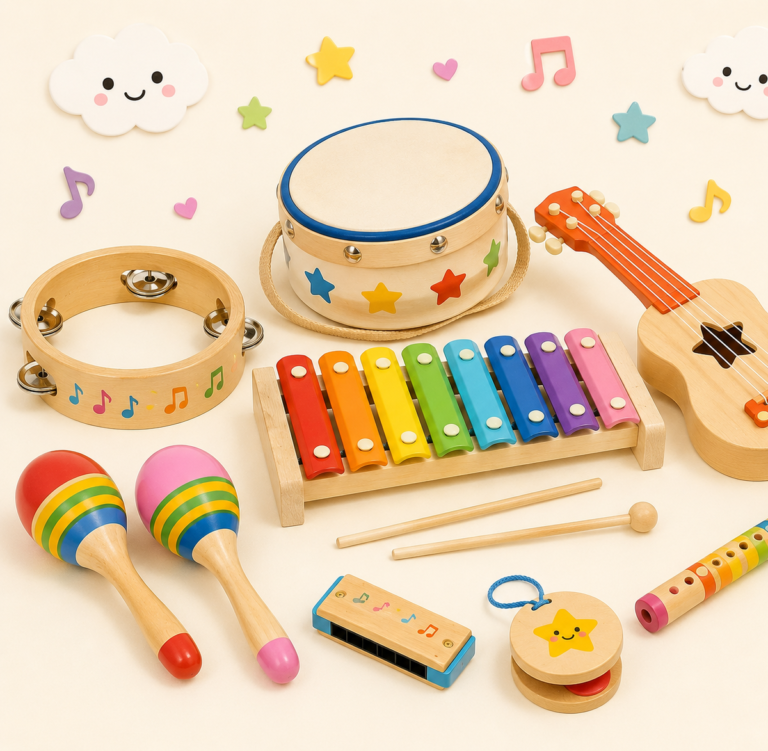
Best Musical Toys for Infant Brain Development

đŸŽ”Music and the Infant Mind From the very first lullaby whispered into a newborn’s ear to the cheerful chimes of a musical cot mobile, sound plays a crucial role in early brain development. Music is not just a source of comfort; it’s a scientific tool that supports infant brain development, enhances emotional bonding, and stimulates neural growth. Recent studies suggest that musical exposure, especially through musical toys, actively engages multiple areas of a baby’s brain—including those responsible for memory, language processing, auditory recognition, and motor skills. In fact, many experts in early childhood development now recommend the use of age-appropriate musical toys for infants to support cognitive and emotional milestones. For example, the rhythmic tapping on a toy drum, the tinkling of a xylophone toy, or the colorful keys on a child’s piano are not just fun—they’re functional tools for brain growth and sensory development. These toys help improve coordination, attention span, auditory discrimination, and even pave the way for early speech patterns. If you’re a parent who’s serious about giving your child the best start in life, investing in interactive musical toys is one of the smartest choices you can make. They support both mental development and emotional bonding, offering your little one a playful path to progress. Whether it’s a musical elephant toy, a gentle lullaby toy, or a stimulating piano play gym, each item is designed to nurture specific parts of your baby’s developing brain. In this blog, you’ll discover how musical toys directly impact brain development, which toys work best at various age stages (from 0–12 months), and how musical play links with the frontal cortex development and neurological development of your growing baby. You’ll also get practical recommendations, parent tips, and expert-backed insights to guide your choices. So, let’s tune in to the science and joy of music as we explore the best musical toys that boost infant brain development—because these aren’t just toys, they’re tools for lifelong learning. 🧠 The Science Behind Music and Brain Development Did you know that babies are born with nearly all the neurons they’ll ever need—but their brains require rich sensory input to build strong connections? That’s where the game changer Musical toys steps in. Backed by scientific research, music acts as one of the most effective stimuli for infant brain development, helping babies grow smarter, more social, and emotionally balanced right from the crib. According to the Harvard Center on the Developing Child, the early years—from birth to age three—are a critical period for developing the architecture of the brain. Neural connections are formed rapidly in response to positive stimulation, and musical toys offer exactly that: rhythmic, repetitive, and emotionally engaging input that activates multiple brain regions at once. 🔬 How Music Stimulates Infant Brain Development: Engages the Auditory Cortex When babies hear music from musical soft toys, rattles, or soothing lullabies, the auditory cortex becomes active. This enhances their ability to differentiate between sounds, understand speech patterns, and eventually, start forming words. In Language Development these listening skills are the backbones or say the very foundation of it. Stimulates the Frontal Cortex The frontal cortex is involved in planning, attention, and emotional control. Exposure to musical toys—like a gentle octoplush toy or a musical activity table—can help babies learn how to self-soothe, improve focus, and recognize emotional cues in different types of music. Boosts the Motor Cortex Have you ever noticed how babies instinctively move when they hear music? Shaking a musical rattle, pressing buttons on a baby piano, or tapping a mini drum set activates the motor cortex, supporting coordination, balance, and gross motor skills. For activities or developments like crawling, standing, and walking these are very crucial. Activates the Hippocampus The hippocampus is the brain’s memory center. Research shows that repetitive exposure to rhythmic music can help infants improve memory retention and pattern recognition. Musical toys that play familiar tunes or repeat melodies encourage this type of learning through sound. đŸŽ¶ Why Rhythmic Music Matters Babies exposed to rhythmic sounds show enhanced brain development in areas linked to cognitive skills, language acquisition, and social-emotional growth. Patterns in music—like beats, pauses, and tempo changes—help babies predict outcomes, which strengthens logical thinking. Musical toys like the infant drum set, piano gym mats, or sound puzzle boards allow babies to explore cause and effect (press a button, hear a sound), improving curiosity, understanding, and learning capacity. Whether it’s a soft plush toy playing gentle lullabies or an interactive piano that lights up and plays multiple notes, each musical toy offers a multisensory experiencethat encourages a baby’s brain to develop connections for lifelong learning. So the next time your little one giggles while tapping on a toy drum or lights up at the sound of a piano, remember—it’s not just cute. It’s brain development in action. Useful Resources: Harvard University: Brain Architecture NIH Study on Music and Brain Development đŸŽ” Best Musical Toys for Infant Brain Development: A Month-by-Month Guide (0–12 Months) đŸ‘¶ Top Musical Toys for Infants to Three Months(0-3 Months) In the early weeks of life, your baby’s world is a blur of light, sound, and touch. While vision is still developing, hearing is already sharp—making this the perfect time to introduce gentle musical toys that support comfort, sleep, and sensory development. 🌟 Top Picks for 0–3 Months Musical Cot Mobile These are a nursery essential. Select a gently rotating crib mobile with gentle lullaby and swinging toys with a lot of contrast.. The combination of soothing motion and music promotes visual tracking and sensory engagement. Some models also include nightlights or nature sounds. Lullaby Toy / Sound Machine Plushie Think of this as your baby’s bedtime buddy. These soft toys play calming white noise, heartbeat sounds, or lullabies to create a womb-like atmosphere. These sounds help regulate your baby’s emotional state and promote better sleep patterns. Musical Rattle Soft rattles that play gentle tunes when shaken are ideal for newborns. They help babies develop grip reflex and auditory awareness. Look for lightweight options with soft

Best Musical Toys for Infant Brain Development Read More »

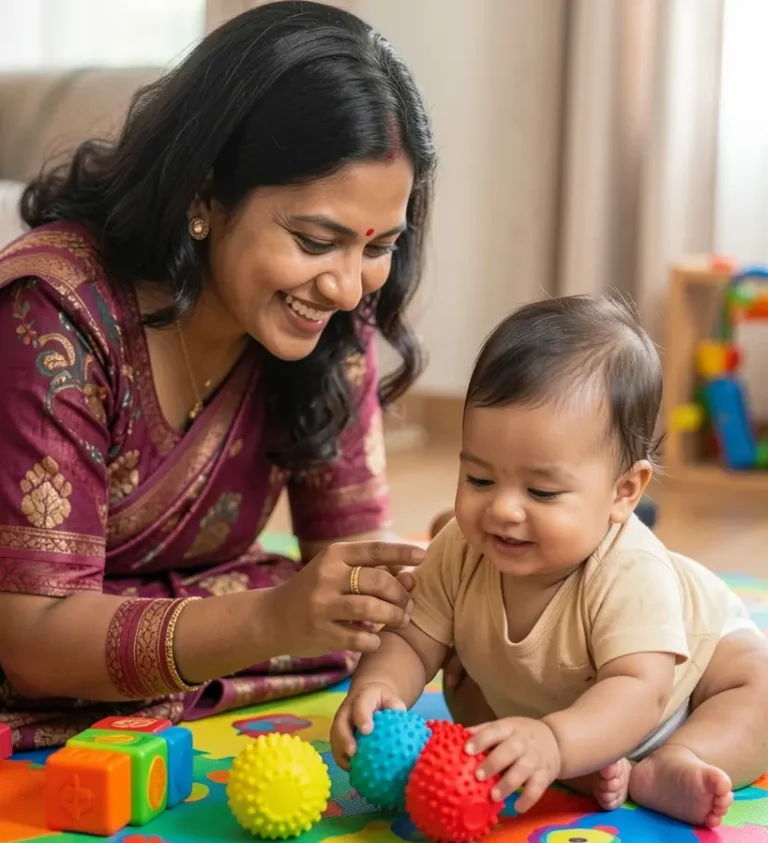
When and Why Do Newborns Need Sensory Toys? Newborn Sensory Toys Parenting Guide (0–6 Months)

Mother engaging her infant with sensory toys for infants on a colorful playmat

  Welcoming a baby into your life comes with many questions — and one of the most common is: When should I introduce sensory toys? And why do newborns need sensory toys in the first place? This complete parenting guide to newborn sensory toys (0–6 months) explains the science behind early development, how sensory toys support brain growth, and how to choose safe, age-appropriate toys for infants. Quick Answer for Busy Parents When do newborns need sensory toys? Newborns can benefit from sensory toys from birth, especially toys that gently stimulate vision, hearing, and touch. Why are sensory toys important? Because during the first six months, a baby’s brain forms rapid neural connections. Proper sensory stimulation helps strengthen these connections and supports cognitive, emotional, and motor development. Why Sensory Toys Matter From Day One Many parents think toys are just for entertainment. In reality, sensory toys are developmental tools. According to research from the Harvard Center on the Developing Child, early childhood is a period of intense brain growth. The brain forms more than one million neural connections per second in early life. Sensory-rich experiences strengthen these pathways. This means that simple newborn sensory toys — such as black-and-white contrast cards or soft rattles — are not just objects. They help your baby: Focus their vision Recognize sounds Explore textures Develop emotional bonding Even before babies can hold toys, they are learning through observation and listening. What Are Sensory Toys? Sensory toys are toys designed to stimulate one or more of the five senses: 👀 Vision 👂 Hearing ✋ Touch đŸ€ž Movement ❀ Emotional comfort Examples of newborn sensory toys include: High-contrast black and white cards Soft textured rattles Musical crib mobiles Tummy time sensory mats Plush comfort toys Unlike regular toys, sensory toys for infants are designed specifically to support developmental milestones.   0–6 Months: What’s Happening in Your Baby’s Brain? From birth to six months, your baby transitions from reflex-driven movements to active exploration. 0–3 Months Visual tracking begins Babies respond to sound Early bonding develops Grasp reflex appears 3–6 Months Rolling and reaching Teething begins Cause-and-effect learning develops Babbling increases The right newborn sensory toys align with these milestones and support natural growth. 0–3 Months: Gentle Sensory Stimulation At this stage, babies can see only 8–12 inches away and are sensitive to overstimulation. Sensory toys should be soft, simple, and calming. Best Newborn Sensory Toys (0–3 Months) ✔ Black and white sensory toys – Improve visual focus and tracking✔ Soft rattles – Introduce sound awareness✔ Musical crib mobiles – Support hearing development✔ Tummy time sensory mats – Strengthen neck and shoulder muscles✔ Soft plush toys – Encourage emotional bonding Why These Sensory Toys Matter These early sensory toys help newborns: Strengthen eye coordination Recognize sound patterns Develop early motor reflexes Build trust and emotional comfort 3–6 Months: Exploration and Interaction Now your baby begins grabbing, rolling, and mouthing objects. Sensory toys should encourage movement and curiosity. Best Sensory Toys for 3–6 Months ✔ BPA-free teething sensory toys✔ Crinkle books and textured cloth books✔ Grasping balls and soft blocks✔ Musical cause-and-effect toys✔ Talking plush toys Development Goals Supported Hand-eye coordination Motor skill development Memory building Early language listening Cause-and-effect learning This is the stage where sensory toys shift from observation to interaction. Let’s look at the growth milestones: Age Range Key Developments 0–3 Months Visual tracking, sound recognition, grasp reflex, early bonding 3–6 Months Smiling, babbling, rolling, grabbing, teething, self-recognition Toys that align with each stage support this natural development. The Science Behind Early Sensory Toys Studies show that sensory-rich environments help create stronger brain pathways. By providing varied textures, sounds, and visuals, you help your baby process new information. 📖 UNICEF recommends daily sensory play to boost a child’s brain and emotional resilience. 👂 Hearing: Use soft rattles, talking toys, or musical mobiles. 👀 Vision: High-contrast black and white books improve focus. 🖐 Touch: Fabrics with texture improve curiosity and motor coordination. đŸ€Č 3–6 Months – Exploration & Action Now your baby begins to reach, roll, and grab. Their neck is stronger. Their eyes follow movement. They are learning cause and effect — for example, “If I press, it squeaks!” Now is an ideal occasion give them toys that they can play with. 🧾 Best Toys for 3–6 Months ✅ 1. Teething Toys Soothes sore gums Choose BPA-free silicone or textured rubber Chill in fridge (not freezer) for extra relief ✅ 2. Crinkle Books or Soft Books Make crinkle sounds when touched Encourage touch and visual exploration Introduce basic shapes, animals, or faces ✅ 3. Grasping Balls or Soft Blocks Improves hand-eye coordination Choose lightweight, easy-to-hold shapes Try activity cubes with tags and textures ✅ 4. Musical and Light Toys Introduce cause and effect Boost memory and attention Encourage movement and smiles! ✅ 5. Soft Animal Toys That Talk Toys that say “hello” or sing rhymes Improve language listening Build emotional bonding 💡 Real-Life Toy Tips for Indian Parents 💰 Budget-Friendly Tips: Don’t buy too many toys. 5–7 quality toys per stage are enough. Use household items like scarves, steel cups, or old cloth for DIY toys (always supervise). đŸ§Œ Hygiene Tips: Clean all toys once or twice a week. Wash soft toys with baby-safe detergent. Use toy sanitizer sprays for plastic toys. 🕒 Play Schedule Tips: Use morning time for active play Use bedtime for soft music toys Don’t force play when baby is tired or cranky 3–6 Months: Toys for Exploration Your baby is now starting to move more — reaching, grasping, mouthing, rolling, and kicking. Their brain is learning fast, especially through cause-and-effect. ✅ What to Look For: Teething-safe toys made from food-grade silicone Crinkle or squeaky textures for sound discovery Toys that respond when touched (e.g. soft music, rattles) Graspable shapes that help with hand-eye coordination 🧠 Development Goal: Motor skills, cause-effect learning, coordination đŸ§© Toy Examples: Soft blocks with different textures and sounds Silicone teething rings with textured grips Plush animals that talk or sing when squeezed Cloth books with lift-the-flap

When and Why Do Newborns Need Sensory Toys? Newborn Sensory Toys Parenting Guide (0–6 Months) Read More »