How to Adopt a Child in India: Step-by-Step Guide for First-Time Parents

Adopt a child in India legal process guide 2026 for parents CARA adoption steps

 adopt a child is one of the most compassionate and life-changing decisions a person or couple can make. It is not just about expanding your family—it is about providing love, security, and a future to a child in need. In India, adoption is a legally regulated and structured process designed to protect both the child and adoptive parents.

For first-time parents, the process may seem complex, filled with legal procedures, eligibility criteria, and emotional decisions. However, with the right guidance and understanding, you can confidently navigate the journey to adopt a child in India.

This comprehensive guide explains everything you need to know—from the adopt a child meaning to eligibility, costs, and step-by-step procedures—ensuring you are fully prepared for this meaningful journey.

Quick Answer – How to Adopt a Child in India?

To adopt a child in India, you must follow a legal process regulated by the Central Adoption Resource Authority (CARA). The process involves registration, verification, matching, and legal finalization.

Key Steps:

  • Register on the official CARA Adoption portal
  • Complete Online registration for Child Adoption in India
  • Submit required documents
  • Undergo a Home Study Report (HSR)
  • Wait for child referral and matching
  • Accept the child legally
  • Complete court formalities
  • Bring your child home

Adoption in India is strictly governed by law to ensure ethical and transparent procedures.

Basic Understanding

What is the Adopt a Child Meaning?

Adopt a child and give a new life filled with love, care, and hope. This video explains important aspects of adoption, helping parents understand the emotional journey and responsibilities involved in adopting a child.

The adopt a child meaning refers to the legal process through which an individual or couple becomes the lawful parent(s) of a child who is not biologically theirs. Once adopted, the child gets the same rights as a biological child, including inheritance, name, and identity.

Adoption is permanent, legally binding, and emotionally significant.

Adoption vs Fostering vs Sponsorship

Understanding the differences is essential before you decide to adopt a child:

Adoption

  • Permanent legal relationship
  • Full parental rights
  • Child becomes part of your family forever

Fostering

  • Temporary care arrangement
  • No legal parental rights
  • Child may return to biological family

Sponsorship

  • Financial support only
  • No custody or parental rights

Adoption provides stability and a lifelong bond, unlike fostering or sponsorship.

Legal Importance of Adoption

Adoption in India is governed by strict laws to:

  • Prevent child trafficking
  • Ensure child welfare
  • Protect adoptive parents legally
  • Provide identity and rights to the child

Following the legal route is mandatory when you choose to adopt a child.

Adoption in India

Types of Adoption

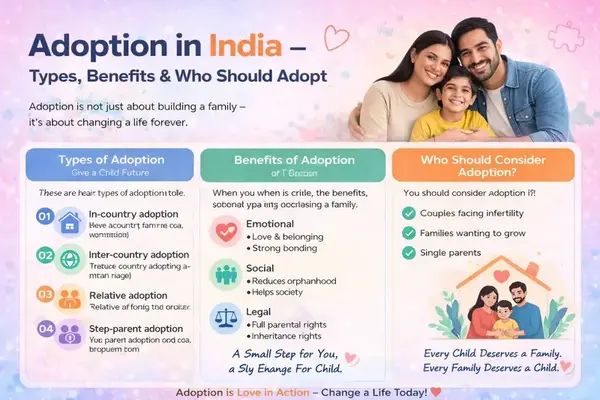
Adopt a child in India infographic showing types of adoption, benefits, and who should consider adoption

There are four main types of adoption in India:

In-country adoption

  • Indian parents adopting a child within India

Inter-country adoption

  • Foreign parents adopting an Indian child

Relative adoption

  • Adoption within family members

Step-parent adoption

  • One spouse adopts the other’s biological child

Each type follows specific legal guidelines under CARA Adoption.

Benefits / Importance of Adoption

When you adopt a child, the benefits extend beyond just building a family:

Emotional Benefits

  • Provides love and belonging to a child
  • Creates deep emotional bonds

Social Benefits

  • Helps reduce orphanhood
  • Contributes to society positively

Legal Benefits

  • Full parental rights
  • Child receives inheritance rights

Examples / Who Should Consider Adoption

You should consider adoption if:

  • You are unable to have biological children
  • You want to expand your family
  • You wish to provide a home to a child in need

Example Scenarios:

  • A couple facing infertility chooses to adopt a child
  • A child is being raised by a single parent.A family adopts a second child to grow their family

Practical Guidance – Step-by-Step Process

Step 1: Register on CARA Portal

tart your journey by registering on the official CARA Adoption website. This is mandatory for all prospective adoptive parents.

Step 2: Online Registration for Child Adoption in India

Complete the Online registration for Child Adoption in India by submitting:

  • Identity proof
  • Income certificate
  • Marriage certificate (if applicable)
  • Medical reports

Step 3: Home Study Report (HSR)

A social worker will evaluate:

  • Your financial stability
  • Emotional readiness
  • Living conditions

This step ensures the child’s safety and well-being.

Step 4: Child Referral

Based on your preferences:

  • Age
  • Gender
  • Health condition

You will receive profiles of children available for adoption.

Step 5: Acceptance of Child

Once you select a child:

  • Review medical records
  • Confirm acceptance officially

Step 6: Pre-Adoption Foster Care

You may take the child home under foster care before legal finalization.

Step 7: Legal Procedure

The court grants legal adoption approval.

Step 8: Final Adoption Order

Once approved, you officially adopt a child, and the child becomes your legal family member.

How to Adopt a Newborn Baby Quickly

Many parents ask about how to adopt a newborn baby quickly, but it’s important to understand:

  • Newborn adoption has long waiting periods
  • Demand is very high
  • Legal checks cannot be skipped

Tip: Be flexible with age preferences to reduce waiting time.

Can I Adopt a 1 Year Old Baby?

Yes, can I adopt a 1 year old baby is a common question—and the answer is yes.

  • Children of various age groups are available
  • Waiting time is shorter compared to newborns
  • Process remains the same

Eligibility Criteria to Adopt a Child in India

Adopt a child in India by understanding the complete legal process and requirements. This video explains how adoption works under Indian laws, including CARA guidelines, eligibility, and step-by-step procedures to help parents start their adoption journey.

Before you decide to adopt a child in India, it is important to understand the eligibility criteria set by authorities. These rules are designed to ensure that every child is placed in a safe, stable, and loving environment. If you plan to adopt a child, meeting these requirements is the first step toward a successful adoption journey.

To adopt a child, the prospective adoptive parent must be physically, mentally, and emotionally fit. Good health is essential because raising a child requires long-term commitment and active involvement. Authorities assess whether you are capable of providing consistent care, support, and attention. If you want to adopt a child, you must also not have any life-threatening medical conditions that could affect your ability to parent.

Financial stability is another key factor when you choose to adopt a child. You do not need to be extremely wealthy, but you must have a steady income and the ability to meet the child’s basic needs, including food, education, healthcare, and overall well-being. During the evaluation process, documents like income proof and employment details are reviewed to ensure you can responsibly adopt a child.

Both married couples and single individuals are eligible to adopt a child in India. Married couples must usually have a stable relationship, often with at least two years of marriage, to provide a secure family environment. Single women are allowed to adopt a child of any gender, while single men are generally not permitted to adopt a girl child. These guidelines are in place to ensure the safety and best interests of the child.

Age is another important criterion when you plan to adopt a child. The minimum age to adopt a child in India is generally 25 years. Additionally, there must be a minimum age difference of 25 years between the adoptive parent and the child. This ensures a natural parent-child relationship. The maximum age to adopt a child depends on the age of the child being adopted, and authorities may allow higher age limits if you are adopting older children.

Emotional readiness is equally important when you decide to adopt a child. Adoption is not just a legal process—it is a lifelong responsibility. Parents must be prepared to support the child emotionally, especially since adopted children may come from challenging backgrounds. Being patient, understanding, and supportive is crucial when you adopt a child.

Lastly, all applicants must undergo a Home Study Report conducted by authorized agencies. This assessment evaluates your lifestyle, family environment, and preparedness to adopt a child. It ensures that the child will grow up in a nurturing and secure home.

In conclusion, to adopt a child in India, you must meet specific physical, financial, emotional, and legal criteria. Understanding these requirements in advance will help you prepare better and move forward confidently in your adoption journey.
Cost of Adoption

How Much Money Do We Need to Adopt a Child

Many ask: how much money do we need to adopt a child?

Typical costs include:

  • Registration fees
  • Documentation charges
  • Agency fees

Approximate range: ₹40,000 – ₹60,000 (legal adoption)

Is Adoption Free in India

Is adoption free in India?

  • Government adoption is mostly regulated and low-cost
  • However, it is NOT completely free
  • Fees are controlled and standardized

Avoid anyone claiming “free” or “fast” adoption outside legal channels.

Common Mistakes / Warnings

Avoid these mistakes when you plan to adopt a child:

  1. Choosing illegal adoption routes
  2. Adopting directly from hospitals without legal process
  3. Ignoring CARA guidelines
  4. Not preparing emotionally
  5. Rushing the decision
  6. Not verifying agencies
  7. Expecting instant newborn adoption

⚠️ Warning: Illegal adoption can lead to legal consequences and cancellation of adoption rights.

To strengthen your parenting journey, consider reading:

These topics improve both knowledge and SEO structure.

FAQs

Who is eligible to adopt a child in India?

Any individual or couple who is physically, mentally, and financially stable can adopt a child. Both married and single individuals are allowed, provided they meet age and eligibility criteria set under CARA Adoption guideline

Can I adopt a 1 year old baby?

Yes, you can adopt a 1 year old baby in India. Many children in this age group are available for adoption, and the waiting period is often shorter compared to newborn adoption.

Is adoption free in India?

No, adoption in India is not entirely free.While government-regulated adoption is affordable, there are standard legal and administrative fees involved in the process.

How much money do we need to adopt a child?

The cost to adopt a child in India typically ranges from ₹40,000 to ₹60,000. This includes agency fees, documentation, and legal procedures regulated by CARA.

What is the minimum age to adopt a child in India?

The minimum age to adopt a child in India is generally 25 years. Additionally, there must be a minimum age difference of 25 years between the adoptive parent and the child.

Maximum age to adopt a child in India?

The maximum age to adopt a child depends on the child’s age, usually up to 55 years for younger children. Older individuals may adopt older children under relaxed criteria.

How to adopt a newborn baby quickly?

Adopting a newborn baby quickly is difficult due to high demand and strict legal checks. Being flexible with age preferences and completing all documentation properly can help reduce waiting time.

Conclusion

To adopt a child in India is a deeply rewarding journey that transforms lives—both yours and the child’s. While the process involves legal steps, documentation, and waiting periods, it ensures that every child is placed in a safe and loving home.

By following the CARA Adoption process, completing the Online registration for Child Adoption in India, and meeting eligibility criteria, you can confidently move forward in your adoption journey.

Always choose ethical and legal routes. Adoption is not just a process—it is a lifelong commitment built on love, trust, and responsibility.

Author Bio

Author: Parenting & Child Development Expert – ZaminoToys
At ZaminoToys (zaminotoys.in), we specialize in research-based parenting guidance, child development insights, and evidence-backed family support resources. Our content is designed to help modern parents make informed, confident decisions.

Reviewed By: Legal/Adoption Specialist
This article has been reviewed by a qualified adoption and legal expert to ensure alignment with current Indian adoption laws and CARA guidelines.

Disclaimer

This article is published by ZaminoToys (zaminotoys.in) for informational and educational purposes only. Adoption laws, procedures, and eligibility criteria in India may change over time. Readers are strongly advised to verify details through official government sources or consult a certified adoption agency or legal professional before making any decisions related to adoption.

Leave a Comment

Your email address will not be published. Required fields are marked *

This site uses Akismet to reduce spam. Learn how your comment data is processed.