Signs of Labor Pain in Pregnancy: Symptoms, Stages & When Labor Starts
If you are in your final weeks of pregnancy, you have probably found yourself wondering when it will actually happen. Every twinge, every ache, every strange feeling in your belly can suddenly feel important. Learning the signs of labor pain is one of the best ways to feel calm and confident as your due date approaches, instead of anxious and unsure.
Here is the reassuring truth: there is no single, universal way the signs of labor pain unfold for every mother. Some mothers feel gentle, gradual changes over several days. For some women, labor begins gradually over several days, while others may transition from feeling completely normal to experiencing regular, strong contractions within just a few hours. Both are completely normal. This guide will walk you through everything you need to know about the signs of labor pain, so you can recognize what your body is telling you and know exactly when it is time to head to the hospital.
What Is Labour? Understanding the Birth Process
Labour is the natural process through which your body prepares for and carries out the birth of your baby. It involves rhythmic tightening and relaxing of the uterine muscles, known as contractions, which gradually open the cervix and help move your baby down through the birth canal.
Labour typically begins on its own once your baby and your body are ready. A complex combination of hormonal signals, including rising oxytocin and prostaglandins, triggers the uterus to start contracting in a coordinated way. These hormones also help soften and thin the cervix so it can open for delivery.
In the weeks and days leading up to labour, your body quietly gets to work. The cervix begins to soften, your baby may shift into a lower position, and your uterus practices with mild tightening. All of this prepares the pathway for birth, even before you notice the more obvious signs of labor pain.
No two labours look exactly the same, even for the same woman across different pregnancies. Genetics, your baby’s position, your pelvic shape, and even your stress levels can all influence how your labour unfolds. This is why comparing your experience to a friend’s story is rarely helpful. Your body will follow its own timeline. 📘 External Reference: Normal Labor: Physiology, Evaluation, and Management
The Three Stages of Labour Explained
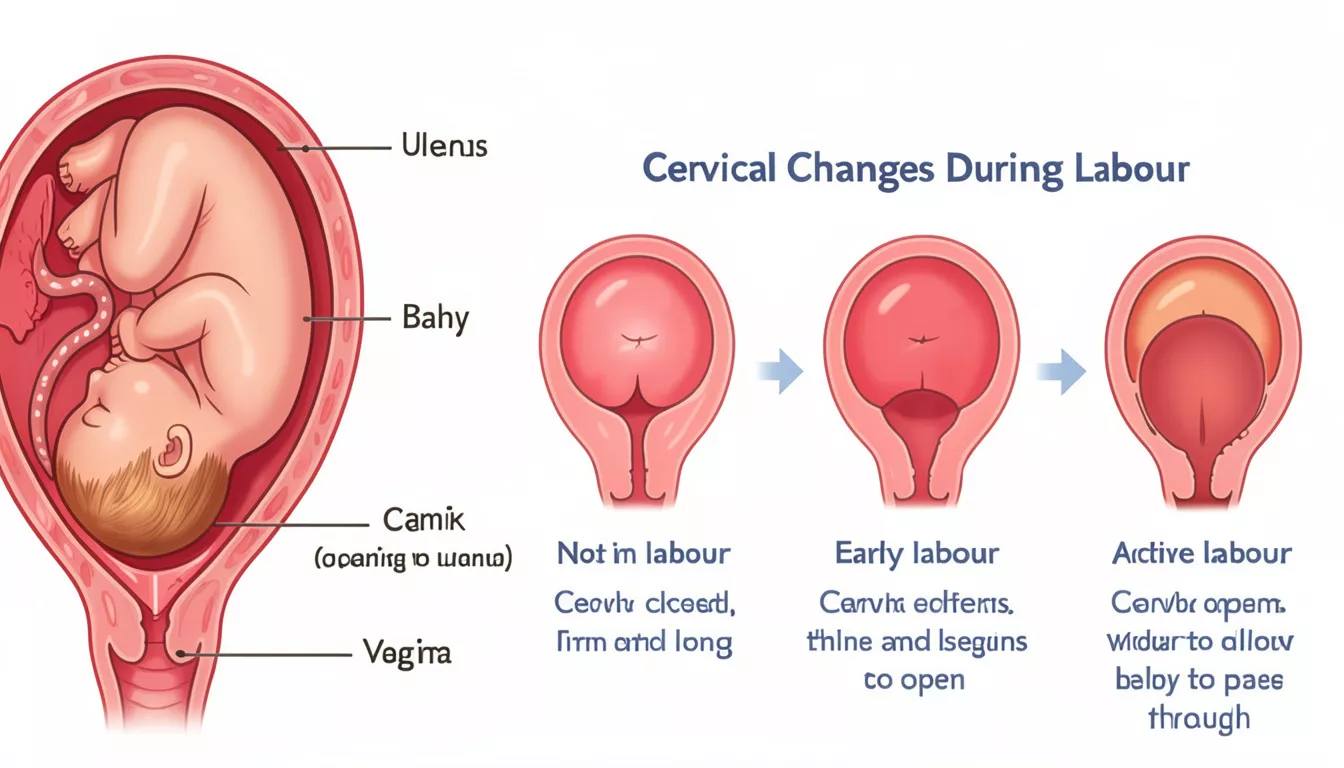
The first stage of labour is the longest and is divided into phases. Early labour is when contractions begin, usually mild and irregular, and the cervix starts to dilate slowly, often up to around four to five centimetres. Many women spend this phase at home, resting, moving around, and timing their contractions.
Active labour follows, marked by stronger, more frequent, and more regular contractions. This is when the signs of labor pain become impossible to ignore, as the intensity increases and contractions typically arrive every three to five minutes.
Cervical Dilation & Effacement
Cervical dilation is the gradual opening of the cervix, measured in centimetres from zero to ten. Effacement refers to the thinning of the cervix, expressed as a percentage. Both need to progress together for birth to happen safely.
The transition phase is the final and most intense part of stage one, where the cervix completes dilation to ten centimetres. Contractions are close together, powerful, and often the hardest part of labour to cope with, but it also tends to be the shortest phase.
Once the cervix is fully dilated, stage two begins. This is the pushing stage, where you actively work with your contractions to help your baby move down and through the birth canal.
Your healthcare team will guide you on when and how to push, coordinating your efforts with each contraction. This stage can last anywhere from a few minutes to a couple of hours, depending on factors like your baby's position and whether this is your first birth.
During the Pushing Stage
As your baby moves through the birth canal, you may feel intense pressure, especially in the pelvis and rectal area. This is a normal and expected part of delivery. The stage ends with the birth of your baby.
After your baby is born, your body still has one more job to do. Stage three involves delivering the placenta, the organ that nourished your baby throughout pregnancy.
Mild contractions continue during this stage, helping the placenta separate from the uterine wall and be delivered, usually within five to thirty minutes after birth.
After the Placenta is Delivered
Your uterus will continue contracting after this stage too, which is essential for controlling bleeding and helping the uterus shrink back toward its pre-pregnancy size. Your healthcare provider will monitor this closely to make sure everything is progressing safely.
📘 External Reference: The 3 Stages of Labor: Clinical Phases & Facts
🤰 Early Signs of Labor Pain You Should Never Ignore
Know the early changes your body may experience before labour begins.
Baby Drops Lower (Lightening)
Passing the Mucus Plug and Increased Vaginal Discharge
Losing the mucus plug is normal, but it does not always mean labour will begin immediately.
Braxton Hicks Contractions (Practice Contractions)
Cervix Starts to Dilate and Thin
Lower Back Pain, Pelvic Pressure, and Menstrual-Like Cramps
If you experience severe pain, bleeding, leaking fluid, or notice your baby's movements have decreased, contact your healthcare provider right away.
Sudden Burst of Energy or Extreme Tiredness
Loose Stools or Frequent Bowel Movements
Stay hydrated and inform your healthcare provider if symptoms become severe or persistent.
Braxton Hicks vs. True Labour: Key Differences Every Mom Should Know
Understanding the difference between Braxton Hicks contractions and true labour contractions can help you recognise the early signs of labour and know when it's time to contact your healthcare provider.
| Feature | 💗 Braxton Hicks Contractions | 💙 Real Labour Contractions |
|---|---|---|
| 🌀 Pattern |
Practice Contractions Irregular and unpredictable. |
True Labour Regular contractions that follow a pattern. |
| ⏰ Frequency | Does not increase over time. | Gradually becomes more frequent. |
| 😣 Pain | Mild tightening, usually more uncomfortable than painful. | Increasingly painful and often begins in the lower back before wrapping around the abdomen. |
| 📈 Intensity | Stays about the same. | Steadily becomes stronger. |
| ⌛ Duration | Varies and is often brief or inconsistent. | Each contraction lasts longer than the previous one. |
| 🚶 Walking or Resting | Often eases with rest, hydration, or changing position. | Continues or becomes stronger regardless of activity. |
| 📞 When to Contact a Provider | Usually not necessary unless contractions become very frequent or concerning. | Call your healthcare provider once contractions become regular, stronger, and closer together. |
⏱️ How to Track Labour Contractions Correctly
Start Timing Each Contraction
Begin timing from the moment a contraction starts, meaning the exact second your uterus begins to tighten.
Measure How Long Each Contraction Lasts
Note when the tightening fully releases. This gives you the duration of that single contraction, an important detail among the many signs of labor pain your provider will ask about.
Track the Time Between Contractions
Measure the time from the beginning of one contraction to the beginning of the next to determine how frequently your contractions are occurring.
Watch for a Regular Pattern
True labour contractions settle into a steady, predictable rhythm over time, rather than starting and stopping randomly.
Notice If the Pain Becomes Stronger
Genuine signs of labor pain typically intensify gradually rather than staying the same. For example, if your contractions move from lasting thirty seconds every fifteen minutes to lasting sixty seconds every five minutes, and this pattern continues consistently for an hour, it is a strong signal that active labour has begun.
Water Breaking Before Labor: Causes, Signs, and Next Steps
Amniotic fluid is the fluid that surrounds and protects your baby throughout pregnancy, contained within the amniotic sac. When this sac ruptures, it is commonly known as your water breaking.
For some women, it happens as a sudden gush of fluid. For others, it is a slow, continuous trickle that can be mistaken for urine leakage. Both are normal ways for the water to break.
Normal amniotic fluid is typically clear or slightly straw-coloured and may have little to no odour. This is a reassuring sign, even without other obvious signs of labor pain yet present.
Abnormal fluid colour, such as green, brown, or a strong unpleasant smell, can indicate the presence of meconium or infection and needs immediate medical attention.
After your water breaks, contact your healthcare provider right away, note the time it happened along with the fluid’s colour and smell, and avoid inserting anything into the vagina, including tampons, until you have been evaluated.
📘 External Reference: What is water breaking?
When Should You Go to the Hospital or Call Your Doctor?
Recognizing when to seek care is just as important as recognizing the signs of labor pain themselves. Contact your healthcare provider or head to the hospital if you experience any of the following:
- Contractions occurring every five minutes, each lasting about a minute, for at least an hour
- Your water breaks, whether as a gush or a slow leak
- Heavy vaginal bleeding, more than light spotting
- Green, brown, or foul-smelling amniotic fluid
- Your baby is moving noticeably less than usual
- Severe, unrelenting abdominal or pelvic pain
- Fever, chills, or feeling unwell
- A high-risk pregnancy where your provider has given specific guidance
- Any symptom that simply worries you, even if it does not fit neatly into a category above
Trust yourself. You know your body better than anyone, and healthcare providers would always rather reassure you than have you wait too long at home.
Conclusion: Be Prepared for Labour and Delivery
Understanding the signs of labor pain can turn a stressful unknown into something you feel genuinely prepared for. From your baby dropping lower and losing the mucus plug, to Braxton Hicks contractions, back pain, and eventually a clear, strengthening pattern of real contractions, your body gives you plenty of signals along the way.
Remember that every labour experience is different, and there is no single “correct” way for things to unfold. Stay calm, keep track of your symptoms, lean on your support system, and never hesitate to call your healthcare provider whenever something feels uncertain. When in doubt, always reach out, because your peace of mind and your baby’s safety matter more than anything else
FAQ
What are the first signs of labor pain?
The first signs of labor pain may include your baby dropping lower into the pelvis, losing the mucus plug, mild contractions, lower back pain, pelvic pressure, and increased vaginal discharge. These changes often happen before active labor begins.
How can I tell if the signs of labor pain are real or false?
Real signs of labor pain include regular contractions that become stronger, longer, and closer together. False labor, also called Braxton Hicks contractions, is usually irregular and often improves with rest or changing positions.
Does back pain mean the signs of labor pain have started?
Lower back pain can be one of the signs of labor pain, especially when it occurs with regular contractions, pelvic pressure, or other labor symptoms. If the pain becomes severe or continuous, contact your healthcare provider.
When should I go to the hospital after noticing signs of labor pain?
You should go to the hospital when the signs of labor pain include contractions every five minutes lasting about one minute each for at least one hour, your water breaks, heavy bleeding occurs, or your baby’s movements decrease
How do I track signs of labor pain at home?
To monitor the signs of labor pain, record when each contraction starts, how long it lasts, and the time between contractions. A regular pattern of stronger and closer contractions often indicates true labor.