“Something feels different… but I can’t explain it.”
If you’ve ever had this thought just before your expected period, you’re not alone. Many women notice small changes — a little spotting, mild cramps, unusual tiredness — and suddenly a question pops into their mind:
“Is this just my period… or could I be pregnant?”
This is exactly where confusion begins.
Because one of the earliest pregnancy signs — implantation bleeding — often looks very similar to a period.And this is where the majority of individuals make mistakes.
Let’s break it down step by step in a simple, real-life way so you can clearly understand what your body might be telling you about implantationand early pregnancy.
Fertilization and implantation
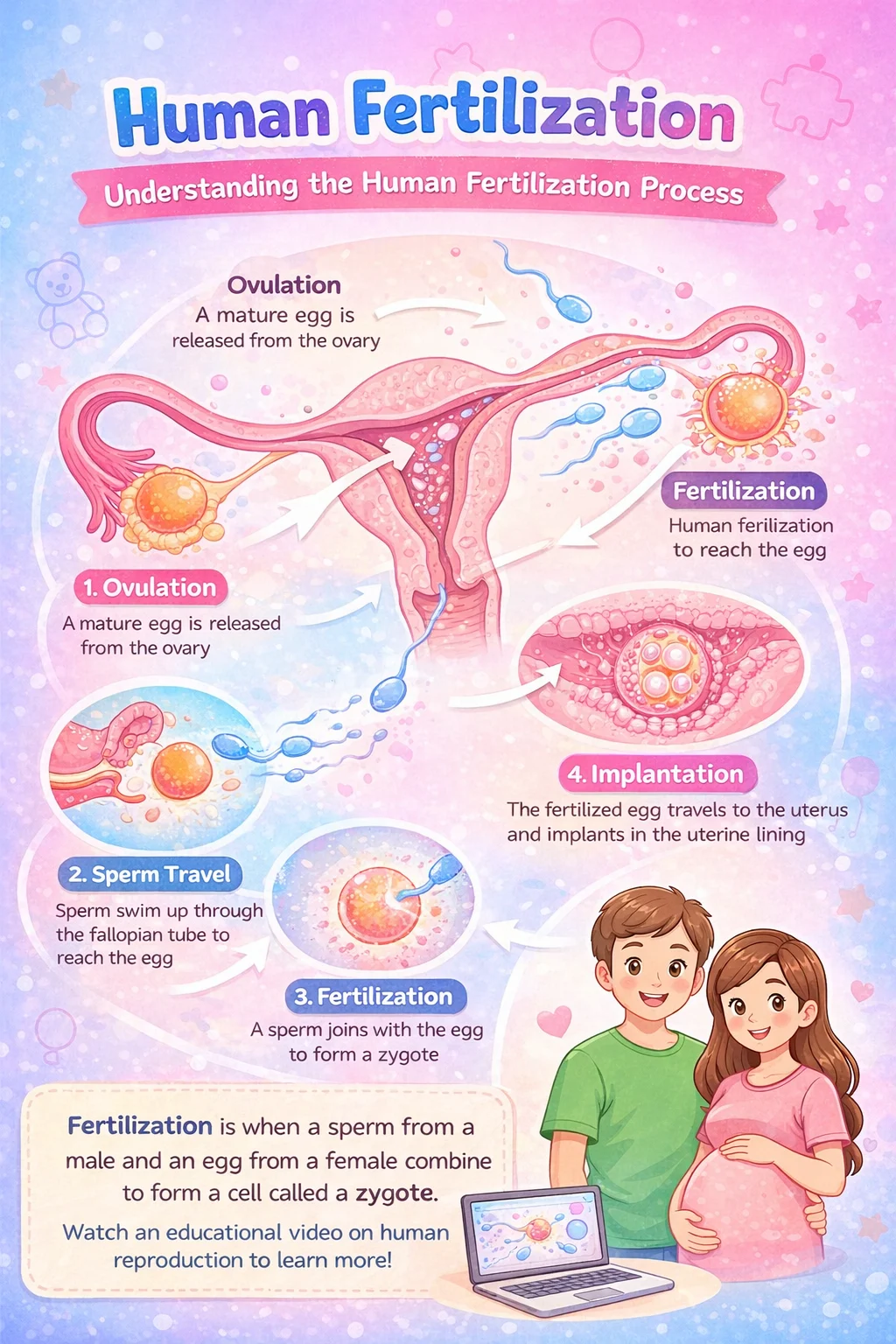
Before understanding implantation bleeding, you need to understand fertilization and implantation.
Pregnancy doesn’t begin with a missed period. It starts much earlier.
Step 1: Fertilization
After ovulation, if sperm meets the egg, fertilization happens in the fallopian tube.
Step 2: Travel to the uterus
The fertilized egg slowly travels toward the uterus while dividing and growing.
Step 3: Implantation
Around 6 to 10 days later, the fertilized egg attaches to the uterine lining.
This process is called fertilization and implantation, and this is when pregnancy actually begins.
During this stage, small blood vessels may break, causing light spotting.
Now let’s answer the most important question:
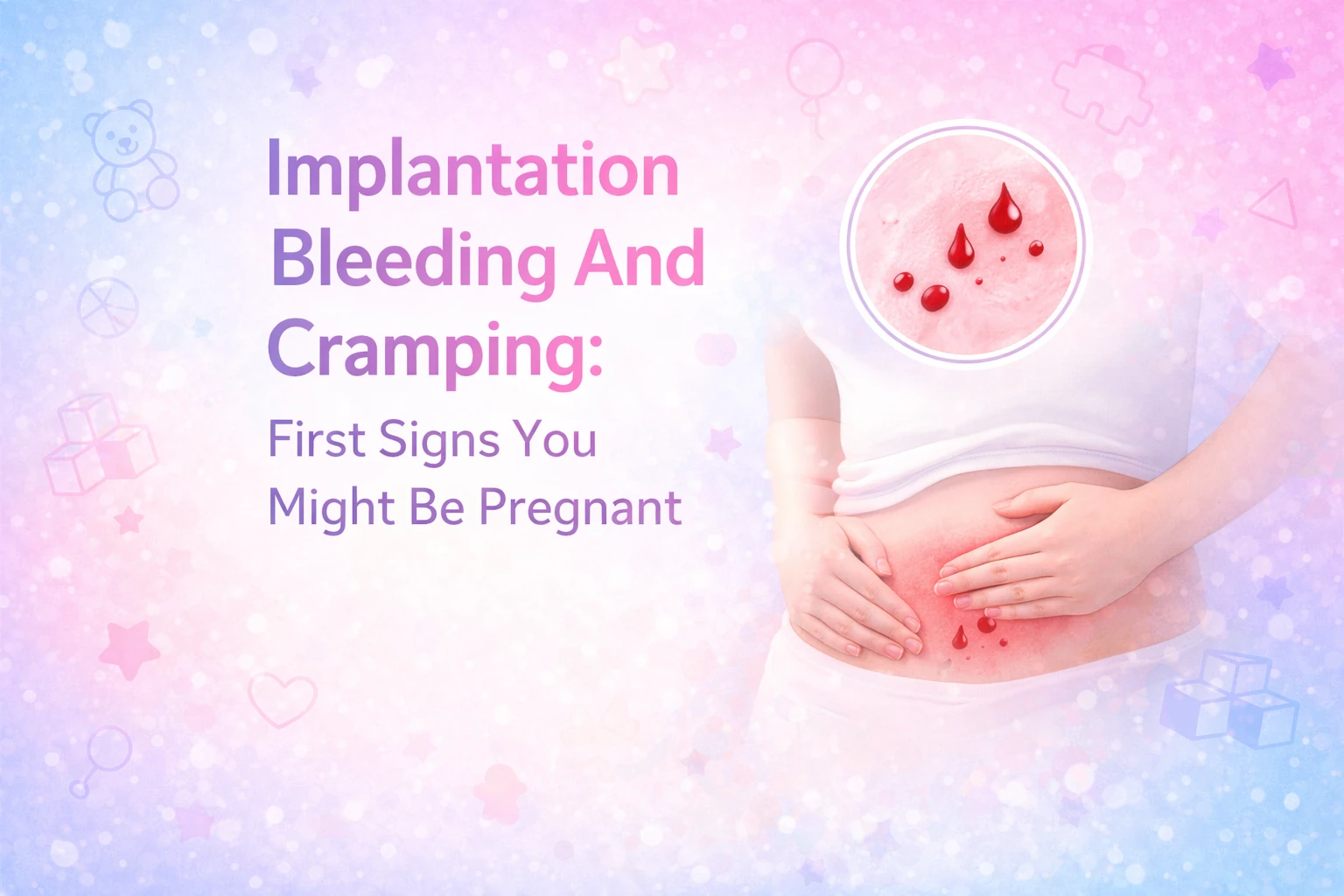
What is implantation bleeding?
This video explains the early signs of pregnancy, focusing on implantation symptoms like light bleeding and mild cramping. It also helps you understand the difference between implantation symptoms and regular period signs, making it easier to identify early pregnancy changes.
Implantation is light spotting that occurs when the fertilized egg attaches to the uterus lining.
It is one of the earliest pregnancy signs.
Key features of implantation bleeding:
- Very light flow
- Short duration (few hours to 2 days)
- Pink or brown color
- No clots
Think of it like this:
👉 Your body is preparing a space for the baby
👉 While the embryo attaches, tiny blood vessels break
👉 This causes slight spotting — called implantation bleeding
Many women confuse what is implantation bleeding with a period — and that’s where confusion starts.
When does implantation bleeding occur
Timing is one of the biggest clues.
When does implantation occur?
- Usually 6 to 10 days after ovulation
- Often before your expected period
This is why many women confuse implantation bleeding with an early period.
Simple timeline:
- Day 0: Ovulation
- Day 1–5: Fertilization
- Day 6–10: Implantation
- Day 10–14: Possible implantation bleeding
👉 So if you notice spotting before your period, it could be implantation bleeding, not menstruation.
Symptoms of implantation bleeding
Recognizing the symptoms of implantation bleeding can help you understand your body better.
Common symptoms of bleeding:
- Light spotting (pink or brown)
- Very light flow (no clots)
- Short duration (1–2 days)
- Mild lower abdominal discomfort
Additional early signs:
- Slight fatigue
- Breast tenderness
- Mood changes
👉 Important: Not every woman experiences all symptoms of implantation bleeding. Some may not notice implantation bleeding at all.
Implantation cramps
Along with spotting, some women experience implantation cramps.
What are implantation cramps?
Implantation cramps are mild discomfort felt when the embryo attaches to the uterus.
How implantation cramps feel:
- Very mild
- Short-lasting
- Light pulling sensation
- Not painful
👉 Unlike period cramps, implantation cramps are gentle and easy to miss.
If pain is strong, it is more likely your period.
Implantation bleeding vs period
This is where most women get confused… and honestly, it’s completely understandable.
You notice bleeding. Your first thought?
“My period has started.”
But what if it’s not your period?
What if your body is actually giving you one of the earliest signs of pregnancy — implantation?
This confusion between implantation vs period is extremely common, especially for women who are actively trying to conceive or carefully tracking their cycle.
And this is exactly where most people get it wrong.
Because even though both implantation bleeding and periods happen around the same time, they are not the same at all.
Let’s break this down in a very simple and practical way so you can confidently understand the difference.
Why implantation bleeding vs period confusion happens
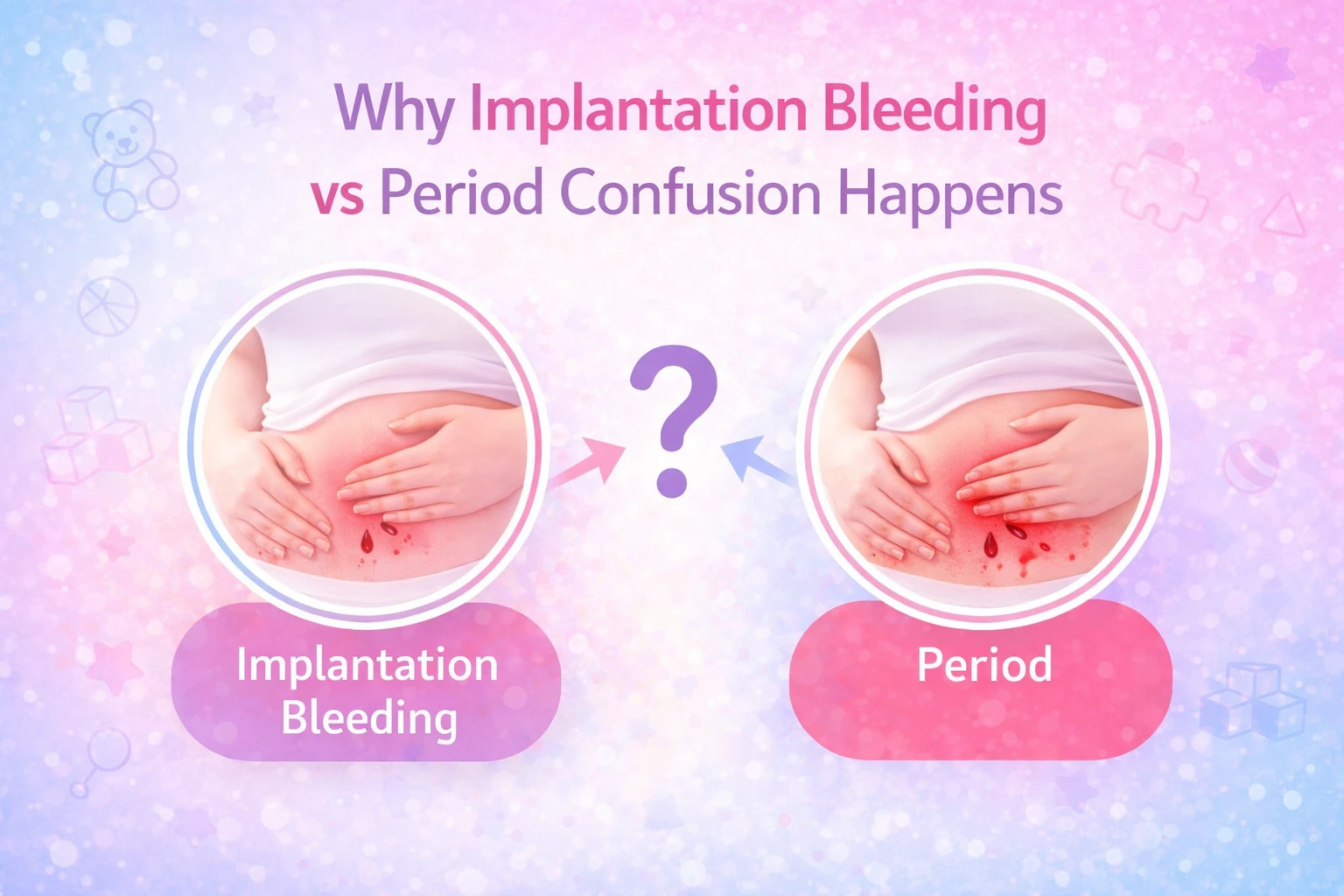
The biggest reason is timing.
Both implantation and periods occur close to each other in your cycle:
- Implantation → Happens 6 to 12 days after ovulation
- Period → Happens around 14 days after ovulation
👉 The gap is very small.
So when you see spotting before your expected date, your brain automatically assumes:
“Okay… this is my period.”
But here’s the truth:
👉 Not all bleeding is a period
👉 Some bleeding is actually implantation
And this is where awareness becomes important.
Understanding the biological difference
Before comparing symptoms, understand what’s happening inside your body.
Period:
- The uterus sheds its lining
- This happens because pregnancy did NOT occur
Implantation :
- A fertilized egg attaches to the uterus lining
- This means pregnancy HAS started
👉 So in simple words:
- Period = End of a cycle
- Implantation bleeding = Beginning of pregnancy
That’s a powerful difference.
1. Flow difference (Most noticeable sign)
Flow is the easiest and most practical way to differentiate implantation bleeding vs period.
Implantation :
- Very light spotting
- Often visible only while wiping
- May not even require a pad
Period:
- Starts light but becomes heavy
- Requires pads or tampons
- Flow increases over time
👉 Ask yourself honestly:
“Do I actually need a pad?”
If not, chances are high that it is implantation bleeding.
2. Color difference
Color gives another strong clue in implantation bleeding vs period comparison.
Implantation bleeding:
- Light pink
- Brown
- Slight rusty shade
Period:
- Bright red
- Dark red
- Looks fresh and flowing
👉 Why this difference?
Because implantation bleeding is older blood leaving slowly, while period blood is fresh and continuous.
3. Duration difference
Duration clearly separates implantation vs period.
Implantation bleeding:
- Few hours to 1–2 days
- Stops suddenly
Period:
- 3 to 7 days
- Gradual start → heavy → slow end
👉 If spotting appears and disappears quickly, it is more likely implantation bleeding.
4. Clots vs no clots
Implantation :
- No clots
- Smooth, light spotting
Period:
- Clots are common
- Especially on heavier days
👉 Presence of clots strongly indicates a period, not implantation bleeding.
5. Implantation cramps vs period cramps
This video explains the key differences between implantation cramps and period pain, helping you understand early pregnancy signs more clearly. It highlights how implantation symptoms are usually milder, shorter, and lighter compared to regular periods, making it easier to identify what your body might be trying to tell you.
Now let’s talk about implantation cramps, which often appear along with implantation bleeding.
Implantation cramps:
- Very mild
- Short duration
- Feels like gentle pulling or stretching
Period cramps:
- Strong and painful
- Can last for days
- May affect daily routine
👉 Many women describe implantation cramps as:
“Something feels different… but it’s not painful.”
This subtle feeling is a key indicator.
6. Timing difference
Timing plays a crucial role in identifying implantation vs period.
Implantation :
- Happens BEFORE your expected period
- Appears as early spotting
Period:
- Comes ON your expected date
- Follows your usual cycle pattern
👉 If your cycle is regular and bleeding comes early, don’t ignore it — it could be implantation
7. Associated symptoms
Your body may give additional signals along with implantation bleeding.
With implantation :
- Mild fatigue
- Breast tenderness
- Slight nausea
- Emotional sensitivity
With period:
- Strong cramps
- Mood swings
- Bloating
- Back pain
👉 However, symptoms can overlap — so use them as supporting clues, not final proof.
Quick comparison (easy to remember)
Here’s a simple way to remember implantation bleeding vs period:
- Flow → Light vs Heavy
- Color → Pink/Brown vs Red
- Duration → Short vs Long
- Clots → No vs Yes
- Cramps → Mild vs Strong
- Timing → Early vs On time
Real-life example (practical clarity)
Let’s make this real.
You are expecting your period in 4 days.
Suddenly, you notice:
- Light brown spotting
- Mild discomfort
- No heavy bleeding
You wait…
Next day — it completely stops.
👉 This is a classic example of implantation bleeding, not your period.
This is where most women get it wrong
Many women believe:
“If I’m bleeding, I’m not pregnant.”
But that’s not always true.
👉 Implantation happens because pregnancy has started.
So early spotting does NOT always mean your period.
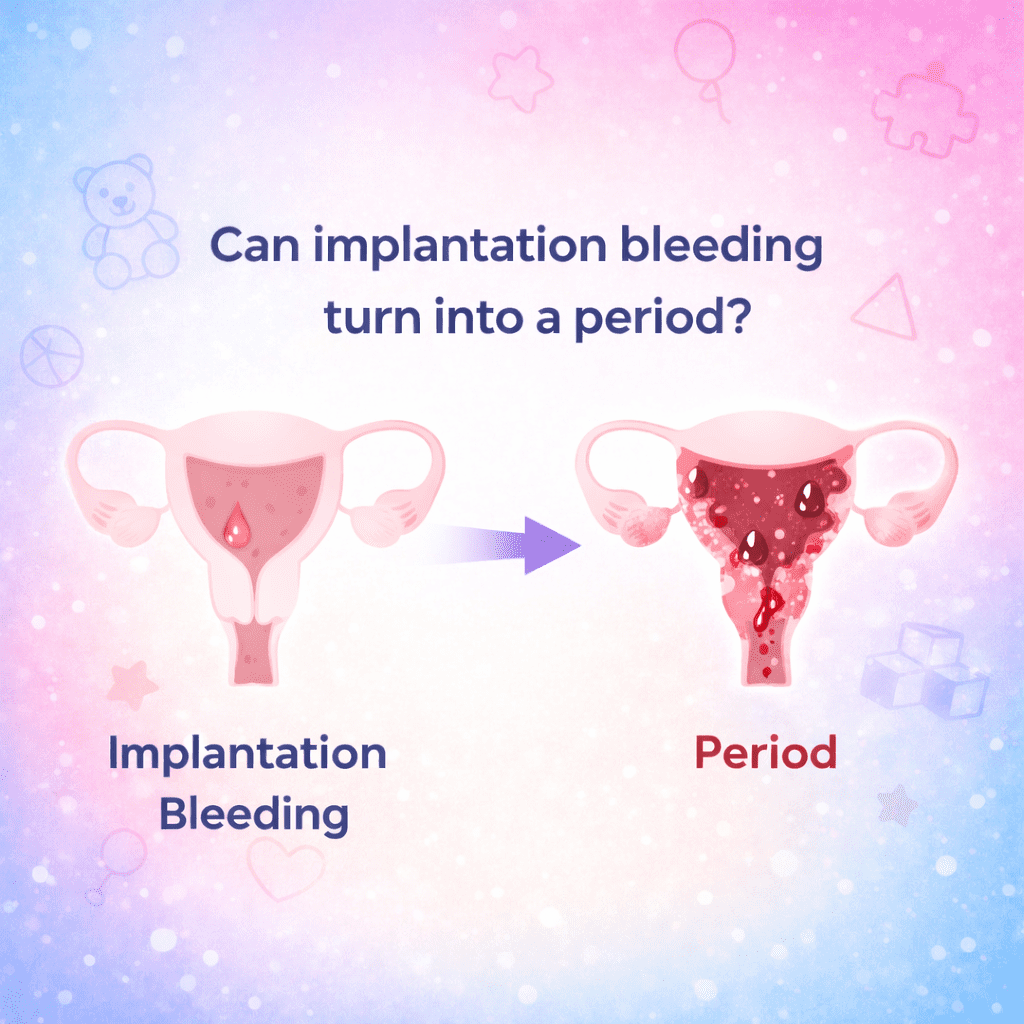
Can implantation bleeding turn into a period?
No.
Implantation bleeding does not turn into a period.
If bleeding becomes:
- Heavy
- Continuous
- Bright red with clots
Then it is a period — not implantation spotting
When should you take a pregnancy test?
If you suspect implantation , timing is very important.
Best time:
- After your missed period
- Or 3–5 days after spotting
Why?
Because your body needs time to produce the hCG hormone.
👉 Testing too early may give a false negative result.
Important warning signs
While implantation spotting is usually normal, consult a doctor if:
- Bleeding becomes heavy
- Severe abdominal pain occurs
- You feel dizzy or weak
- Bleeding lasts more than 2–3 days
These could indicate other medical conditions.
This is where most people get it wrong
Many women think:
“Bleeding means I’m not pregnant.”
But that’s not true.
👉 Implantation happens because pregnancy has started.
So spotting can actually be a positive sign.
Can implantation bleeding turn into a period?
No.
Iimplantation spotting does not turn into a period.
If bleeding becomes:
- Heavy
- Continuous
- Red with clots
Then it is most likely a period, not implantation spotting
When should you take a pregnancy test
If you suspect implantation spotting, timing matters.
Best time to test:
- After missed period
- Or 3–5 days after spotting
Why?
Because your body needs time to produce the hCG hormone.
An early test could result in a false negative.
Important warning signs
While implantation spotting is usually harmless, consult a doctor if:
- Heavy bleeding
- Severe pain
- Dizziness
- Bleeding lasts more than 2–3 days
For trusted guidance, refer to:
Why many women misunderstand implantation spotting
Let’s be honest.
Most people are taught about periods, but very few understand implantation bleeding.
👉 Early pregnancy signs are subtle
👉 Each person has different symptoms.
👉 Implantation bleeding is often ignored
That’s why awareness matters.
FAQs
1. Is implantation bleeding a sign of pregnancy?
Indeed, bleeding during implantation may be a precursor to pregnancy. It happens when the fertilized egg attaches itself to the uterus lining. However, not every woman experiences it, so its absence doesn’t mean you are not pregnant.
2. What is implantation bleeding and how is it different from a period?
Implantation bleeding is light spotting that occurs in early pregnancy when the embryo attaches to the uterus. Unlike a regular period, it is much lighter in flow, shorter in duration, and usually pink or brown in color instead of bright red.
3. How long does implantation bleeding last?
Implantation bleeding usually lasts from a few hours up to 1–2 days. It does not continue like a regular period and typically stops on its own without becoming heavy.
4. Can implantation bleeding be heavy?
No, implantation bleeding is usually very light. If you experience heavy bleeding similar to a period or with clots, it is more likely to be menstruation rather than implantation.
5. What do implantation cramps feel like?
Implantation cramps are generally mild and short-lasting. They may feel like light pulling or slight discomfort in the lower abdomen, unlike stronger menstrual cramps.
Conclusion
Implantation and implantation cramps are some of the earliest signs of pregnancy.
But remember:
- Not every woman experiences implantation bleeding
- Symptoms vary
- Timing and flow are key indicators
Many women confuse implantation spotting vs period, but now you understand the difference clearly.
So next time you notice early spotting, don’t panic.
Pause. Observe. Understand.
Because sometimes, that small sign could be the beginning of something beautiful.
👉 For more pregnancy tips, baby development guides, and parenting advice, explore ZaminoToys.
Author Bio
ZaminoToys is a trusted parenting platform dedicated to helping modern parents make confident decisions. From pregnancy guidance and baby development to toy recommendations, ZaminoToys provides simple, practical, and research-based content for Indian families.
Disclaimer
This content is for informational purposes only and is not a substitute for professional medical advice. Always consult a qualified healthcare professional for any concerns related to pregnancy or health.