
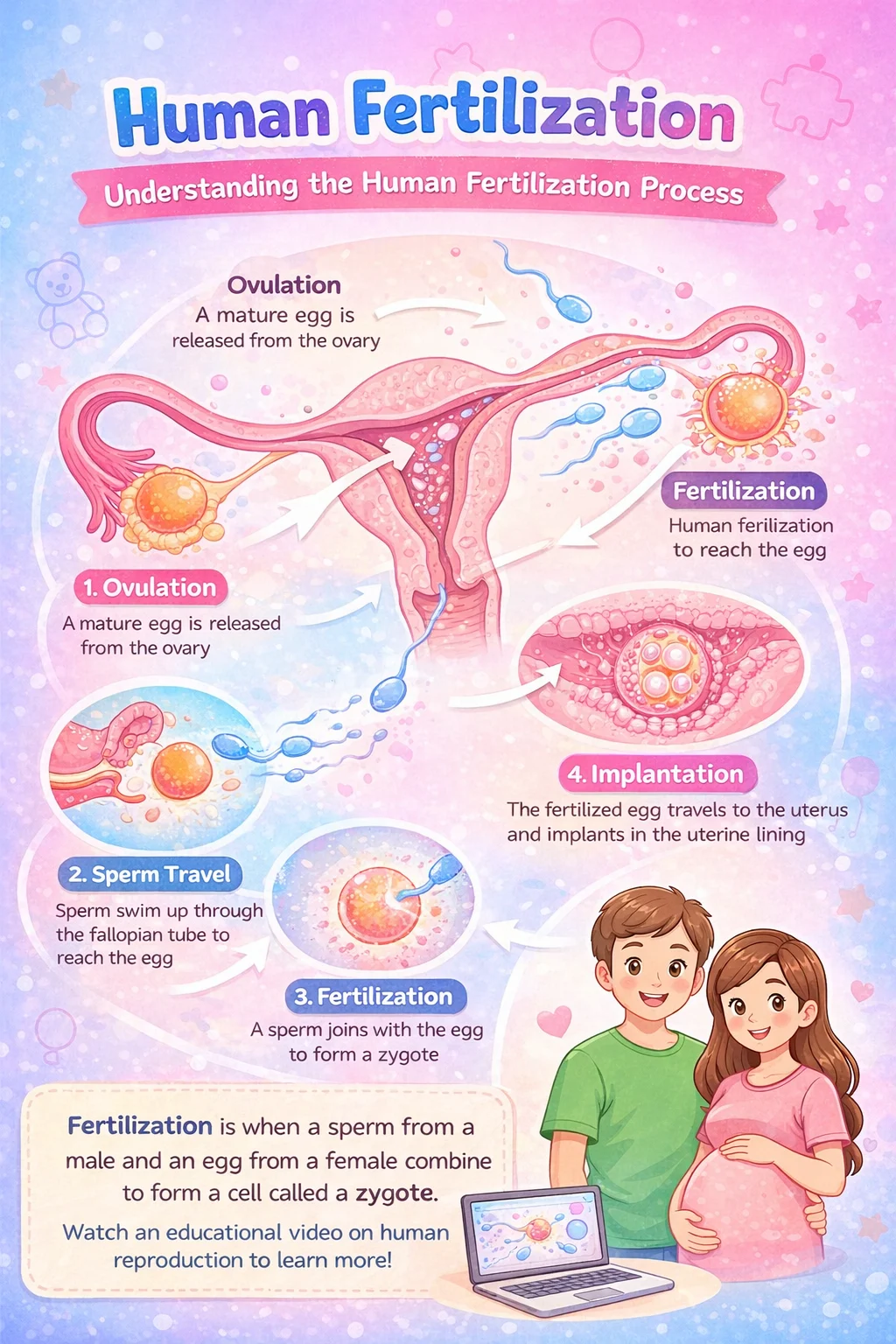
Human life begins with a remarkable biological event known as human fertilization. It is the process through which a male reproductive cell (sperm) and a female reproductive cell (egg) combine to form the first cell of a new human being. For parents, students, and general readers, understanding human fertilization and reproduction in humans provides valuable insight into how pregnancy begins and how the human life cycle starts.
Many people search online for questions such as what is fertilization, where does fertilization occur in human females, and how the human fertilization process works. These questions are important not only for academic learning but also for basic health awareness. Parents who want to understand pregnancy and child development also benefit from learning about the human reproduction system.
The process of human fertilization is carefully coordinated by the body. Several organs and biological systems work together to ensure that sperm and egg meet at the right time and place. Once fertilization occurs, the newly formed cell begins developing into an embryo and eventually a baby.
In this article, we will explore the complete human fertilization process, including:
- What fertilization means
- How reproduction happens in humans
- The role of the human reproduction system
- Where fertilization occurs in human females
- Step-by-step explanation of the fertilization process
This guide is written in simple language so that parents, students, and curious learners can clearly understand the science behind human fertilization.
What is Fertilization?
Human fertilization is the biological process where a male sperm cell joins with a female egg cell to form a single new cell called a zygote. This event marks the beginning of human life and is the first step in the process of reproduction in humans.
Understanding Human Fertilization in Simple Words
In simple terms, human fertilization happens when the sperm from the male reproductive system meets the egg from the female reproductive system. When these two cells combine, they create the very first stage of a new human life.
This process is a central part of the human fertilization process and is essential for pregnancy to begin. Without fertilization, the egg cannot develop into an embryo.
The sperm carries genetic information from the father, while the egg carries genetic information from the mother. When fertilization occurs, the genetic material from both parents combines to create a unique set of DNA. This DNA determines many characteristics of the future child, including physical traits such as eye colour, hair type, and certain inherited features.
Where Does Human Fertilization Take Place?
One of the most commonly asked questions is where does fertilization occur in human females. In humans, fertilization usually takes place in the fallopian tube, which is part of the human reproduction system.
During ovulation, the ovary releases an egg into the fallopian tube. At the same time, sperm entering the female body through sexual intercourse begin traveling through the reproductive tract. If a sperm reaches the egg while it is inside the fallopian tube, human fertilization occurs.
This meeting of sperm and egg begins the fertilization process in humans.
How Human Fertilization Happens
The process of human fertilization involves several important steps:
- The ovary releases an egg during ovulation.
- The egg enters the fallopian tube.
- Sperm move in the direction of the egg through the female reproductive system.
- One sperm penetrates the egg’s outer layer.
- A zygote is created when the sperm and egg unite.
- Once fertilization occurs, the zygote begins dividing into multiple cells. Over the next few days, it travels toward the uterus, where it attaches to the uterine lining in a process called implantation. This marks the beginning of pregnancy.
Role of the Human Reproduction System
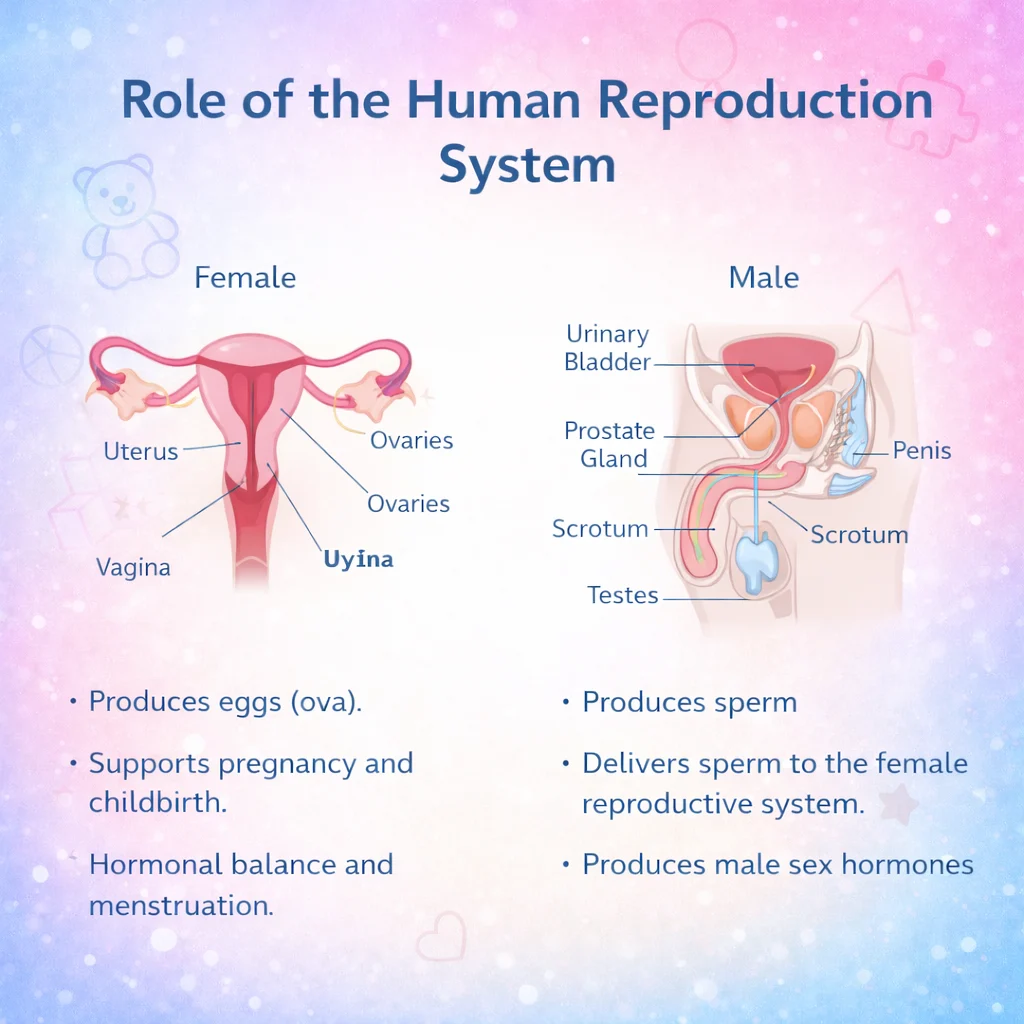
The human reproduction system plays an essential role in the fertilization process. Both male and female reproductive organs are involved.The male reproductive system produces and transports sperm, while the female reproductive system produces eggs and provides the environment needed for fertilization and early development.Important human reproductive organs involved in fertilization include:
- Testes (produce sperm)
- Ovaries (produce eggs)
- Fallopian tubes (site of fertilization)
- Uterus (where the embryo develops)
A human reproduction system diagram often helps students understand how these organs work together during the fertilization process.Why Human Fertilization is ImportantThe process of human fertilization is essential because it begins the development of a new human life.
It combines genetic information from two parents and starts the early stages of embryo development.
For parents and students learning about reproduction in humans, understanding fertilization helps explain how pregnancy begins and how the human life cycle continues from one generation to the next.
Studying the human fertilization process also improves awareness about reproductive health and helps individuals understand the biological foundation of human development.
Short Answer:
Fertilization is the biological process where a male sperm cell combines with a female egg cell to form a new cell called a zygote. This moment marks the beginning of a new human life and is the first step in the process of pregnancy.
Understanding Fertilization
In simple terms, human fertilization occurs when a sperm from the male reproductive system meets and merges with an egg from the female reproductive system. Each of these cells carries genetic information from one parent.
When fertilization happens:
- The sperm pierces the egg’s outer covering.
- The genetic material from both cells combines.
- A new cell called a zygote forms.
This zygote contains half of its DNA from the mother and half from the father. It holds the complete genetic instructions needed to develop into a human baby.
Why Fertilization Is Important
The process of human fertilization is essential because it begins the formation of new life. Without fertilization, pregnancy cannot occur.
The importance of fertilization includes:
- Starting the process of pregnancy
- Combining genetic traits from both parents
- Beginning the development of the embryo
- Continuing the cycle of reproduction in humans
Understanding what fertilization is helps us appreciate the complexity and beauty of human biology.
Human Fertilization Process
This video explains the human fertilization process, showing how sperm meets the egg and forms a zygote, the first stage of human developmen
The human fertilization process happens in several stages. Each stage plays an important role in allowing sperm and egg to meet and create a new life.
1. Ovulation
Ovulation is the stage when a mature egg is released from one of the ovaries.
Key facts about ovulation:
- It occurs once during each menstrual cycle.
- typically occurs in the middle of the cycle.
- The egg leaves the ovary and enters the fallopian tube..
During this time, the egg remains alive for about 12–24 hours. If sperm reaches the egg within this time, human fertilization can occur.
2. Sperm Travel
During sexual intercourse, millions of sperm enter the female reproductive system. However, the journey toward the egg is difficult.
Sperm must travel through:
- the vagina
- the cervix
- the uterus
- the fallopian tube
Out of millions of sperm, only a few hundred reach the egg. Eventually, only one sperm fertilizes the egg.
3. Fertilization
The key stage of the human fertilization process occurs when a sperm penetrates the outer membrane of the egg.
Once one sperm enters:
- the egg prevents other sperm from entering
- the genetic material combines
- a zygote forms
This is the exact moment when human fertilization takes place.
4. Zygote Formation
After fertilization, the newly formed zygote begins dividing into multiple cells.
Human development starts at this point. The zygote starts forming an early embryo while moving through the fallopian tube toward the uterus.
5. Implantation
After about five to seven days, the embryo reaches the uterus. It then attaches to the uterine lining in a process called implantation.
Once implantation occurs:
- pregnancy officially begins
- the embryo starts growing
- the placenta begins developing
This completes the early stages of the fertilization process in humans.
Reproduction in Humans
Short Answer:
Reproduction in humans is the biological process through which a male and female contribute reproductive cells that combine during fertilization to create a new human life.
Understanding Human Reproduction
Humans reproduce through sexual reproduction, which means that both male and female reproductive cells are required.
The stages of reproduction in humans include:
- Production of sperm in males
- Production of eggs in females
- Release of the egg during ovulation
- Fertilization of the egg by sperm
- Development of the embryo and fetus
Each stage is controlled by the human reproduction system.
Importance of Reproduction
The process of reproduction in humans is essential for the continuation of the human species. It allows genetic information to pass from one generation to the next.
Understanding reproduction also helps individuals learn about fertility, pregnancy, and reproductive health.
Human Reproductive System
The human reproduction system includes organs that produce reproductive cells and support the development of new life.
These human reproductive organs work together to make fertilization possible.
Male Reproductive System
The male reproductive system produces and transports sperm.
Important organs include:
Testes
The testes produce sperm cells and the hormone testosterone.
Epididymis
This coiled tube stores sperm and allows them to mature.
Vas Deferens
The vas deferens transports sperm from the testes toward the urethra.
Penis
The female reproductive system facilitates pregnancy by producing eggs.
Together, these organs ensure that sperm can reach the egg during the human fertilization process.
Female Reproductive System
The female reproductive system facilitates pregnancy by producing eggs.
Important organs include:
Ovaries
Eggs and hormones like progesterone and estrogen are produced by the ovaries.
Fallopian Tubes
These tubes connect the ovaries to the uterus. They are the place where human fertilization usually occurs.
Uterus
The uterus is the organ where the embryo grows during pregnancy.
Cervix
Through the vagina, sperm enter the female reproductive system.
Vagina
Sperm enter the female reproductive system through the vagina.
These organs together allow the fertilization process in humans to occur.
Human Reproduction System Diagram
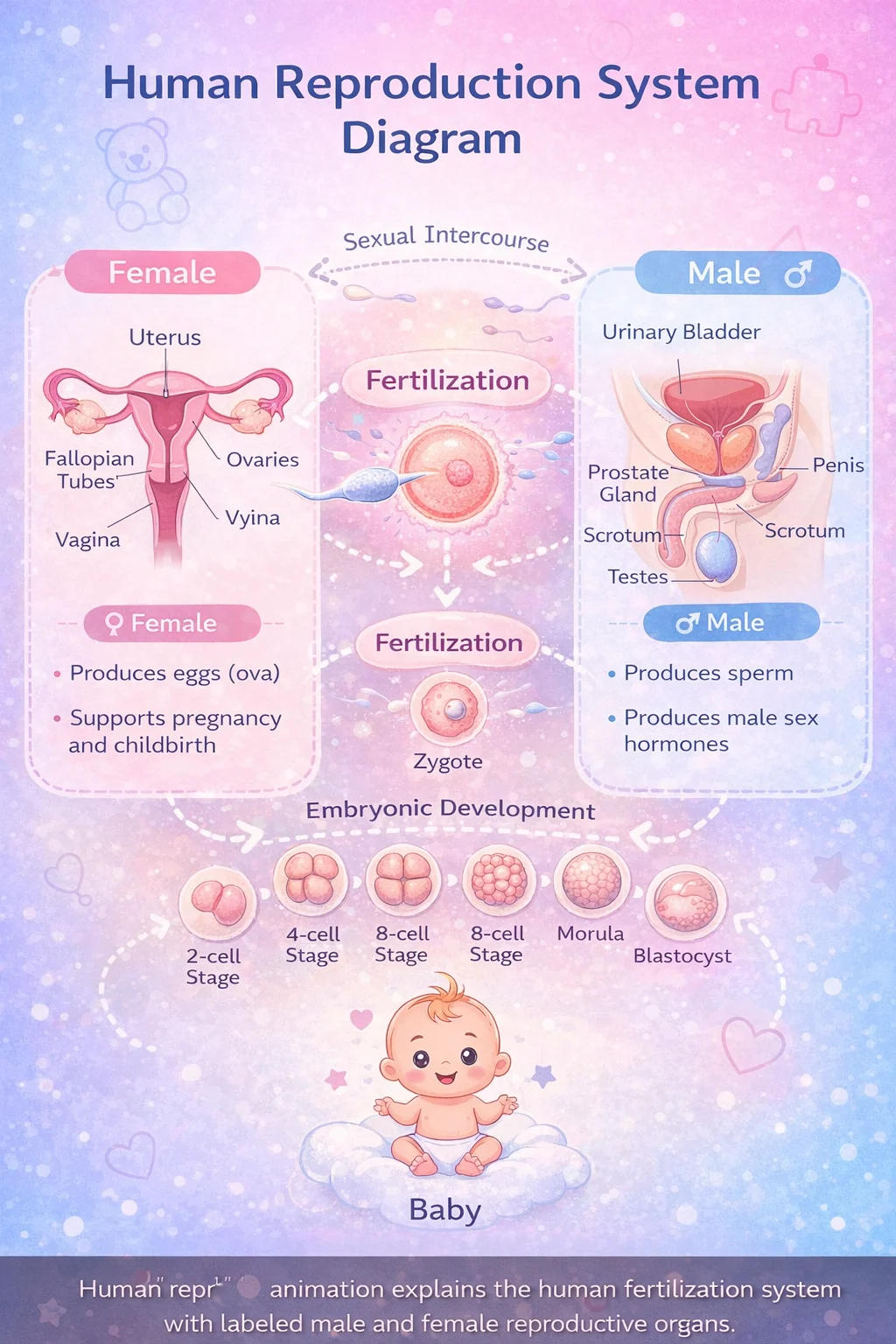
A human reproduction system diagram helps people understand the location and function of reproductive organs.
When looking at such a diagram, you will typically see two sections: the male reproductive system and the female reproductive system.
Male Reproductive System in the Diagram
The diagram usually shows:
- testes
- epididymis
- vas deferens
- prostate gland
- penis
These organs produce and transport sperm.
Female Reproductive System in the Diagram
The diagram shows:
- ovaries
- fallopian tubes
- uterus
- cervix
- vagina
It also illustrates the path the egg takes from the ovary to the uterus.
Understanding a human reproduction system diagram helps students clearly visualize how human fertilization happens.
Where Does Fertilization Occur in Human Females?
Short Answer:
In humans, fertilization usually occurs in the fallopian tube of the female reproductive system.
Detailed Explanation
The fallopian tube is the location where the sperm and egg meet during the human fertilization process.
After ovulation:
- The ovary releases an egg.
- The egg moves into the fallopian tube.
- Sperm entering the female body travel toward the tube.
If a sperm reaches the egg while it is in the fallopian tube, human fertilization occurs.
Once fertilization happens:
- a zygote forms
- the embryo begins developing
- the embryo travels toward the uterus
Understanding where fertilization occurs in human females helps explain how pregnancy begins.
Human Fertilization Diagram
A human fertilization diagram visually explains how sperm and egg meet inside the fallopian tube.
In most diagrams, you will see:
- the ovary releasing an egg
- the egg entering the fallopian tube
- sperm traveling toward the egg
- fertilization taking place
- the zygote moving toward the uterus
These diagrams help students and readers easily understand the human fertilization process.
Human Reproduction Video
This educational 3D animation explains how fertilization happens in humans.
It shows how sperm travels through the female reproductive system to reach the egg, leading to the formation of a zygote, which marks the beginning of human life and pregnancy. The video clearly demonstrates the key stages of the human reproduction process, helping viewers understand how new life begins.
Some learners understand biological concepts better through visual explanations. Watching a human reproduction video can make it easier to understand how fertilization occurs.
Educational videos usually show:
- the human reproduction system
- the journey of sperm toward the egg
- the moment of fertilization
- the early development of the embryo
Animations help simplify complex topics and allow students to clearly see the fertilization process in humans step by step.
Importance of Human Fertilization
The process of human fertilization is the beginning of human life. It starts the chain of events that eventually leads to pregnancy and birth.
Key reasons why fertilization is important include:
- It begins the development of a new human organism.
- It combines genetic information from both parents.
- It allows the embryo to develop in the uterus.
- It ensures the continuation of human generations.
Without human fertilization, the process of reproduction would not occur.
Common Questions About Human Fertilization
Many people have questions about how fertilization works.
How long does fertilization take?
Fertilization usually occurs within 24 hours after ovulation if sperm is present in the fallopian tube.
How many sperm reach the egg?
Although millions of sperm enter the female body, only a few hundred reach the egg.
What are the chances of fertilization?
The chances depend on factors such as timing of ovulation, reproductive health, and sperm quality.
Understanding these factors helps explain how human fertilization works.
FAQ Section (AEO Optimized)
What is fertilization in simple words?
Fertilization is the process where a sperm cell from a male joins with an egg cell from a female. This union forms a new cell called a zygote, which is the first stage of human life and the beginning of pregnancy.
Where does fertilization occur in human females?
Fertilization usually occurs in the fallopian tube. After ovulation, the egg enters the fallopian tube, where sperm may meet and fertilize it.
How long does fertilization take?
Fertilization usually occurs within 24 hours after the egg is released from the ovary if sperm are present in the fallopian tube.
What happens after fertilization?
After fertilization, the zygote divides into multiple cells and moves toward the uterus. It then attaches to the uterine lining in a process called implantation.
Can fertilization happen immediately after intercourse?
Not always. Fertilization depends on ovulation. Sperm can survive inside the female body for up to five days, so fertilization may occur several days after intercourse.
Conclusion
The process of human fertilization is one of the most fascinating events in biology. It begins when a sperm cell meets and combines with an egg cell, forming the first cell of a new human life.
Understanding the human fertilization process helps parents, students, and readers appreciate how reproduction in humans works. From the structure of the human reproduction system to the journey of sperm and egg inside the body, each step plays an important role.
Learning about fertilization also encourages awareness about reproductive health and human development. By understanding these biological processes, we gain a deeper appreciation of how life begins.
External References
- World Health Organization (WHO) – Reproductive Health Resources
- National Institutes of Health (NIH) – Human Reproduction Research
- MedlinePlus – Fertilization and Pregnancy Education
Author
ZaminoToys Editorial Team
ZaminoToys shares educational content related to parenting, pregnancy awareness, and child development. Our goal is to provide clear and reliable information that helps parents and students understand important health and development topics.