Child Development

When and Why Do Newborns Need Sensory Toys? Newborn Sensory Toys Parenting Guide (0–6 Months)

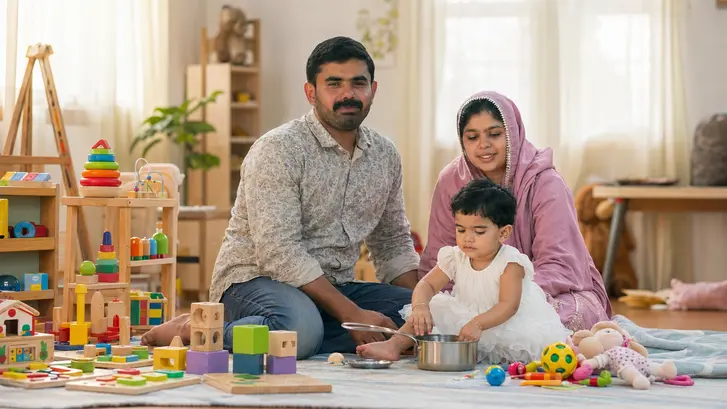
Mother engaging her infant with sensory toys for infants on a colorful playmat

  Welcoming a baby into your life comes with many questions — and one of the most common is: When should I introduce sensory toys? And why do newborns need sensory toys in the first place? This complete parenting guide to newborn sensory toys (0–6 months) explains the science behind early development, how sensory toys support brain growth, and how to choose safe, age-appropriate toys for infants. Quick Answer for Busy Parents When do newborns need sensory toys? Newborns can benefit from sensory toys from birth, especially toys that gently stimulate vision, hearing, and touch. Why are sensory toys important? Because during the first six months, a baby’s brain forms rapid neural connections. Proper sensory stimulation helps strengthen these connections and supports cognitive, emotional, and motor development. Why Sensory Toys Matter From Day One Many parents think toys are just for entertainment. In reality, sensory toys are developmental tools. According to research from the Harvard Center on the Developing Child, early childhood is a period of intense brain growth. The brain forms more than one million neural connections per second in early life. Sensory-rich experiences strengthen these pathways. This means that simple newborn sensory toys — such as black-and-white contrast cards or soft rattles — are not just objects. They help your baby: Focus their vision Recognize sounds Explore textures Develop emotional bonding Even before babies can hold toys, they are learning through observation and listening. What Are Sensory Toys? Sensory toys are toys designed to stimulate one or more of the five senses: 👀 Vision 👂 Hearing ✋ Touch 🤸 Movement ❤️ Emotional comfort Examples of newborn sensory toys include: High-contrast black and white cards Soft textured rattles Musical crib mobiles Tummy time sensory mats Plush comfort toys Unlike regular toys, sensory toys for infants are designed specifically to support developmental milestones.   0–6 Months: What’s Happening in Your Baby’s Brain? From birth to six months, your baby transitions from reflex-driven movements to active exploration. 0–3 Months Visual tracking begins Babies respond to sound Early bonding develops Grasp reflex appears 3–6 Months Rolling and reaching Teething begins Cause-and-effect learning develops Babbling increases The right newborn sensory toys align with these milestones and support natural growth. 0–3 Months: Gentle Sensory Stimulation At this stage, babies can see only 8–12 inches away and are sensitive to overstimulation. Sensory toys should be soft, simple, and calming. Best Newborn Sensory Toys (0–3 Months) ✔ Black and white sensory toys – Improve visual focus and tracking✔ Soft rattles – Introduce sound awareness✔ Musical crib mobiles – Support hearing development✔ Tummy time sensory mats – Strengthen neck and shoulder muscles✔ Soft plush toys – Encourage emotional bonding Why These Sensory Toys Matter These early sensory toys help newborns: Strengthen eye coordination Recognize sound patterns Develop early motor reflexes Build trust and emotional comfort 3–6 Months: Exploration and Interaction Now your baby begins grabbing, rolling, and mouthing objects. Sensory toys should encourage movement and curiosity. Best Sensory Toys for 3–6 Months ✔ BPA-free teething sensory toys✔ Crinkle books and textured cloth books✔ Grasping balls and soft blocks✔ Musical cause-and-effect toys✔ Talking plush toys Development Goals Supported Hand-eye coordination Motor skill development Memory building Early language listening Cause-and-effect learning This is the stage where sensory toys shift from observation to interaction. Let’s look at the growth milestones: Age Range Key Developments 0–3 Months Visual tracking, sound recognition, grasp reflex, early bonding 3–6 Months Smiling, babbling, rolling, grabbing, teething, self-recognition Toys that align with each stage support this natural development. The Science Behind Early Sensory Toys Studies show that sensory-rich environments help create stronger brain pathways. By providing varied textures, sounds, and visuals, you help your baby process new information. 📖 UNICEF recommends daily sensory play to boost a child’s brain and emotional resilience. 👂 Hearing: Use soft rattles, talking toys, or musical mobiles. 👀 Vision: High-contrast black and white books improve focus. 🖐 Touch: Fabrics with texture improve curiosity and motor coordination. 🤲 3–6 Months – Exploration & Action Now your baby begins to reach, roll, and grab. Their neck is stronger. Their eyes follow movement. They are learning cause and effect — for example, “If I press, it squeaks!” Now is an ideal occasion give them toys that they can play with. 🧸 Best Toys for 3–6 Months ✅ 1. Teething Toys Soothes sore gums Choose BPA-free silicone or textured rubber Chill in fridge (not freezer) for extra relief ✅ 2. Crinkle Books or Soft Books Make crinkle sounds when touched Encourage touch and visual exploration Introduce basic shapes, animals, or faces ✅ 3. Grasping Balls or Soft Blocks Improves hand-eye coordination Choose lightweight, easy-to-hold shapes Try activity cubes with tags and textures ✅ 4. Musical and Light Toys Introduce cause and effect Boost memory and attention Encourage movement and smiles! ✅ 5. Soft Animal Toys That Talk Toys that say “hello” or sing rhymes Improve language listening Build emotional bonding 💡 Real-Life Toy Tips for Indian Parents 💰 Budget-Friendly Tips: Don’t buy too many toys. 5–7 quality toys per stage are enough. Use household items like scarves, steel cups, or old cloth for DIY toys (always supervise). 🧼 Hygiene Tips: Clean all toys once or twice a week. Wash soft toys with baby-safe detergent. Use toy sanitizer sprays for plastic toys. 🕒 Play Schedule Tips: Use morning time for active play Use bedtime for soft music toys Don’t force play when baby is tired or cranky 3–6 Months: Toys for Exploration Your baby is now starting to move more — reaching, grasping, mouthing, rolling, and kicking. Their brain is learning fast, especially through cause-and-effect. ✅ What to Look For: Teething-safe toys made from food-grade silicone Crinkle or squeaky textures for sound discovery Toys that respond when touched (e.g. soft music, rattles) Graspable shapes that help with hand-eye coordination 🧠 Development Goal: Motor skills, cause-effect learning, coordination 🧩 Toy Examples: Soft blocks with different textures and sounds Silicone teething rings with textured grips Plush animals that talk or sing when squeezed Cloth books with lift-the-flap

When and Why Do Newborns Need Sensory Toys? Newborn Sensory Toys Parenting Guide (0–6 Months) Read More »

Age-Wise Toy Guide: How to Choose the Right Toy for Every Stage of Childhood

Infographic showing the 10 best age-wise toys for children from 0 to 7 years, part of an age-wise toy guide for child growth in 2025.

An Age-Wise Toy Guide helps parents choose toys based on developmental milestones instead of just age labels. The right toys improve brain development, sensory learning, emotional intelligence, motor skills, creativity, and problem-solving ability in children from newborn stage to 10 years. Why an Age-Wise Toy Guide Matters More Than Ever Toys are not just entertainment tools — they are developmental building blocks that shape your child’s physical, emotional, social, and intellectual growth. In modern parenting, toy selection has become confusing. Markets are filled with trending toys, digital gadgets, and flashy marketing, which often distract parents from choosing toys that truly support child development. This Age-Wise Toy Guide for Indian parents simplifies toy selection using child psychology research, developmental science, and real parenting experience. Instead of impulse buying, this guide helps parents invest in meaningful, growth-oriented play experiences. Whether you are raising a newborn, toddler, preschooler, or growing child, selecting the right toy at the right stage supports confidence, curiosity, and lifelong learning habits. Choosing toys using developmental guidance ensures children learn through play while building essential life skills. 👉 Related:  Still confused about why toys matter in a child’s life? Start with our Toys – What, When & Why? guide for complete clarity. Scientific Research Supporting Developmental Toy Selection According to the American Academy of Pediatrics (AAP), toys that encourage imagination, interaction, and problem-solving significantly improve early brain development, language skills, and emotional bonding between parents and children. Research from developmental psychology journals confirms that children learn fastest when toys match their developmental readiness instead of chronological age alone.   🍼 0–6 Months: The Newborn Stage – Sensory Discovery Begins Your baby is entering a brand new world, and their senses are their guide. During this fragile yet fascinating stage, babies rely on sensory input to understand their surroundings. Every sound, light, and touch shapes their early development. “In this video, we explore how introducing the right sensory toy at the right time can naturally guide your baby through their earliest developmental milestones. During the first six months, your little one is building the foundational visual and motor skills needed to eventually hold and play with objects independently.” 🧠 Developmental Focus: Visual stimulation (especially contrasting colors) Auditory development and sound localization Beginning hand movement and muscle awareness Emotional comfort and bonding ✅ Best Toys for Newborns: Soft rattles with gentle jingles to attract attention High-contrast flashcards in black, white, and red Tummy time mats to build neck and shoulder strength Soft plushies with varying fabrics for tactile experience Crib mobiles with slow movement and lullabies 🧸 Expert Insight: Toys at this stage should support sensory exploration. Introducing multiple textures and sounds gradually can help stimulate different parts of the brain without overwhelming the child. 🧠 Did you know? Research published in Infant Behavior and Development shows that visually stimulating toys significantly improve infants’ attention span and tracking ability within just a few weeks of play. 6–12 Months: Sitting, Crawling, and Cause-and-Effect Learning Around six months, your baby starts sitting independently and might begin crawling. They’re curious, eager to grab, drop, and repeat actions. Toys should now focus on building motor coordination and simple logic. 🧠 Developmental Focus: Cause-and-effect awareness (e.g., pressing a button causes a sound) Strengthening large muscles for crawling and sitting Object permanence (understanding things still exist when hidden) ✅ Recommended Toys: Pop-up activity boxes to teach surprise and interaction Teething-safe soft rings that can be twisted or chewed Mirrored toys to help babies discover their reflection Sensory balls with ridges or soft spikes for rolling and gripping 💡 Practical Parenting Tip Place toys slightly out of reach during playtime. This encourages crawling and strengthens muscle development. Using simple verbal cues like “Where is your ball?” also promotes early language development. 🚼 1–2 Years: Toddler Time – Moving, Mimicking, and Learning Words This is when your toddler is on the move—and their brain is too! More independence, testing, and emotional expression are to be assumed. The best toys are those that blend imagination with action. Work best. 🧠 Developmental Focus • Walking and climbing coordination• Vocabulary and speech growth• Emotional expression and self-awareness• Parallel play development ✅ Ideal Toys • Push walkers for stability• Stacking rings and blocks• Musical toys like drums or xylophones• Pretend play phones or tool kits 👪 Parenting Development Tip Narrating play activities helps language development naturally. Example:“You are stacking the blue block on the red block.” 2–3 Years: Imagination, Role Play & Emotional Learning   Best Toys for 2–3 Year Old Children This stage is dominated by pretend play and storytelling. Children begin understanding social roles and emotional empathy. 🧠 Developmental Focus • Symbolic and imaginative thinking• Emotional understanding through characters• Trial-and-error problem solving• Sorting and classification skills ✅ Must-Have Toys • Dolls and plush toys with character stories• Shape sorting toys• Kitchen, doctor, or mechanic role-play sets• Montessori latch and lock boards 🧩 Bonus Activity:- Creating pretend store play helps children learn communication, social interaction, and early math skills. 3–5 Years: Preschool Readiness & Structured Learning   As your child approaches the preschool years, your toy rotation should shift towards more structured and readiness-focused items. Our Age-Wise Toy Guide for 3–5 years (seen below) highlights how curated tools—from alphabet magnetic boards to memory board games—actively build memory and social cooperation. Furthermore, incorporating a specific type of age wise toy into daily quiet play routines is a critical school preparation tip, directly helping your child develop the sustained attention required in a classroom environment. Best Toys for Preschool Children Preschool children begin understanding instructions, rules, and structured activities. 🧠 Developmental Focus • Memory building• Sequential thinking• Social cooperation• Early literacy and number awareness ✅ Recommended Educational Toys • Alphabet magnetic boards• Memory board games• Creative craft kits• Beginner puzzles• Mega building blocks 🎓 School Preparation Tip:- Daily quiet play activities improve concentration and help children adjust to classroom learning. 5–7 Years: STEM Thinking & Strategy Development   Best Toys for 5–7 Year Old Children Children become curious about how things work and

Age-Wise Toy Guide: How to Choose the Right Toy for Every Stage of Childhood Read More »