

Brain Development Toys for Kids and Simple Play Ideas
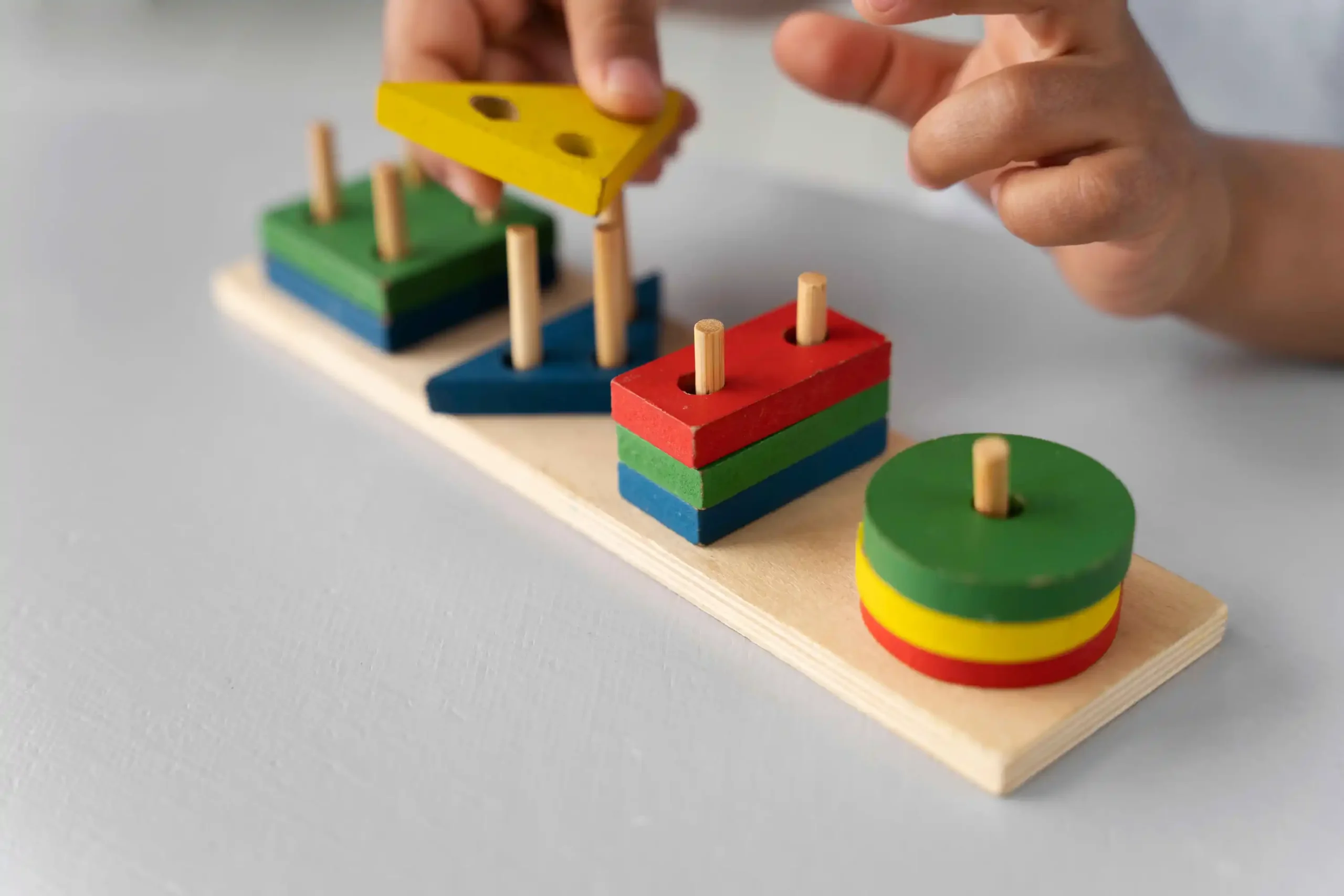
If you’ve spent any time browsing an online toy store, you’ve probably come across phrases like “brain development toys,” “boosts cognitive growth,” or “builds neural pathways.” It’s on stacking rings, on shape sorters, and on wooden puzzles that look pretty much identical to the ones from twenty years ago, just with a bigger sticker on the box. The question worth asking isn’t whether these toys are good or bad. It’s simpler than that: what does the label actually mean, and does it match what happens when your child sits down to play?
At ZaminoToys, we think it’s worth taking a closer look at that gap. Not to tell you these toys are useless — many of them are genuinely well made and hold a child’s attention for good reasons — but to separate the marketing language from what’s actually going on during play.
Where the Phrase "Brain Development Toys" Comes From
Almost any toy that involves stacking, sorting, matching, building, or problem-solving gets labeled a “brain development toy” somewhere along the way. It’s become a catch-all category rather than a specific claim about any one product. That’s worth knowing, because it means the label tells you very little about whether a particular toy suits your child’s age, interests, or stage of play.
The phrase sells well because it taps into something every parent feels: wanting to give your child a fair shot, without quite knowing which purchase actually helps and which one is just noise. That’s a reasonable thing to want. It’s also exactly the gap that toy marketing tends to fill with big, confident claims that are hard to verify from a product listing.
We’re not going to make promises about what any toy does to a child’s brain. That’s not something a toy review can honestly claim, and it’s not the kind of expertise this site offers. What we can talk about clearly and specifically is what children actually do when they play with these toys—which is a more useful question anyway.
What These Toys Actually Let a Child Do During Play
This is the part that tends to get buried under the marketing language, so it’s worth spelling out plainly, toy by toy.
-
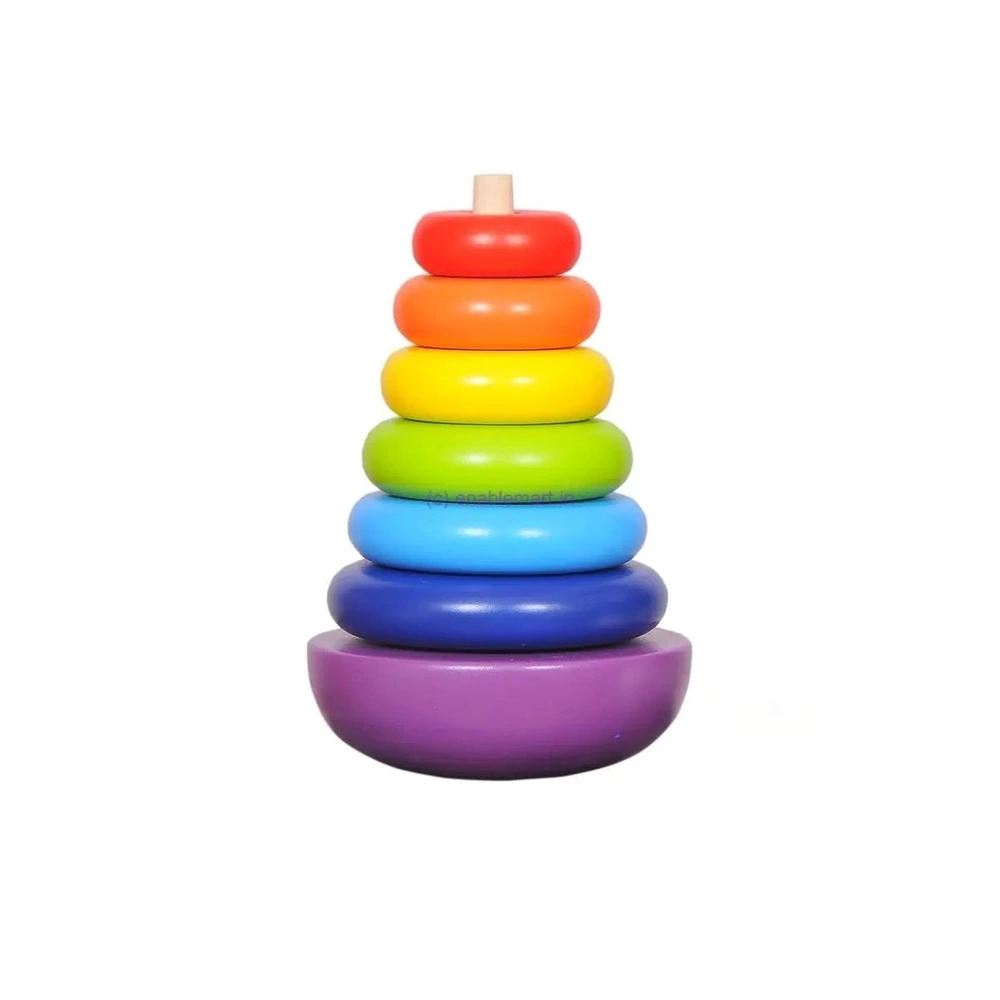
Stacking toys and rings
A child grasps a ring, works out how to line it up, and either succeeds or knocks the whole stack over and starts again. That's practice with grip, balance, and simple trial and error—nothing more mysterious than that, but this gives a child a chance to practice grasping, balancing, and simple trial and error.
-
Shape sorters
A child picks up a shape, tries it against different holes, and eventually matches the shape to the opening. Some children get this quickly. Others need weeks of repetition, and that's completely normal—it says nothing about how sharp a child is, just where they are in learning to compare and adjust.
-
Simple puzzles
A child looks at a gap, picks up a piece, and figures out through trial and error whether it fits. Chunky wooden puzzles with a handle on each piece tend to work well for younger toddlers because the physical grip is easier than for flat cardboard pieces.
-
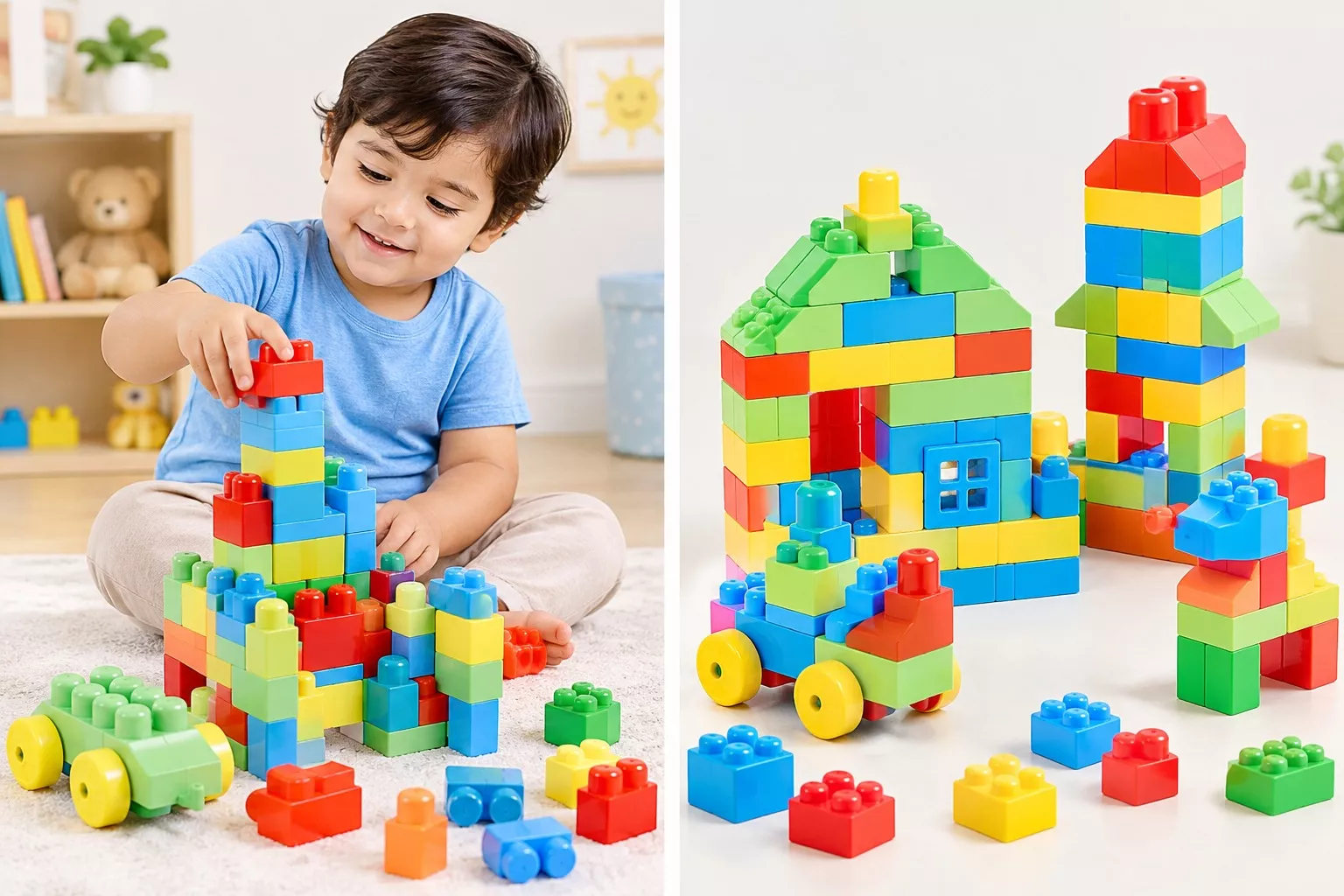
Open-ended building blocks
A child stacks, knocks down, rebuilds, and sometimes turns blocks into something that has nothing to do with building at all — a phone, a snack, a pretend animal. Open-ended blocks can also leave room for children to use them in different ways, rather than following one fixed outcome, precisely because there's no "correct" outcome to reach.
-
Textured or sensory toys
A child explores a rough patch, a smooth patch, and a crinkly sound and simply notices the difference. Some children stay with this for a long stretch. Others move on in seconds. Both are fine.
None of this is medical advice, just the kind of practical checking most parents end up doing anyway once a toy has been in the house a week.
When Toy Marketing Promises Too Much
A lot of packaging in this category leans on phrases about neural connections, IQ, or giving a child a head start. It’s worth being skeptical of any of that, no matter how confidently it’s written. A toy is a tool a child interacts with for a few minutes at a time. It’s genuinely difficult to point to a single toy and say it changed anything measurable—and any listing that claims otherwise is stretching further than it should.
It’s also worth noticing that “brain development” claims rarely mention the downsides. A shape sorter with too many holes can frustrate a younger toddler rather than engage them. A puzzle pitched at “18 months+” might genuinely suit a very different range of children depending on their interest in puzzles specifically, not just their age in months. And a toy that looks impressive in a product photo sometimes gets ten minutes of attention before it ends up at the bottom of the toy box—that’s a common outcome, not a rare exception.
A Few Practical Things Worth Checking
Before buying anything under this label, a few ordinary questions tend to matter more than the packaging claims:
-
Does the toy suit where your child actually is right now, not just their age in months? A toddler who isn't interested in shapes yet won't suddenly love a shape sorter because it's labeled for their age.
-
Are the pieces sized appropriately, with no small parts that could come loose for a child who still mouths toys?
-
Is the toy sturdy enough to survive being dropped, chewed, and occasionally sat on?
-
Would your child get similar value from something already in the house — a set of stacking cups from the kitchen, a few clean containers, a pile of cushions to climb over?
That last point deserves a little more attention than it usually gets. Plenty of “brain development” toys are doing the same basic job as things you probably already own. That doesn’t make the branded version worthless — some are genuinely nicer to use, more durable, or more visually engaging — but it’s worth knowing there’s rarely one toy your child specifically needs.
What to Realistically Expect
If you do buy a toy sold under this label, a reasonable expectation is this: your child may find it interesting for a while, may return to it occasionally, and may eventually move on to something else—the same as with almost any toy. That’s a normal, healthy pattern of play; a child losing interest is a normal part of play. Interest that comes and goes is far more common than the steady, focused engagement shown in most product photos.
This is also where we’d usually share our own testing notes when we have them for a specific product. For this general topic, we haven’t tested a single named toy here—this piece is a research-based look at the category and the language used to sell it, not a review of one product. Where ZaminoToys does share hands-on testing, we say so directly and clearly, separate from anything based on research or general observation.
Frequently Asked Questions
Are brain development toys actually different from regular toys?
Not usually. Most toys sold under this label are ordinary stacking toys, sorters, puzzles, or building sets. The label describes a marketing category more than it describes anything unique about how the toy is built.
How do I know if a toy is right for my child's age?
Age labels are an important safety starting point, especially when a toy contains small parts. Once you've checked that the toy is safe for your child's age, also consider whether they can comfortably grip, manipulate, and use it without constant frustration.
Should I buy several "brain development" toys to give my child more opportunities?
Not necessarily. A handful of toys that get used regularly are usually more valuable than a larger collection that mostly sits unused. Rotating a smaller number of toys, rather than buying more, often works just as well.
Can household items work as well as branded toys in this category?
Often, yes. Nesting containers, wooden spoons, muffin tins, and other suitable household items can offer opportunities for grasping, sorting, and exploring. The important part is choosing items that are clean, sturdy, and appropriate for your child's age, with no small pieces or loose parts that could be swallowed.
Is it a problem if my child loses interest in a toy quickly?
No. Interest that comes and goes is normal at this age, and it doesn't say anything meaningful about the toy or the child. Some toys get picked up again weeks or months later, once a child's interests shift.
Do I need expert advice to choose the right toy for my child?
Not for most everyday toy decisions. Practical observation—does my child enjoy this, is it safe, does it suit where they currently are—usually tells you more than a general age label or a marketing claim ever will.
Conclusion
Looking beyond the label is what matters here. “Brain development toys” is mostly a marketing label rather than a meaningful category. The toys underneath it—stackers, sorters, puzzles, blocks, and textured toys—can give children opportunities to practice grasping, matching, problem-solving, and imaginative play. They just do that because they’re reasonably well-designed toys for a child’s stage, not because of anything mysterious happening beneath the surface. You don’t need to chase every product with this label on the box, and a simpler alternative from around the house is often just as good a starting point.
Comments are closed.