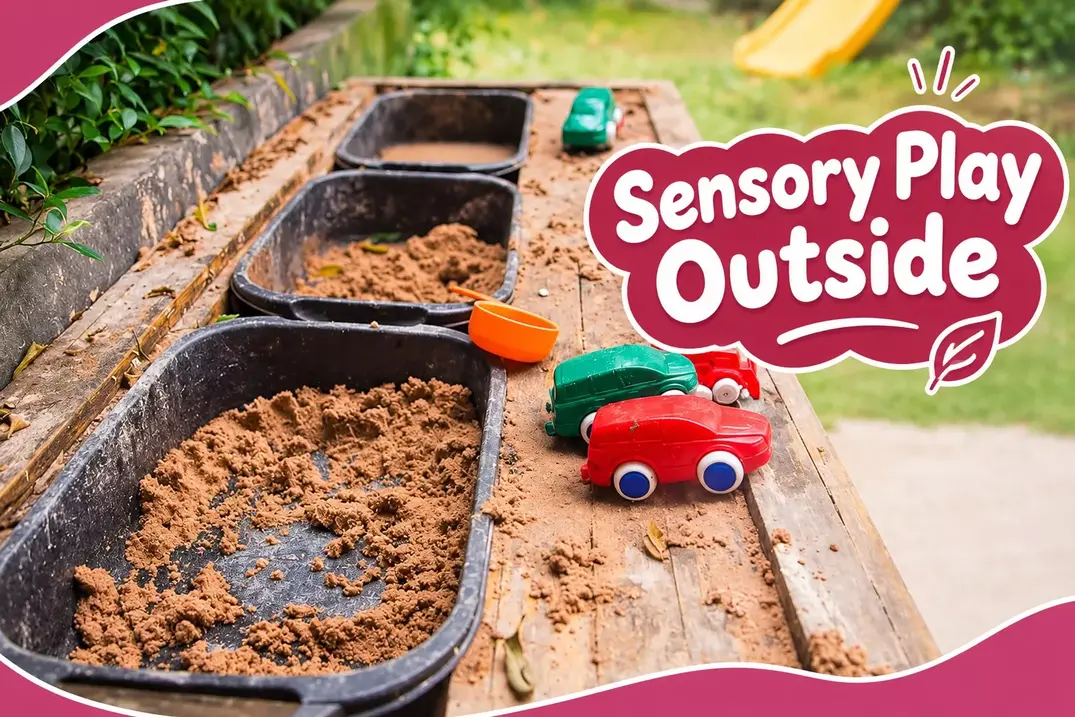



What Can Children Explore During Outdoor Sensory Play?
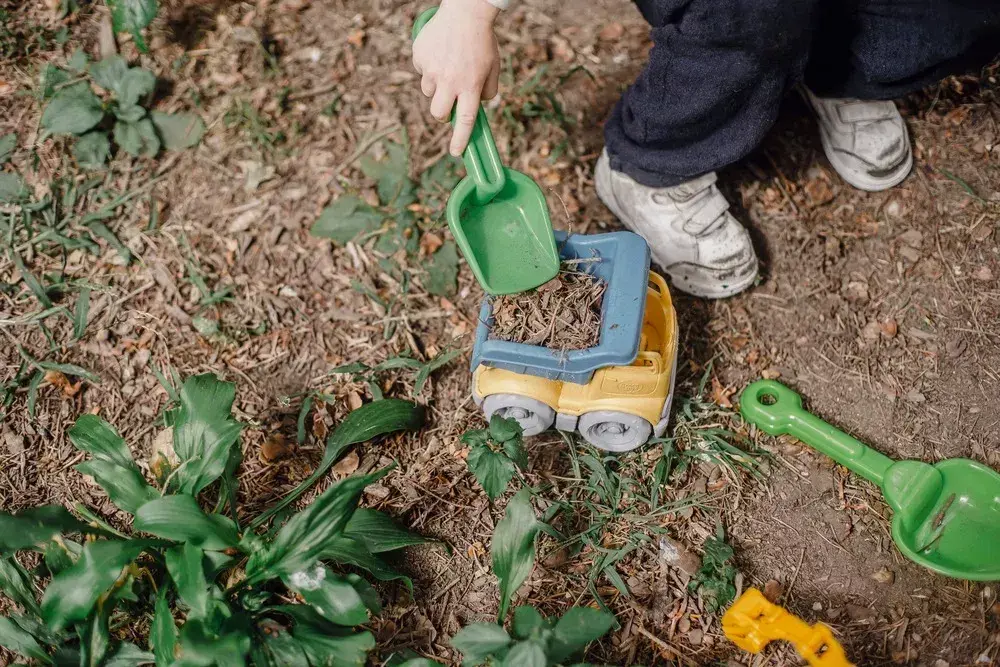
Sensory play outside means letting your child touch, hear, smell and look at things in a garden, balcony or park, such as leaves, grass, water and soil. For ages 0 to 4, you need no toys. Pick a clean, shaded spot, stay within arm’s reach, and ask your child’s doctor about anything health-related.
Read the checks before you go out.
A leaf drifts down and your toddler stops to look. A crow calls from the wall. One patch of ground is warm and the next is cool. None of it needs to be bought.
If you want to try sensory play outside with your baby or toddler and aren’t sure what is safe, this page covers what to set out at each age and what to check first. It is information only.
What to Offer for Sensory Play Outside at Each Age
These are ideas for what you can set out. Children differ, so treat the ages as rough guides.
Birth to 6 Months
Spread a clean cloth on the ground in the shade, or hold your baby under a tree so they can watch the leaves move. Talk about what you both see and hear, and keep it short. If you’re wondering when a newborn can go outside, ask your child’s doctor.
For floor time, see our page on tummy time toys.
6 to 12 Months
Lay a clean mat and offer a few dry leaves from a plant you know. Watch closely the whole time. Before you sit down, check the area for small stones, seeds and berries, because small parts are a choking risk for children under 3.
1 to 2 Years
A shallow tub with a little water and a cup is enough. So is a bucket of dry leaves or a slow walk past a wall, a tree and a patch of grass. Stay within arm’s reach of any water, even a few centimetres, and empty the tub when play ends.
2 to 4 Years
Hand over a basket for collecting leaves, a clean patch of soil to dig (ask your child’s doctor first if you’re unsure), a damp cloth for wiping a stone, or a walk to find three different smells. You can name what you notice together: rough, smooth, cool, wet.
For more ideas on moving about, see our gross motor skills activities, and our games to play indoors for wet days.
Staying Close
Stay near enough to reach your child within a second or two.
Look over the area first for glass, thorns, droppings and small objects.
For children who can walk, a wobbly step on uneven ground is fine. Step in if there is real danger.
Checks Before You Go Out
Small objects
Small parts can cause choking in children under 3, so check what is within reach before you sit down.
Water
A young child can drown in water no deeper than 2 to 5 cm. Stay within arm’s reach of any water, including buckets and tubs, and empty them after use.
Flood water
In the monsoon, keep children out of flood water. Keep them away from muddy areas the flood water has covered until a week after it has gone down. If you’re unsure about water on the ground, play somewhere dry.
Plants, berries and seeds
Offer only dry leaves from a plant you know. Ask your child’s doctor which plants are safe.
Drinking water
Bring it for older children. For babies, ask your child’s doctor.
Sun, insects, hygiene and anything else about health
Ask your child’s doctor.
Keeping Costs Low
You can do sensory play outside with a cloth, a cup, a basket and a shady spot. If you’re thinking about garden toys, check the age label and small parts first. Our toddler toys and toys for 2-year-olds pages cover what to look for, and toys for 3-year-olds cover the next stage. If you want play without a device, see screen-free toys.
Frequently Asked Questions
-
When can I take a newborn outside?
Ask your child’s doctor.
-
Is it okay for my child to play in grass and soil?
Ask your child’s doctor first if you’re unsure. If you go ahead, pick clean ground, stay close and wash hands when you finish.
-
How much water is too much?
Young children can drown in an inch or two of water. Stay within arm’s reach of any water, and empty tubs and buckets after play.
-
What if my child won’t touch the mud?
That’s fine. Let them watch you and try another day, or skip it.
-
How long should a session be?
There’s no set time. A few minutes is plenty for a young baby. Stop when your child loses interest.
A Dad’s Note: What I Check Before Sensory Play Outside
I’m not an expert, so this is only my own checklist before my daughter goes outside.
- I look at the ground first. Glass, thorns, droppings, anything sharp.
- I check what she can reach and put in her mouth: stones, seeds, berries, bottle caps.
- I look for water: buckets, drains, puddles. I keep her away from dirty or standing water.
- I pick a shady spot and a cooler time of day.
- I dress her in clothes I don’t mind getting dirty.
- I stay close enough to reach her in a second or two.
- When we come in, we wash her hands.
What I check might not be what suits your child or your garden. If you’re unsure about anything, ask your child’s doctor.
SHARE THIS STORY
Latest
Fine Motor Skill Milestones: Birth to Age 4, Dad Reviewed
November 19, 2026
Gross Motor Skills Activities for 1–4 Year Olds (Easy, Safe)
November 16, 2026

Games to Play Indoors for Ages 2 to 4: 6 Ideas, No Toys Needed
November 13, 2026
Screen-free toys for 0-4: Does your child play or watch?
November 6, 2026
Pretend Play Toys: A Dad’s View of 6 Types for Young Kids
November 3, 2026
Categories