


What We Tried at Home: 6 Fine Motor Activities for Babies and Toddlers
These six fine motor activities are things I tried at home with my daughter, using a hanging toy, a board book, old newspaper, cups, crayons and water. Some held her attention longer than others. The page-turning activity did not keep her interested for long, while tearing paper kept her busy. I have written down what we used, how we did each activity and what happened. This is not a checklist of what a child should be able to do at a certain age, and it is not medical advice. These are my notes on what happened with my daughter, not what every child will do.
Safety first
I stayed with her for every activity on this page, the whole time. An adult should do the same.
Anything that fits inside a toilet-roll tube can choke a child under 3, so keep those items away.
This is what we did at home. It is not a milestone checklist or medical advice. If you are worried about your child’s hand use or development, ask your pediatrician.
Fine Motor Activities We Tried in the First 6 Months
1. Hanging toy
What you need
A movable hanging toy on its own stand. We bought ours from the market.
What to do
Place the stand where your baby can see the toy while lying on her back. Position it so she can also reach towards it. Stay close while she looks at and reaches for the moving toy.
We used a stand that held the toy on its own. Keep the setup as described here: the toy hangs from its own stand, and an adult stays nearby.
Safety: Stay within arm’s reach throughout the activity. Do not tie a string across a cot or crib.
What happened here
It worked well for my daughter, and she was very engaged. She even tried to grab the toy. That was what I noticed at home.
Fine Motor Activities for 6 to 12 Months
2. Page turning
What you need
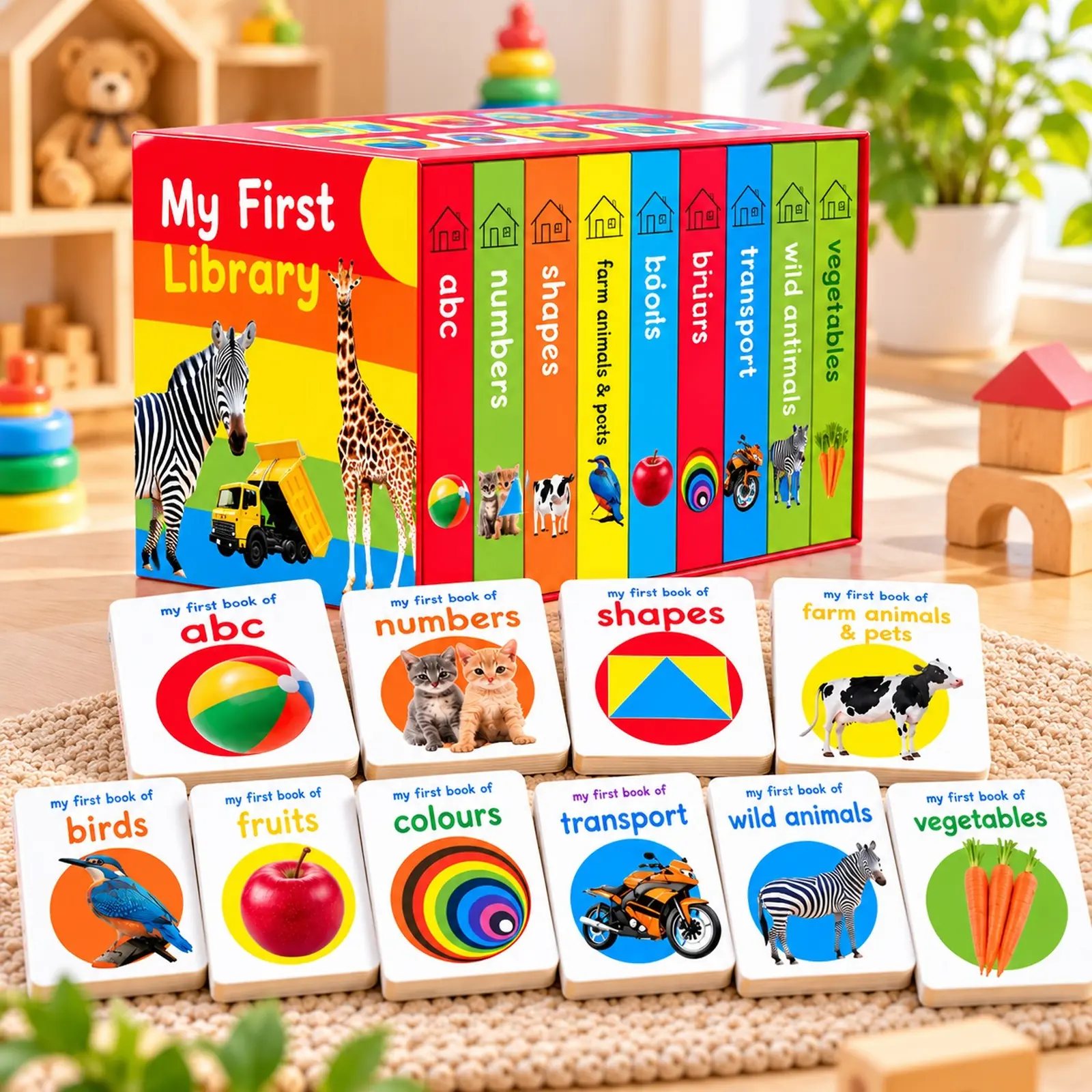
A picture board book with large pictures.
What to do
Sit with your baby and let her flip through the pages. When she turns one, point at the picture and say its name. Let her handle the pages herself while you sit beside her.
How long
Ten minutes at most. After that, she lost interest.
Safety: Stick to a board book with thick pages, and check the corners aren’t torn.
What happened here
You need patience with this one. My daughter got bored quickly. I think it was because there was nothing in the book for her to touch or move.
3. Paper tearing
What you need
Old newspaper.
What to do
Give your baby some newspaper and let her tear it. We did not need a special toy for this activity. She could pull and tear the paper while I stayed beside her. Stay close rather than leaving her with the newspaper while you do something else..
Safety: Watch closely to make sure no paper goes into your baby’s mouth. Wash her hands afterwards. Keep the activity supervised from start to finish.
What happened here
It was messy, but my daughter was very engaged.
Fine Motor Activities for 12 to 24 Months
4. Stacking cups and rings
What you need
Ordinary paper cups and a ring-stack toy.
What to do
We used both paper cups and a ring-stack toy. Stack the cups or rings, knock them down, then stack them again. You can repeat the same action as long as your child remains interested. In our case, stacking and knocking down were the actions we tried.
Safety: Stay nearby throughout the activity. Watch that your child does not chew the paper cups apart.
What happened here
The ring-stack toy was the best-value toy we bought, and I would buy it again.
5. Crayon scribbling
What you need
White paper, tape to stick it to the wall, and jumbo crayons.
What to do
Stick the paper to the wall at your child’s height. Give her the jumbo crayons and let her draw the lines she wants. I sit with my daughter while she draws.
How long
My daughter stayed with this activity for up to 30 minutes at most.
Safety
An adult must stay with the child because crayons can go into the mouth.
What happened here
Taking part with her worked well for us. She gets interested in trying new colours and shapes.
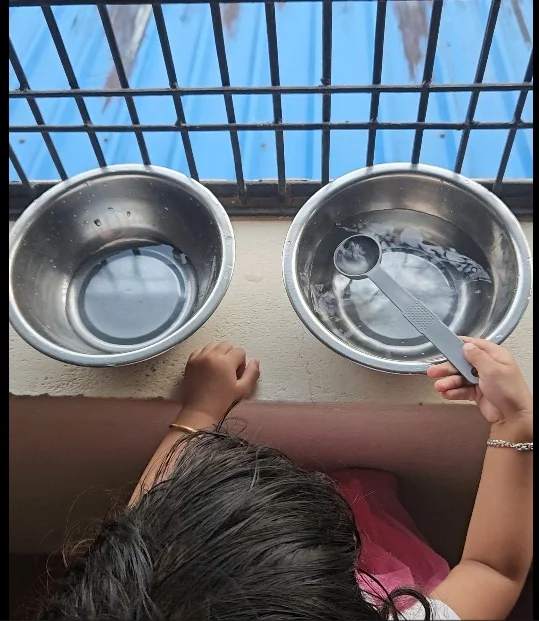
6. Pouring between cups
What you need
Cups, two large bowls to catch spills, and water. From age 2, dry rice can also be used.
What to do
Put the two bowls where they can catch spills. Give your child a cup and let her pour from one cup into another over the bowls. We used water. After age 2, dry rice is another option.
Later, the activity turned into pretend play. My daughter began serving food. Using rice and water together made that pretend play even more engaging for her.
The two bowls helped keep the mess in one place. This was still a messy activity, so choose a spot where spilled water or rice will be manageable.
Safety
Stay within arm’s reach for the whole activity. If you do it in the bath or a shallow tub, do not leave your child alone to answer the phone. When using rice, watch carefully to make sure none goes into her mouth.
What happened here
My daughter found the activity very engaging, but it was messy. Two large bowls helped catch the spills. Later, it became pretend play, with her serving food. That part was even more engaging when we used rice and water together.
Frequently Asked Questions
-
Which fine motor activities can I try at home?
From our experience, you can try page turning with a picture board book, tearing old newspaper, stacking cups and rings, scribbling on paper with jumbo crayons, or pouring water between cups. A hanging toy was another activity we tried when my daughter was younger.
-
Are household items enough for these activities?
We used old newspaper, paper cups, bowls, water and paper, along with a hanging toy, a board book, a ring-stacking toy and jumbo crayons. You can choose from the items you already have, while keeping the safety notes for each activity in mind.
-
What if my child loses interest quickly?
That happened with page turning at our home. My daughter became bored quickly, and I thought the book might not have offered enough to touch or move. You can stop when your child loses interest rather than trying to make the activity continue.
-
Can I use rice for pouring between cups?
We found dry rice worked well alongside water once our daughter was past two—it kept her interested longer. Just stay within arm’s reach the whole time, and keep an eye out to make sure none of it ends up in her mouth
These are the six things we tried at home, from a hanging toy to pouring cups. Stay with your child the whole time, and stop when they lose interest. For more ideas, see our guide to educational games for kids and our toys for babies and toddlers.
SHARE THIS STORY
Latest
Categories