7 Things Parents Should Know About This Pull Out Spike Toy Hedgehog
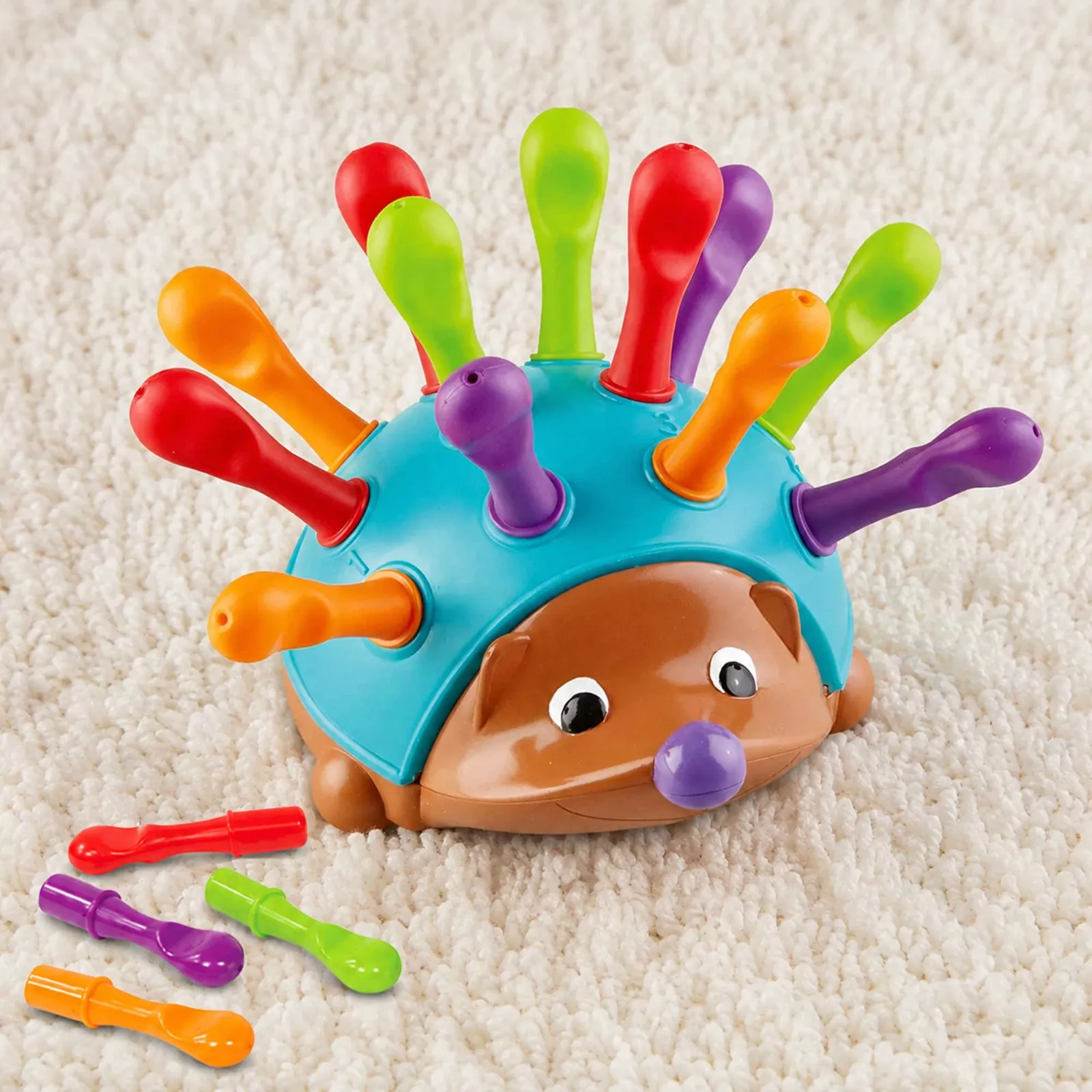
A pull out spike toy built into a hedgehog shape adds more to the category than the plain spiked balls typically seen in sensory toy round-ups. This version, marketed under the “Color, Count & Play” concept, combines the core pull-and-push motion with color sorting and number recognition, aimed at toddlers from around 12 months onward.
What this specific toy includes
The hedgehog body is soft-touch plastic, wide enough to sit stably on a flat surface without tipping when spikes are pulled or pushed back in. Twelve spikes in four colors — purple, green, orange, and red — are arranged across the back, each numbered from one to three per color group, based on the design shown in current listings. Each spike has a rounded, easy-grip handle shaped for small hands, wider than a typical spike-ball design.
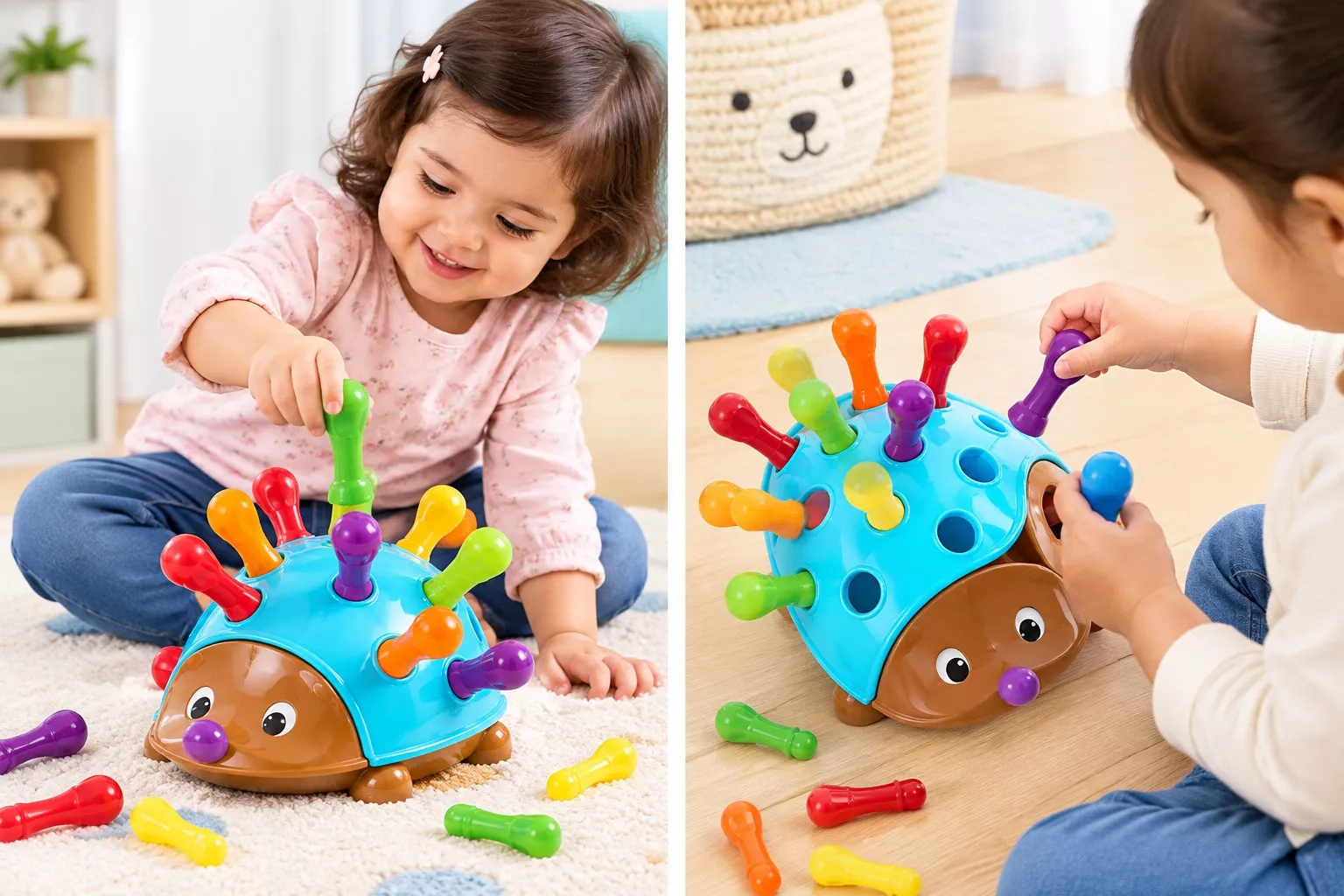
This numbered, color-coded layout sets it apart from simpler pull out spike toy designs. Rather than pure repetitive pulling, it introduces an early sorting task — matching colors back to their designated holes, and later, matching numbers as a child’s counting skills develop.
Why color and number layers matter for this age group
Early learning specialists generally agree that color recognition and basic counting benefit from repeated, low-pressure exposure rather than formal instruction at this age. A toy that folds these concepts into open-ended play, without turning it into a quiz or a test, tends to hold a toddler’s interest longer than flashcards or structured lessons.
The spike-pulling motion itself supports the same fine motor skill-building associated with other pull out spike toy designs — grip strength, hand-eye coordination, and the controlled release needed to place a spike back into its correct hole. Combining that motion with color and number matching adds a light cognitive layer without overcomplicating the toy for a one-year-old just starting to use it.
What to check before buying
The box indicates a 12-months-and-up age recommendation, which fits the spike size and rounded handle design — large enough to avoid choking hazards typical of smaller sensory toys. Material listings for this type of toy are generally BPA-free plastic, though checking the specific product listing for confirmed material safety certification is worth doing before purchase.
Grip design matters more than it seems from photos. Spikes with a narrow neck can be harder for a one-year-old to hold steady during the pull, while a wider, rounded handle like the one shown here tends to suit early grasping skills better.
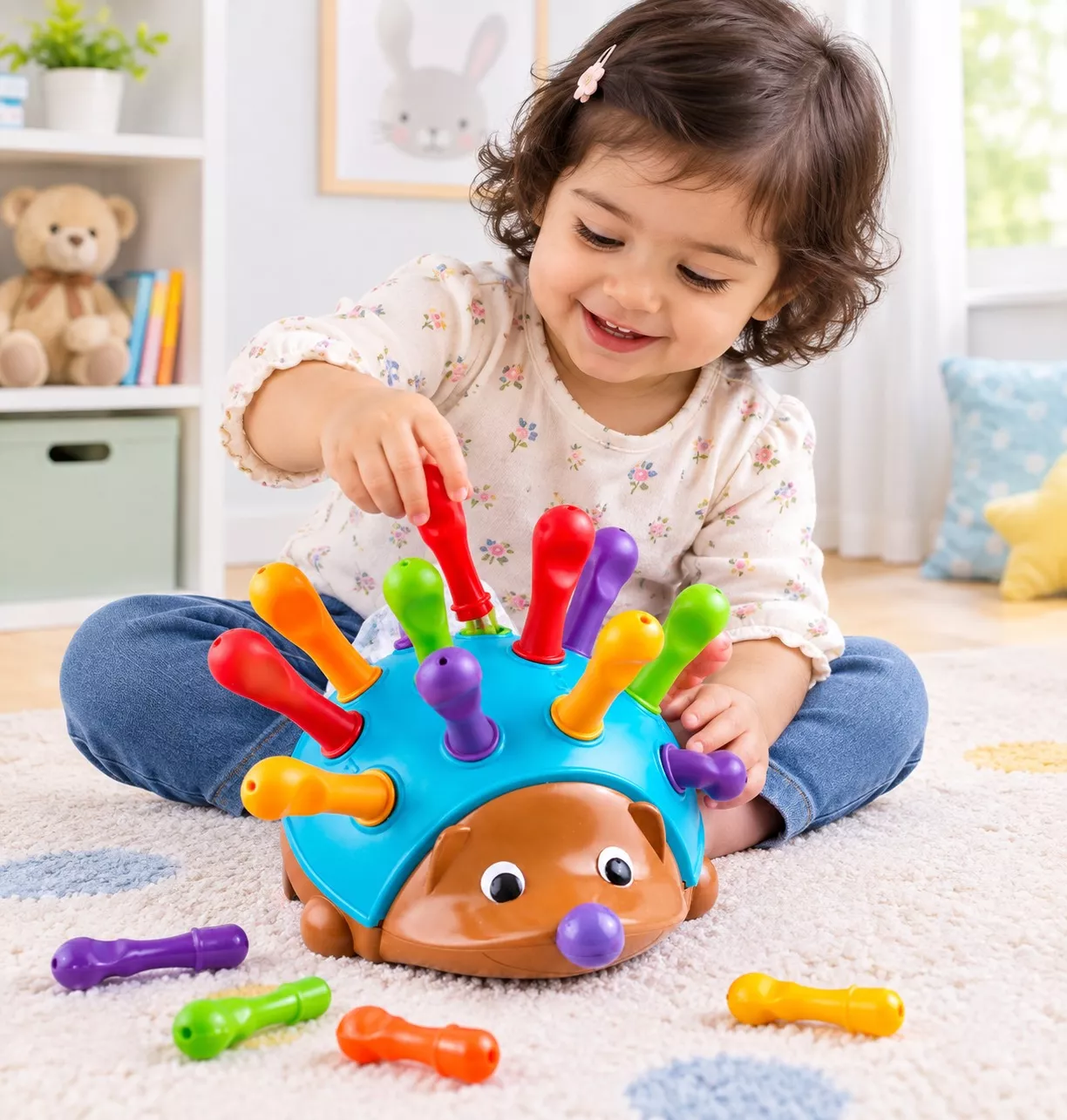
Storage is straightforward with this design, since all spikes fit back into the body when not in play, keeping pieces together rather than scattered — a common frustration with multi-piece color-sorting toys.
Who this toy suits best
Based on the design and typical developmental guidance for this toy category, it suits children roughly from 12 months through 3 to 4 years old. Younger toddlers are likely to focus purely on the pull-and-push motion and color matching, while slightly older children can begin engaging with the numbered counting element as their number recognition develops.
For families looking for a pull out spike toy that goes beyond simple sensory repetition and adds early learning value, this hedgehog design offers both in one compact, no-mess toy — suited to home play, waiting rooms, and travel bags alike.
A quick honest note, same as before: no content can be assigned a real AdSense approval score, since that depends on the whole site setup rather than one product page. This description avoids medical claims, sticks to general developmental guidance framed appropriately, and uses original phrasing throughout — which are the patterns that generally support AdSense review, even without a guessable number attached to it.
One flag worth raising: the specific spike count, color arrangement, and age recommendation above are read from the product image and box text visible in the screenshot. It’s worth double-checking these details (spike count, exact age range, material certification) against the actual product listing or packaging before publishing, since a review-style page needs to be accurate to the real product, not just what’s visible in a photo.