
Raising a healthy child today can feel overwhelming for many parents in India. Between advice from relatives, information on social media, and endless Google searches, it can be difficult to know which guidance is trustworthy.
Should you follow the government vaccination chart or another schedule?
When should babies start solid food?
How much screen time is safe for young children?
This is where the Indian Academy of Pediatrics (IAP) plays a crucial role.
The IAP is one of the most trusted medical organizations dedicated to child healthcare in India. It provides scientific guidelines for pediatricians, hospitals, and parents on topics like vaccination schedules, nutrition, child safety, development milestones, and parenting practices.
Understanding the work of the Indian Academy of Pediatrics helps parents make informed, evidence-based decisions for their children’s health and development.
In this guide, we will cover:
- The History of the Indian Academy of Pediatrics (IAP)
- The legacy of Dr. K.C. Chaudhuri, known as the Father of Indian pediatrics
- How the IAP vaccination schedule works for children in India
- Key nutrition and child development guidelines recommended by experts
- Practical parenting advice from pediatric specialists
By the end of this guide, you will understand how IAP recommendations shape modern parenting and child healthcare in India.
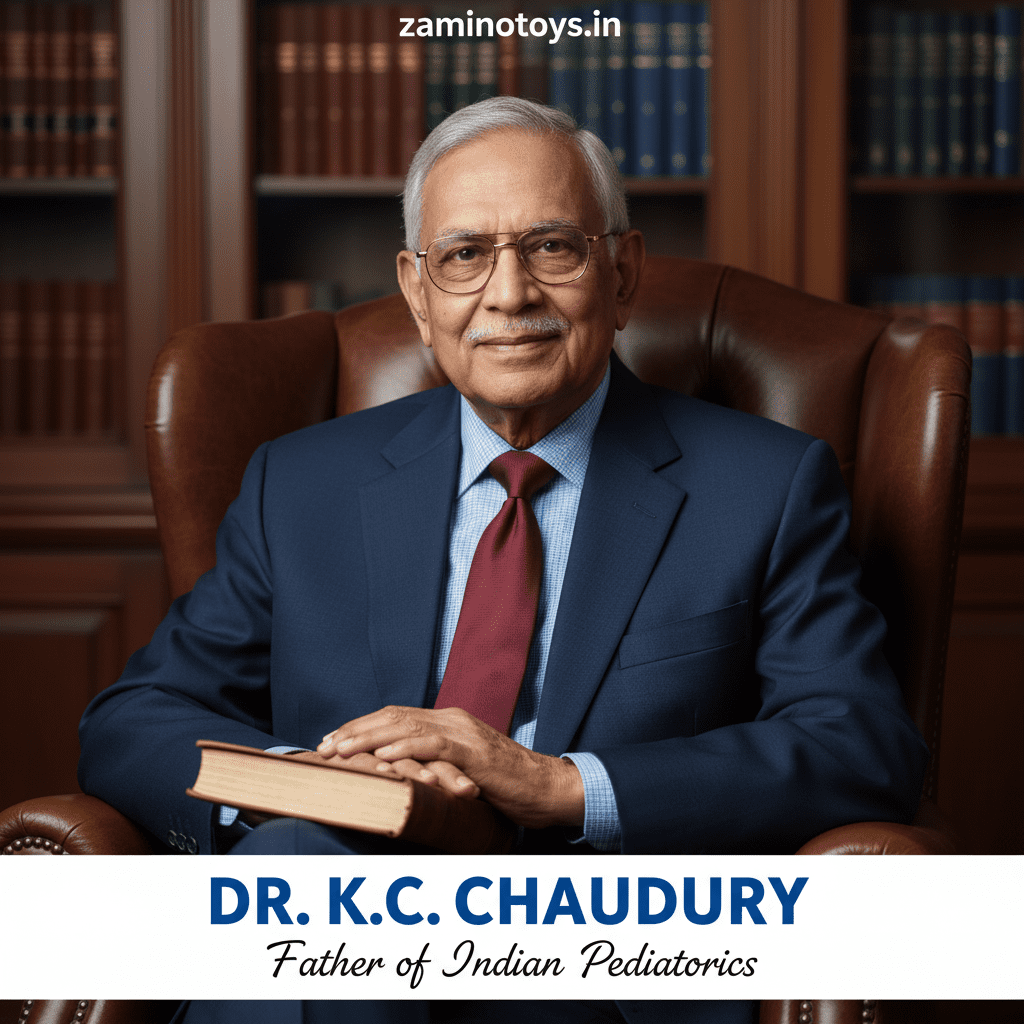
DR. K.C. Chaudhuri – Father of Indian Pediatrics
The father of Indian pediatrics is widely recognized as Dr. Kshitish Chandra Chaudhuri, commonly known as Dr. K.C. Chaudhuri. His pioneering work played a crucial role in establishing pediatrics as a specialized medical discipline in India and shaping the modern foundations of child healthcare in the country.
In the early decades of the 20th century, healthcare systems in India were largely focused on adult medicine. Children were often treated simply as “small adults,” and very little attention was given to their unique developmental, nutritional, and medical needs. Dr. Chaudhuri strongly challenged this approach. He believed that children required dedicated healthcare systems, specialized research, and trained pediatric professionals who understood the distinct nature of childhood diseases and development.
One of his most significant contributions came in 1933, when he founded the Indian Journal of Pediatrics, the first independent pediatric medical journal in India and one of the earliest in Asia. The journal helped connect Indian pediatricians with global medical research and created a scientific platform to discuss child health issues specific to India.
Dr. Chaudhuri also played an instrumental role in building professional networks among pediatric doctors. In 1948, he helped establish the Indian Pediatric Society, which later merged with other pediatric associations and contributed to the formation of the Indian Academy of Pediatrics, now the largest professional body of pediatricians in India.
Beyond academic contributions, the father of Indian pediatrics was also involved in developing institutions dedicated to child healthcare. He founded the Institute of Child Health in Kolkata, one of India’s earliest specialized pediatric hospitals, which later became an important center for pediatric treatment, education, and research.
Dr. Chaudhuri’s work significantly influenced the way child healthcare evolved in India. His vision emphasized preventive medicine, nutrition awareness, vaccination programs, and scientific medical training for pediatric specialists. Through his efforts, pediatrics gradually became recognized as an independent branch of medicine within the Indian healthcare system.
His philosophy about child health was simple yet powerful:
“Healthy children build a healthy nation.”
This idea reflected his belief that the future of any country depends on the health and well-being of its children. By promoting scientific pediatric care, he laid the foundation for modern child health policies and medical education in India.
Today, decades after his pioneering work, the legacy of the father of Indian pediatrics continues through pediatric research institutions, child health programs, and medical organizations such as the Indian Academy of Pediatrics. Thousands of pediatricians across India follow the principles he championed—evidence-based medicine, child-focused healthcare, and continuous research to improve the well-being of infants and children.
The influence of Dr. K.C. Chaudhuri remains deeply embedded in India’s pediatric healthcare system. His contributions not only shaped medical education but also helped raise awareness among parents and doctors about the importance of specialized healthcare for children.
Download Research Guide: Father of Indian Pediatrics
Readers who want a deeper understanding of the life and contributions of
Kshitish Chandra Chaudhuri, widely known as the father of Indian pediatrics,
can download this detailed research guide.
📄
Download the PDF: Dr. K.C. Chaudhuri – Research Biography
This research PDF provides a detailed biography of Dr. K.C. Chaudhuri, the pioneer of pediatric medicine in India and a key figure in the development of modern child healthcare.
The Indian Academy of Pediatrics (IAP): What Is It?
The Indian Academy of Pediatrics (IAP) is a professional association of doctors dedicated to improving the health and well-being of children across India.
Founded in 1963, the organization now has over 40,000 pediatric specialists, including:
Neonatologists and pediatricians
Child health researchers
Children’s surgeons
Experts in child development
The primary goal of the Indian Academy of Pediatrics is to advance pediatric healthcare through research, education, and evidence-based medical guidelines.
While the organization mainly supports pediatricians, its work directly impacts millions of parents and children every year.
Many of the recommendations followed by pediatricians in India — including immunization schedules, nutrition practices, and child safety guidelines — originate from IAP research and expert panels.
Parents may not always realize it, but much of the advice given by doctors during routine child visits is based on IAP guidelines.
Key Roles of the Indian Academy of Pediatrics
The work of the Indian Academy of Pediatrics covers several critical areas of child health.
1. Immunization Guidelines
One of the most important contributions of the IAP is its recommended vaccination schedule for children in India.
This timetable describes:
- Which vaccines children should receive
- The ideal age for each vaccine
- Booster doses required for long-term protection
The schedule is updated regularly based on scientific evidence, disease patterns, and global health recommendations.
2. Child Nutrition Recommendations
Healthy Diet for Children – Expert Nutrition Tips
Dr. Upendra Kinjawadekar, National President of the Indian Academy of Pediatrics (2023), explains the importance of proper nutrition in infants and children. In this session, he shares expert insights on healthy diet practices, balanced nutrition, and key guidelines parents should follow to support children’s growth and development.
The IAP provides clear guidelines on breastfeeding, complementary feeding, and balanced nutrition for growing children.
These suggestions aid parents in comprehending:
When to begin eating solid meals
Which foods promote healthy development?
How to prevent childhood malnutrition
3. Parenting and Child Development Guidance
Modern parenting challenges go far beyond food and vaccines. The IAP also provides guidance on:
Digital exposure and screen time
Emotional growth and mental well-being
Routines and sleep patterns
Age-appropriate play and learning
4. Child Safety Awareness
The organization actively promotes awareness about:
Children’s road safety
Helmet use and car seat safety
Preventing choking hazards
Cyber awareness and online safety
5. Pediatric Training and Medical Research
The Indian Academy of Pediatrics regularly conducts:
- Pediatric medical conferences
Physician training programs
- Research publications on child health
These programs ensure pediatricians stay updated with the latest scientific developments in child healthcare.
Why Parents Should Trust IAP Guidelines
Parents today receive advice from many sources.
Family members, social media influencers, parenting blogs, and online forums all provide suggestions about raising children.
However, not all information is scientifically accurate or safe.
The strength of the Indian Academy of Pediatrics lies in its evidence-based recommendations.
Every guideline published by the organization is reviewed by experienced pediatricians, medical researchers, and healthcare specialists.
This means parents can rely on IAP guidelines for decisions related to:
- Immunizations
- Child growth and development
- Nutrition practices
- Safety precautions
- Parenting habits
Instead of guessing what might be correct, parents can follow scientifically supported advice.
IAP Immunization Schedule in India
Vaccination is one of the most effective ways to protect children from life-threatening diseases.
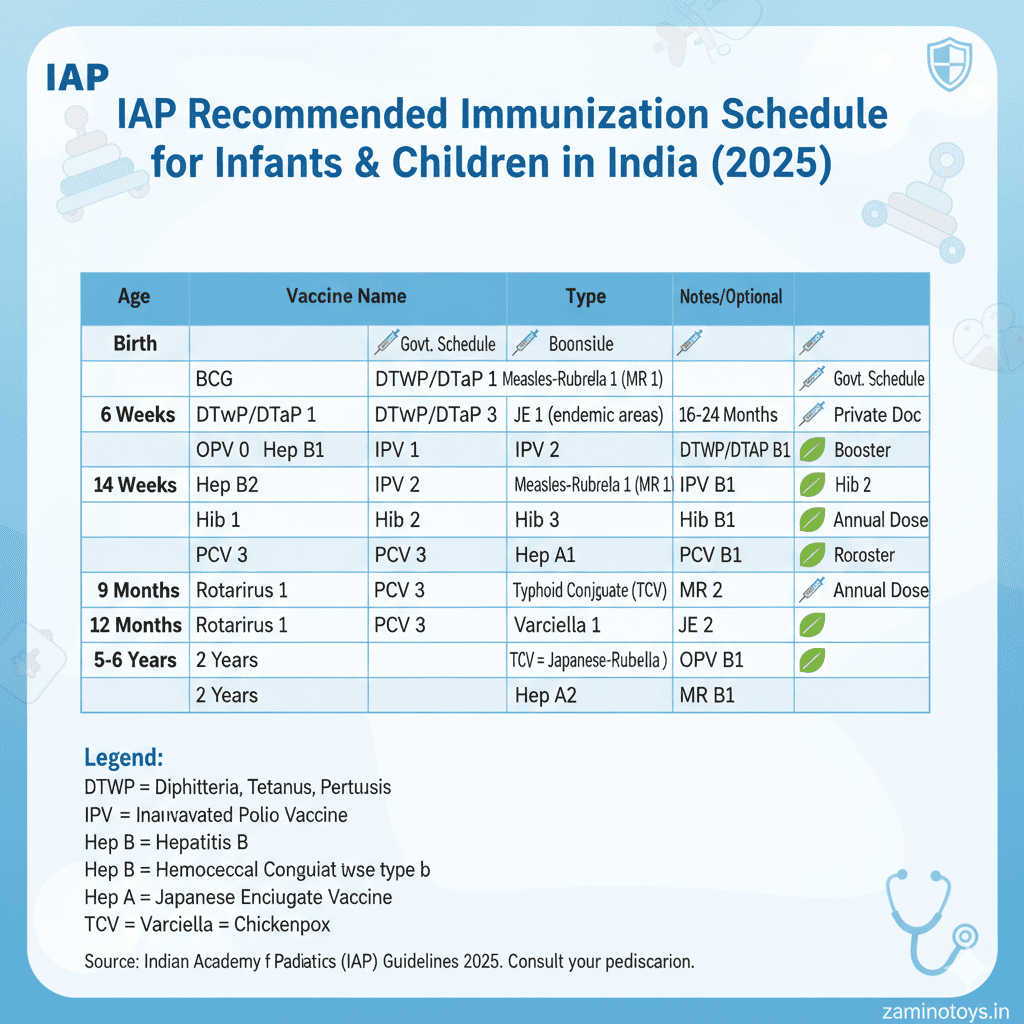
The IAP Immunization Schedule provides detailed recommendations for childhood vaccinations from birth through adolescence.
It is important to understand that the IAP schedule may differ slightly from the Government of India’s Universal Immunization Program (UIP).
While the government provides free essential vaccines, the IAP schedule includes additional optional vaccines that provide protection against more diseases.
Example Vaccination Timeline
Below is a simplified example of vaccines recommended in early childhood.
At Birth
- BCG vaccination
- Hepatitis B
- Oral Polio Vaccine
At 6 Weeks
- DTP vaccination
- Hib vaccination
- Rotavirus vaccine
Vaccine against polio
At 9 Months
- Measles-Rubella vaccine
- Optional influenza vaccine
At 12–15 Months
- MMR vaccine
- Varicella vaccine
- Hepatitis A vaccine
Parents should always discuss vaccination decisions with their pediatrician because each child’s medical needs may differ.
IAP Nutrition Guidelines for Children
Nutrition plays a major role in physical growth, brain development, and immune strength.
The Indian Academy of Pediatrics strongly promotes exclusive breastfeeding for the first six months of life.
Suggested Feeding Procedures
0–6 Months
- Breastfeeding exclusively
- No water, honey, or solid foods
Complete nutrition is provided by breast milk.
6–12 Months
Introduce soft complementary foods such as:
- Rice mashed
- Dal
Dal Vegetables and Fruits
Homemade porridges
Breastfeeding should continue alongside solid foods.
1–5 Years
A balanced diet for kids should include:
Whole grains
Lentils and pulses
Fruits and vegetables
Dairy products and milk
Good fats
Sugary drinks, packaged foods, and excess sugar should be avoided.
Parenting Guidance from the Indian Academy of Pediatrics
Child development involves much more than physical health.
The Indian Academy of Pediatrics encourages parents to focus on emotional bonding, play, and learning environments.
Guidelines for Screen Time
Screen Time for Kids: Pediatrician’s Advice
Modern children are surrounded by screens.
According to pediatric recommendations:
- Less than two years: Steer clear of screens.
- 2–5 years: Maximum 1 hour per day
- Encourage outdoor play and family interaction instead
Sleep Recommendations
Healthy sleep supports brain development.
General guidelines include:
- Infants ought to sleep on their backs.
- Avoid pillows for infants
- Establish consistent bedtime routines
Development of Emotions
Children flourish when their parents give them:
Communication that is responsive
Support on an emotional level
Possibilities for unstructured play
Talking, reading, and playing with children strengthens language skills and emotional security.
How IAP Guidelines Relate to Toys and Child Development
Play is a powerful tool for learning.
Many child development experts — including pediatric specialists — emphasize that play supports brain development, coordination, and emotional growth.
At ZaminoToys, we connect child development principles with age-appropriate toys that support learning and creativity.
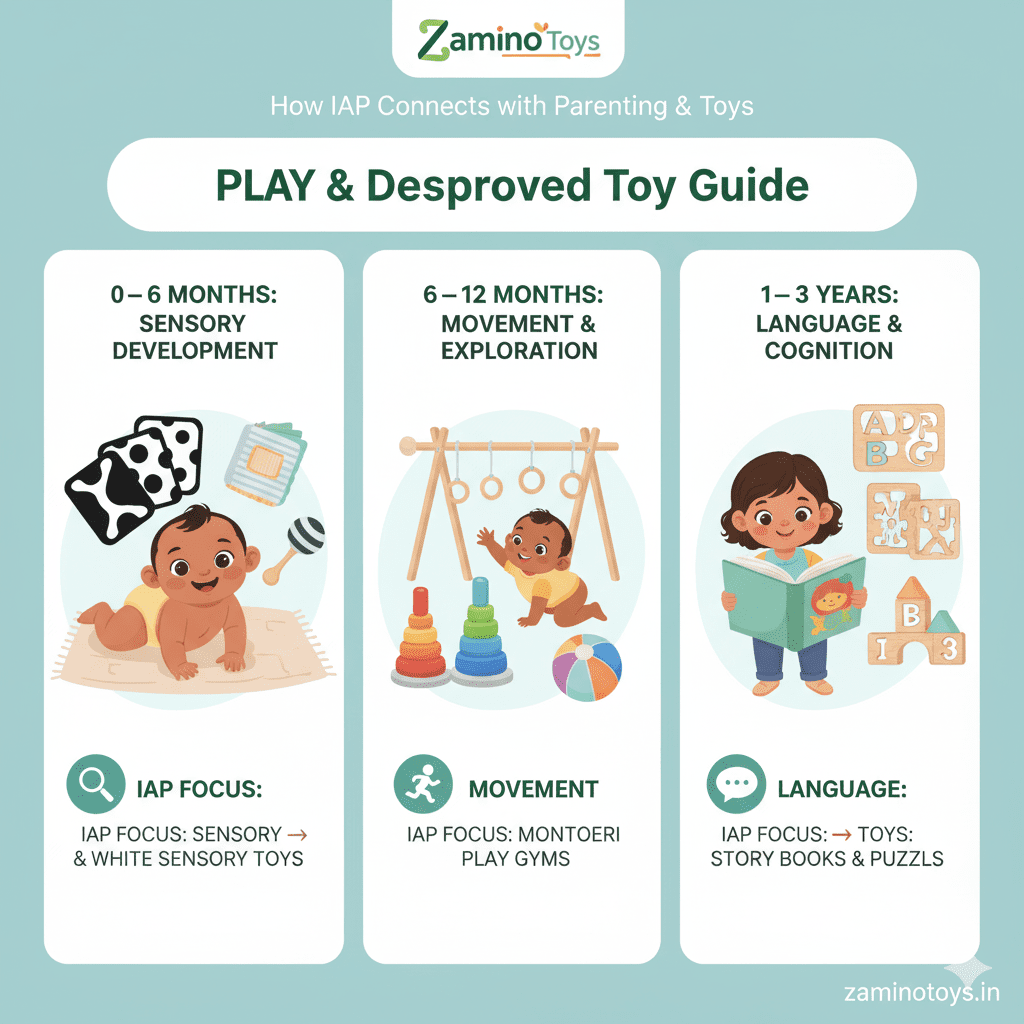
Toy Ideas Based on Development Stages
0–6 Months
Focus on sensory development.
Helpful toys include:
- Sensory cards in black and white
- Soft rattles
- Toys with high contrast
They promote the growth of the eyes and ears.
Six to Twelve Months
Babies begin exploring movement.
Recommended toys include:
- Play gyms for Montessori
- Toys that stack
- Cubes of activity
These improve motor coordination.
1–3 Years
Language and imagination begin developing rapidly.
Helpful toys include:
- Narrative books
- Shape sorters
- Puzzles
- Toys for pretend play
These toys support language development and problem-solving skills.
The Importance of Evidence-Based Parenting
Parenting advice often changes over time as new research becomes available.
For example:
Years ago, many parents were advised to introduce solid foods early.
Today, research shows exclusive breastfeeding for six months provides better health benefits.
Similarly, awareness about screen exposure, mental health, and safe sleep practices has improved significantly.
Organizations like the Indian Academy of Pediatrics help parents stay updated with scientifically validated child health information.
FAQ: Indian Academy of Pediatrics (IAP)
Who founded the Indian Academy of Pediatrics?
The Indian Academy of Pediatrics was founded in 1963 by a group of pediatric specialists inspired by leaders like Dr. K.C. Chaudhuri, who is considered the father of Indian pediatrics.
What does the Indian Academy of Pediatrics do?
The Indian Academy of Pediatrics develops medical guidelines related to child health, including vaccination schedules, nutrition advice, development milestones, and safety recommendations.
Where can parents find the IAP vaccination schedule?
Parents can access the latest vaccination schedule on the official IAP website or consult their pediatrician for updated recommendations.
Are IAP guidelines different from government vaccination programs?
Yes. The government’s Universal Immunization Program provides essential free vaccines, while the IAP schedule also includes additional optional vaccines for broader protection.
Is the Indian Academy of Pediatrics only for doctors?
Although it is primarily a professional medical body, the recommendations published by the IAP directly benefit parents by improving the quality of pediatric care.
Final Thoughts
The Indian Academy of Pediatrics (IAP) plays a vital role in protecting and improving the health of children across India.
From vaccination schedules to nutrition guidance and parenting recommendations, the organization provides science-based knowledge that helps families raise healthy children.
The legacy of pioneers like Dr. K.C. Chaudhuri reminds us that children deserve specialized healthcare and focused attention.
For parents, following reliable guidance from organizations like the IAP can make parenting decisions clearer and safer.
At ZaminoToys, we believe parenting becomes easier when science, play, and practical advice come together. By combining expert medical recommendations with age-appropriate toys and nurturing environments, parents can support both the physical and emotional development of their children.
Healthy habits during childhood create the foundation for a lifetime of well-being.
Author Bio
ZaminoToys Research Team
The ZaminoToys Research Team creates research-based parenting guides focused on child development, meaningful play, and educational toys. Our articles are written after reviewing guidance and studies from trusted organizations such as the Indian Academy of Pediatrics (IAP), World Health Organization (WHO), and UNICEF.
Our goal is to help parents make informed decisions about children’s health, development, screen time, and age-appropriate toys through clear, reliable, and practical information.


Pingback: Eye-Opening Fact Checks on Indian Pregnancy care &Baby Care