
Age-Wise Toy Guide: How to Choose the Right Toy for Every Stage of Childhood
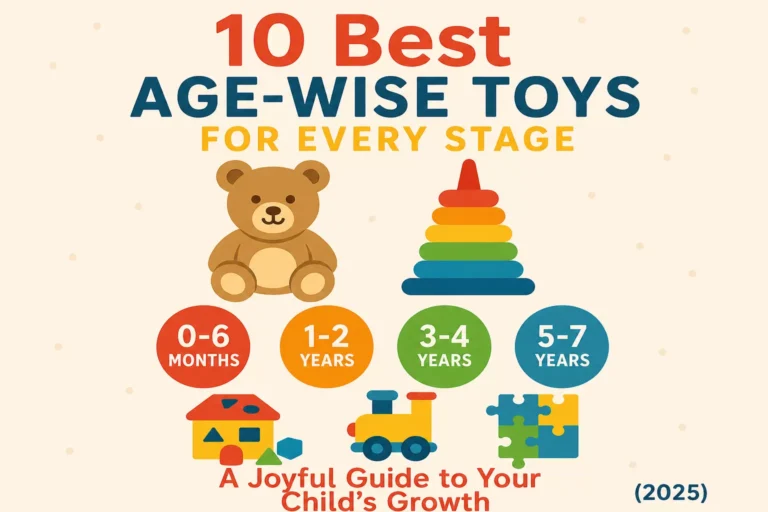
An Age-Wise Toy Guide helps parents choose toys based on developmental milestones instead of just age labels. The right toys improve brain development, sensory learning, emotional intelligence, motor skills, creativity, and problem-solving ability in children from newborn stage to 10 years. Why an Age-Wise Toy Guide Matters More Than Ever Toys are not just entertainment tools — they are developmental building blocks that shape your child’s physical, emotional, social, and intellectual growth. In modern parenting, toy selection has become confusing. Markets are filled with trending toys, digital gadgets, and flashy marketing, which often distract parents from choosing toys that truly support child development. This Age-Wise Toy Guide for Indian parents simplifies toy selection using child psychology research, developmental science, and real parenting experience. Instead of impulse buying, this guide helps parents invest in meaningful, growth-oriented play experiences. Whether you are raising a newborn, toddler, preschooler, or growing child, selecting the right toy at the right stage supports confidence, curiosity, and lifelong learning habits. Choosing toys using developmental guidance ensures children learn through play while building essential life skills. 👉 Related: Still confused about why toys matter in a child’s life? Start with our Toys – What, When & Why? guide for complete clarity. Scientific Research Supporting Developmental Toy Selection According to the American Academy of Pediatrics (AAP), toys that encourage imagination, interaction, and problem-solving significantly improve early brain development, language skills, and emotional bonding between parents and children. Research from developmental psychology journals confirms that children learn fastest when toys match their developmental readiness instead of chronological age alone. 🍼 0–6 Months: The Newborn Stage – Sensory Discovery Begins Your baby is entering a brand new world, and their senses are their guide. During this fragile yet fascinating stage, babies rely on sensory input to understand their surroundings. Every sound, light, and touch shapes their early development. “In this video, we explore how introducing the right sensory toy at the right time can naturally guide your baby through their earliest developmental milestones. During the first six months, your little one is building the foundational visual and motor skills needed to eventually hold and play with objects independently.” 🧠 Developmental Focus: Visual stimulation (especially contrasting colors) Auditory development and sound localization Beginning hand movement and muscle awareness Emotional comfort and bonding ✅ Best Toys for Newborns: Soft rattles with gentle jingles to attract attention High-contrast flashcards in black, white, and red Tummy time mats to build neck and shoulder strength Soft plushies with varying fabrics for tactile experience Crib mobiles with slow movement and lullabies 🧸 Expert Insight: Toys at this stage should support sensory exploration. Introducing multiple textures and sounds gradually can help stimulate different parts of the brain without overwhelming the child. 🧠 Did you know? Research published in Infant Behavior and Development shows that visually stimulating toys significantly improve infants’ attention span and tracking ability within just a few weeks of play. 6–12 Months: Sitting, Crawling, and Cause-and-Effect Learning Around six months, your baby starts sitting independently and might begin crawling. They’re curious, eager to grab, drop, and repeat actions. Toys should now focus on building motor coordination and simple logic. 🧠 Developmental Focus: Cause-and-effect awareness (e.g., pressing a button causes a sound) Strengthening large muscles for crawling and sitting Object permanence (understanding things still exist when hidden) ✅ Recommended Toys: Pop-up activity boxes to teach surprise and interaction Teething-safe soft rings that can be twisted or chewed Mirrored toys to help babies discover their reflection Sensory balls with ridges or soft spikes for rolling and gripping 💡 Practical Parenting Tip Place toys slightly out of reach during playtime. This encourages crawling and strengthens muscle development. Using simple verbal cues like “Where is your ball?” also promotes early language development. 🚼 1–2 Years: Toddler Time – Moving, Mimicking, and Learning Words This is when your toddler is on the move—and their brain is too! More independence, testing, and emotional expression are to be assumed. The best toys are those that blend imagination with action. Work best. 🧠 Developmental Focus • Walking and climbing coordination• Vocabulary and speech growth• Emotional expression and self-awareness• Parallel play development ✅ Ideal Toys • Push walkers for stability• Stacking rings and blocks• Musical toys like drums or xylophones• Pretend play phones or tool kits 👪 Parenting Development Tip Narrating play activities helps language development naturally. Example:“You are stacking the blue block on the red block.” 2–3 Years: Imagination, Role Play & Emotional Learning Best Toys for 2–3 Year Old Children This stage is dominated by pretend play and storytelling. Children begin understanding social roles and emotional empathy. 🧠 Developmental Focus • Symbolic and imaginative thinking• Emotional understanding through characters• Trial-and-error problem solving• Sorting and classification skills ✅ Must-Have Toys • Dolls and plush toys with character stories• Shape sorting toys• Kitchen, doctor, or mechanic role-play sets• Montessori latch and lock boards 🧩 Bonus Activity:- Creating pretend store play helps children learn communication, social interaction, and early math skills. 3–5 Years: Preschool Readiness & Structured Learning As your child approaches the preschool years, your toy rotation should shift towards more structured and readiness-focused items. Our Age-Wise Toy Guide for 3–5 years (seen below) highlights how curated tools—from alphabet magnetic boards to memory board games—actively build memory and social cooperation. Furthermore, incorporating a specific type of age wise toy into daily quiet play routines is a critical school preparation tip, directly helping your child develop the sustained attention required in a classroom environment. Best Toys for Preschool Children Preschool children begin understanding instructions, rules, and structured activities. 🧠 Developmental Focus • Memory building• Sequential thinking• Social cooperation• Early literacy and number awareness ✅ Recommended Educational Toys • Alphabet magnetic boards• Memory board games• Creative craft kits• Beginner puzzles• Mega building blocks 🎓 School Preparation Tip:- Daily quiet play activities improve concentration and help children adjust to classroom learning. 5–7 Years: STEM Thinking & Strategy Development Best Toys for 5–7 Year Old Children Children become curious about how things work and
Age-Wise Toy Guide: How to Choose the Right Toy for Every Stage of Childhood Read More »