
How to Care for a Newborn: Essential Tips for New Parents
Welcoming your baby home is a beautiful and unforgettable experience. Along with the joy, it’s natural to have questions about Caring for a Newborn. Every new parent learns step by step, and you don’t need to know everything from day one.
This easy-to-follow guide from Zaminotoys is designed to help you feel more confident during your baby’s first weeks. You’ll learn the essentials of Caring for a Newborn , including feeding, bathing, safe sleep, keeping your baby warm, maintaining hygiene, and recognizing when it’s time to contact a doctor. At Zaminotoys , we believe that trusted information helps parents make the best choices for their little ones. Whether you’re a first-time parent or welcoming another baby into your family, this guide will provide practical tips in simple language to support you every step of the way.
Understanding the Basics of Newborn Care
The first month with your baby is often called the “fourth trimester.” Your baby is adjusting to life outside the womb, and everything – light, sound, temperature, hunger – feels new to them. Caring for a newborn during this stage mostly means meeting three basic needs consistently: feeding, comfort, and sleep.
You don’t need to get everything perfect. Babies simply need a caregiver who responds to their cues with warmth and consistency. Trust your instincts; you’ll know your baby better than any book or blog ever could.
1.Holding and Bonding With Your Baby
One of the most important parts of Caring for a Newborn is building a strong bond with your baby. Simple actions like holding your baby close and spending time in skin-to-skin contact can help your little one feel safe, loved, and secure.
Skin-to-skin contact offers many benefits. It helps regulate your baby’s body temperature, heartbeat, and breathing while encouraging healthy emotional bonding between you and your newborn.
Here are a few simple tips for Caring for a Newborn through safe holding and bonding:
Always support your baby’s head and neck.
Hold your baby close to your chest so they can hear your heartbeat, which helps them feel calm and comforted.
Try gentle swaddling if your baby enjoys being wrapped snugly. Safe swaddling may help some newborns sleep better and feel more secure.
Spend time cuddling, talking, and making eye contact with your baby every day to strengthen your connection.

Many new parents worry about holding their baby too often, but you cannot spoil a newborn with love and comfort. During the first few months, frequent cuddles and close contact are an essential part of Caring for a Newborn and support healthy emotional and physical development
2.Feeding Your Newborn
Feeding is one of the most important parts of Caring for a Newborn. Most newborns need to be fed every 2 hours, or whenever they show signs of hunger. Watch for early hunger cues like rooting, sucking on their hands, or lip-smacking instead of waiting until they cry.
After each feed, gently burp your baby to reduce gas and discomfort. Keep track of wet and dirty diapers, as they show your baby is feeding well and staying hydrated. If you have concerns about breastfeeding, formula feeding, or your baby’s feeding pattern, speak with your pediatrician or a lactation consultant. trusted tips to make Caring for a Newborn easier for every parent.
3.Bathing and Skin Hygiene
Bathing is an important part of Caring for a Newborn , but your baby does not need a bath every day. During the first few weeks, gently clean your baby’s face, hands, neck, and diaper area with lukewarm water. Keep the umbilical cord stump clean and dry until it naturally falls off, usually within one to two weeks.. Use mild, fragrance-free baby products only when needed, as newborn skin is very delicate. Always test the bath water with your wrist or elbow to make sure it is warm, not hot.Keeping your baby’s skincare routine simple, gentle, and safe.
4. Diapering and Skin Care

Diapering is an essential part of Caring for a Newborn. Most newborns need 8–10 diaper changes each day to keep their skin clean and comfortable. Change wet or dirty diapers as soon as possible to help prevent diaper rash and irritation.
When cleaning your baby, always wipe from front to back, especially for baby girls, to reduce the risk of infection. If you notice redness, apply a thin layer of barrier cream to protect the skin. When possible, let your baby’s skin air-dry for a few minutes before putting on a fresh diaper.Regular diaper changes also help you monitor your baby’s feeding, hydration, and overall health.
5. Safe Sleep Practices
Creating a safe sleep environment is a key part of Caring for a Newborn . Place your baby on their back every time they sleep, whether it’s a nap or bedtime. Choose a firm, flat sleep surface with a fitted sheet, and keep the sleeping area free from pillows, blankets, stuffed toys, and crib bumpers.
It is safest for your baby to sleep in the same room as you , but in a separate crib or bassinet, during the first 6 months. Dress your baby in lightweight sleepwear to help maintain a comfortable body temperature. Newborns usually sleep 14–17 hours a day in short sleep cycles and wake frequently for feeding. This pattern is completely normal during the early weeks of Caring for a Newborn .
6. Keeping Your Baby Warm (Without Overheating)
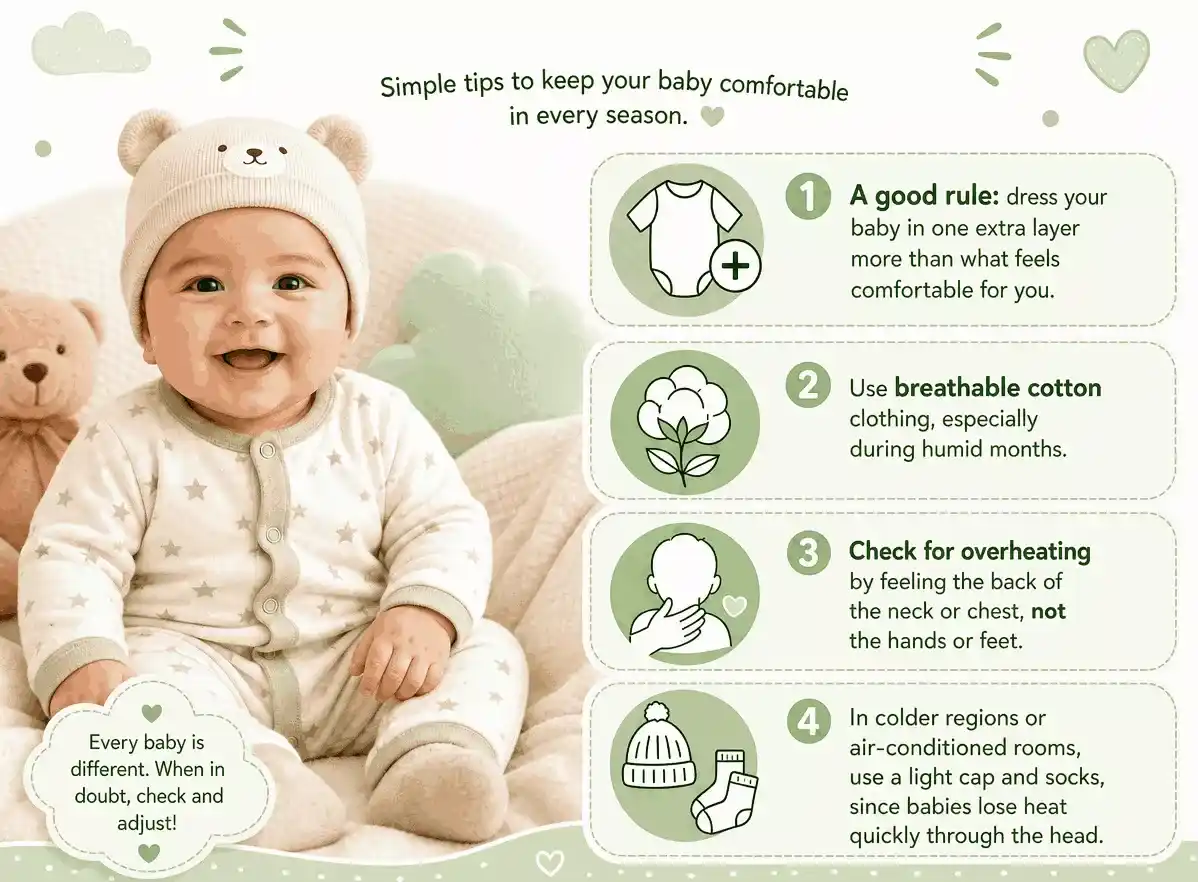
In India’s varied climate, temperature regulation is a key part of caring for a newborn.
- A good rule: dress your baby in one extra layer more than what feels comfortable for you.
- Use breathable cotton clothing, especially during humid months.
- Check for overheating by feeling the back of the neck or chest, not the hands or feet.
- In colder regions or air-conditioned rooms, use a light cap and socks, since babies lose heat quickly through the head.
7.Soothing a Crying Newborn
Crying is how babies communicate during the first few weeks, and it is a normal part of Caring for a Newborn. When your baby cries, first check if they are hungry, sleepy, need a diaper change, or feel too hot or too cold. Some babies may also cry because of gas or discomfort.
To comfort your baby, try gentle rocking, skin-to-skin contact, soft singing, or white noise. Swaddling may also help some newborns feel calm and secure. If your baby cries for a long time, is difficult to comfort, or seems unwell, contact your pediatrician for advice. Learning what your baby needs becomes easier with time and patience
8.Common Health Concerns to Watch For
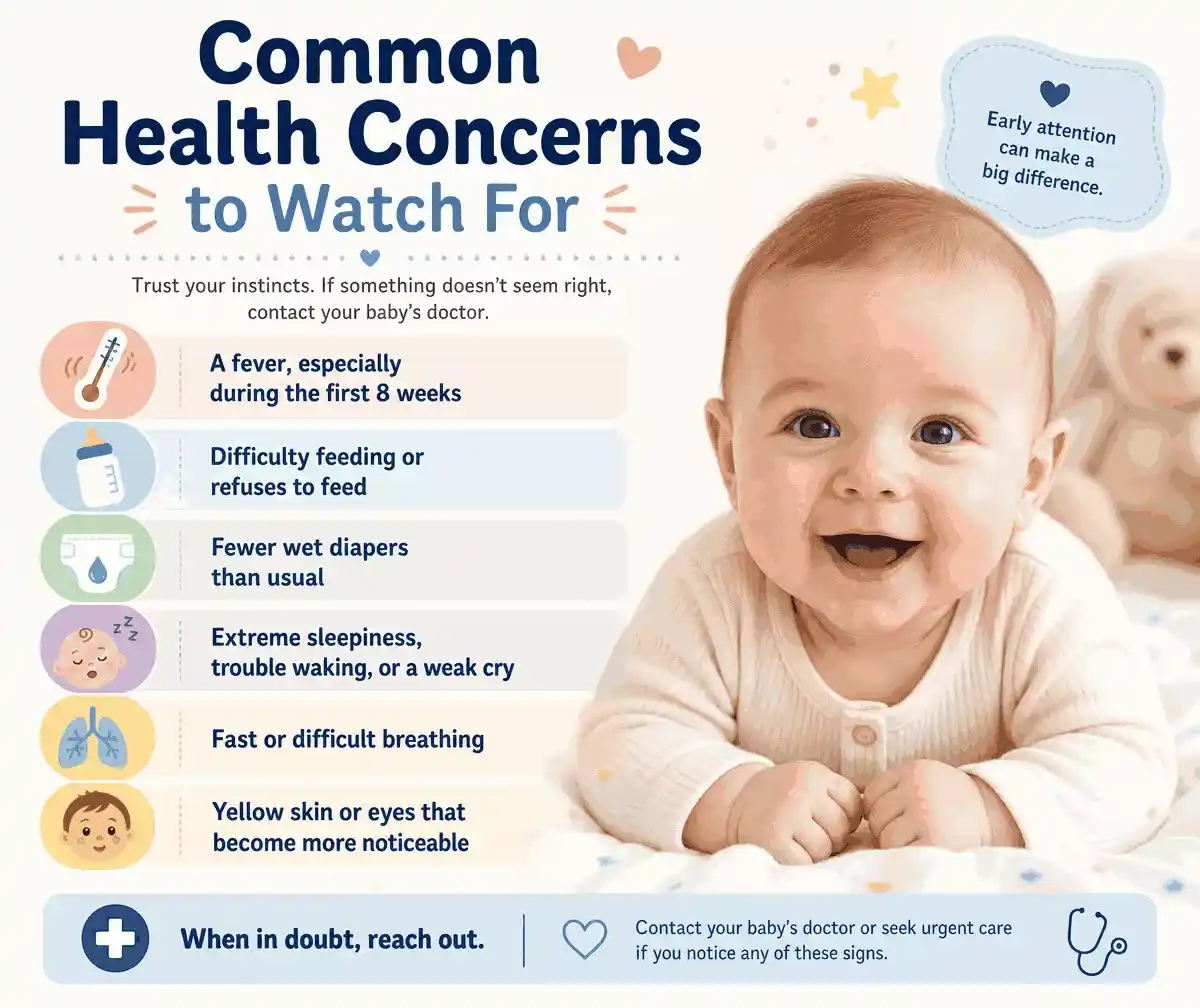
Knowing when to seek medical help is an important part of Caring for a Newborn. Some conditions, such as mild jaundice, baby acne, hiccups, and occasional sneezing, are common and often improve on their own. However, some signs need immediate medical attention.
Contact your pediatrician if your baby has:
A fever, especially during the first 8 weeks
Difficulty feeding or refuses to feed
Fewer wet diapers than usual
Extreme sleepiness, trouble waking, or a weak cry
Fast or difficult breathing
Yellow skin or eyes that become more noticeable
If you are worried about your baby’s health, trust your instincts and seek medical advice without delay.
9.Building a Simple Daily Routine
A simple daily routine can make Caring for a Newborn easier for both you and your baby. Although newborns do not follow a fixed schedule, a gentle pattern of feed, sleep, and quiet awake time can help create a sense of comfort and routine.
During awake time, give your baby a few minutes of supervised tummy time to support healthy muscle and motor development. Keep activities calm and simple by talking, singing, making eye contact, or using high-contrast picture cards and soft baby toys. Gentle, age-appropriate play helps support your baby’s early growth without overstimulating them.
Newborn Care Essentials Checklist
- Soft cotton onesies and swaddles
- Diapers and fragrance-free wipes
- A firm-mattress crib or bassinet
- A digital thermometer
- Nail clippers designed for infants
- Burp cloths and bibs
- Age-appropriate sensory toys for tummy time
Final Thoughts
Caring for a Newborn is a journey, and every parent learns along the way. Focus on the basics-feeding, safe sleep, good hygiene, regular diaper changes, and plenty of love and comfort. As you spend more time with your baby, you’ll become more confident in understanding their needs and daily routine.If you ever have concerns about your baby’s health or development, don’t hesitate to contact your pediatrician. Early guidance can provide peace of mind and the right support.For more expert parenting tips, baby care guides, and helpful resources on Caring for a newborn, explore Zaminotoys and support your baby’s healthy growth from the very beginning.
FAQ
What is the most important part of caring for a newborn in the first week?
Feeding, safe sleep positioning, and keeping your baby warm are the top priorities when caring for a newborn in the first week, alongside monitoring diaper output for feeding adequacy
How many hours of sleep does a newborn need when caring for a newborn?
When caring for a newborn, babies typically sleep 14–17 hours a day, but in short 2–4 hour stretches rather than one long sleep period
When should I start bathing my newborn regularly while caring for a newborn?
When caring for a newborn, you can begin regular baths once the umbilical cord stump falls off, usually around 1–2 weeks. Until then, top-and-tail sponge cleaning is safest.
How do I know if my baby is feeding enough when caring for a newborn?
When caring for a newborn, track wet and soiled diapers most well-fed newborns produce at least 6 wet diapers a day after the first week, along with steady weight gain.