From Curiosity to Confidence: The Science of Play
According to the Harvard Center on the Developing Child, in the first year of life, a baby's brain generates over a million new neural connections every single second. The period between 6 and 12 months is often referred to as a “learning explosion” because this is when babies begin connecting cause to consequence—for example, discovering “if I shake this rattle, it makes a sound.”
During this stage, toys that allow repeated exploration (like stacking, shaking, pulling, or dropping) reinforce brain wiring. Babies love repetition not because they are bored, but because each time they repeat an action, their brain is actively building mastery.
Why Toys for 6 to 12 Months Matter So Much
According to research from Harvard University, babies experience an unprecedented surge in neural connections during their first year. In months 6 to 12, your child’s ability to move, communicate, and problem-solve expands rapidly.
This period is often called a “developmental leap” because your baby begins transitioning from a passive observer into an active explorer. Their brain is literally wiring itself through every physical interaction—a neurological process called “neural pruning and strengthening.” When babies repeat actions like banging, shaking, or dropping toys, they are strengthening those developmental pathways through experience.

Matching developmental milestones with the right developmental toys for 6 to 12 months.
A landmark study published in Pediatrics (the official journal of the American Academy of Pediatrics) highlights that early experiences and responsive caregiving play a major role in shaping cognitive, emotional, and physical outcomes. This means that playtime is not just fun—it is crucial for healthy development.
Key Milestones Reached Between 6 and 12 Months:
- Sitting Without Support: Builds core physical strength and spatial awareness.
- Crawling and Standing with Assistance: Improves balance, muscle tone, and physical independence.
- Object Permanence: Around 8 months, babies begin to understand that objects exist even when out of sight. This is a major cognitive brain milestone.
- Babbling and Responding to Sounds: Lays the structural foundation for speech and social interaction.
- Stronger Grip and Hand-Eye Coordination: Prepares them for self-feeding, precise toy manipulation, and motor planning.
These developmental leaps open the door to meaningful, purposeful play. For this reason, Montessori games, sensory toys, and cause-and-effect toys work exceptionally well. These tools allow your child to lead their own discovery safely, at their own pace—aligning perfectly with how babies naturally learn.
So, don’t just think of toys as simple distractions. At this stage, toys are your baby’s tools to build their brain, one playful moment at a time.
Reference: Harvard University - Center on the Developing Child
What Makes Montessori Toys Different for a 6 to 12-Month-Old?
Montessori toys for 6 to 12 months are specially designed to support a baby’s natural development by encouraging independence, concentration, and sensory learning. Inspired by Dr. Maria Montessori’s approach, these toys are not just for entertainment—they are tools that help your baby learn real-life skills through play.
Principles of Montessori Toy Design:
Montessori toys focus strictly on simplicity and purpose. They are:
- Natural Resources: Made of organic materials including wood, cotton, or metal.
- Quiet & Purposeful: Free of flashing lights, loud electronic music, or overwhelming features.
- Single-Skill Focus: Designed to support one developmental skill at a time—like grasping, stacking, or fitting objects.
- Beautifully Crafted: Built to invite deep focus and repeated, intentional use.
Scientific Research on Open-Ended Play
Scientific studies in early childhood education show that open-ended toys promote longer attention spans, better motor planning, and stronger memory retention. According to a study published in Frontiers in Psychology, children exposed to simple, unstructured toys tend to develop better problem-solving skills and focus more deeply on activities than those given electronic or complex toys.
📄 View AAP Study: The Power of Play in Child Development
How Montessori Toys Help 6 to 12-Month-Old Babies
During this age range, your baby is building coordination, exploring cause and effect, and developing hand control. Montessori toys allow them to do this independently, without overstimulation:
- Wooden Ball Trackers: Train visual tracking and object movement awareness.
- Object Permanence Box: Helps babies understand that items exist even when out of view—a major brain milestone around 8 months.
- Nesting Cups or Bowls: Support spatial problem-solving, size comparison, and fine motor precision.
These toys don’t just keep your baby busy—they allow your baby to practice real-world thinking. They also align with the natural way babies learn: by repeating the same action until they achieve mastery.
Why Child Development Specialists Recommend Fewer Toys
One core Montessori principle is “less but better.” Instead of overwhelming your baby with too many options at once, offer 2 to 3 purposeful toys that support their current developmental stage. This avoids sensory overstimulation and encourages deeper play.
For example: At 7 months, your baby might love a soft ring stacker, while at 10 months, they will enjoy posting balls into containers or pulling scarves from a box. Let your baby’s natural interests guide the choice.
Month-by-Month Development and Toy Suggestions
Every month between 6 and 12 months brings new physical capabilities. Here is a month-by-month roadmap of physical milestones and recommended toys:
6 Months: Sit, Reach & Explore
Developmental Milestones:
- Sits independently with minimal support.
- Begins transferring objects between hands.
- Shows interest in cause-and-effect actions.
Best Recommended Toys:
- Montessori Rolling Drum: Promotes reaching and rolling.
- Soft Cloth Books with Tags: Encourages tactile exploration and visual tracking.
7 Months: Grip, Pass, and Drop
Developmental Milestones:
- Enhanced grip and two-hand coordination.
- Passes toys smoothly from one hand to another.
- Begins intentional dropping to test sound reactions.
Best Recommended Toys:
- Stacking Rings: Encourages grasping and hand-eye coordination.
- Pop-Up Toys: Builds curiosity and action-reaction logic.
8 Months: Crawling & Discovering
Developmental Milestones:
- Crawls and actively explores surroundings.
- Responds to name and familiar faces.
- Actively looks for hidden objects.
Best Recommended Toys:
- Object Permanence Box: A classic Montessori discovery toy.
- Mirror Play Panels: Improves self-recognition and emotional growth.
🌐 CDC Reference: 8-Month Milestones
9 Months: Problem Solving Begins
Developmental Milestones:
- Understands simple words (“no”, “bye-bye”).
- Uses pincer grasp to pick up small objects.
- Imitates vocal sounds and adult gestures.
Best Recommended Toys:
- Nesting & Stacking Cups: Perfect for floor and bath play.
- Soft Shape Sorters: Promotes fine motor logic.
Pro Tip: Rotate toys weekly to maintain curiosity and avoid clutter.
10 Months: Stand, Bang, and Babble
Developmental Milestones:
- Pulls up to stand using furniture.
- Cruises sideways along support structures.
- Loves to bang objects together and mimic sounds.
Best Recommended Toys:
- Push-and-Go Cars: Encourages crawling and chasing.
- Pull-Up Bar with Mirror: Enhances balance and self-awareness.
11 Months: Try, Fail, Repeat
Developmental Milestones:
- Experiments with repetitive cause-and-effect.
- Starts uttering early words like “mama” or “dada”.
- Enjoys peek-a-boo and spatial memory games.
Best Recommended Toys:
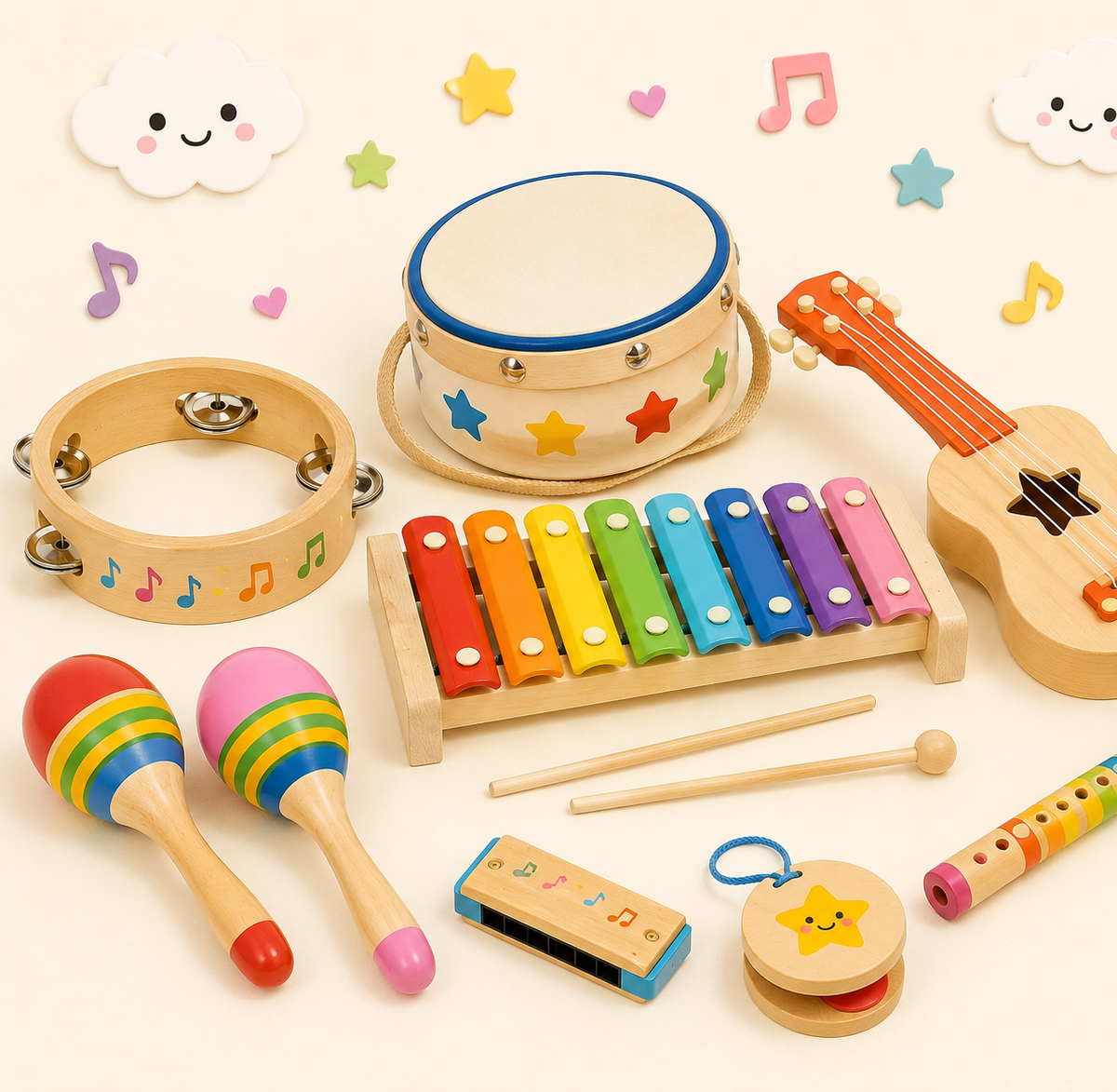
- Musical Instruments (Tambourines/Bells): Introduces rhythm.
- Lift-the-Flap Books: Builds vocabulary and memory.
Toys for 6 to 12 Months: How to Choose the Best
When selecting toys for your baby, keep these five essential guidelines in mind:
- Follow Your Baby’s Curiosity: Observe what captures their attention naturally and build upon it.
- Choose Open-Ended Toys: Select items like blocks or stacking cups that grow alongside your child.
- Avoid Over-Stimulating Electronic Devices: Battery-operated toys with flashing lights divert attention rather than engaging active problem-solving.
- Rotate Toys Regularly: Rotating 3 to 4 toys every week keeps learning fresh and reduces living room clutter.
- Focus on One Skill at a Time: Choose simple toys tailored specifically to your baby's current milestone stage.
Final Thoughts: Build Playful Bonds, Not Just Shelves
Toys for 6 to 12 months are far more than colorful objects—they are vital tools that support brain growth, emotional bonding, and lifelong skills. From soft stacking rings that teach grip control to pretend play toys that spark imagination at 12 months, each item supports an essential stage of your baby’s journey.
Research consistently confirms that meaningful play builds strong neural pathways. According to studies by the American Academy of Pediatrics, child-led play strengthens language skills, self-regulation, and emotional resilience. Simply put: the more babies explore through active play, the stronger their brain becomes.
What Your Baby Truly Needs:
- A few high-quality, non-toxic toys matched to their age stage.
- Your focused attention, warmth, and engagement.
- Uninterrupted time to explore and repeat activities safely.
Remember, you are your baby’s first and best toy. Your voice, your smile, and your hands offer more joy and learning than any store-bought gadget ever could.
Keep playtime stress-free, baby-led, and rooted in love. And as your trusted parenting partner, ZaminoToys is always here to help you choose the right developmental tools at the right time.