


Choosing Soft Toys for Newborn: A Dad Shares What to Check
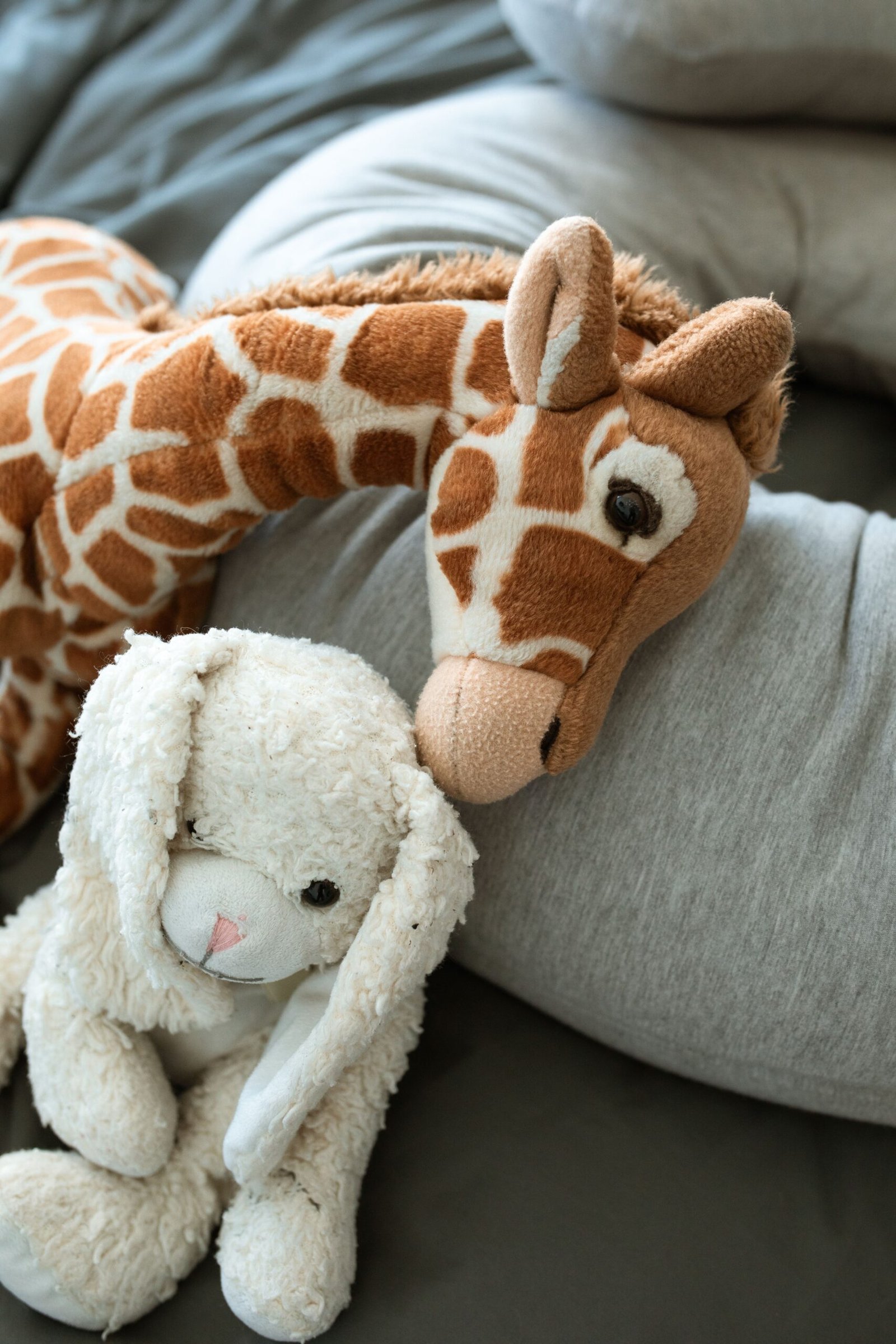
A newborn can have a soft toy nearby, but only when they are awake and an adult is within arm’s reach. Pick a small, light toy you can wash, with stitched eyes, firm seams, no dangling strings and an age label you can read. It should never go in the cot or bassinet. For the first year, a baby’s sleep space should hold nothing but the baby.
Here at ZaminoToys, we put this guide together to help you check a plush toy before it goes near your baby, judge the fabric, see how the choice changes as your baby grows, and decide when it is fine to buy nothing at all. Where we rely on safety guidance, we name the source, and you will find the full list under Sources at the bottom of the page.
Why Soft Toys Need Careful Checking
A rattle sits in a hand. A soft toy gets squeezed, chewed, dragged and slept near. It touches the face more than most toys, and it soaks up drool, milk and dust.
Problems usually come from a few places:
- Parts that come off: Plastic eyes, buttons, bows and clip-on trims.
- Weak seams: Stuffing and loose thread end up within reach.
- Strings and ribbons: Loops can wrap around fingers or necks.
- Unknown dyes or finishes: A strong smell or colour that rubs off is a warning sign.
- Poor washability: A toy you cannot clean gets grubby quickly.
None of this makes soft toys risky by nature. It means a two-minute check before first use is worth the time.
Six Things to Check Before Buying
Think small, plain and simple. Here is what to look at.
Face and trims. Stitched eyes and noses are the safer choice. Plastic parts are attached with shanks or glue, and a firm pull can break them.
Size and weight. Hold the toy next to your baby’s head. Giant bears look sweet in photos, but they are awkward beside a tiny baby. A palm-sized or slightly larger toy is easier to manage.
Seams. Press along each seam and tug at the arms, legs and ears. Stuffing, thread ends or a gap that widens means the toy goes back.
Filling. You may not be able to see it, so always check the label. Filling that feels lumpy or uneven, or that smells strongly, is a reason to pass.
Fabric. Smooth, short pile is easier to live with than long, shaggy fur that sheds fibres.
Anything that dangles. Remove loose swing tags and plastic fasteners. Leave the sewn-in care label.
How to Read Toy Age Labels in India
An age label tells you who the maker designed the toy for. A toy marked 3+ is not a baby toy that happens to have a warning. It was designed and tested with older children in mind.
For ages 0–3, three things deserve extra attention: small parts, loose pieces and batteries. A toy with a sound box needs a battery compartment that closes with a screw. If a thumbnail can open it, it is not suitable for a baby.
In India, toys covered by the applicable Toys Quality Control Order must meet the relevant BIS requirements. The IS 9873 series covers several safety requirements for non-electric toys. Before buying, check the current BIS requirements and the toy’s required marking. If the maker, age range or product details are missing, ask the seller for clarification.
Choosing Toys for Different Age Groups
Here is a plain guide. These are shopping and safety pointers, not targets your child must meet.
| Age | What to look for | What to avoid |
|---|---|---|
| 0–3 months | One small, light toy with stitched features, used for awake time with you within arm’s reach | Anything with plastic parts, strings, batteries or large size |
| 3–12 months | Easy-to-grip shapes, washable fabric, strong seams, since mouthing is common | Bows, buttons, hanging loops, tiny accessories |
| 1–2 years | Simple animals or dolls that suit carrying and cuddling | Avoid soft toys with beads, pellets, or detachable parts. For babies under 12 months, |
| 2–4 years | Larger plush toys, characters, role-play pieces, with the age label still checked | Anything marked for older children when small parts are present |
One rule does not move: for babies under 12 months, soft toys stay out of the sleep space. After your baby’s first birthday, check age-appropriate sleep guidance and inspect any toy for loose parts or damage.
What Can a Baby Actually Do with a Soft Toy?
Less than the packaging suggests, especially at the start.
In the first weeks, a baby cannot reach for a toy on purpose. You can hold it a short way from their face, move it slowly and talk in a soft voice. Some babies look for a few seconds, while others turn away. Neither response tells you anything about your child. They may be tired or hungry.
With soft toys for newborn few months older, play looks different. Babies start batting, grabbing, squeezing and mouthing. Check that any toy is suitable for the child’s age, has no loose parts, and is designed for the way the child will use it. Stay within arm’s reach during play.
The useful part of a soft toy is you. It gives you a reason to sit down, sing, and play.
What Mistakes Do Parents Make with Plush Toys?
These come up again and again.
1. Buying for the photo. The toy looks lovely on a shelf, then turns out to have glued eyes and a ribbon.
2. Choosing size over sense. Big toys are impressive and rarely practical for a small baby.
3. Skipping the first wash. New toys may carry dust from packaging and storage.
4. Ignoring the care label. If you cannot follow the washing steps, the toy gets used dirty or thrown out.
5. Buying on price alone. Very cheap toys may have weak seams that can tear easily. A very expensive toy may only have a nicer box.
6. Keeping a toy past its life. Once there is a hole, a loose eye or thinning seam, it is finished.
Does Fabric Type Matter?
Yes, but less than some product pages suggest. Cotton and polyester plush can both be fine, so fabric alone does not tell you which is safer. The dye, the stitching and how the toy survives washing matter more.
Three quick checks at home:
Smell it. A strong chemical odour is a reason to skip it.
Gently wipe it with a damp white cloth. Colour on the cloth means the dye isn’t stable, so pick another toy.
Wash it once as the label says. If it comes out misshapen or patchy, it will not last.
Words like “premium” or “baby-safe” mean little without a proper label. Be careful with any claim about skin or allergies that you cannot check.
Are Handmade and Eco-Friendly Toys Worth Buying?
It’s not essential, but it’s worth checking. “Eco-friendly” on a tag tells you about the materials, not about how well the toy is made. A bear stuffed with recycled fibre can still have a loose eye.
Check the seams, the label and the stitching first. If two toys pass, then go for the one that tells you what it’s made of, like the fabric and where it was sewn.
And if a cousin has a clean, sturdy toy sitting in a cupboard, that’s the greenest choice you’ll find.Check it using the same safety steps, and see if it has any recalls.
What About Handmade Soft Toys?
A handmade toy can be a good find, but “handmade” only tells you how it was made, not whether anyone checked it. So ask the maker a few things: what is the fabric, what is inside, are the eyes stitched, and can it go in the wash? Ask if they’ve tested it against a toy safety standard, too.
If the answers are fuzzy, walk away. The same goes for anything with beads, buttons or bits that hang. A plain toy with neat stitching is the safer buy for a newborn, however pretty the fancy one looks.
How to Choose Soft Toys for Newborn Babies in India
Before you pay, whether in a shop or on a screen, run through these points:
Label: An age range and the BIS mark on the pack or in the listing.
Face: Stitched eyes and nose, with no plastic or glued trims.
Seams: Even stitching, which you can judge from close-up photos.
Seller: A maker or shop name and a way to contact them.
Washing: A care label or clear steps, since the toy will need a quick wash when it gets soiled.
Use: Meant for awake play with you within arm’s reach, never for the cot.
Can’t squeeze the seams online? Ask for close-up photos. When the parcel comes, compare the toy with the listing, and don’t use it if it looks different.
Are Soft Toys a Good Gift for a Newborn?
Yes, if you keep it modest. New parents rarely need more stuff, so a single small toy they can wash is a better gift than a giant bear.
Before you buy, skip the ribbons and clip-on bits, and leave the care label on. A gift receipt helps too, because someone else may have bought the same bunny.
And if you’re the parent staring at a pile of plush toys: you don’t have to use them all. Check each one, keep the best, and put the rest away for later.
Cleaning and Checking Toys for Damage
Read the care label before anything else. If it allows washing, give a new toy one wash before your baby gets hold of it.
After that, wash a favourite about once a week. Don’t wait if it gets soaked in milk or drool, or if someone at home has been ill. Dry it all the way through, because a damp toy goes musty quickly.
Every few days, squeeze along the seams and give the eyes and limbs a gentle pull. If you find a hole, a loose thread or a wobbly eye, stop using that toy. Stitching a torn toy yourself is not a fix. Get a new one.
A spare toy makes all of this easier. Swap them on wash day, and your baby is never without.
Safety Note
Keep soft toys out of the cot and bassinet, and stay within arm’s reach whenever your baby has one. Follow the age on the label. If a toy breaks, put it away and check for recalls with the relevant product safety authority in India. For anything about your baby’s sleep or health, ask your pediatrician.
Frequently Asked Questions
-
Can I use regular household items as bath toys?
Yes, if they are clean, have no sharp edges, and are too large to swallow. Check them for cracks. Avoid anything that held chemicals or cleaning products.
-
How often should I replace bath toys?
There's no fixed schedule. Replace a toy when it is cracked, has trapped water or dark spots inside, or keeps a smell after washing.
-
Are squeeze toys with holes a bad choice?
They are harder to keep clean. If your child loves them, dry them thoroughly after every use and inspect them often. Toys without holes are more basic.
-
Can bath toys be used in an infant bath tub?
Yes, but pick small, light toys so they don't crowd the space. Always follow the tub maker's instructions.
-
Should I buy a big set or a single toy?
One toy, or a small set, is normally plenty. Add more only if your child shows what they like.
conclusion
You don’t have to buy a soft toys for newborn. If one turns up as a gift, check the eyes, the seams and the label, then wash it. Bring it out when your baby is awake and you’re within arm’s reach. At sleep time it goes on a shelf, never in the cot.
A toy is a nice extra. Your voice matters more.
SHARE THIS STORY
Latest
Categories