
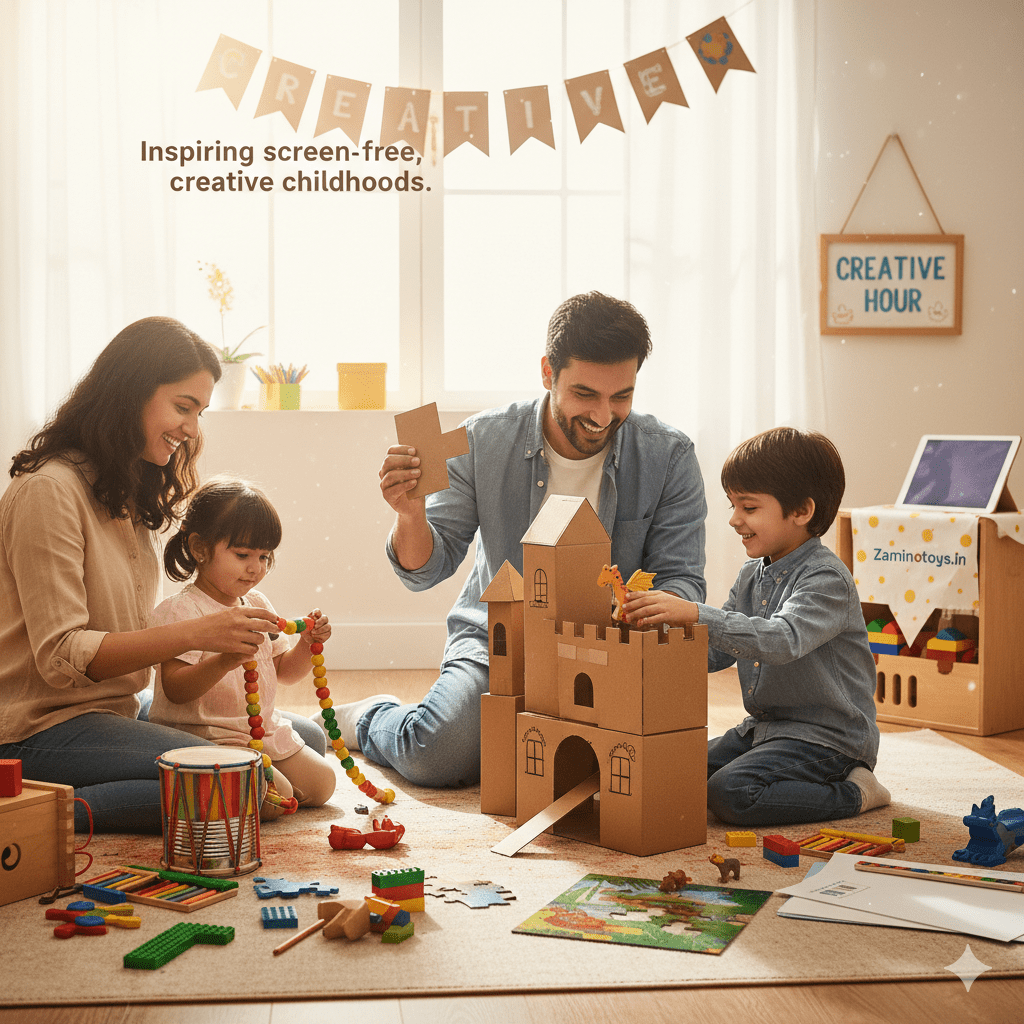
Childhood in a Screen-Filled World
screen free toys If you look around most homes today, screens are everywhere.
From smartphones and tablets to televisions and gaming devices, children grow up surrounded by digital entertainment.
Many kids learn how to swipe and scroll before they can even read.
While technology certainly has its benefits, many parents have started asking an important question:
Are Screens replacing real play?
As part of the ZaminoToys parenting advice platform, we regularly speak with parents who share similar concerns. Many notice that their children prefer watching videos or playing mobile games instead of building with toys, drawing, or creating imaginative stories.
However, children are naturally curious and creative. They are born explorers. When given the right opportunities, they naturally enjoy activities that allow them to build, experiment, and imagine.
This is where screen free toys play an important role.
Unlike digital entertainment, screen free toys encourage children to interact with the physical world. They inspire creativity, strengthen focus, and help children develop emotional and social skills.
Real play does more than entertain children.
It helps them grow, learn, and discover their abilities.
At ZaminoToys, we believe childhood should include meaningful play experiences that support healthy development.
What Are Screen free toys
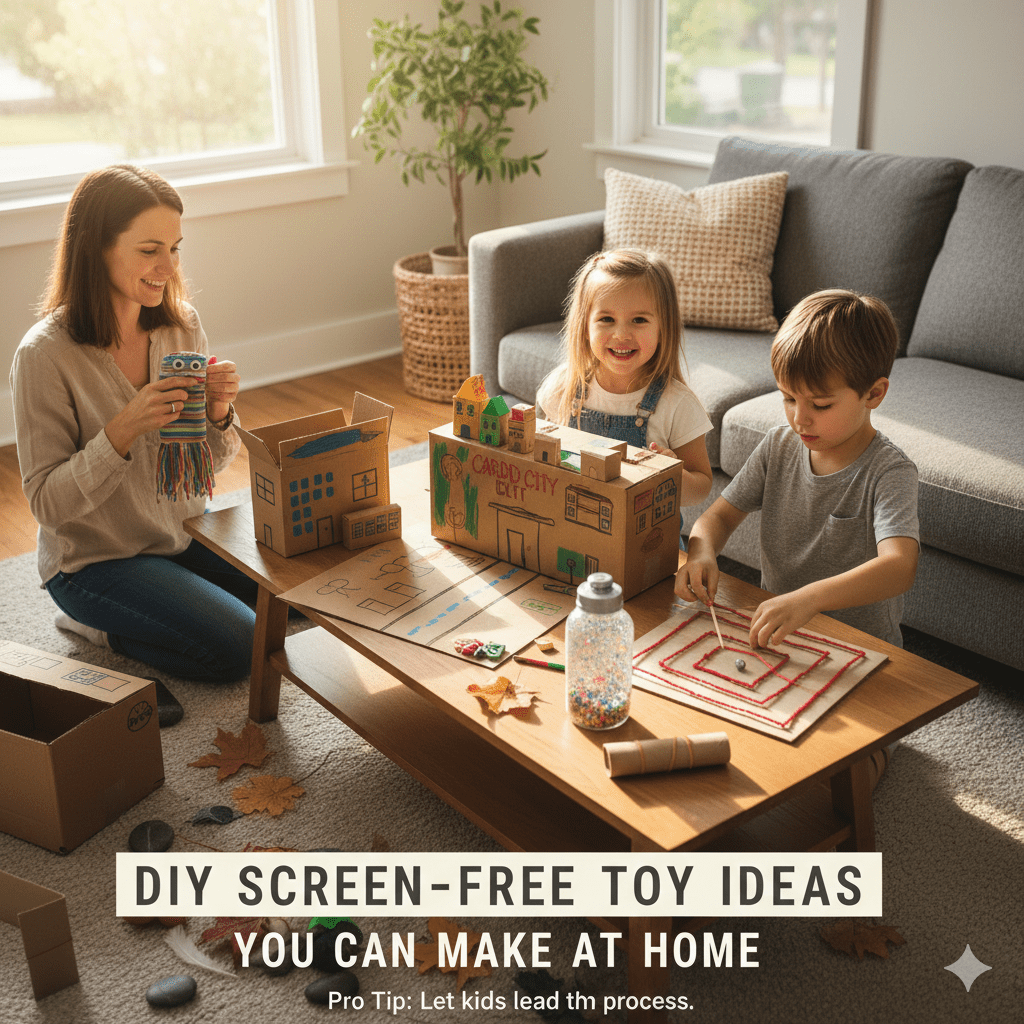
screen free toys are toys that encourage children to play, imagine, and learn without relying on digital screens or electronic devices.
These toys focus on hands-on interaction and creative thinking rather than passive entertainment.
Examples of screen free toys
Typical examples include:
- Building blocks
- Puzzles
- Wooden toys
- Board games
- Sensory toys
Instead of watching something happen on a screen, children actively participate in play.
According to the American Academy of Pediatrics, play-based learning is essential for early childhood development because it supports cognitive, emotional, and social growth.
screen free toys help create this type of healthy learning environment.
Why Screen-Free Play Is Important for Children
Children learn best through exploration and real-world experiences.
Watch this short video to understand why balancing technology with real play, physical toys, and creative activities is important for healthy child development.
This video explains the impact of screen time on children’s brains and why many experts encourage parents to limit device use during early childhood. It highlights the importance of hands-on play, real-world interaction, and screen free toys to support focus, creativity, and emotional development in kids.
The Harvard Center on the Developing Child explains that early experiences shape the architecture of the developing brain.
Activities that encourage curiosity, creativity, and interaction help build strong neural connections.
Screen-free play supports this development by allowing children to:
- Try new things and investigate concepts
- Learn through trial and error
- Interact with others
- Become confident and independent
When children play with toys, they are not just passing time.
They are learning how the world works, how to solve problems, communicate ideas, and manage emotions.
These experiences form the foundation for lifelong learning.
Psychological Benefits of Screen free toys
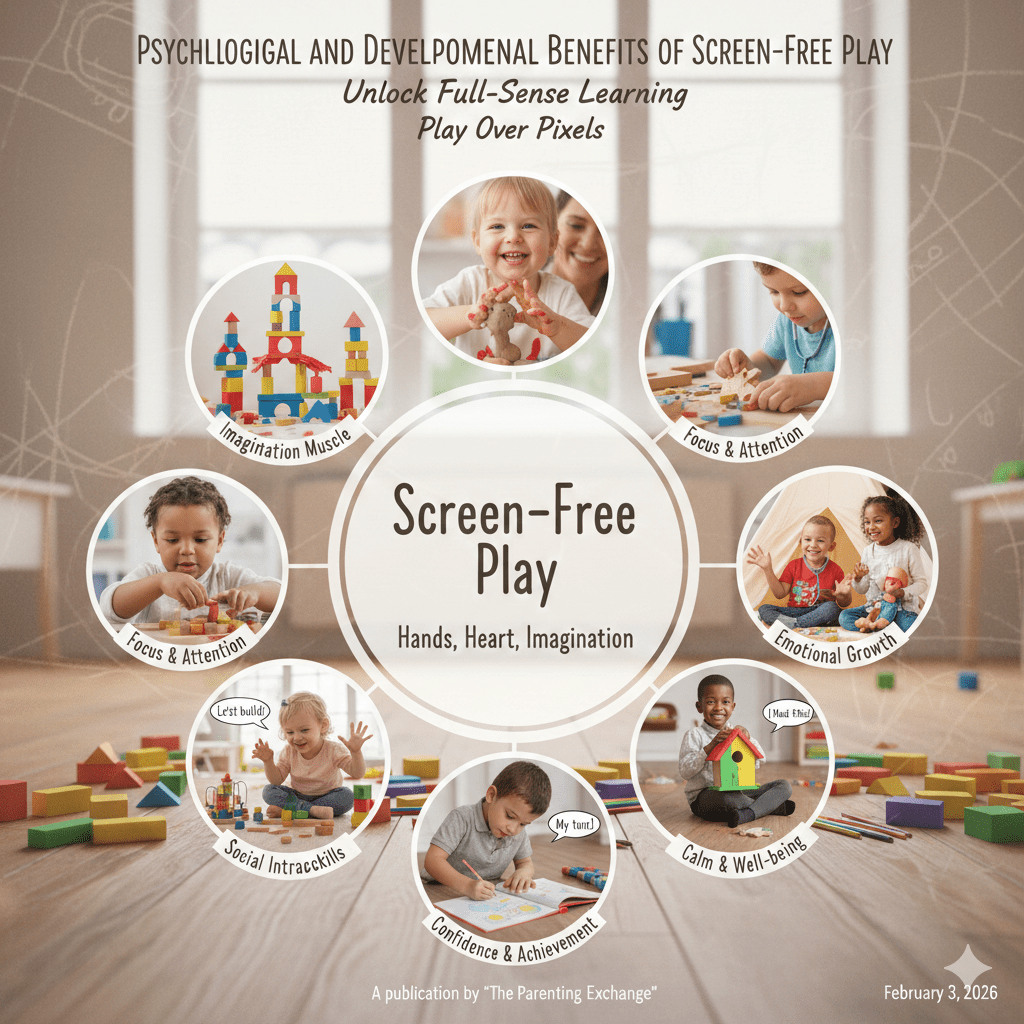
Hands-on play has powerful effects on a child’s mental and emotional development.
1. Encouraging Imagination and Creativity
Digital content often presents ready-made stories and characters.
But when children play with screen free toys, they create their own stories.
A few building blocks can become a castle, a spaceship, or a bridge.
A pretend kitchen can become a restaurant where children serve imaginary meals.
This type of imaginative play strengthens creativity and innovation.
Researchers often emphasize that open-ended play helps children become better problem solvers and independent thinkers.
2. Enhancing Attention and Focus
Reduced attention span is one of the major challenges parents face today.
Fast-moving digital content trains the brain to expect constant stimulation.
Screen-free toys encourage deep engagement instead.
Activities such as:
- puzzles
- building sets
- art projects
require patience and concentration.
Over time, children develop stronger focus and problem-solving skills.
3. Supporting Emotional Development
Play helps children understand and express their emotions.
During pretend play, children act out roles and situations that help them process feelings.
For example:
- pretending to be a doctor
- acting as a teacher
- playing family roles
Child psychologists often use play therapy because toys help children express emotions naturally.
4. Strengthening Motor Skills and Coordination
Many screen-free toys involve physical movement.
Activities like:
- stacking blocks
- threading beads
- shaping clay
help develop:
- fine motor skills
- hand-eye coordination
- body awareness
Strong motor skills are important for everyday tasks such as writing and drawing.
5. Encouraging Social Skills and Communication
Screen time is often a solitary activity.
Play with toys usually involves interaction with others.
Children naturally practice:
- sharing
- negotiation
- communication
- teamwork
Board games and collaborative play encourage conversation and cooperation.
Choosing Screen free toys by Age
Children’s interests and abilities change as they grow. Choosing toys that match their developmental stage keeps play engaging.
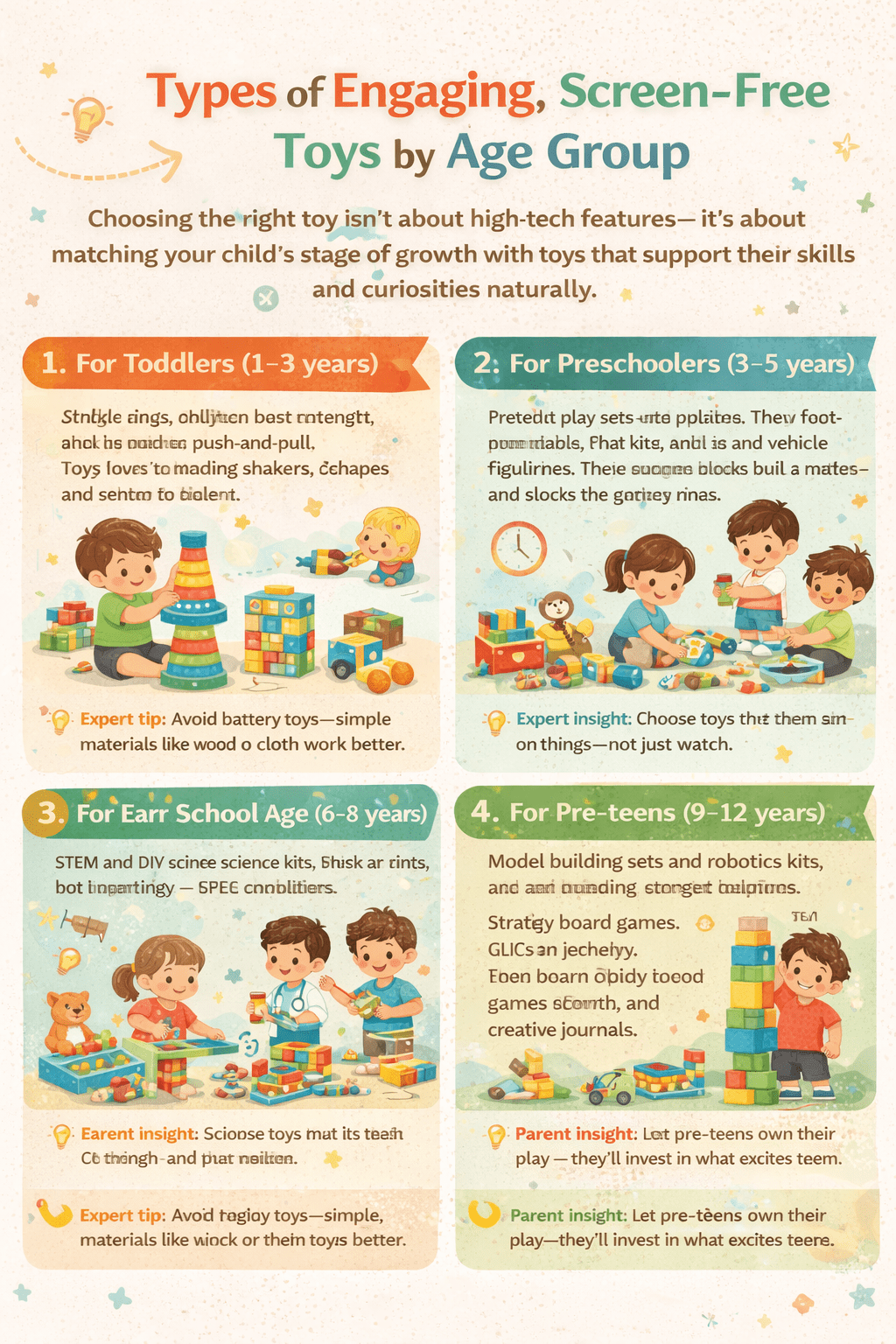
Toddlers (1–3 Years)
Recommended toys:
- stacking rings
- soft building blocks
- push-and-pull toys
- shape sorters
- sensory balls
These toys help toddlers develop balance and coordination.
Preschoolers (3–5 Years)
Good toy options include:
- pretend play sets
- puzzles
- play dough
- craft kits
- animal figurines
These toys encourage creativity and emotional expression.
Early School Age (6–8 Years)
Recommended toys:
- construction sets
- STEM kits
- art supplies
- board games
- beginner musical instruments
These toys support logical thinking and creativity.
Pre-Teens (9–12 Years)
Examples include:
-
- robotics kits
- model building sets
- strategy board games
- creative journals
- sports equipment
These activities promote independence and confidence.
Simple DIY Screen free toys Ideas for Families
Parents do not always need expensive toys to create meaningful play.
Some engaging activities include:
Sensory Bottles
Fill a clear bottle with water, glitter, and beads.
This short video shows how parents can create DIY sensory bottles using simple household materials.
Sensory bottles are a fun screen-free activity that helps children explore colors, movement, and textures while supporting focus and sensory development.
Cardboard Cities
Use cardboard boxes to create houses or castles.
Sock Puppets
Transform old socks into puppets for storytelling.
Nature Treasure Hunts
Ask children to collect leaves, stones, or flowers.
These simple activities show that creativity does not require expensive toys.
Practical Tips for Reducing Screen Time
Small daily changes can help reduce screen dependence.
Create Screen-Free Zones
Keep bedrooms and dining areas free of devices.
Offer Creative Alternatives
Provide puzzles, craft materials, and toys.
Be a Role Model
Children imitate adult behavior.
Start Gradually
Increase screen-free playtime step by step.
Frequently Asked Questions
What are screen free toys?
Toys that encourage play and learning without digital devices.
Why are screen free toys important?
They help develop creativity, focus, and emotional intelligence.
Can screen free toys improve attention span?
Yes. Activities like puzzles help children practice concentration.
How can parents reduce screen time?
Replace digital entertainment with creative play and outdoor activities.
Are screen free toys good for brain development?
Yes. Play-based learning strengthens neural connections in the brain.
Final Thoughts: Bringing Back the Joy of Real Play
Technology is part of modern life, but childhood should still include plenty of opportunities for real play.
screen free toys encourage children to explore creativity, develop life skills, and build meaningful relationships.
The best childhood memories are rarely created by watching screens.
They are created through imagination, laughter, and shared experiences.
At ZaminoToys, we aim to help parents make thoughtful choices that support healthy childhood development.
Because the best toys do more than entertain.
They help children learn, grow, and thrive.
ZaminoToys Research Team
The ZaminoToys Research Team writes evidence-based parenting guides focused on child development, meaningful play, and educational toys. Our articles are created after reviewing research from trusted organizations such as the American Academy of Pediatrics (AAP), Harvard Center on the Developing Child, and UNICEF.
Our goal is to help parents make informed decisions about toys, screen time, and healthy childhood development.