
The Story Behind Real Playtime
Let’s be honest — screens are everywhere.
From the moment our kids wake up to the time they go to bed, glowing rectangles surround them. They watch, tap, scroll, and swipe like tiny tech experts.
As a parenting advisor and toy enthusiast, I’ve seen this story repeat across homes worldwide — children glued to screens while a box of colorful toys lies untouched in the corner.
But here’s the good news: kids haven’t forgotten how to play. They’ve just been distracted. The joy of building, imagining, and creating is still in them — waiting for a little spark. That spark often comes from something simple: engaging, screen free toys.
These toys do more than just entertain — they bring back connection.
They help kids talk, laugh, explore, and learn in ways screens simply can’t replicate.
At Zaminotoys.in, we celebrate that magic. We believe toys should do more than light up — they should light up minds.
So, let’s explore together how engaging, screen free toys can help your child grow happier, smarter, and more imaginative — one playtime at a time.
The Hidden Power of Screen-Free Play
When I first started working with parents, many told me,
“Toys no longer hold my child’s attention; it’s difficult to get them off the screen.”
It’s true. Digital games are designed to be addictive. But what they don’t do is build real-world skills.
Here’s why screen-free play matters:
- It builds creativity.
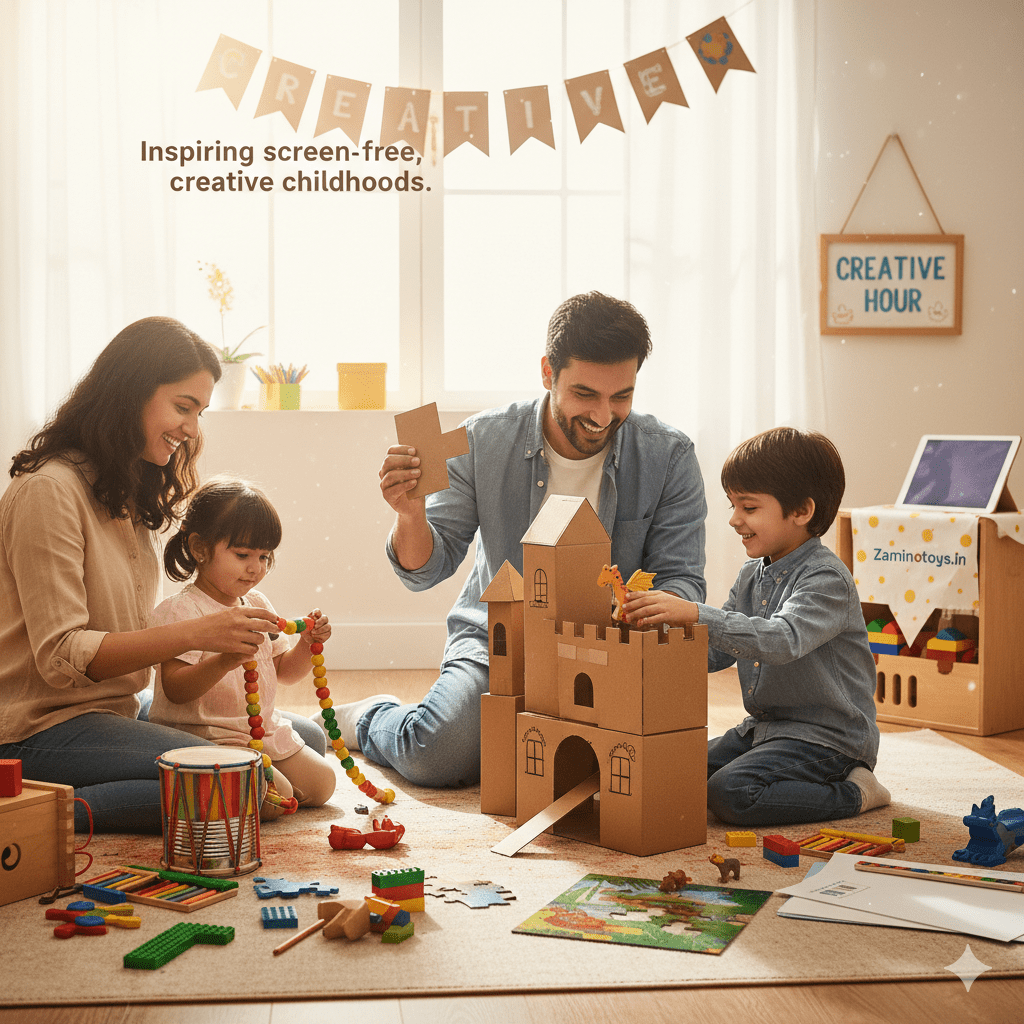
When kids play without screens, their imagination fills the gaps. A wooden spoon becomes a magic wand, a cardboard box turns into a castle.
That’s real learning — powered by curiosity, not pixels. - It strengthens attention span.
Screen activities change every few seconds. That shortens attention.
But playing with engaging, screen free toys — like puzzles, LEGO bricks, or art kits — teaches patience and focus. - It boosts emotional health.
Children who engage in hands-on play learn to handle frustration (“my tower fell!”), joy (“I did it!”), and teamwork (“let’s build together!”).
This emotional growth doesn’t happen through digital rewards — it happens through real experiences. - It improves motor and cognitive skills.
From stacking blocks to threading beads, these small movements shape coordination, balance, and confidence. - It connects families.
Screen-free play is bonding time. Parents, siblings, and friends get to share laughter and memories that last longer than any YouTube video.
So, if you’re wondering whether engaging, screen free toys really make a difference — they absolutely do.
They don’t just keep kids busy — they help them become who they’re meant to be.
Psychological and Developmental Benefits of Screen-Free Play
When I talk with parents around the world, one thing stands out:
Every child learns best when their hands, heart, and imagination are working together.
That’s exactly what engaging, screen free toys encourage — full-sense learning. It’s not about keeping kids “busy” but about helping them build brains, emotions, and creativity naturally.
Let’s explore what really happens inside your child’s mind and body when you choose play over pixels.
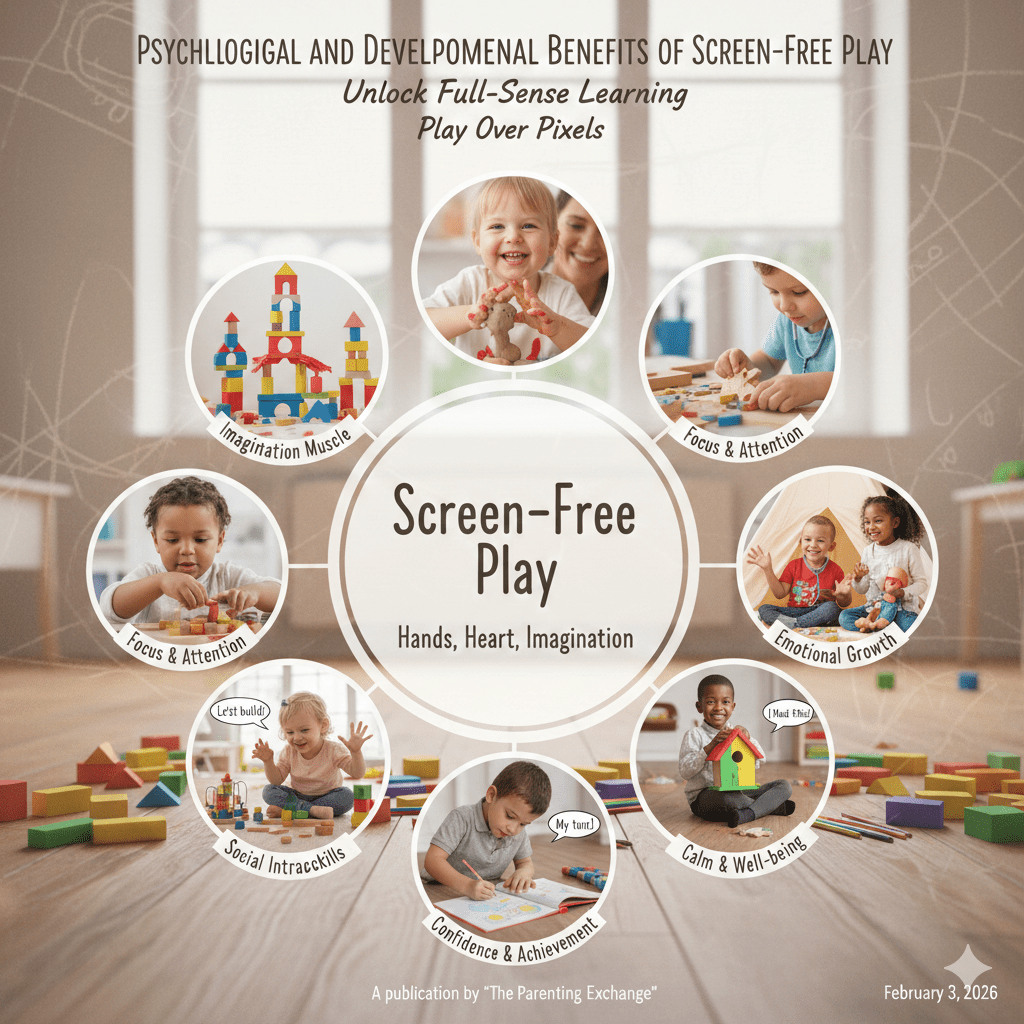
1. Strengthening the Imagination Muscle
When kids stare at screens, everything is ready-made — characters, colors, and stories.
But in the world of screen free toys, imagination is the hero.
Give a child a few building blocks, and you’ll see endless possibilities — a house today, a spaceship tomorrow.
That kind of open-ended play stimulates the right side of the brain, where creativity and innovation live.
Researchers say imaginative play builds problem-solving skills, empathy, and abstract thinking — all the skills your child will need for life.
When your child plays with engaging, screen free toys, they’re not just having fun. They’re learning how to think outside the box — sometimes literally!
2. Boosting Focus and Attention Span
One of the biggest challenges parents face today is short attention span.
Screens feed the brain with constant movement — fast cuts, bright lights, and instant rewards.
But when a child engages in screen free play, the pace slows down.
They learn to focus on one thing for longer periods, whether it’s solving a puzzle, finishing a LEGO model, or completing a craft.
That steady concentration builds mental endurance, which later helps in school, reading, and everyday life.
Engaging, screen free toys like construction sets, stacking blocks, and art kits naturally train the mind to stay calm, patient, and goal-oriented.
3. Supporting Emotional Growth
Children express emotions best through play.
In pretend play, they act out roles, experiment with feelings, and make sense of the world.
Imagine your child pretending to be a doctor or a teacher — they’re learning empathy, understanding social rules, and gaining confidence.
Screen free toys give children the power to process emotions naturally — joy, disappointment, curiosity, pride — all through play that feels real.
It’s why child psychologists often use play therapy — toys are the language of the heart.
When your child plays with engaging, screen free toys, they are not escaping reality — they’re understanding it better.
4. Building Motor Skills and Body Awareness
Every movement during play teaches coordination.
When a child threads beads, shapes clay, or builds a block tower, tiny muscles in their hands and fingers get stronger — improving handwriting and self-control later on.
For younger children, large movement play (rolling, stacking, balancing) improves gross motor skills and body confidence.
Engaging, screen free toys such as wooden blocks, sorting games, and play dough give a full-body workout — without them even realizing it!
Unlike tapping a tablet, physical play strengthens both body and brain connections.
5. Encouraging Social Interaction and Language Skills
Screens often isolate. Kids become quiet observers rather than active talkers.
But during hands-on play, conversation naturally flows:
“Let’s build together,” “Can I have that block?” “What should we name this?”
This kind of interactive play teaches cooperation, sharing, and communication — real social skills that no app can teach.
Whether your child is playing with siblings, friends, or parents, engaging, screen free toys turn playtime into teamwork.
You’ll notice something magical: children who talk more during play often develop better vocabulary and emotional understanding.
6. Reducing Stress and Supporting Mental Health
We don’t talk about this enough — even children feel stress.
Fast-paced digital content overstimulates young minds, leading to irritability and sleep issues.
But when kids spend time with screen free toys, their nervous system slows down.
They enter a relaxed, mindful state — just like meditation for adults.
Activities like coloring, clay modeling, or stacking toys have a calming rhythm. They release tension and encourage emotional balance.
That’s why therapists often recommend engaging, screen free toys as part of sensory and mindfulness play for children.
7. Building Confidence Through Achievement
Nothing boosts confidence like saying, “I made this myself!”
When a child completes a puzzle, builds a tower, or finishes an art project, they feel proud. That sense of achievement shapes self-esteem and resilience.
Screens give instant success — but it’s not earned.
Hands-on play gives children the joy of effort, patience, and reward — real confidence that grows from doing, not watching.
Every time your child picks up engaging, screen free toys, they’re learning that success comes from creativity, not clicks.
A Parent’s Perspective
I’ve seen this transformation firsthand.
A mother once told me her 6-year-old was addicted to a tablet game. He barely played outdoors. So she replaced screen time with craft sessions and sensory toys.
At first, he resisted. But soon, he began making paper airplanes, painting, and building forts. Within weeks, his focus and mood improved.
That’s the power of engaging, screen free toys — they don’t just fill time, they fill lives with growth, imagination, and balance.
Types of Engaging, Screen Free Toys by Age Group
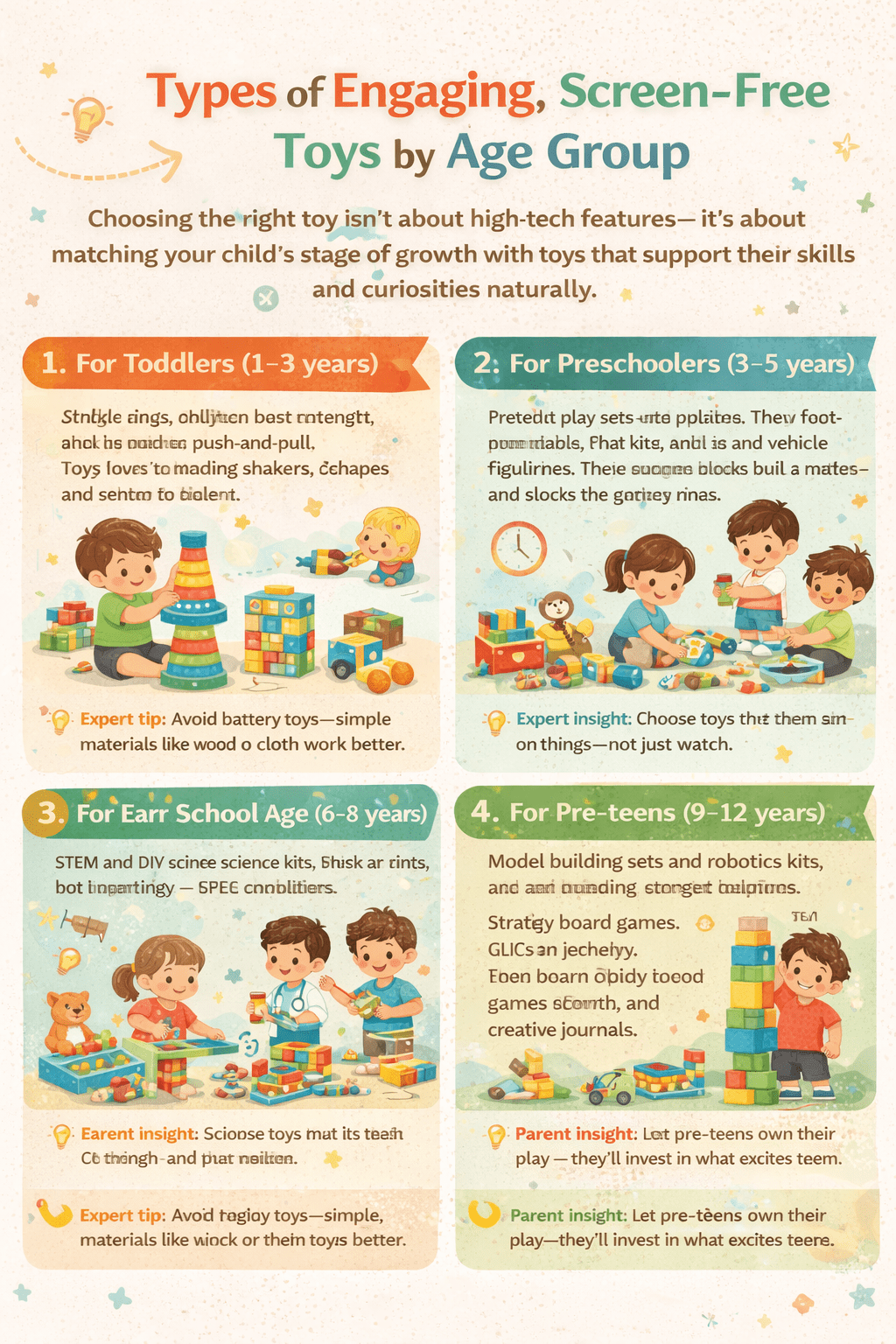
Choosing the right toy isn’t about how colorful or high-tech it is — it’s about how it connects with your child’s stage of growth.
Each age comes with new skills, curiosities, and challenges. The best engaging, screen free toys are those that match those needs naturally.
Let’s explore age by age.
1. For Toddlers (1–3 years)
At this stage, children learn through touch, sound, and movement. They love to explore textures, shapes, and cause-and-effect.
Best engaging, screen free toys for toddlers:
- Stacking rings and nesting cups – build motor coordination and size awareness.
- Soft building blocks – safe for creative play and hand-eye coordination.
- Push-and-pull toys – help toddlers balance and develop walking confidence.
- Musical shakers or drums – introduce rhythm, listening, and joy.
- Shape sorters and sensory balls – stimulate touch and cognitive growth.
💡 Expert tip: Avoid flashy or noisy battery toys at this age. Simple materials like wood or cloth work better for concentration and calm play.
2. For Preschoolers (3–5 years)
Preschoolers are storytellers. They love pretending, building, and asking endless questions. Their imagination is at its peak — and that’s the perfect time for screen free toys that encourage role play and problem-solving.
Best toys for preschoolers:
- Pretend play sets (doctor kits, kitchen sets, tool benches) – build confidence and empathy.
- Simple board games – teach patience and following rules.
- Craft kits and play dough – spark creativity and sensory learning.
- Animal or vehicle figurines – inspire storytelling and imagination.
- Building blocks and magnetic tiles – support early math and design thinking.
💡 Expert insight: Preschoolers thrive on interaction. Choose toys that let them do things — not just watch things happen.
3. For Early School Age (6–8 years)
This is the age where curiosity meets capability. Kids want to know “how” things work and love challenges that test their minds.
Engaging, screen free toys for this age:
- STEM and DIY science kits – fuel curiosity and logical thinking.
- Art sets and origami kits – promote creativity and patience.
- Construction toys (LEGO, magnetic sets) – support design and spatial awareness.
- Musical instruments (keyboard, xylophone, ukulele) – introduce rhythm and coordination.
- Board games and puzzles – build critical thinking and teamwork.
💡 Expert note: Kids at this stage crave independence. Offer toys that make them feel capable — like small projects they can finish alone.
4. For Pre-teens (9–12 years)
Pre-teens often drift toward screens because they seek stimulation and social connection. But they still love creativity when it feels “grown-up.”
Best engaging, screen free toys for pre-teens:
- Model building sets and robotics kits – challenge intellect and patience.
- Strategy board games – develop focus and decision-making.
- DIY crafts or jewelry kits – give space for self-expression.
- Outdoor sports equipment – promote teamwork and confidence.
- Science experiments and creative journals – encourage curiosity and reflection.
💡 Parent insight: Let them choose. Give pre-teens ownership of their play. They’ll naturally invest time in what excites them.
DIY Screen-Free Toy Ideas You Can Make at Home
You don’t always need fancy toys to engage kids. Some of the best screen free toys are made right at home — simple, inexpensive, and full of creative joy.
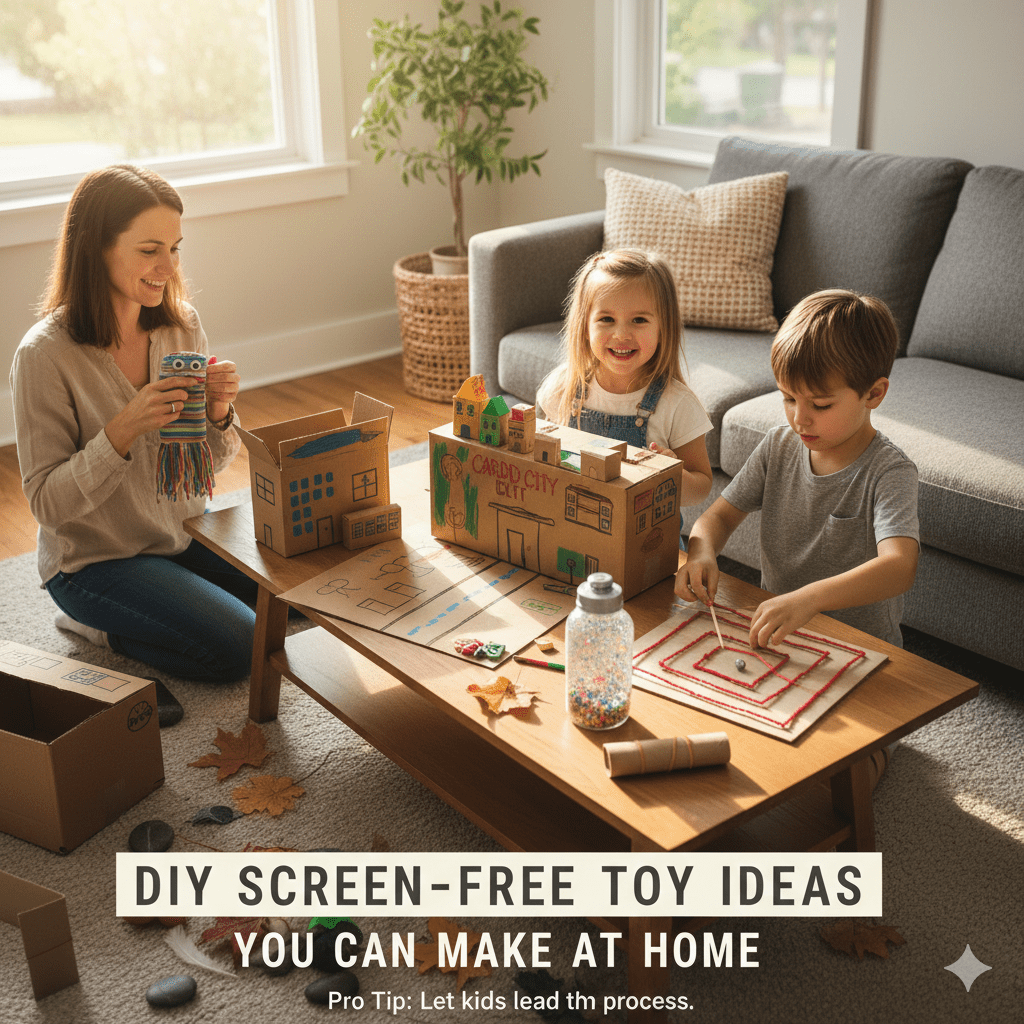
Here are a few of my favorite DIY ideas that families can make together.
1. The Sensory Bottle
Fill a clear bottle with water, glitter, and small beads. Seal it tight.
Let your child shake and watch the “magic” settle.
It’s soothing, helps with focus, and can calm anxiety — like a mindfulness tool for kids.
2. Cardboard City
Collect old boxes, cut out shapes, and build a tiny town — houses, roads, even a school!
Paint or color them together.
This simple craft teaches teamwork, spatial design, and storytelling.
3. Paper Plate Maze
Draw a maze pattern on a paper plate and create walls using straws or yarn.
Use a marble or small ball to navigate through it.
Perfect for hand-eye coordination and fun competition.
4. Sock Puppets
Turn old socks into cute puppets using buttons, cloth, and glue.
Then host a mini puppet show!
This activity improves creativity, communication, and emotional expression.
5. Nature Treasure Hunt
Take your child outdoors. Give them a list of things to find — a yellow leaf, a smooth stone, a feather.
This builds observation, focus, and a love for nature.
6. DIY Musical Instruments
Use paper rolls, rubber bands, and rice to create homemade maracas or guitars.
Let your little musician create their own rhythm and joy — zero screen needed!
💡 Pro Tip: Let kids lead the process. When they create toys themselves, they value them more. DIY play naturally turns into mindful, engaging, screen free play time.
Expert Tips for Reducing Screen Time
Let’s be real — completely banning screens isn’t realistic. But balancing them is possible.
Here’s how parenting experts and educators recommend doing it gently — without resistance or guilt.
1. Set “Screen-Free Zones”
Make mealtimes, bedrooms, and family play areas screen-free.
When you remove the device, fill that time with engaging, screen free toys — puzzles, art, or family games.
2. Replace, Don’t Restrict
Kids don’t like being told “no.”
Instead of taking the screen away, offer an alternative — “Let’s build something fun,” or “Let’s make a craft challenge.”
When the replacement feels exciting, resistance disappears.
3. Model the Behavior
Children copy what they see.
If parents scroll during dinner, kids learn the same.
Show them that offline joy exists — read a book, paint, or build something together.
4. Start with 30 Minutes a Day
You don’t need to go cold turkey.
Start with just half an hour of screen free play daily. Gradually extend it.
Make it part of your family routine — “creative hour,” “build time,” or “toy zone.”
5. Choose Engaging Toys Over Passive Ones
When kids truly enjoy their toys, screens lose appeal naturally.
Invest in open-ended, engaging, screen free toys that grow with your child — like magnetic tiles, STEM kits, or crafts that can be reused.
6. Involve the Whole Family
Play together. Parents, siblings, and grandparents included.
Shared laughter and bonding make screen-free moments meaningful and memorable.
7. Celebrate Small Wins
Did your child spend 45 minutes painting instead of watching a cartoon? Celebrate it!
Positive reinforcement encourages more of that behavior.
💡 Remember: Reducing screens isn’t about taking fun away — it’s about bringing back joy, creativity, and connection through play that feels alive.
FAQs
Q1. What are engaging, screen free toys?
Engaging, screen free toys are play items that capture a child’s attention through imagination, creativity, and hands-on activity — without any digital screens or electronics. Examples include puzzles, building blocks, craft kits, and pretend play sets.
Q2. Why are screen free toys important for kids?
They help children focus better, think creatively, and build real-world skills. Unlike screens, engaging, screen free toys encourage movement, social interaction, and emotional development.
Q3. How do I reduce my child’s screen time using toys?
Start with short play sessions using exciting, hands-on toys like art sets or sensory kits. Gradually replace digital time with creative playtime that feels rewarding.
Q4. Are screen free toys good for learning?
Absolutely! They build problem-solving, coordination, and curiosity — all essential for learning. Many screen free toys are designed around STEM, art, or sensory play principles.
Q5. What are the best screen free toys for different ages?
- Toddlers: Stacking toys, sensory balls, and musical shakers
- Preschoolers: Pretend play kits, puzzles, art sets
- School-age kids: STEM kits, board games, building blocks
- Pre-teens: Model sets, craft kits, and strategy games
Q6. Can screen free toys improve focus and patience?
Yes. Toys that require building, painting, or solving help kids slow down, think deeply, and complete tasks step by step — boosting attention and patience.
Q7. Where can I find engaging, screen free toys online?
You can explore Zaminotoys.in, where we share handpicked toy ideas, DIY crafts, and creative play guides for families worldwide.
In today’s digital world, good information needs to reach parents in a proper way. Platforms such as One Web One Hub help small toy and learning brands promote better products for kids. You can check their website here:
Final Thoughts: Let’s Bring Back the Real Joy of Play
As parents, we can’t change the digital world — but we can balance it.
We can remind our children that the best memories are made with hands, hearts, and imagination — not screens.
Engaging, screen free toys don’t just fill time.
They build patience, laughter, curiosity, and confidence. They bring families closer.
So next time you’re about to hand over a tablet, pause for a second — and hand them a puzzle, some clay, or a cardboard box instead.
You’ll see it: the spark, the smile, the story starting to unfold.
That’s what real play looks like.
Zaminotoys.in – Inspiring screen-free, creative childhoods through toys that make learning joyful again.