Newborn
Infant
Toddler
Preschooler
Early childhood
School age
Ages & Stages of : Your Complete Parenting Guide
Every stage of childhood brings new experiences, exciting discoveries, and important milestones. From a baby’s first smile to their first words and early learning skills, each moment plays a key role in growth and development. At ZaminoToys, we help parents understand these changes through a simple and easy-to-follow Child Development Timeline designed for every age and stage. This page covers the complete journey from Newborn (0–3 months) to School Age (6+ years). Parents can explore developmental milestones for infants, toddlers, preschoolers, and young children, including physical growth, communication skills, social development, emotional learning, and everyday achievements. Our timeline is based on trusted child development guidelines, making it easier for families to know what to expect as their child grows.
Parenting becomes easier when you understand your child’s development journey. Whether you are tracking milestones, looking for age-appropriate guidance, or simply learning more about your child’s growth, this resource is here to support you. Explore each stage, celebrate every milestone, and make every moment of childhood more meaningful with ZaminoToys.
Milestone Timeline — Birth to 6 Years
A child’s early years are filled with incredible growth, learning, and discovery. Our Child Development Timeline helps parents understand important milestones from birth to 6 years, making it easier to follow their child’s physical, emotional, social, and cognitive development. From a newborn’s first smile and eye contact to a preschooler’s communication and learning skills, every stage brings exciting changes that shape a child’s future.
This Child Development Timeline covers key ages and stages, including newborn, infant, toddler, preschooler, and early childhood development. Based on trusted child development guidelines, it provides parents with age-appropriate insights and milestone information to support healthy growth. Explore each stage, celebrate every achievement, and enjoy the rewarding journey of watching your child grow with confidence and happiness.
Newborn Development
Discover newborn milestones including tummy time, bonding, feeding schedules, and sensory development.
Explore →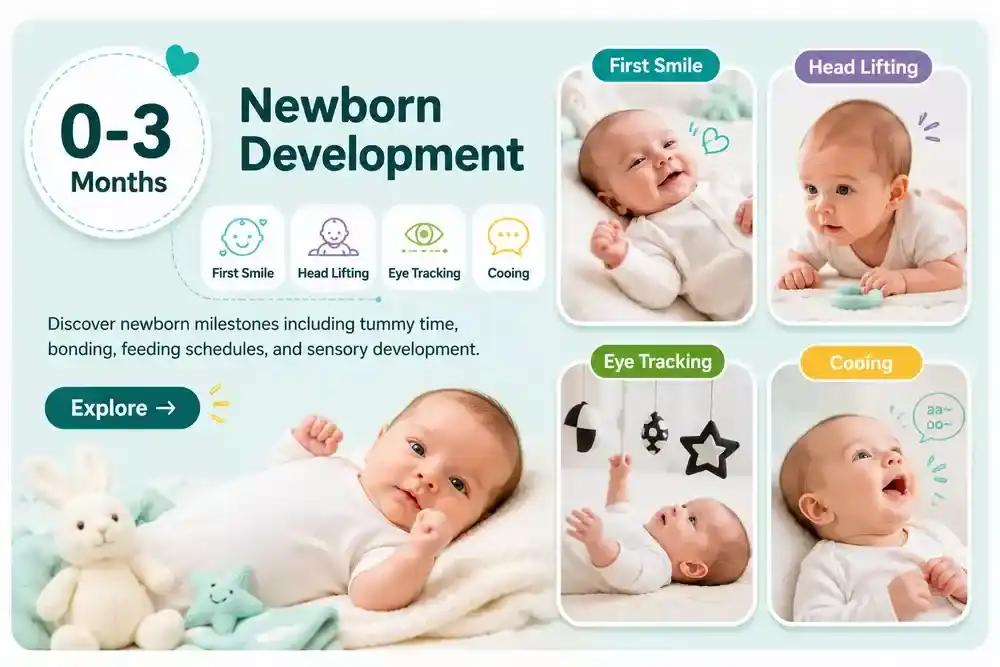
Infant Growth & Learning
Learn about movement, communication, sensory play, and early food readiness milestones.
Explore →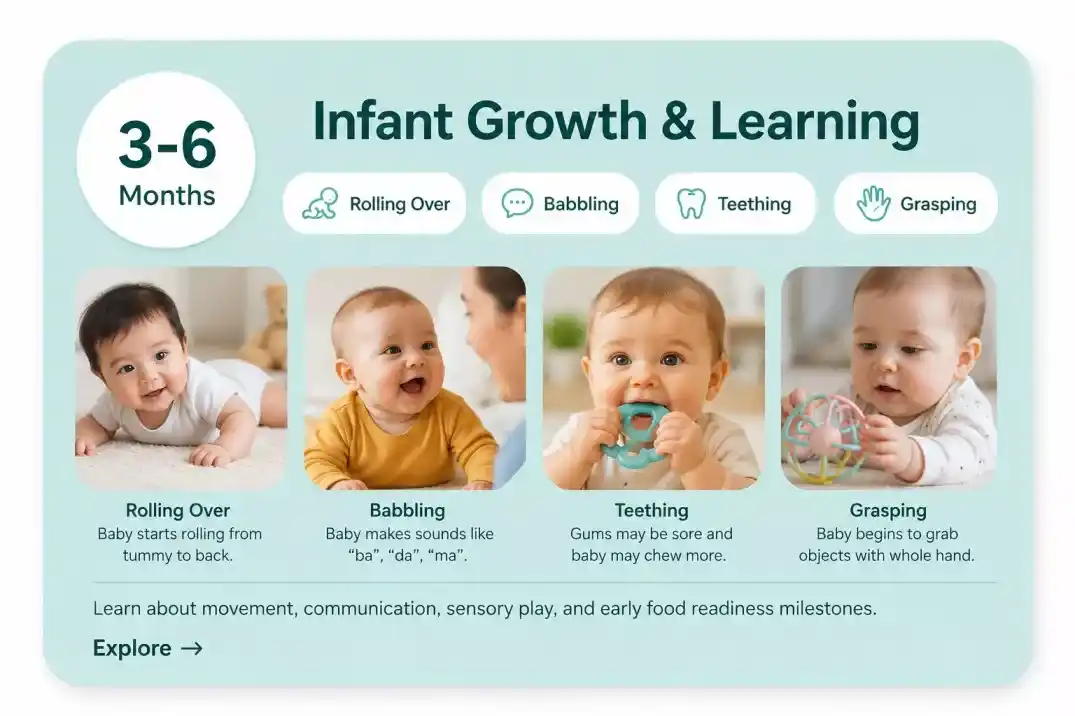
Sitting & Crawling Stage
Explore crawling, standing support, finger foods, and communication development milestones.
Explore →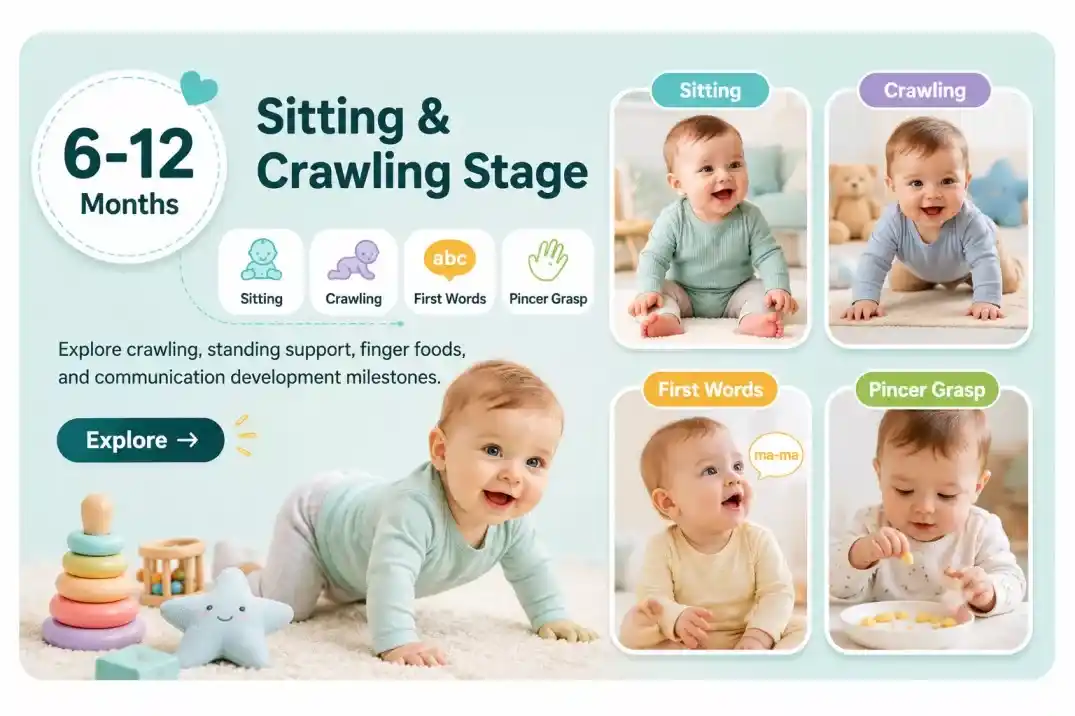
Toddler — 1 to 2 Years
Explore toddler milestones including walking, speech development, emotional growth, nutrition, and play learning.
Explore →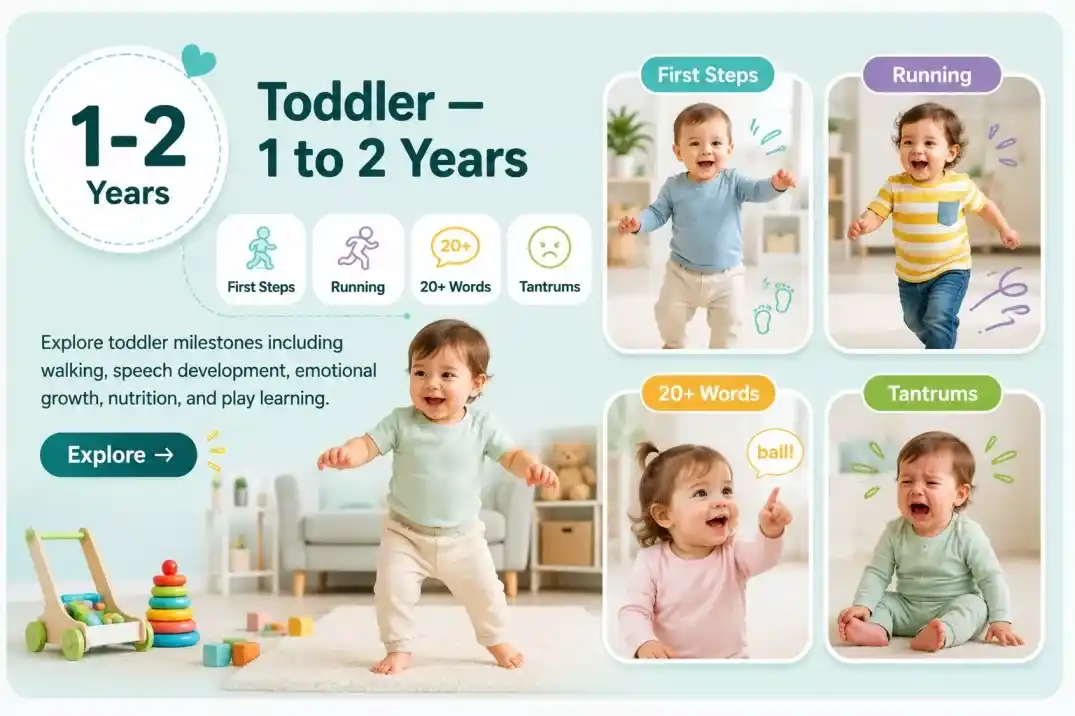
Preschooler — 2 to 4 Years
Explore preschool milestones including language growth, creativity, social skills, learning activities, and emotional development.
Explore →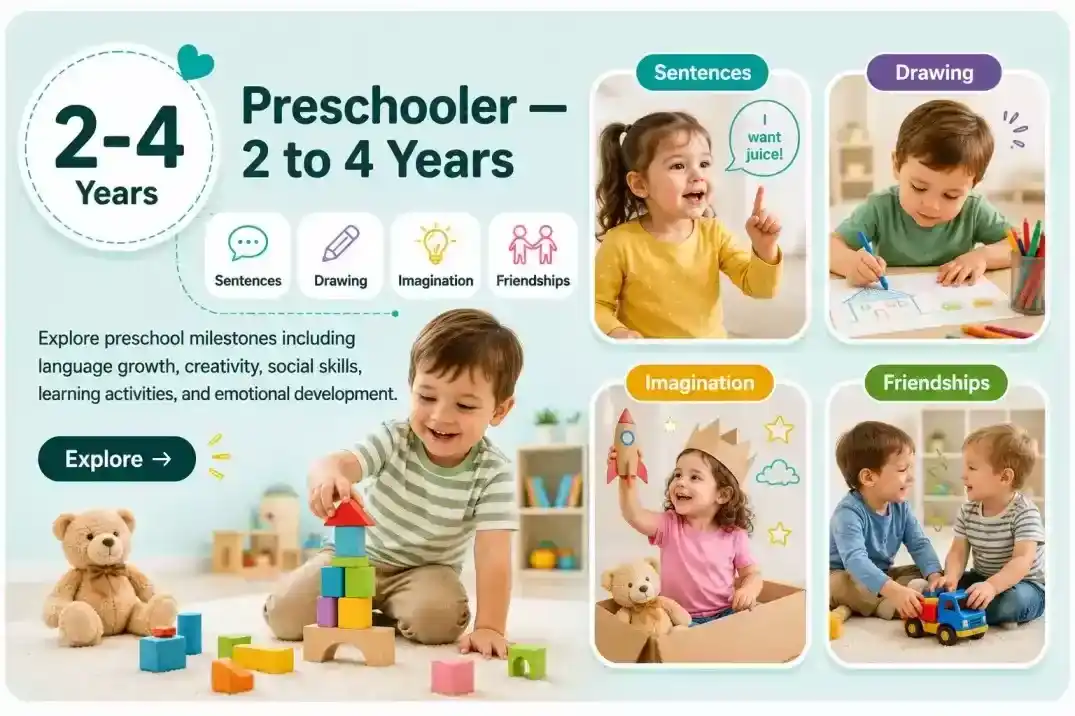
School Ready — 4 to 6 Years
Explore school readiness, confidence building, creativity, emotional growth, learning skills, and social development.
Explore →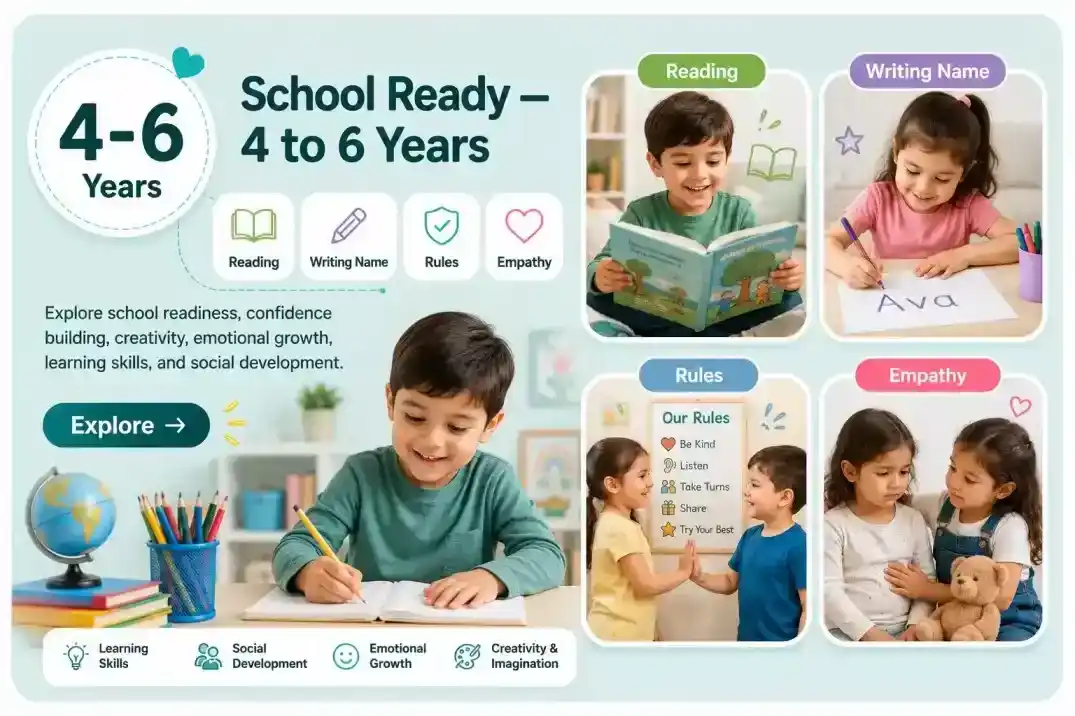
Why Child Development Milestones Matter: A Parent's Guide to Healthy Growth
Understanding your child’s growth is one of the most important parts of parenting. Every child learns new skills as they grow, from smiling and crawling to speaking, learning, and building friendships. A Child Development Timeline helps parents understand these changes and provides a clear picture of what to expect during each stage of childhood. By knowing the milestones associated with different age groups, parents can better support their child’s physical, emotional, social, and cognitive development.
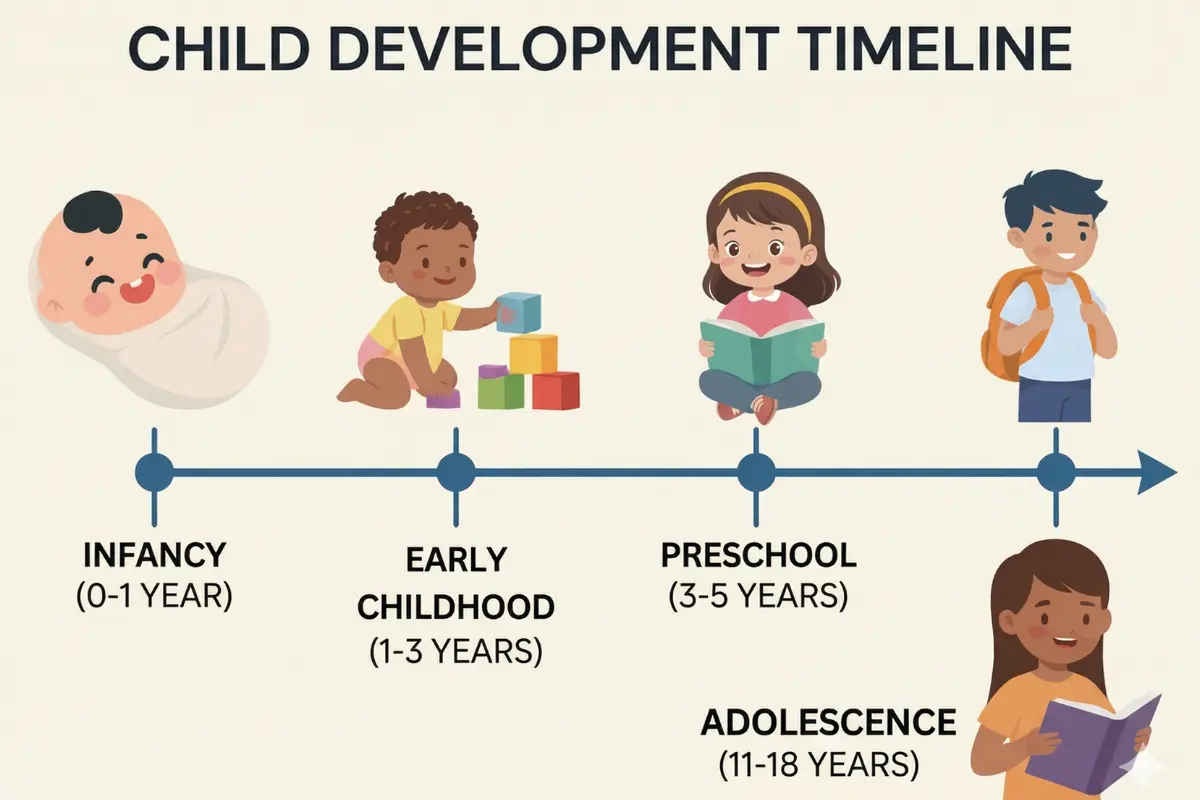
Tracking milestones does not mean comparing children with one another. Instead, it helps families recognize progress and celebrate achievements along the way. A well-structured Child Development Timeline allows parents to identify strengths, encourage learning opportunities, and seek guidance if they have concerns about their child’s development. Early awareness can play an important role in supporting healthy growth and building confidence in both children and parents.
At ZaminoToys, we believe that every milestone is worth celebrating. From birth to 6 years and beyond, understanding child development helps create a strong foundation for lifelong learning and success. By staying informed and actively involved in your child’s journey, you can provide the encouragement, care, and support they need to reach their full potential. Every small step today contributes to a brighter future tomorrow.
Every child develops and learns at their own rate, which means that it is natural for developmental milestones to differ among children. However, parents should be attentive if their child repeatedly has trouble achieving age-appropriate milestones in areas such as movement, communication, learning, or socializing. Certain signs may suggest the need for professional help, such as not reacting to sounds or sights, limited eye contact, delayed speech or language skills, difficulty with movement or coordination, or challenges in interacting with family or other children. Although occasional delays do not always point to a serious issue, keeping track of a child’s progress can help ensure they get the support they need.
Parents should also consult a pediatrician if their child loses skills they had previously mastered, such as speaking words, responding to their name, or performing familiar tasks. Recognizing developmental issues early can help families obtain evaluations, therapies, and resources that support children in reaching their full potential. Routine health checkups and clear communication with healthcare providers are essential for monitoring a child’s development and spotting any problems early. With timely support and intervention, many children can make meaningful progress and keep developing key physical, cognitive, social, and emotional abilities throughout their childhood.
How Nutrition Supports Healthy Child Development
Good nutrition plays a vital role in child development, providing the nutrients children need for healthy growth, learning, and overall well-being. During the early years, a child’s brain and body develop rapidly, making balanced nutrition especially important. Essential nutrients such as protein, iron, calcium, healthy fats, vitamins, and minerals support child brain development, strengthen bones and muscles, and help children build strong immune systems. A nutritious diet gives children the energy they need to learn, play, and reach important developmental milestones.
Healthy eating habits established during childhood can have a lasting impact on a child’s growth and development. Parents can support healthy growth in children by offering a variety of fruits, vegetables, whole grains, dairy products, and protein-rich foods. Age-appropriate nutrition is also important, as babies, toddlers, preschoolers, and school-age children have different nutritional needs. Providing balanced meals and healthy snacks helps children develop positive eating habits that support both physical and cognitive development.






Hydration is another essential part of nutrition and child development. Drinking enough water helps regulate body temperature, supports digestion, improves concentration, and keeps children active throughout the day. Combined with a balanced diet and healthy lifestyle, proper hydration contributes to overall health and development. By encouraging nutritious food choices and healthy eating routines, parents can help build a strong foundation for lifelong health, learning, and successful child development.
Why Sleep Is Important for Growing Children
Babies typically need the most sleep, while toddlers, preschoolers, and school-age children sleep. Sleep plays a vital role in child development, supporting healthy growth, brain function, learning, and emotional well-being. During sleep, a child’s body works hard to repair tissues, strengthen the immune system, and release important growth hormones that support physical development. Children of different ages have different sleep requirements, making it important for parents to understand child sleep needs by age. Children require consistent sleep routines to support their changing developmental needs.

The relationship between sleep and child development extends beyond just physical health.Good sleep helps children understand new information, remember things, and build important thinking skills. Children who get enough rest are more likely to pay attention, learn, solve problems, and do well in school and daily activities. Sleep is also key for developing a healthy brain, which is a vital part of a child’s growth.
Newborn sleep
16-18h
3-6 Months
14-16h
6-12 Months
12-15h
1-2 years
11-14h
Getting enough sleep is also important for managing emotions and behaving well.Children who are well-rested are better at controlling their feelings, dealing with difficulties, and getting along with others. On the other hand, not getting enough sleep can cause mood changes, irritability, and trouble focusing. Creating a bedtime routine, limiting screen time before bed, and making the sleep environment comfortable can help children develop good sleep habits. By focusing on sleep, parents can support overall child development and set the stage for long-term learning, growth, and well-being.
How Play Helps Children Learn and Grow
Play is one of the most important parts of child development, helping children learn, grow, and explore the world around them. Through play, children develop essential physical, cognitive, social, and emotional skills that support healthy growth throughout childhood. Whether it is imaginative play, outdoor activities, educational games, or interactive toys, play provides valuable learning experiences that encourage curiosity, creativity, and confidence. At ZaminoToys, we believe that play is more than entertainment it is a powerful tool that supports every stage of child development.
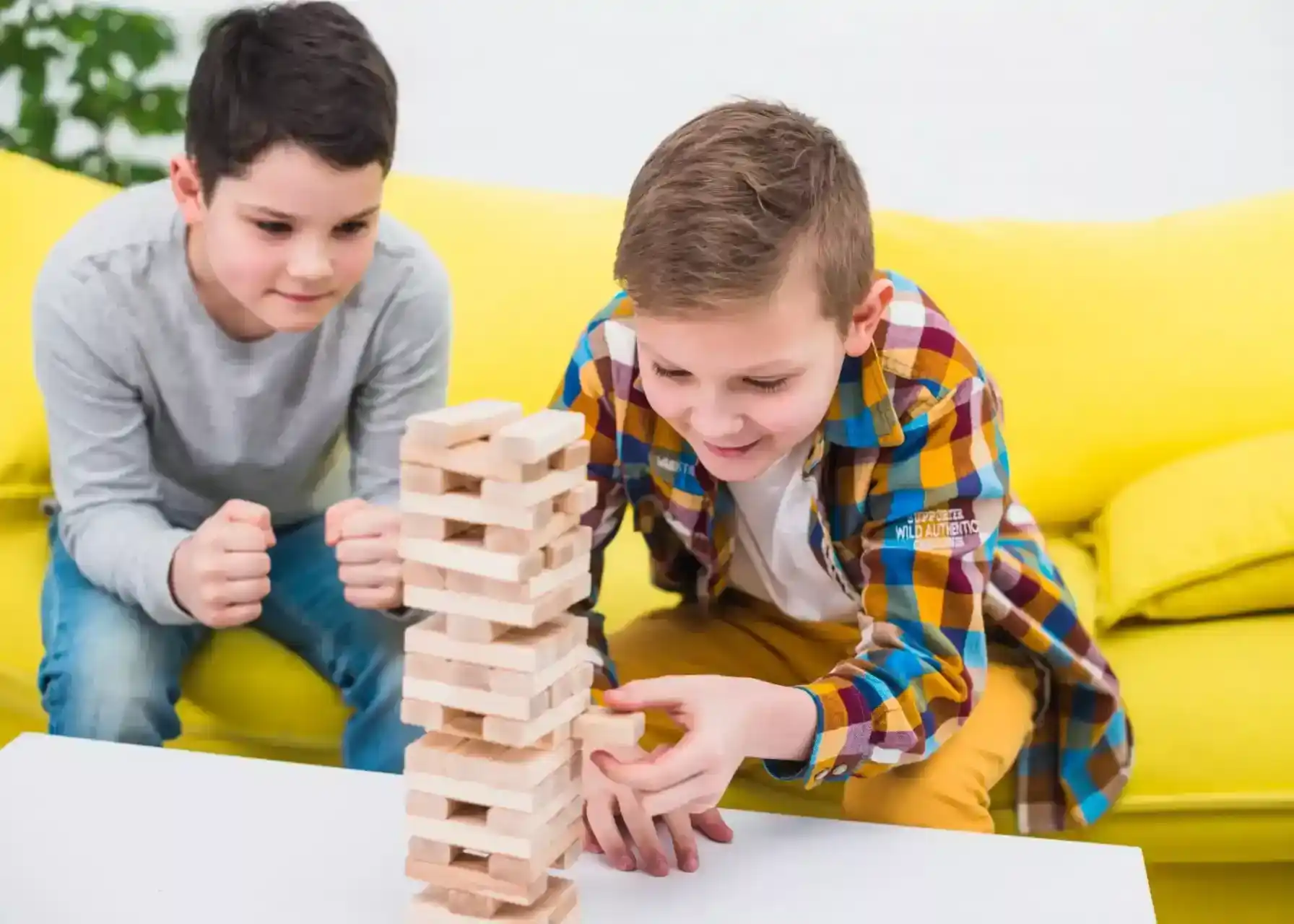
Play plays a key role in brain development by helping children think, learn, remember, and solve problems. Activities such as puzzles, building blocks, pretend play, and educational toys strengthen problem-solving abilities and encourage critical thinking. Play also nurtures creativity by allowing children to use their imagination, explore new ideas, and express themselves freely. These experiences help children develop important cognitive skills that support learning both at home and in school.
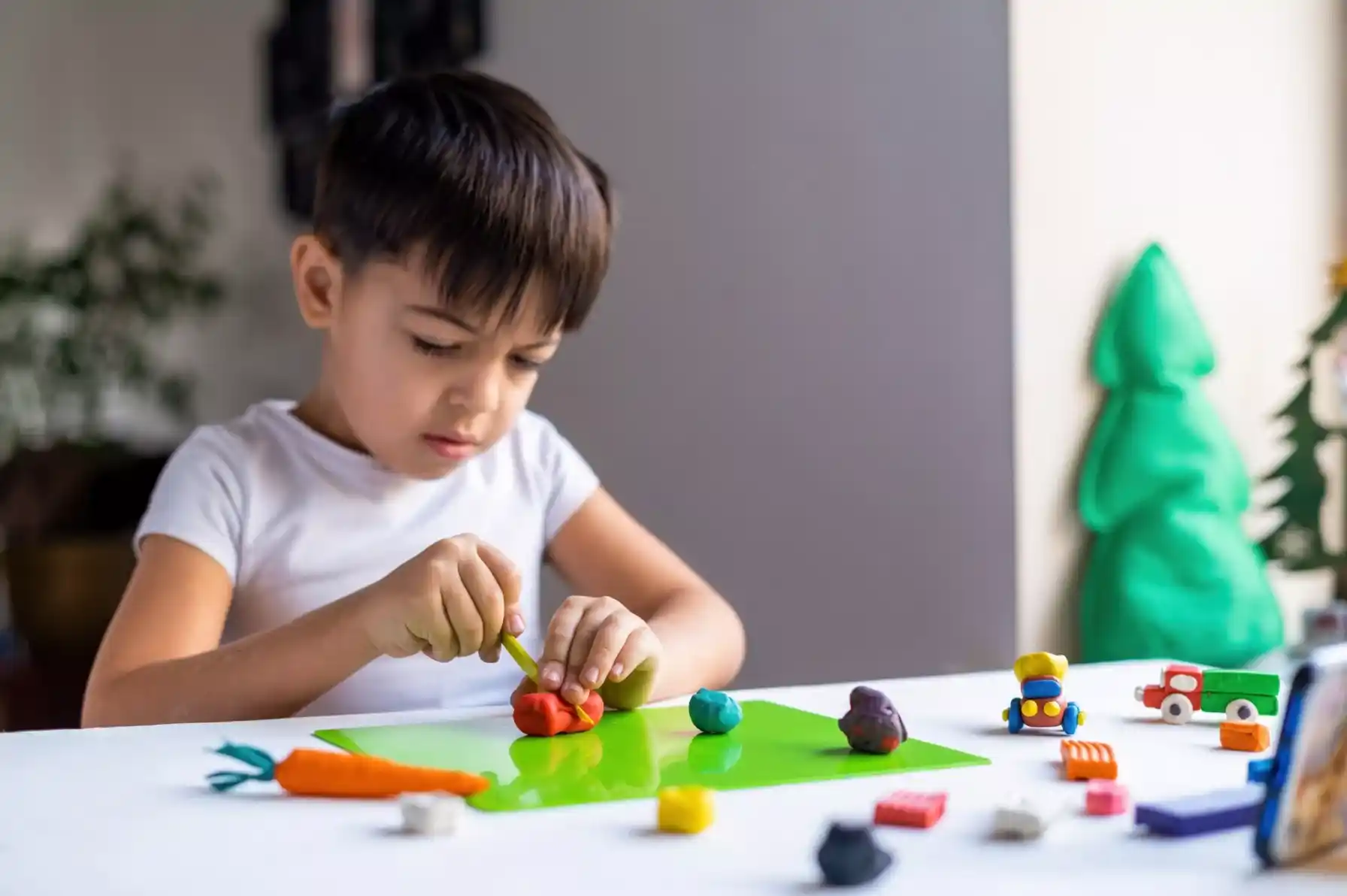
In addition to supporting learning, play helps children develop motor skills, social skills, and emotional regulation. Active play improves coordination, balance, strength, and fine motor development, while group play teaches sharing, teamwork, communication, and empathy. Through play, children also learn how to manage emotions, cope with challenges, and build self-confidence. By providing opportunities for meaningful play, parents can support healthy child development and help children build the skills they need for lifelong success, happiness, and well-being.
FAQ
The five main areas of child development help children grow physically, emotionally, socially, and intellectually. These include physical development, cognitive development, language and communication development, social development, and emotional development, all of which support healthy growth and lifelong learning
Parents can support child development by providing a safe and loving environment, encouraging play, reading regularly, offering healthy nutrition, maintaining good sleep routines, and spending quality time with their children. Positive interactions and age-appropriate learning experiences also support healthy development.
Play is an important part of child development because it helps children learn new skills, build confidence, improve problem-solving abilities, develop motor skills, and strengthen social and emotional development. Learning through play supports healthy growth at every stage.
Early childhood development lays the foundation for future learning, behavior, health, and social skills. Positive experiences during the early years support brain development and help children build the skills needed for lifelong success.
Quality sleep is essential for healthy child development. During sleep, children process information, strengthen memory, support brain development, and release growth hormones that contribute to physical growth and learning.
Social skills develop through interactions with family, friends, teachers, and other children. As part of healthy child development, children learn sharing, communication, teamwork, and empathy. Playtime and social activities help children build confidence and develop positive relationships.
During cognitive development, children learn how to process information, understand concepts, and solve everyday problems. Reading, creative play, and age-appropriate activities help strengthen these important child development skills.
Physical activity helps children build strength, coordination, balance, motor skills, and confidence while supporting overall health and development.
The main stages of child development include newborn, infant, toddler, preschooler, school-age child, and adolescence. Each stage brings unique developmental milestones and learning opportunities.