
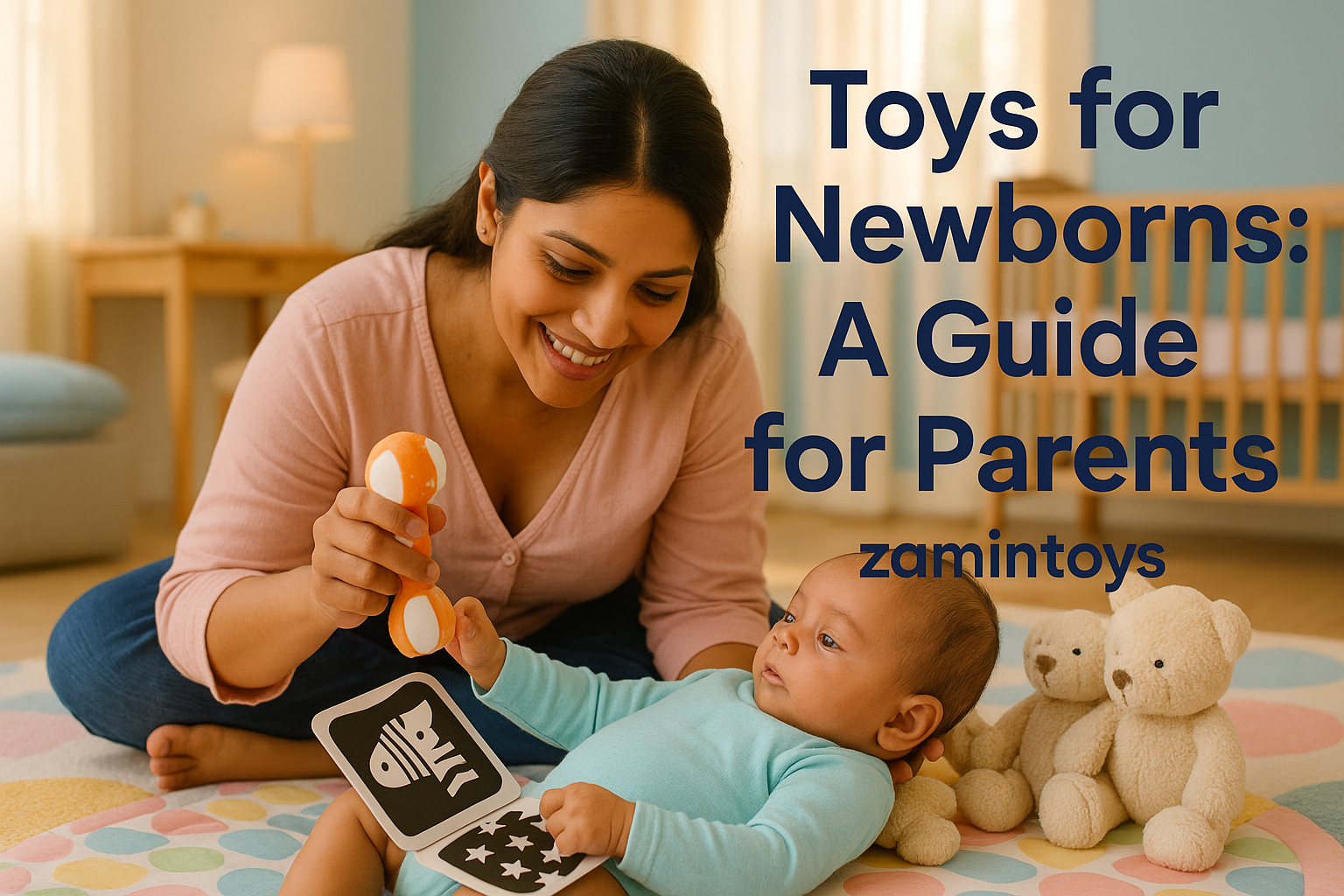
Welcoming a baby into your life comes with many questions — and one of the most common is:
When should I introduce sensory toys? And why do newborns need sensory toys in the first place?
This complete parenting guide to newborn sensory toys (0–6 months) explains the science behind early development, how sensory toys support brain growth, and how to choose safe, age-appropriate toys for infants.
Quick Answer for Busy Parents
When do newborns need sensory toys?
Newborns can benefit from sensory toys from birth, especially toys that gently stimulate vision, hearing, and touch.
Why are sensory toys important?
Because during the first six months, a baby’s brain forms rapid neural connections. Proper sensory stimulation helps strengthen these connections and supports cognitive, emotional, and motor development.
Why Sensory Toys Matter From Day One
Many parents think toys are just for entertainment. In reality, sensory toys are developmental tools.
According to research from the Harvard Center on the Developing Child, early childhood is a period of intense brain growth. The brain forms more than one million neural connections per second in early life. Sensory-rich experiences strengthen these pathways.
This means that simple newborn sensory toys — such as black-and-white contrast cards or soft rattles — are not just objects. They help your baby:
-
Focus their vision
-
Recognize sounds
-
Explore textures
-
Develop emotional bonding
Even before babies can hold toys, they are learning through observation and listening.
What Are Sensory Toys?
Sensory toys are toys designed to stimulate one or more of the five senses:
-
👀 Vision
-
👂 Hearing
-
✋ Touch
-
🤸 Movement
-
❤️ Emotional comfort
Examples of newborn sensory toys include:
-
High-contrast black and white cards
-
Soft textured rattles
-
Musical crib mobiles
-
Tummy time sensory mats
-
Plush comfort toys
Unlike regular toys, sensory toys for infants are designed specifically to support developmental milestones.
0–6 Months: What’s Happening in Your Baby’s Brain?
From birth to six months, your baby transitions from reflex-driven movements to active exploration.
0–3 Months
-
Visual tracking begins
-
Babies respond to sound
-
Early bonding develops
-
Grasp reflex appears
3–6 Months
-
Rolling and reaching
-
Teething begins
-
Cause-and-effect learning develops
-
Babbling increases
The right newborn sensory toys align with these milestones and support natural growth.
0–3 Months: Gentle Sensory Stimulation
At this stage, babies can see only 8–12 inches away and are sensitive to overstimulation. Sensory toys should be soft, simple, and calming.
Best Newborn Sensory Toys (0–3 Months)
✔ Black and white sensory toys – Improve visual focus and tracking
✔ Soft rattles – Introduce sound awareness
✔ Musical crib mobiles – Support hearing development
✔ Tummy time sensory mats – Strengthen neck and shoulder muscles
✔ Soft plush toys – Encourage emotional bonding
Why These Sensory Toys Matter
These early sensory toys help newborns:
-
Strengthen eye coordination
-
Recognize sound patterns
-
Develop early motor reflexes
-
Build trust and emotional comfort
3–6 Months: Exploration and Interaction
Now your baby begins grabbing, rolling, and mouthing objects. Sensory toys should encourage movement and curiosity.
Best Sensory Toys for 3–6 Months
✔ BPA-free teething sensory toys
✔ Crinkle books and textured cloth books
✔ Grasping balls and soft blocks
✔ Musical cause-and-effect toys
✔ Talking plush toys
Development Goals Supported
-
Hand-eye coordination
-
Motor skill development
-
Memory building
-
Early language listening
-
Cause-and-effect learning
This is the stage where sensory toys shift from observation to interaction.
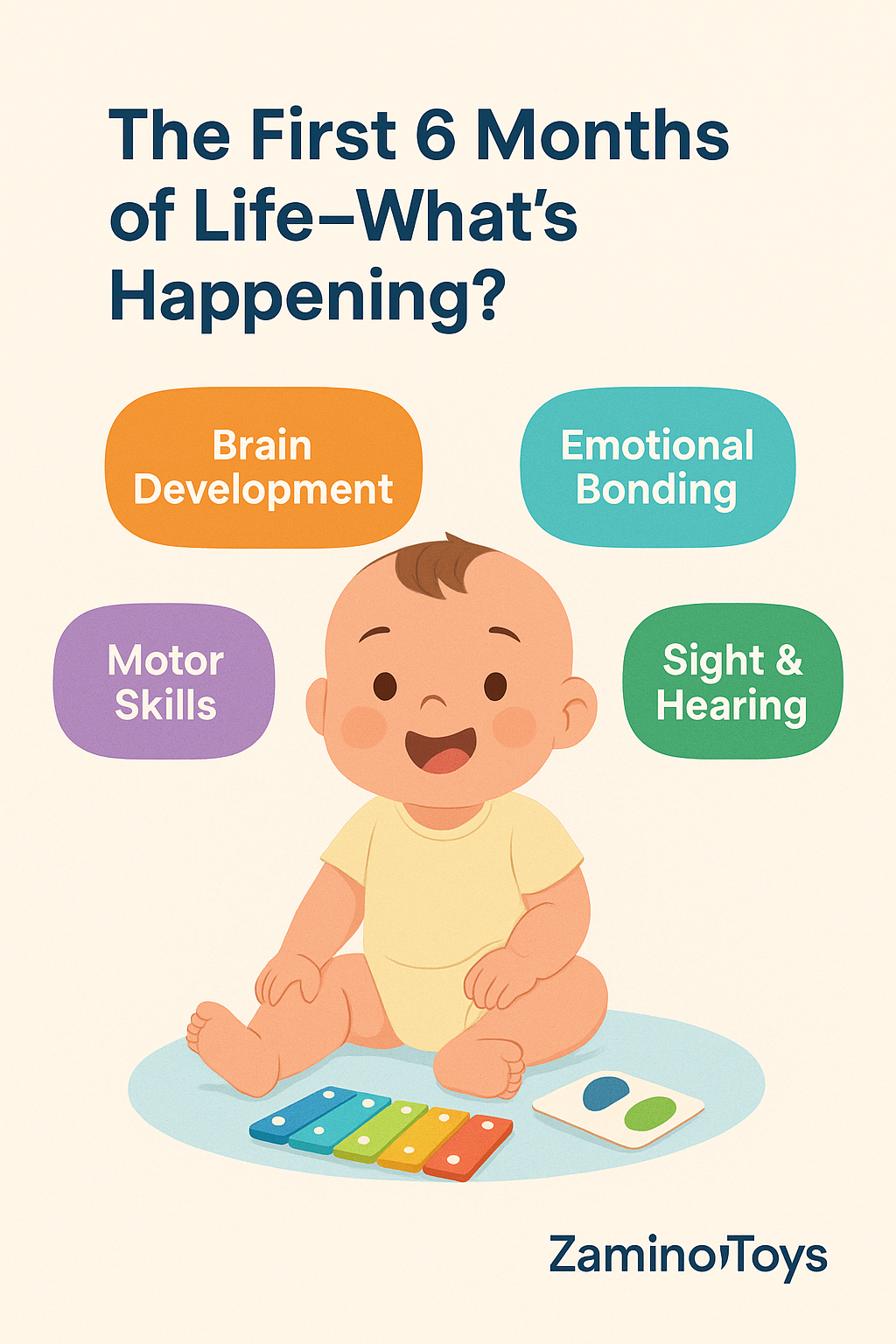
Let’s look at the growth milestones:
| Age Range | Key Developments |
| 0–3 Months | Visual tracking, sound recognition, grasp reflex, early bonding |
| 3–6 Months | Smiling, babbling, rolling, grabbing, teething, self-recognition |
Toys that align with each stage support this natural development.
The Science Behind Early Sensory Toys
Studies show that sensory-rich environments help create stronger brain pathways. By providing varied textures, sounds, and visuals, you help your baby process new information.
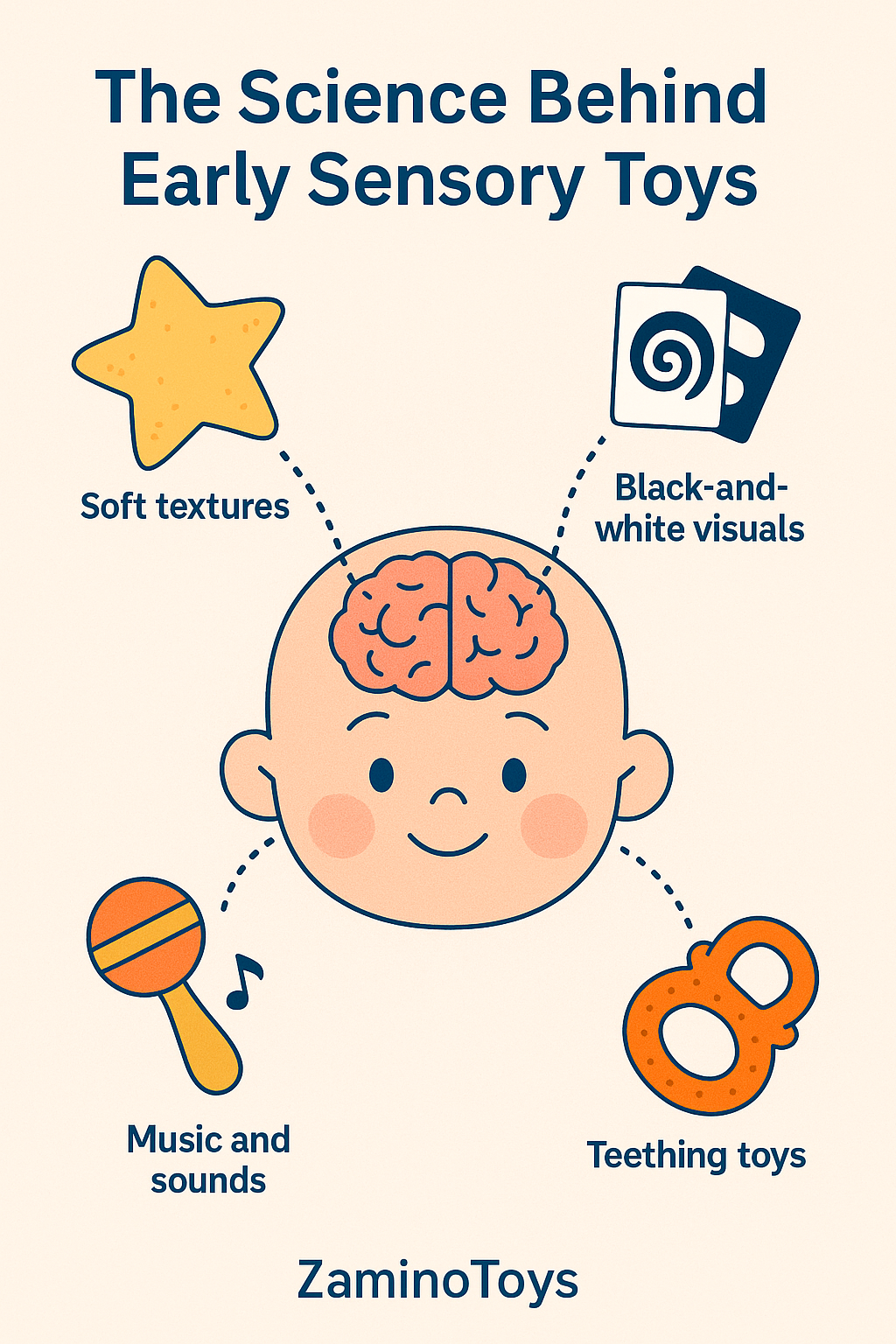
📖 UNICEF recommends daily sensory play to boost a child’s brain and emotional resilience.
👂 Hearing:
Use soft rattles, talking toys, or musical mobiles.
👀 Vision:
High-contrast black and white books improve focus.
🖐 Touch:
Fabrics with texture improve curiosity and motor coordination.
🤲 3–6 Months – Exploration & Action
Now your baby begins to reach, roll, and grab. Their neck is stronger. Their eyes follow movement. They are learning cause and effect — for example, “If I press, it squeaks!”
Now is an ideal occasion give them toys that they can play with.
🧸 Best Toys for 3–6 Months
✅ 1. Teething Toys
- Soothes sore gums
- Choose BPA-free silicone or textured rubber
- Chill in fridge (not freezer) for extra relief
✅ 2. Crinkle Books or Soft Books
- Make crinkle sounds when touched
- Encourage touch and visual exploration
- Introduce basic shapes, animals, or faces
✅ 3. Grasping Balls or Soft Blocks
- Improves hand-eye coordination
- Choose lightweight, easy-to-hold shapes
- Try activity cubes with tags and textures
✅ 4. Musical and Light Toys
- Introduce cause and effect
- Boost memory and attention
- Encourage movement and smiles!
✅ 5. Soft Animal Toys That Talk
- Toys that say “hello” or sing rhymes
- Improve language listening
- Build emotional bonding
💡 Real-Life Toy Tips for Indian Parents
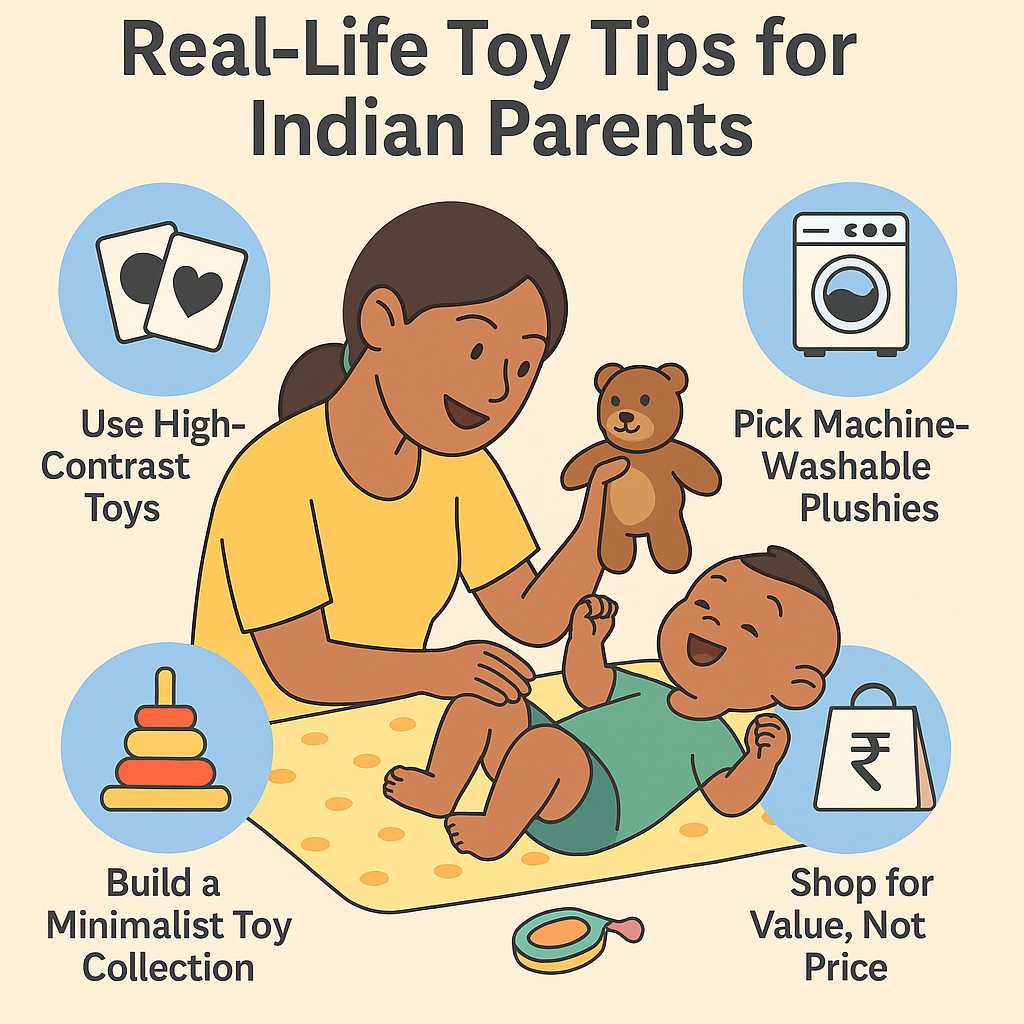
💰 Budget-Friendly Tips:
- Don’t buy too many toys. 5–7 quality toys per stage are enough.
- Use household items like scarves, steel cups, or old cloth for DIY toys (always supervise).
🧼 Hygiene Tips:
- Clean all toys once or twice a week.
- Wash soft toys with baby-safe detergent.
- Use toy sanitizer sprays for plastic toys.
🕒 Play Schedule Tips:
- Use morning time for active play
- Use bedtime for soft music toys
- Don’t force play when baby is tired or cranky
3–6 Months: Toys for Exploration
Your baby is now starting to move more — reaching, grasping, mouthing, rolling, and kicking. Their brain is learning fast, especially through cause-and-effect.
✅ What to Look For:
- Teething-safe toys made from food-grade silicone
- Crinkle or squeaky textures for sound discovery
- Toys that respond when touched (e.g. soft music, rattles)
- Graspable shapes that help with hand-eye coordination
🧠 Development Goal: Motor skills, cause-effect learning, coordination
🧩 Toy Examples:
- Soft blocks with different textures and sounds
- Silicone teething rings with textured grips
- Plush animals that talk or sing when squeezed
- Cloth books with lift-the-flap or crinkle pages
🛡️ General Toy Safety Checklist (For 0–6 Months)
Before giving any toy to your baby, run through this checklist:
| ✅ Must-Have | 🚫 Avoid |
| Age-labeled “0+” or “0–6M” | Small detachable parts |
| BPA-free, phthalate-free | Long strings or cords |
| EN71 / BIS certified | Sharp edges or zippers |
| Machine-washable (for soft toys) | Toys with button batteries |
| Lightweight and easy to grip | Overstimulating sound/light |
🔍 Always check toys daily for wear and tear, especially after teething or heavy mouthing.
🧰 Bonus Tip: Build a Minimalist Toy Kit
You don’t need 30 toys. You just need 6–8 purposeful toys that rotate weekly.
🛒 A balanced newborn toy kit might include:
- 1 high-contrast cloth book
- 2 soft rattles (different shapes/sounds)
- 1 musical mobile
- 1 baby-safe mirror
- 1 textured teether
- 1 plush toy for cuddling
- 1 tummy time mat or sensory play surface
This not only saves money but helps your baby focus better and feel less overwhelmed.
🧷 Toy Safety – What to Avoid
- ❌ Small parts that can be swallowed
- ❌ Long strings or cords (strangulation risk)
- ❌ Sharp edges or loose stitching
- ❌ Loud electronic toys
- ❌ Bright flashing lights
✅ Safety Checklist:
- BIS or ISI mark
- Non-toxic, BPA-free, phthalate-free
- Soft materials only
- Age-labeled “0–6 months”
🧩Sensory Play Activities You Can Do at Home
- Mirror Time: While standing keep your infant in front of a mirror.
- Texture Basket: Use cloth, sponge, paper, fur
- Foot Painting: Dip baby’s feet in edible color
- Sound Discovery: Bang (lightly) on bowls
- Water Playing: Using warm water and floated toys (under adult supervision)
Frequently Asked Questions
Do newborns really need sensory toys?
Yes. Newborn sensory toys stimulate vision, hearing, and touch, which supports brain development from birth.
When should I start using sensory toys?
Parents can introduce simple sensory toys immediately after birth.
Are homemade sensory toys safe?
They can be safe if made with non-toxic materials and used under supervision.
Is screen time a substitute for sensory toys?
No. The WHO and pediatric experts recommend avoiding screen exposure for babies under two years. Real-life interaction and sensory toys are far more beneficial.
Final Thoughts: Sensory Toys Are Early Learning Tools
Sensory toys are not just playthings — they are developmental partners in your baby’s first six months.
They support:
🧠 Brain growth
🤗 Emotional security
💪 Motor skills
🗣️ Language development
But remember: your voice, touch, and presence are more powerful than any toy.
Choosing the right newborn sensory toys and using them with love creates a strong foundation for lifelong learning.
📌 Explore more parenting insights, toy tips, and stage-by-stage play guides at ZaminoToys.in
🔗 Related Blogs:
- Toys – What, When & Why? A Complete Guide for Parents
- Age-Wise Toy Guide: Choose the Right Toy by Age
This parenting guide is based on child development research from:
-
Harvard Center on the Developing Child
-
UNICEF early childhood development guidelines
-
WHO infant development recommendations
ZaminoToys focuses on science-backed parenting guidance and safe sensory toy recommendations for Indian families.
Pingback: 5 Gentle Parenting Tips That Work – Indian Parenting Advice
Pingback: Best Toys for 6 to 12 Months – Montessori & Milestone Play
Pingback: Brilliant DIY Sensory Toys at Home for Babies (0–12 Months
Pingback: Indian Academy of Pediatrics: A Guide for Parents in India