Constipation in a newborn occurs when a baby passes hard, dry, or painful stool rather than simply having fewer bowel movements. Most mild cases can be safely managed with gentle massage, feeding correction, movement exercises, and warm baths. However, persistent symptoms require pediatric evaluation to prevent complications.
Pediatrician’s Perspective
“As a pediatric healthcare professional, one of the most common concerns raised by new parents is constipation in a new born. Many families become worried when their baby strains while passing stool or does not poop daily. While this concern is understandable, it is important to know that newborn bowel habits vary widely and not every irregular stool pattern indicates constipation”.
True constipation in a newborn is identified by stool texture, baby discomfort, and feeding behavior rather than stool frequency alone. This medically structured guide explains causes, symptoms, constipation in a newborn home remedies, clinical constipation in infants treatment, and safe prevention methods supported by pediatric knowledge.
Understanding Normal Newborn Bowel Movements
Before diagnosing constipation in a newborn, parents must understand what is considered normal.
Breastfed Babies
Breastfed newborns typically:
- Pass soft, loose stools
• Poop multiple times daily during early weeks
• May poop less frequently after digestive maturity develops
Breast milk contains natural digestive enzymes and mild laxative properties. Therefore, true constipation in a newborn is less common in exclusively breastfed babies.
Formula-Fed Babies
Formula-fed infants often:
- Pass thicker stools
• Have slightly less frequent bowel movements
• Show higher risk of stool firmness
Many parents seeking treatment constipation in a newborn by managing formula-related stool consistency changes.
Medical Definition of Constipation in a Newborn
Clinically, constipation in a newborn is diagnosed when:
- Stool is hard or pellet-like
• Baby cries or strains excessively during bowel movement
• Abdomen appears bloated or firm
• Feeding decreases due to discomfort
• Stool frequency reduces alongside pain
Passing stool every two or three days can still be normal if the stool remains soft and the baby remains comfortable.
Causes of Constipation in a Newborn
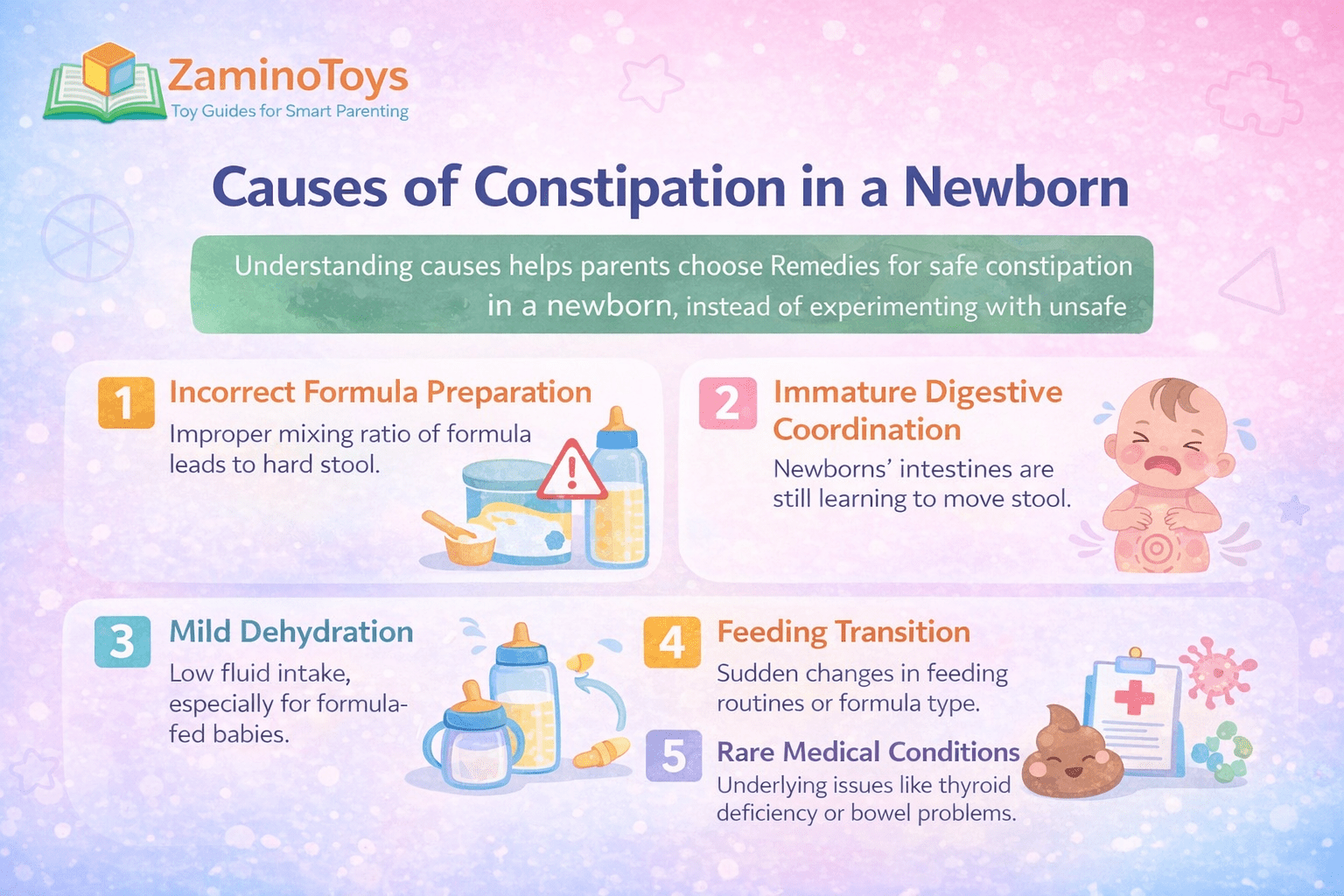
Understanding causes helps parents choose Remedies for safe constipation in a newborn, instead of experimenting with unsafe solutions.
1. Incorrect Formula Preparation
Improper mixing ratio is one of the leading causes of constipation in a newborn. Concentrated formula reduces hydration and leads to stool hardening.
Parents should always follow manufacturer instructions carefully when preparing formula milk.
2. Immature Digestive Coordination
Newborn digestive systems are still developing. Their intestines and abdominal muscles are learning to coordinate stool movement. This developmental stage may mimic constipation in infant remedies failure, although it is often temporary.
3. Mild Dehydration
Insufficient fluid intake, especially among formula-fed infants, can cause stool dryness. Hydration balance plays a crucial role in preventing constipation in a new born.
4. Feeding Transition
Sudden changes in feeding routine or formula brand may temporarily disturb digestion. Many mild cases improve with simple constipation in newborn home remedies.
5. Rare Medical Conditions
Persistent or severe constipation in a new born may occasionally signal underlying medical conditions such as:
- Congenital intestinal obstruction
• Thyroid hormone deficiency
• Hirschsprung disease
These require immediate pediatric evaluation.
Symptoms of Constipation in a New Born
Parents should monitor these warning signs:
- Hard or dry stool
- Excessive crying during bowel movement
- Bloated or tight abdomen
- Feeding refusal
- Blood streaks due to anal fissure
- Reduced stool frequency with discomfort
Recognizing early symptoms helps parents apply appropriate constipation in infants treatment or home management safely.
How to Treat Constipation in New Born Safely
Parents frequently ask pediatricians, how to treat constipation in new born safely. Treatment always begins with gentle, non-invasive approaches unless complications exist.
Doctor-Recommended Constipation in Newborn Home Remedies
These methods are medically accepted and safe for mild constipation in a new born.
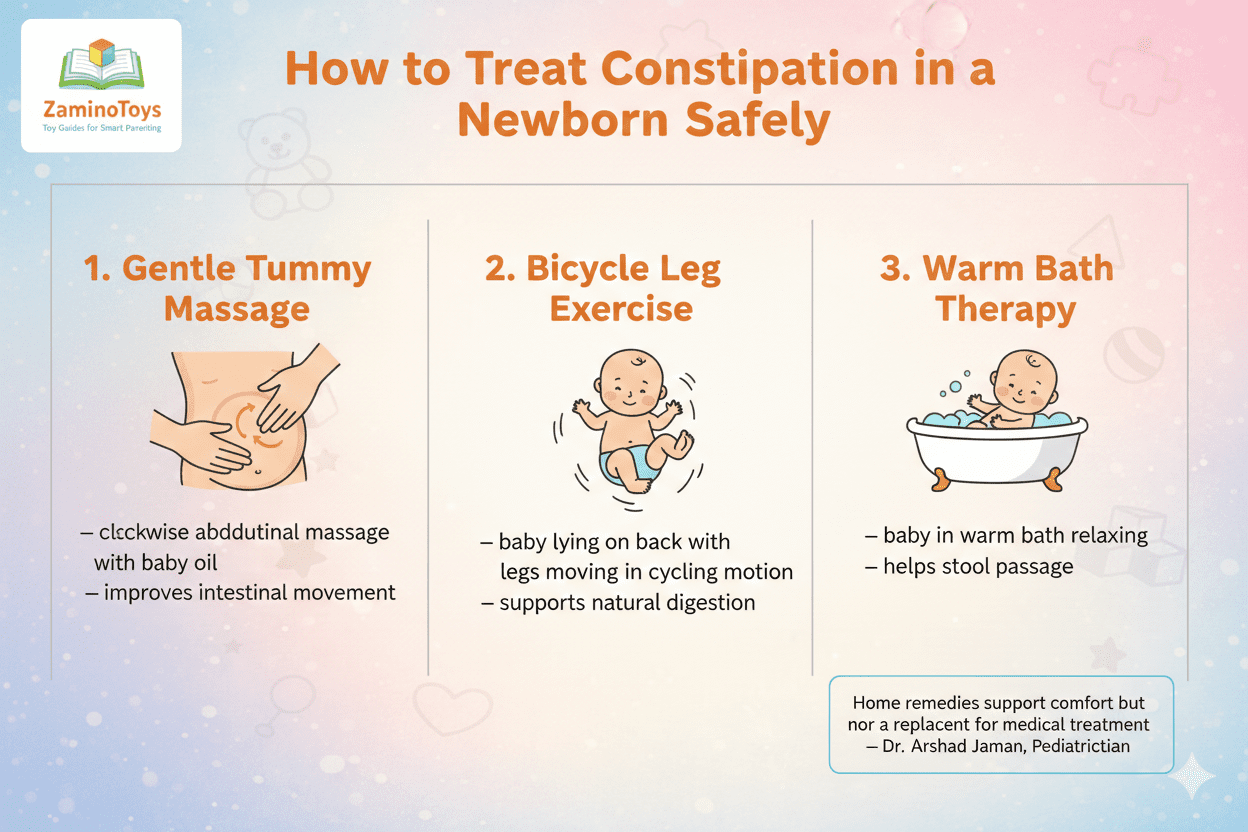
Gentle Tummy Massage
Abdominal massage stimulates intestinal movement and reduces trapped gas pressure.
Recommended Method
- Wash hands thoroughly
• Apply mild baby oil
• Massage abdomen clockwise
• Continue for 5–10 minutes twice daily
Massage remains one of the safest remedies recommended by pediatricians for constipation in a newborn.
Bicycle Leg Exercise
Passive leg movement improves bowel stimulation naturally.
How to Perform
- Lay baby on back
• Move legs gently in cycling motion
• Repeat 10–15 repetitions
This exercise supports natural digestion and is widely used in constipation in infant remedies.
“Parents Can use This excercise as as A home Remedy Only,Its not recommended as a solution either By Indian Academy Of Pediatrics (IAP) OR American Academy of Pediatrics (AAP) )”- By Dr Arshad Jaman MT
Warm Bath Therapy
Warm water relaxes abdominal muscles and improves stool passage. Pediatricians often suggest this simple method when advising how to treat constipation in new born.
Feeding Technique Evaluation
Improper feeding remains a major contributor to constipation in a newborn.
Breastfeeding Support
- Ensure correct latch
• Maintain frequent feeding
• Monitor swallowing pattern
Formula Feeding Support
- Use correct dilution ratio
• Avoid frequent brand switching
• Observe formula tolerance
Many cases of constipation in infants treatment resolve after feeding correction.
Unsafe Remedies Parents Must Avoid
Many online-suggested constipation in newborn home remedies are medically unsafe.
Avoid:
❌ Honey (risk of infant botulism)
❌ Adult laxatives
❌ Herbal mixtures without doctor approval
❌ Rectal stimulation using objects
❌ Giving water without pediatric advice
Unsafe methods can worsen constipation in a newborn or cause infection and injury.
Clinical Constipation in Infants Treatment
If home remedies fail, pediatricians may recommend medical constipation in infants treatment.
Glycerin Suppository
Occasionally used to provide immediate stool relief. Should only be used under strict medical supervision.
Formula Modification
Doctors may recommend partially hydrolyzed or specialized formula for babies struggling with digestion.
Medical Evaluation
Persistent constipation in a newborn beyond two weeks requires investigation for underlying disorders.
When Parents Should Seek Immediate Medical Help
Consult a pediatrician urgently if:
- Baby has no stool for more than five days
• Persistent vomiting occurs
• Abdomen becomes severely swollen
• Baby refuses feeding
• Blood appears repeatedly in stool
• Baby shows fever or poor weight gain
These symptoms indicate serious constipation in a newborn must require clinical intervention.
Breastfeeding and Constipation Risk
Breast milk supports natural bowel movement through digestive enzymes and immune factors. Exclusive breastfeeding significantly lowers the risk of needing constipation in newborn remedies.
Infrequent but soft stool in breastfed babies is usually normal and not considered as constipation in a newborn issue.
Long-Term Risks of Ignoring Constipation
Untreated severe constipation in a newborn may cause:
- Anal fissures
• Painful bowel habits
• Feeding anxiety
• Sleep disturbance
• Digestive sensitivity later in infancy
Early management prevents these complications.
Preventing Constipation in a newborn
Prevention remains the safest strategy.
Maintain Feeding Consistency
Regular feeding supports digestive rhythm and stool formation.
Encourage Gentle Physical Movement
Simple leg exercises improve intestinal activity and reduce need for constipation in infant remedies later.
Monitor Stool Pattern
Tracking stool texture, frequency, and baby comfort helps early detection of constipation in a new born.
Avoid Frequent Formula Changes
Sudden feeding changes may trigger digestive disturbance requiring medical constipation in infants treatment.
Frequently Asked Questions
How Often Should a Newborn Poop?
Newborns may pass stool several times daily or once every few days. Stool softness and baby comfort determine whether constipation in a new born exists.
Is Straining Normal?
Yes. Newborn abdominal muscles are immature. Straining without hard stool is not constipation.
How to Treat Constipation in New Born Quickly?
Safe treatments include tummy massage, bicycle leg movement, warm bath therapy, and feeding evaluation. Avoid medication unless prescribed.
Are Constipation in Newborn Home Remedies Safe?
Pediatrician-approved techniques like massage and movement exercises are safe for mild constipation.
Developmental Digestive Insight
A newborn’s digestive system continues developing during early months. Temporary constipation in a newborn often appears during growth spurts or feeding transitions and resolves naturally with supportive care.
Pediatric Monitoring Checklist for Parents
Parents should track:
✔ Stool consistency
✔ Baby comfort level
✔ Feeding pattern
✔ Abdomen firmness
✔ Stool frequency
This checklist helps determine whether home remedies or professional treatment required for the issue of constipation in a newborn.
Doctor’s Final Advice to Parents
Most cases of constipation in a newborn are mild and temporary. Parents should focus on baby comfort rather than strict stool frequency monitoring.
Avoid experimenting with unverified constipation in a newborn remedies found online. Safe pediatric-recommended techniques combined with observation solve most cases naturally.
Early consultation prevents complications and ensures healthy digestive development.
Final Thoughts
Understanding constipation in a newborn empowers parents to respond calmly and safely. Gentle constipation in a newborn home remedies, feeding correction, and pediatric supervision remain the safest approach.
Every baby develops differently, and digestive maturity takes time. With proper knowledge and early care, most newborn constipation resolves without long-term complications.
About the Author
This article is medically reviewed and developed by the ZaminoToys Parenting Research Team, a child development education platform focused on evidence-based parenting guidance and developmental care. The content has also been reviewed by Dr. Arshad Jaman, Pediatrician, a valued member of the ZaminoToys Medical Review Team, ensuring clinical accuracy and child-safety alignment.
The information presented integrates pediatric medical research, developmental psychology, and Also as a real parent who’s experience gained while raising My 18-month-old Daughter. Every recommendation is carefully evaluated to support safe, age-appropriate decision-making for modern parents.
ZaminoToys is committed to delivering trustworthy, research-supported parenting knowledge that helps families make confident decisions about child development and infant care.
Medical Disclaimer
This article is for educational purposes only and does not replace professional medical consultation. Parents should always consult their pediatrician before trying treatments for newborn health conditions.
Trusted Medical References
Mayo Clinic Infant Digestive Health Guide
https://www.mayoclinic.org
World Health Organization Infant Feeding Recommendations
https://www.who.int
NHS Baby Constipation Guidance
https://www.nhs.uk