Why 7 Months Sensory Play Matters So Much
At seven months, your baby is no longer just observing the world—they are actively exploring it. This stage is marked by rapid brain development, increased curiosity, and a strong desire to touch, taste, hear, and move. 7 months sensory play becomes one of the most powerful ways to support this growth naturally and joyfully.
For Indian parents, balancing safety, tradition, and modern child development advice can feel overwhelming. The good news is that 7 months sensory play does not require expensive tools or complicated setups. Simple, everyday experiences—when done thoughtfully—can build strong foundations for learning, movement, communication, and emotional security.
This in-depth guide explains everything you need to know about 7 months sensory play, from benefits and safe activities to toy choices, common mistakes, and expert-backed tips. Whether you are a first-time parent or caring for your second child, this article will help you make confident, informed decisions.
What Is Sensory Play for a 7-Month-Old Baby?
7 months sensory play refers to activities that stimulate your baby’s five senses—touch, sight, sound, smell, and taste—while also supporting movement and body awareness. At this age, babies learn best through hands-on exploration rather than structured instruction.
How 7 Months Sensory Play Works
At seven months, babies typically:
- Sit with or without support
- Reach, grasp, and transfer objects
- Respond to sounds and familiar voices
- Explore objects by mouthing
- Show curiosity about textures and movement
7 months sensory play aligns perfectly with these milestones by offering safe opportunities to explore different sensations in a controlled, loving environment.
Sensory Systems Involved
While most parents think sensory play only involves touch, 7 months sensory play actually engages multiple systems:
- Tactile (touch and texture)
- Visual (colours, movement, contrast)
- Auditory (sounds, rhythm, tone)
- Oral sensory (safe mouthing)
- Vestibular (balance and movement)
- Proprioceptive (body awareness)
Why 7 Months Sensory Play Is Essential for Brain Development
The brain grows fastest during the first year of life. Every sensory experience strengthens neural connections. Regular 7 months sensory play helps your baby’s brain organise information efficiently.
Key Benefits of 7 Months Sensory Play
1. Supports Cognitive Development
Through 7 months sensory play, babies learn cause and effect, problem-solving, and attention control.
2. Strengthens Motor Skills
Grasping, squeezing, kicking, and rolling during 7 months sensory play improve both fine and gross motor skills.
3. Enhances Language Readiness
Listening to sounds and parent narration during 7 months sensory play builds early communication pathways.
4. Builds Emotional Security
When parents participate in 7 months sensory play, babies feel safe, understood, and emotionally connected.
5. Encourages Independent Exploration
Sensory experiences teach babies to explore confidently, an essential life skill developed through 7 months sensory play.
Understanding Your Baby’s Sensory Needs at 7 Months
Every baby responds differently to 7 months sensory play. Some love textures, others prefer sounds or movement.
Signs Your Baby Enjoys Sensory Play
- Focused attention
- Reaching eagerly
- Smiling or babbling
- Calm engagement
Signs of Sensory Overload
- Turning head away
- Fussiness or crying
- Stiff body posture
Successful 7 months sensory play respects your baby’s cues and comfort level.
Safe and Simple 7 Months Sensory Play Ideas at Home
Babies are in an amazing developmental stage at seven months of age. They are more alert, curious, and eager to explore the world around them. Sensory play at this age is not about structured learning or complicated toys—it is about meaningful experiences that stimulate the senses and support natural development. With the right approach, parents can easily create safe and simple sensory play ideas at home that nurture a baby’s growing brain and body.
This article explores safe and simple sensory play ideas for 7-month-old babies, explains why sensory play is important, and offers practical tips to ensure safety while playing at home.
What Is Sensory Play for a 7-Month-Old Baby?
Sensory play refers to activities that stimulate one or more of the five senses—touch, sight, sound, smell, and taste. For a 7-month-old baby, sensory play is a primary way of learning. Babies at this age explore mostly through their mouths, hands, eyes, and ears.
At seven months, most babies:
- Sit with support or independently
- Reach, grasp, and transfer objects between hands
- Respond to sounds and voices
- Show curiosity about textures, movement, and colors
Safe sensory play supports these milestones by encouraging exploration in a controlled and nurturing way.
Why Sensory Play Is Important at 7 Months
Sensory play is not just entertainment; it plays a critical role in early development.
1. Brain Development
Sensory experiences help form neural connections in the brain. Each new texture, sound, or visual stimulus strengthens pathways that support thinking and learning.
2. Motor Skill Development
Grasping, squeezing, tapping, and reaching during sensory play improve both fine and gross motor skills.
3. Emotional Security
When babies explore with a trusted caregiver nearby, they feel safe. This builds confidence and emotional bonding.
4. Language and Communication
Talking, singing, and responding during sensory play help babies associate sounds with meaning, supporting early language development.
Safety Guidelines for Sensory Play at Home
Before trying any sensory play ideas, safety should always come first.
- Always supervise your baby closely
- Steer clear of little items that could cause choking.
- Use non-toxic, baby-safe materials
- Ensure all items are clean and age-appropriate
- Stop the activity if the baby shows discomfort or fatigue
Sensory play should be gentle, enjoyable, and pressure-free.
Safe and Simple Sensory Play Ideas for 7-Month-Old Babies
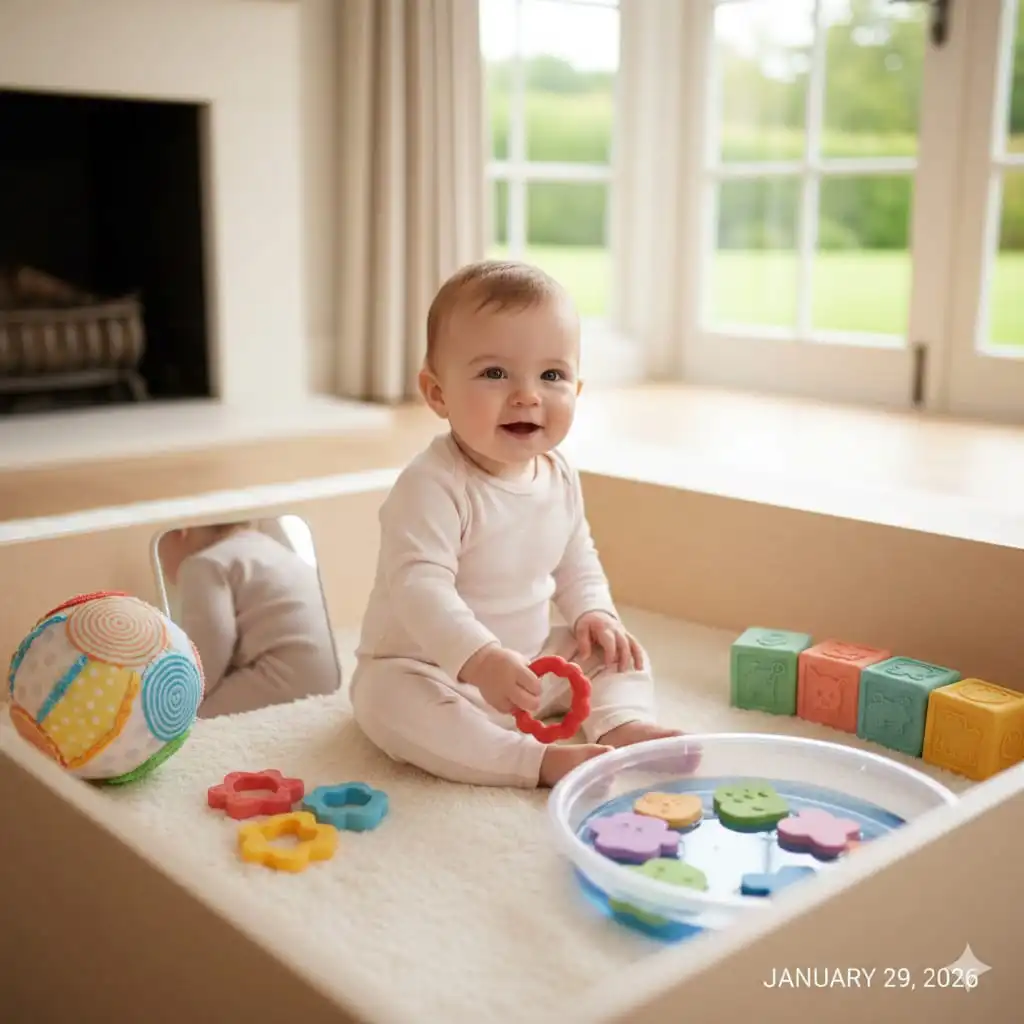
1. Texture Exploration with Household Fabrics
Lay out different soft fabrics such as cotton cloth, towel, muslin, or wool on the floor. Let your baby touch, rub, and grab each texture.
Benefits:
- Enhances tactile awareness
- Strengthens hand muscles
- Encourages curiosity
Tip: Avoid rough or itchy fabrics and always supervise.
2. Water Play in a Shallow Bowl
Fill a wide bowl with a small amount of water and let your baby splash while seated securely. You can add a floating cup or spoon.
Benefits:
- Improves hand-eye coordination
- Introduces cause and effect
- Calms and relaxes babies
Safety note: Never leave your baby unattended near water.
3. Sound Discovery with Everyday Objects
Create gentle sounds using household items like:
- Steel bowls tapped lightly
- Rattling spoons
- Crinkly paper (thick and safe)
Talk or sing along as your baby listens.
Benefits:
- Enhances auditory development
- Builds attention and listening skills
4. Mirror Play for Visual Awareness
Place an unbreakable baby-safe mirror in front of your baby during playtime.
Benefits:
- Encourages self-recognition
- Supports visual tracking
- Promotes social curiosity
Babies love watching facial expressions and movements.
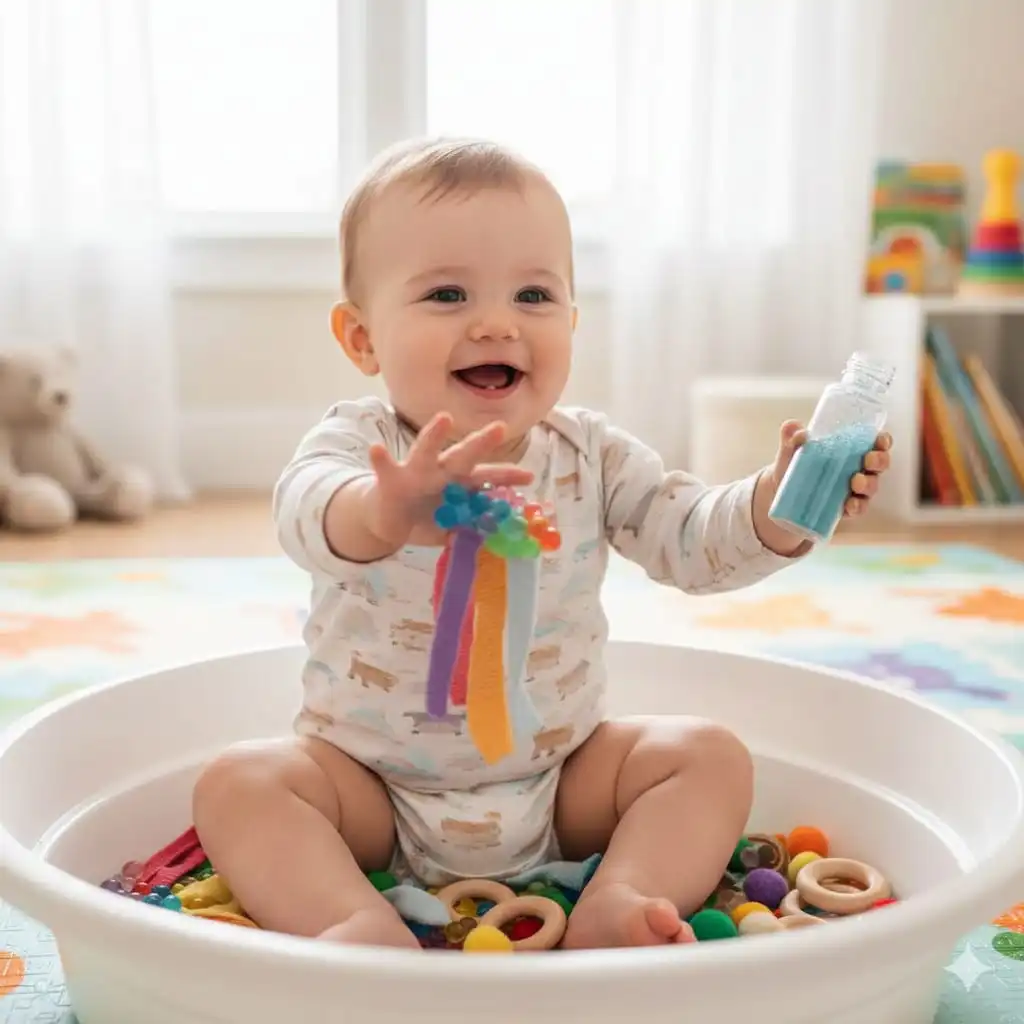
5. Sensory Basket with Safe Objects
Fill a basket with large, safe items like:
- Wooden spoons
- Silicone teethers
- Soft balls
- Large rings
Let your baby explore freely.
Benefits:
- Strengthens grasp and coordination
- Encourages independent exploration
Ensure all items are too large to fit in the mouth.
6. Taste Exploration Through Feeding Time
Sensory play can happen during meals. Introduce mashed fruits or vegetables and allow your baby to touch the food before eating.
Benefits:
- Encourages acceptance of new foods
- Supports sensory tolerance
- Builds positive food experiences
Always follow pediatric feeding guidelines.
7. Music and Movement Play
Play soft music and gently move your baby’s hands or let them bounce while seated.
Benefits:
- Develops rhythm and balance
- Encourages body awareness
- Strengthens parent-child bonding
8. Soft Ball Rolling
Roll a soft ball slowly toward your baby and encourage them to push it back.
Benefits:
- Improves coordination
- Encourages interaction and anticipation
9. Light and Shadow Play
Use natural sunlight or a soft lamp to create gentle shadows on the wall. Move your hand slowly and let your baby watch.
Benefits:
- Enhances visual focus
- Encourages curiosity
Avoid bright or harsh lighting.
10. Gentle Massage as Sensory Play
Use baby-safe oil and gently massage your baby’s arms, legs, and feet while talking softly.
Benefits:
- Improves body awareness
- Promotes relaxation
- Strengthens emotional bonding
How Long Should Sensory Play Last?
For a 7-month-old baby, sensory play does not need to be long. Even 10–20 minutes of focused play is enough. Babies learn best in short, meaningful bursts.
Watch your baby’s cues:
- Smiling and engagement mean they are enjoying it
- Turning away or fussiness means it’s time to stop
Tips to Make Sensory Play More Effective
- Follow your baby’s interest
- Talk, describe, and respond during play
- Repeat favorite activities
- Keep the environment calm and clutter-free
- Focus on enjoyment, not outcomes
Sensory play should never feel forced or overstimulating.
Common Mistakes to Avoid
- Using too many toys at once
- Expecting a “right” way to play
- Leaving the baby unsupervised
- Using unsafe or sharp objects
Simple is always better for babies at this age.
Safe and simple sensory play ideas at home are one of the most powerful ways to support a 7-month-old baby’s development. These activities help babies learn through touch, sound, sight, and movement while strengthening their physical, cognitive, and emotional growth. Parents do not need expensive toys or complex setups—everyday household items, loving interaction, and mindful supervision are enough.
By creating a safe, calm, and engaging environment, sensory play becomes a joyful experience that lays the foundation for lifelong learning and curiosity.
Using Everyday Indian Household Items for 7 Months Sensory Play
One of the strengths of 7 months sensory play is its simplicity.
Common Household Materials
- Steel plates (sound play)
- Wooden spoons (grip practice)
- Cotton dupattas (peekaboo)
- Empty spice containers (sound, sealed securely)
Ensure all items used in 7 months sensory play are clean, large enough not to choke, and free from sharp edges.
Toys Best Suited for 7 Months Sensory Play
Choosing the right toys enhances 7 months sensory play while keeping safety first.
Characteristics of Good Sensory Toys
- Non-toxic and BPA-free
- Easy to clean
- Lightweight
- Multi-sensory
Recommended Toy Types
- Textured balls
- Stacking rings
- Soft fabric books
- Sensory blocks
Quality toys support 7 months sensory play without overwhelming the baby.
Role of Parents in 7 Months Sensory Play
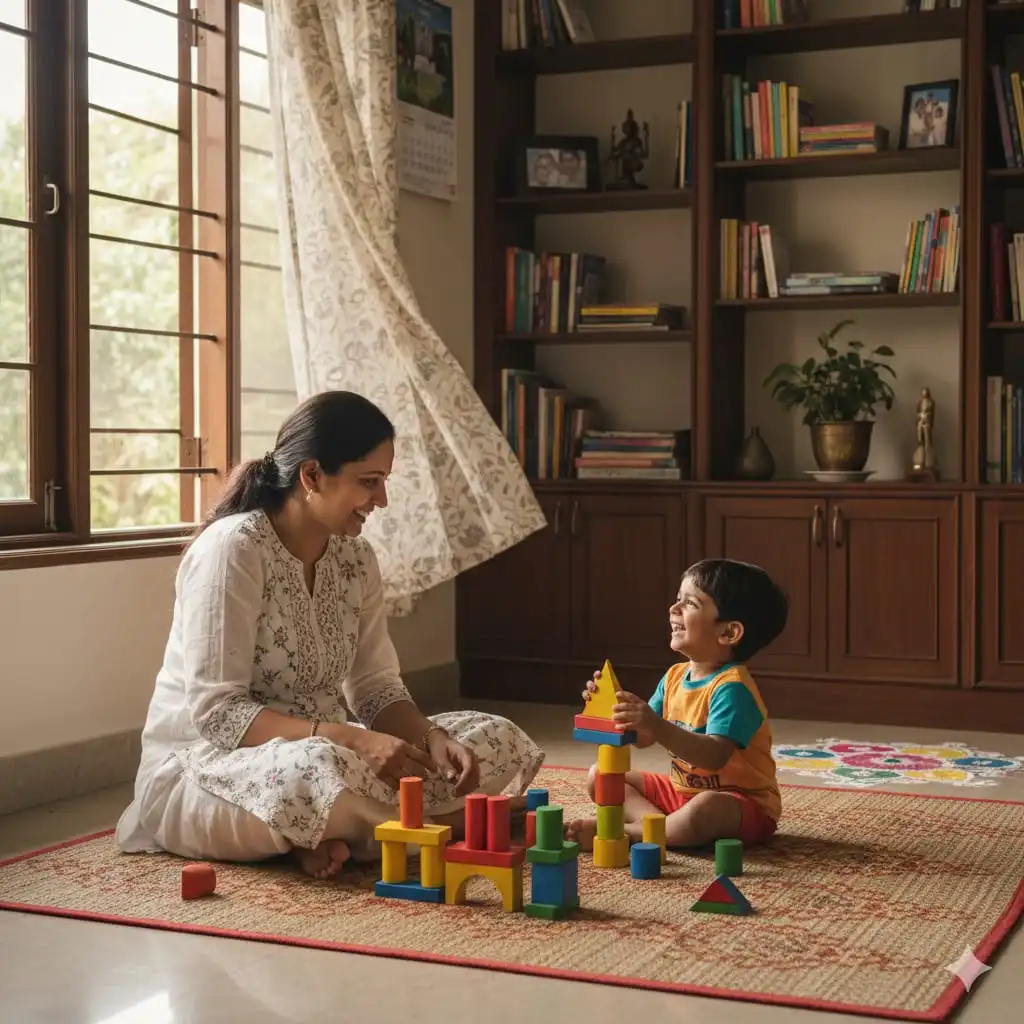
Parents are the most important part of 7 months sensory play.
How Parents Can Support Effectively
- Sit at baby’s level
- Talk gently about what the baby is touching
- Allow exploration without interruption
- Avoid forcing interaction
Responsive parenting enhances the value of 7 months sensory play.
Safety Guidelines for 7 Months Sensory Play
Safety is non-negotiable.
Essential Safety Tips
- Never leave baby unattended
- Avoid small or sharp objects
- Check toys regularly for damage
- Wash materials before and after use
Safe practices ensure 7 months sensory play remains positive and risk-free.
Common Mistakes Parents Make During 7 Months Sensory Play
Even well-meaning parents can make errors.
Mistakes to Avoid
- Overstimulating with too many toys
- Expecting specific outcomes
- Using screens as sensory input
- Forcing participation
Balanced 7 months sensory play focuses on experience, not performance.
How Often Should You Do 7 Months Sensory Play?
Short, frequent sessions work best.
Ideal Routine
- 2–3 sessions daily
- 10–15 minutes each
- Based on baby’s mood
Consistency matters more than duration in 7 months sensory play.
Adapting 7 Months Sensory Play for Different Baby Temperaments
Every baby is unique.
- Active babies enjoy movement-based 7 months sensory play
- Calm babies prefer tactile or visual experiences
- Sensitive babies need slow, gentle sensory input
Observe and adapt your 7 months sensory play approach accordingly.
Cultural Relevance of 7 Months Sensory Play in Indian Homes
Traditional Indian parenting already includes sensory-rich practices.
- Lullabies
- Baby massage
- Floor play
- Rhythmic clapping
These naturally align with modern 7 months sensory play principles.
FAQs: 7 Months Sensory Play
What is the best sensory activity for a 7-month-old?
The best 7 months sensory play activity is one that aligns with your baby’s current developmental stage and personal interest. At this age, babies are curious, alert, and eager to explore using their hands, mouth, eyes, and ears. Sensory activities such as textured toys, soft fabric books, stacking rings, rattles, and gentle sound-based toys work extremely well.
The goal of sensory play for a 7-month-old is not to teach skills directly, but to offer safe opportunities for exploration. When a baby squeezes, shakes, taps, or mouths an object, their brain forms new neural connections. Simple activities like touching different fabrics, listening to soft sounds, or exploring safe household items can be just as effective as store-bought toys when used mindfully.
How long should 7 months sensory play last?
A typical 7 months sensory play session should last around 10 to 15 minutes, depending on your baby’s mood, energy level, and attention span. Babies at this age learn best in short, focused bursts rather than long, structured play sessions.
It’s important to watch your baby’s cues. If they are actively engaged—reaching, smiling, vocalizing, or repeating actions—the sensory play is effective. If they become fussy, distracted, or tired, it’s perfectly fine to stop. Sensory play should always feel enjoyable and pressure-free. Multiple short sensory play sessions for 7-month-old babies throughout the day are far more beneficial than one long session.
Is messy play safe at 7 months?
Yes, messy 7 months sensory play is safe when it is carefully supervised and uses age-appropriate, non-toxic materials. Messy play allows babies to explore textures, temperatures, and resistance, which are all important for sensory development.
Safe messy play options include cooked and cooled vegetables, mashed fruits, soaked grains, or edible dough. Always ensure that materials are soft, clean, and large enough to avoid choking risks. Avoid items with sharp edges, strong smells, or artificial colors. When done safely, messy sensory play supports curiosity, confidence, and independent exploration in 7-month-old babies.
Can sensory play help with crawling?
Absolutely. Movement-based 7 months sensory play plays a major role in preparing babies for crawling and other mobility milestones. Activities that encourage reaching, rolling, pivoting, and pushing help strengthen core muscles, arms, and legs.
Placing sensory toys just slightly out of reach motivates babies to move toward them. Textured mats, soft cushions, and interactive toys on the floor encourage weight shifting and balance. Over time, these small movements build the physical strength and coordination required for crawling. Sensory play also improves body awareness, which is essential for confident movement.
Are store-bought toys better than home items?
Both store-bought toys and everyday household items can effectively support 7 months sensory play, as long as they are safe and used intentionally. High-quality educational toys are designed with textures, sounds, and shapes that stimulate sensory development, but simple home items can be just as valuable.
For example, a clean steel bowl, a wooden spoon, or a soft cloth can provide rich sensory experiences. What matters most is supervision, safety, and allowing the baby to explore freely. Combining thoughtfully chosen toys with safe household objects creates a balanced and cost-effective sensory play environment for 7-month-old babies.
What if my baby shows no interest in sensory play?
It’s completely normal if your baby shows little or no interest in 7 months sensory play on certain days. Babies, like adults, have changing moods, energy levels, and preferences. A lack of interest does not mean the activity is ineffective or that your baby is behind.
If your baby seems uninterested, pause the activity and try again later or on another day. You can also change the sensory input by introducing a different texture, sound, or movement-based activity. To make play effective, follow your baby’s actions rather than forcing a specific activity. Over time, consistent exposure to sensory play will naturally spark curiosity and engagement.
Note
This guidance is based on early childhood development principles commonly recommended by pediatric experts, child psychologists, and play-based learning research. Always adapt activities to your baby’s individual needs and consult a pediatrician if you have any safety concerns.
Building Strong Foundations Through 7 Months Sensory Play
7 months sensory play is not about entertainment—it is about connection, development, and trust. These early experiences shape how your baby learns, explores, and responds to the world.
By offering safe, simple, and meaningful 7 months sensory play, Indian parents can nurture confident, curious, and emotionally secure children. You do not need perfection. You only need presence, patience, and understanding.
With consistent 7 months sensory play, you are giving your baby one of the greatest gifts: a strong start in life built on joy, discovery, and love.